
Discovering your dog has fleas is stressful, but it is solvable. The key is acting fast, cleaning thoroughly, and staying consistent for longer than most people expect. This guide walks you through every step, from the moment you spot fleas to long-term flea prevention that keeps your home clear for good.
Quick Actions To Take As Soon As You Spot Fleas
If your dog has fleas, you need to act the same day. Fleas feed on blood, reproduce at alarming speed, and spread to other pets, furniture, and carpets within hours. A single female flea can lay up to 50 eggs daily, meaning a small problem becomes a flea infestation fast. Visible fleas on your dog indicate a moderate level of infestation, and for every flea you see, hundreds more may be developing in your home.
Dogs may scratch excessively due to fleas, particularly around the tail base, inner thighs, and belly. You may notice tiny dark specks in the coat (flea dirt), restlessness at night, or actual live fleas jumping near the skin. Flea infestations can multiply rapidly and may infest an entire home if left unchecked.
Here is your first-24-hours checklist:
- Isolate the dog from soft furnishings, upholstered furniture, and other pets.
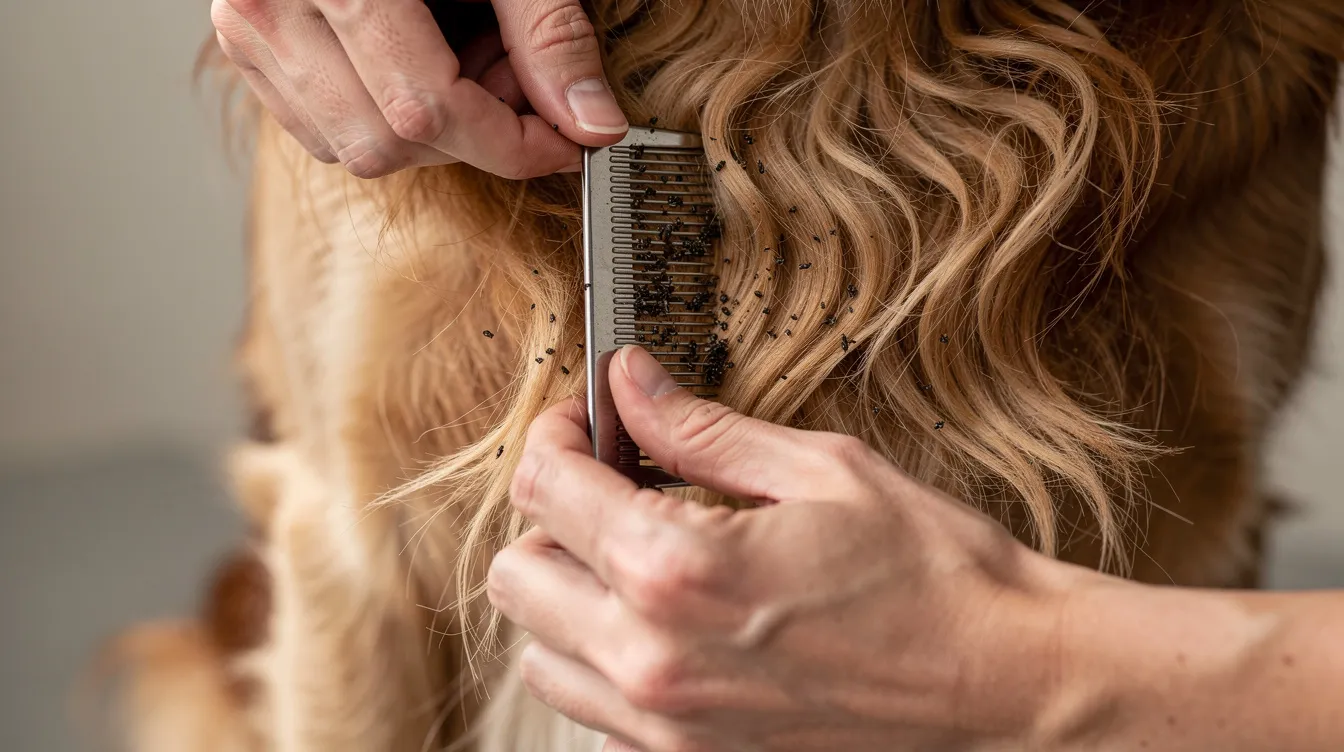
- Run a flea comb through the coat over a white surface to confirm fleas or flea dirt.
- Give a vet-approved flea bath if your dog’s skin can tolerate it.
- Start a fast-acting flea treatment (oral chewable, topical spot-on, or collar based on veterinary advice).
- Begin cleaning: wash bedding, vacuum carpets and furniture, and seal soft items.
Call a vet or emergency clinic immediately if you see very pale gums, extreme lethargy, heavy breathing, large areas of hair loss, or open sores. Puppies and small breeds are especially vulnerable. CompanAIn can help pet owners triage urgency, log symptoms, and organise next steps within minutes of noticing fleas using its AI-powered symptom checker.
How To Tell If Your Dog Really Has Fleas
Many pet owners assume every itch means dog fleas, but dogs scratch for many reasons: food allergies, contact dermatitis, mites, or dry skin. Confirming that your dog actually has fleas prevents wasted money on the wrong flea products and delays in real relief.
Classic signs include frequent scratching, nibbling at the skin (especially the rear back, tail base, and inner thighs), small red bumps, restlessness at night when fleas are more active, and patchy hair loss around the lower back and tail region. Patchy hair loss can occur from excessive scratching due to fleas, and flea eggs can be found in your dog’s bedding as tiny white ovals.
To spot fleas, part the fur along the tail base, groin, and armpits. Flea dirt appears as black specks in your dog’s coat. Collect those specks on a damp white paper towel: flea feces dissolve into a reddish-brown stain because they contain digested blood from flea bites. A fine-toothed comb dragged through the dog’s coat over a white surface will catch both live fleas and debris.
Check household members too. Small red dots on ankles or waistlines suggest fleas are biting humans as well, which is a supporting clue.
Some dogs develop flea allergy dermatitis, a hypersensitivity to flea saliva. These dogs may show intense constant itching, raw skin, and scabs from just a few bites, yet you may struggle to spot fleas at all. If signs are severe but no visible fleas appear, contact your vet. You can use CompanAIn to record photos of the dog’s skin and hair loss over time so both the AI assistant and your vet can review changes.
Understanding Where Fleas Live And The Flea's Life Cycle
Understanding the flea life cycle explains why fleas seem impossible to eliminate with a single treatment. Fleas have a lengthy life cycle, and infestations can take weeks or months to eliminate depending on conditions.
The flea’s life cycle has four stages: egg, larva, pupa, and adult. Under warm indoor conditions, fleas can grow from eggs to adults in as little as three weeks. In cooler or less ideal environments, the different life stages may stretch the cycle to several months.
- Adult fleas live on the dog, feed on blood, and begin laying eggs within one to two days of their first meal. A single flea can lay up to 50 eggs daily.
- Flea eggs hatch within 1–10 days after being laid. Eggs fall off the pet into carpets, cracks, and pet bedding.
- Flea larvae feed on blood residue and flea dirt to develop, hiding deep in carpet fibres and under furniture.
- Pupae can remain in cocoons for several months, waiting for vibrations, warmth, or carbon dioxide to trigger emergence. Flea pupae can survive in the environment for several months, resisting many insecticides while cocooned.
- Only about 5% of the total flea population are adult fleas on the dog. The remaining 95% are eggs, larvae, and pupae hiding in your home.
This is exactly why pet owners often see new visible fleas even after applying a product that kills fleas. Newly emerged adults keep hatching from old environmental reservoirs. Fully breaking the life cycle usually takes at least 8–12 weeks of continuous flea prevention on all pets. Use CompanAIn’s timeline feature to schedule and track every treatment dose and cleaning session across this three-month window.
Step‑By‑Step: What To Do Right Now If Your Dog Has Fleas
Start by isolating the dog in a room with hard flooring if possible. Keep them away from upholstered furniture, beds, and carpet while you begin immediate treatment. This limits where fleas lay eggs and makes cleanup easier.
Give a flea bath using a vet-approved medicated shampoo. Flea shampoos can kill fleas on contact during the bath. Wet the dog’s coat fully, lather from the neck backward to prevent fleas from running toward the face, protect the eyes and ears, and leave the shampoo on for the time stated on the label (usually 5–10 minutes). Rinse thoroughly.
Avoid using strong dish soaps or home chemical mixes unless specifically advised by a veterinarian. These can dry and irritate the dog’s skin and provide zero residual flea control.
After the bath, use a flea comb immediately. A fine-toothed metal flea comb can help remove fleas and debris from a dog’s fur. Work in small sections:
- Neck and behind ears
- Tail base and lower back
- Belly and groin
Dip the comb in hot, soapy water after each pass to kill fleas caught in the teeth. Dry the dog fully with towels and, if needed, a low-heat dryer. Then check again with the fine toothed comb to spot fleas that survived the bath.
This Day 1 routine helps remove fleas already on the dog but must be followed by a proper ongoing effective flea treatment and thorough home cleaning to get rid of fleas for good.
Choosing Flea Treatments That Actually Kill Fleas
Modern flea control products are safer and far more effective than the old powders and dips many dog owners remember. But flea control treatments should match the dog’s species, age, and weight for safety, and consulting a veterinarian is crucial to choose an effective flea treatment.
The main categories of flea treatments include:
- Fast acting oral medications (isoxazoline class like lotilaner, afoxolaner, sarolaner, or fluralaner; also nitenpyram/Capstar). These kill adult fleas systemically after the flea bites. Lotilaner (Credelio) achieves 99.6% flea kill by 8 hours post-dose. Capstar can kill fleas quickly within hours and works well as a rescue treatment.
- Topical spot-on treatments applied to the skin, with active ingredients like fipronil, imidacloprid, or selamectin. These typically kill fleas within 12–24 hours.
- Flea collars that slowly release active ingredients over months, offering extended protection.
Many vet-prescribed products both kill adult fleas and include Insect Growth Regulators that can prevent flea eggs and larvae from maturing into biting adults, interrupting the flea life cycle at multiple life stages.
Not all “natural” or over-the-counter flea products work reliably. Essential-oil–based sprays and collars are often not rigorously tested, and some have caused adverse reactions including vomiting, lethargy, and skin irritation. Using dog flea products on cats can be dangerous unless specified safe by the label – permethrin, common in some dog topicals, is toxic to cats.
Use CompanAIn’s AI tools to prepare questions before a vet appointment so they can tailor the product to your dog’s needs. And remember: pet owners should treat all pets in the household simultaneously to prevent reinfestation, even if only the dog shows visible fleas. Cat fleas – the species most commonly found on dogs – will happily infest other animals too.
Cleaning Your Home So Fleas Don't Keep Coming Back
Effective flea control requires treating both your dog and the home environment. Because most fleas live off the pet as eggs, larvae, and pupae, treating your home is essential to stop flea reinfestation. Deep cleaning your home helps eliminate flea eggs and larvae that would otherwise hatch into new adults for weeks.
Follow this cleaning checklist for at least 4–6 weeks:
- Wash bedding in hot water. Wash all pet bedding, throws, cushion covers, and washable rugs at about 60°C (140°F). Hot water at 130°F kills fleas at all life stages. Washing fabrics in hot water kills fleas at all stages. Dry everything on high heat.
- Vacuum carpets, skirting boards, upholstery, mattresses, car interiors, and under furniture every 2–3 days. Vacuuming removes flea eggs and larvae from your home, and regular vacuuming reduces the chances of flea reinfestation. Empty the vacuum bag or canister outside into a sealed bin bag so surviving fleas cannot crawl back in.
- Use a pet-safe home flea spray with an IGR (methoprene or pyriproxyfen) in cracks, along baseboards, and under furniture. Ventilate rooms until dry before allowing pets back.
- Fleas can lay up to 50 eggs daily, worsening infestations, so consistent deep cleaning is not optional – it is the backbone of home flea treatments.
Severe infestations in older homes with thick carpets may require professional pest control. Log every cleaning date and treatment in CompanAIn so you and your vet can see progress and identify gaps.

Flea Bites, Skin Problems, And When To Worry
Flea bites are more than a nuisance. Fleas can cause anemia and transmit parasites and infectious agents, making prompt treatment important for your dog’s overall health.
Flea bites on dogs appear as tiny red raised bumps, often in clusters or lines on the lower back, tail base, inner thighs, and belly. Dogs with flea allergy dermatitis experience an intense allergic reaction to flea saliva – even a few bites can trigger raw or bleeding skin, scabs, and hair loss focused around the rump. Skin infections can follow when open sores from excessive scratching become infected, producing oozing, bad odour, or swelling.
In small dogs and puppies, heavy flea burdens carry a real risk of anaemia. Watch for pale gums, weakness, rapid breathing, and cold extremities. If you notice these signs, seek veterinary advice immediately. CompanAIn can help you monitor indicators like these between appointments.
Fleas also transmit tapeworm infections: if a dog swallows an infected flea during grooming, tapeworm larvae develop internally. Look for rice-grain-like segments near the anus or in faeces. While cat scratch disease and swollen lymph nodes are more commonly associated with flea-borne bacteria in cats, dogs in multi-pet homes can be part of the transmission chain.
Upload close-up photos of bites, irritated skin, and hair loss to CompanAIn to track whether things improve between vet visits and to document responses to treatment.
How Long It Takes To Get Rid Of Fleas And Why They Seem To Come Back
Getting rid of fleas is measured in weeks to months, not days. Even excellent flea treatments only kill fleas that bite or contact treated pets, so newly emerging adults from environmental pupae may still appear on the dog for several weeks after treatment starts.
Flea eggs and pupae in carpets and cracks can survive standard cleaning and wait in the environment for warmth and movement before hatching. Most households start to see a major reduction within 3–4 weeks, but full flea control commonly requires at least three months of continuous prevention on all pets. All pets in the household must be treated to prevent reinfestation, and monthly flea prevention is essential to stop reinfestation.
Common reasons fleas persist include missed doses, incorrect dosing for the dog’s weight, bathing or swimming too soon after topical treatments, untreated other pets in the home, and inconsistent home cleaning. Do not stop follow up treatments just because you no longer spot fleas. Finishing the full course according to the flea’s life cycle is what prevents future infestations.
CompanAIn can send reminders for each monthly dose and log when new visible fleas or flea bites were last observed, showing a clear downward trend over time.
Long‑Term Flea Prevention And Monitoring With CompanAIn
Year-round flea prevention is recommended to avoid reinfestation, especially in warm or humid regions, homes with carpets, multiple pets, or wildlife visiting the garden. Fleas thrive in these conditions regardless of season because indoor environments maintain warmth year-round. Monthly flea prevention products are essential for long-term control.
Build these simple weekly habits:
- Quick check with a flea comb, focusing on the tail base and groin.
- Brushing sessions to spot fleas and flea dirt early.
- Inspect common hiding areas where fleas live: along baseboards, pet bedding seams, under furniture.
Keep the yard tidy: trim grass short, remove leaf piles, avoid leaving pet bedding outdoors, and discourage stray animals from resting where your dog spends time.
CompanAIn helps dog owners store vet prescriptions, track flea prevention doses, and summarise lab results if bloodwork is needed for severe infestations. Share your CompanAIn health timeline with your veterinarian via the secure vet portal to improve communication about ongoing flea control and related skin or health issues.
With consistent prevention, good home hygiene, and smart use of tools like CompanAIn, most families can prevent future infestations and keep both your dog and your home comfortable and flea-free all year.

FAQs About Dogs And Fleas
What kills fleas on dogs the fastest? Fast acting oral medications like Capstar (nitenpyram) kill fleas quickly, often eliminating nearly all adult fleas within a few hours. Isoxazoline chews begin working within 2–4 hours. Flea shampoos kill fleas on contact during the flea bath but offer no residual protection, so they must be paired with an ongoing treatment.
Do I have to treat my home if my dog has fleas? Yes. Because the majority of flea life stages live off the pet, without treating the environment, reinfestation is almost certain. Vacuum carpets regularly, wash bedding in hot water, and use environmental sprays to eliminate fleas at every stage.
Can humans get fleas from dogs? Fleas may bite people, especially around the ankles and waistline, but they prefer pets as hosts. Thorough treatment of both your dog and the home is the key to stopping human flea bites.
Is it safe to cuddle my dog if they have fleas? Cuddling is emotionally helpful for both of you. Start immediate treatment, wash your hands and clothes afterward, and avoid letting a heavily infested dog sleep in the human bed until the infestation is under control.
How often should I use flea prevention? Monthly for most oral or topical flea control products, or as directed by your vet. Some flea collars last several months. Set reminders in CompanAIn so no dose gets missed – even one gap can allow a population rebound.
When should I see a vet in person? Seek veterinary advice if your dog has persistent hair loss, non-healing sores, signs of anaemia, serious disease symptoms like fever or collapse, or if flea problems continue despite three months of proper treatment. Bring your CompanAIn records to the appointment so your vet can review the full treatment history and adjust the plan.