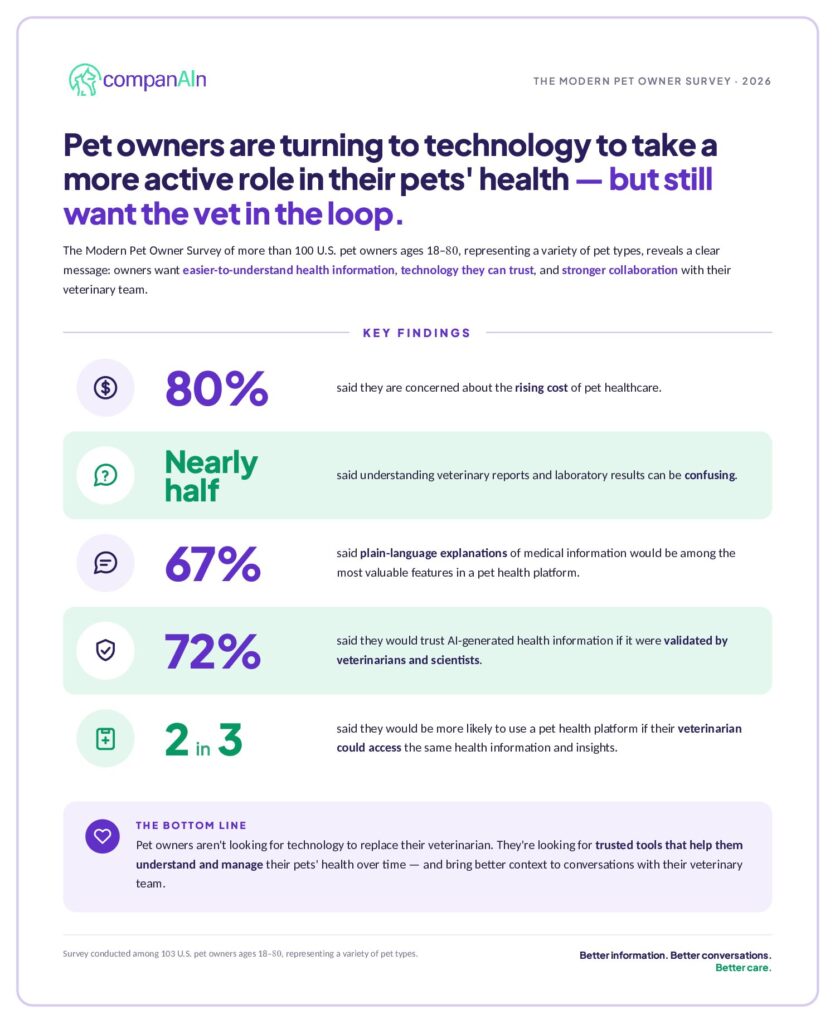

What can a dog urine test show? More than you’d think—kidney function, diabetes, infections, liver health, and metabolic disorders all leave traces in urine. A single sample reveals conditions hiding beneath the surface, often before symptoms appear.
The challenge isn’t just running the test. It’s understanding what dozens of markers mean when they interact. CompanAIn’s AI-powered platform analyzes lab results from veterinary records, organizing health data into dynamic timelines and flagging emerging patterns. From protein levels to glucose detection, our specialized agents help you and your veterinarian catch problems early and respond faster.
Understanding Urinalysis and Why It Matters
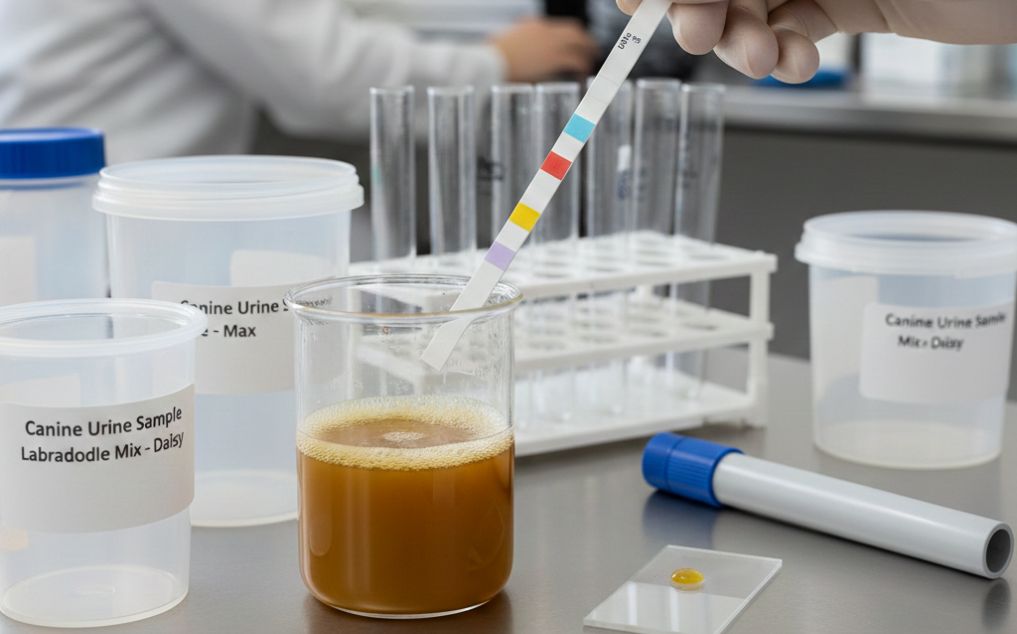
Urinalysis examines the physical and chemical properties of urine to evaluate kidney and urinary system health. The test also reveals issues in other organs, making it one of veterinary medicine’s most valuable diagnostic tools.
The American Animal Hospital Association recommends testing every six to twelve months for adult dogs and twice yearly for senior pets. The test is affordable, non-invasive, and provides critical baseline data that tracks changes over time.
Early detection of asymptomatic conditions makes urinalysis essential for preventive care. Kidney disease, diabetes, and urinary tract infections often develop silently, showing no obvious signs until they’ve progressed significantly. Regular testing catches these problems when they’re most treatable.
CompanAIn specializes in lab interpretation and health marker analysis, organizing test results into actionable insights that veterinarians can use immediately.
Protein Levels: Window Into Kidney Function
Proteinuria—protein in urine—signals potential kidney problems. Healthy dogs typically have protein-to-creatinine ratios below 0.5. Values above 1.0 indicate abnormal kidney function requiring immediate investigation.
The significance of proteinuria depends on urine concentration. Mild protein in concentrated urine may not concern veterinarians, but the same amount in dilute urine suggests serious kidney issues. Context matters when interpreting results.
Protein-to-creatinine ratio testing provides the gold standard measurement. This test quantifies exactly how much protein your dog is losing through urine, helping veterinarians determine whether kidney disease, infection, inflammation, or urinary tract trauma is causing the problem.
To understand how to interpret the full range of findings from a urine test, check out dog urine test results for a detailed guide on what each marker can indicate about your pet’s health.
Glucose Detection: Screening for Diabetes
Glucose should never appear in healthy dog urine. The kidneys normally reabsorb all glucose filtered through the glomerulus, keeping blood sugar where it belongs.
When glucose shows up in urine, diabetes mellitus is the most likely culprit. Dogs develop glucosuria when blood glucose exceeds the renal threshold of approximately 180 milligrams per deciliter. Large amounts of urinary glucose almost always indicate diabetes requiring veterinary evaluation.
Small amounts of glucose can also signal kidney disease affecting the proximal tubules. When reabsorption mechanisms fail, glucose spills into urine even with normal blood sugar levels. Either scenario demands follow-up testing to determine the underlying cause.
Ketones: Metabolic Warning Signs
Ketones appear when the body breaks down stored fat for energy instead of using glucose. This metabolic shift produces byproducts that overflow into urine.
Diabetes mellitus commonly causes ketone production, but prolonged fasting or starvation triggers the same response. Ketones in urine indicate your dog’s metabolism has switched to burning fat reserves, which isn’t sustainable long-term.
Finding ketones alongside glucose strongly suggests diabetic ketoacidosis, a serious condition requiring immediate veterinary intervention. The combination signals that diabetes has progressed beyond simple blood sugar elevation into dangerous metabolic territory.
Blood and Urinary Tract Health Markers
Blood in urine points to bleeding somewhere in the urinary system. Infections, inflammation, stones, trauma, or cancer can all cause hematuria.
Red blood cells indicate bladder wall or kidney damage. White blood cells suggest infection or inflammation. Nitrites reveal bacterial urinary tract infections, while abnormal pH levels create environments where bacteria thrive.
Healthy dog urine maintains pH between 6.5 and 7.0. Values outside this range allow bacteria to multiply and crystals to form. Alkaline urine combined with white blood cells and bacteria typically confirms urinary tract infection requiring antibiotic treatment.
Bilirubin: Liver Function Indicator
Bilirubin forms in the liver and normally exits through bile. Abnormal amounts in urine indicate liver disease or accelerated red blood cell destruction.
Small bilirubin amounts may appear in healthy male dogs without concern. However, consistent bilirubinuria warrants investigation for hemolysis or hepatic conditions affecting liver function.
Urobilinogen presence confirms the bile duct remains open, allowing bile flow from the gallbladder into the intestine. While a positive urobilinogen test doesn’t diagnose disease, it provides useful information about biliary system function.
Specific Gravity: Measuring Urine Concentration
Specific gravity reveals how well kidneys concentrate or dilute urine based on hydration needs. Healthy kidneys adjust urine concentration dynamically throughout the day.
Normal specific gravity typically exceeds 1.015 in healthy dogs. Values above 1.030 indicate concentrated urine, often seen with dehydration. Conversely, consistently dilute urine may signal kidney disease, metabolic disorders, or hormonal imbalances.
The relationship between specific gravity and other test results matters tremendously. Dilute urine in a dehydrated dog points to serious kidney problems, while concentrated urine with normal hydration suggests the kidneys are functioning properly.
Urine Appearance and Color Analysis
Normal dog urine ranges from pale yellow to light amber and appears clear to slightly cloudy. Color variations provide immediate clues about health status.
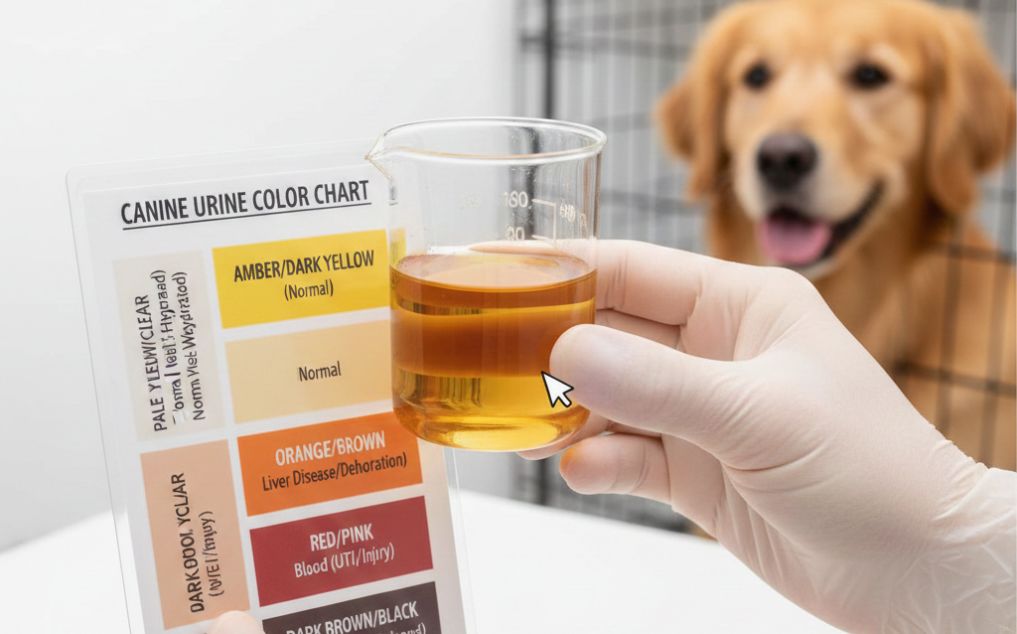
Dark yellow urine typically indicates dehydration. Your dog needs more water intake to dilute metabolic waste products. Orange-tinged urine may suggest liver problems or bilirubin elevation.
Red or bloody urine signals bleeding or developing urinary tract infections. Green or unusual colors indicate abnormal substances that shouldn’t appear in healthy urine. Turbidity—cloudiness—reveals suspended cells, crystals, or debris requiring microscopic examination.
Microscopic Sediment Examination
Urine sediment contains suspended components that settle during centrifugation. Laboratory technicians examine this material under microscopes to identify cellular and crystalline elements.
Red and white blood cells reveal inflammation or bleeding. Crystals indicate various conditions depending on type. Struvite crystals form in alkaline urine, while calcium oxalate develops in acidic conditions.
Bacteria and microorganisms point to infections. Renal casts—tube-shaped particles from kidney tubules—indicate significant kidney damage. Tissue cells and abnormal cells may suggest cancer, making sediment analysis crucial for comprehensive health assessment.
AI-Enhanced Urinalysis Interpretation
CompanAIn’s specialized AI agents transform how veterinarians interpret urinalysis results. Our platform processes multiple health markers simultaneously, providing context-aware insights that reveal patterns invisible to traditional analysis.
Domain-specific intelligence improves accuracy. Rather than evaluating each parameter in isolation, CompanAIn’s multi-agent system understands how markers interact. High protein combined with dilute urine carries different implications than the same protein level in concentrated samples.
The platform accelerates result interpretation while maintaining veterinary alignment. AI-powered early health alerts identify subtle changes indicating emerging health issues, enabling proactive intervention before conditions become severe. This comprehensive pattern recognition surpasses traditional analysis methods.
Collecting Quality Urine Samples
The collection method affects sample quality and accuracy. Three main techniques exist, each with specific advantages.
Free-catch voided samples work well for at-home collection. Collect midstream urine in sterile containers, avoiding the first and last portions. This method is easiest but risks contamination from external sources.
Catheterization provides sterile samples with less contamination than free-catch. Cystocentesis offers the most sterile collection by accessing the bladder directly through the abdominal wall.
Timing matters critically. Analyze samples within 30 to 60 minutes of collection for best accuracy. Refrigerate immediately if testing can’t happen right away. Delayed analysis allows bacteria to multiply and crystals to form, potentially creating false results.
When Your Dog Needs Urinalysis
Annual urinalysis benefits all adult dogs as preventive screening. Senior dogs over age eight should receive testing twice yearly to catch age-related conditions early.
Specific symptoms warrant immediate testing. Increased water intake, frequent urination, visible blood, changes in urine appearance, or unusual odors all signal potential problems. Suspected infections or metabolic diseases require prompt urinalysis.
Baseline testing before starting medications protects your dog by establishing normal values. Monitoring existing conditions with regular urinalysis helps veterinarians adjust treatments and track disease progression over time.
Supporting Your Dog's Health Through Smart Testing
Urinalysis provides remarkable diagnostic power in a simple, affordable test. Early detection prevents minor issues from becoming serious health crises while reducing treatment costs and improving outcomes.
CompanAIn enhances this diagnostic process with AI-powered analysis that creates comprehensive health profiles. Regular monitoring combined with intelligent interpretation gives veterinarians the insights they need for proactive care.
Schedule annual urinalysis with your veterinarian and consider AI-enhanced interpretation for deeper insights. Preventive care supported by smart technology helps your dog live a longer, healthier life. When you combine veterinary expertise with advanced analysis tools, every test result becomes more meaningful and actionable.
Frequently Asked Questions
How long does it take to get urinalysis results?
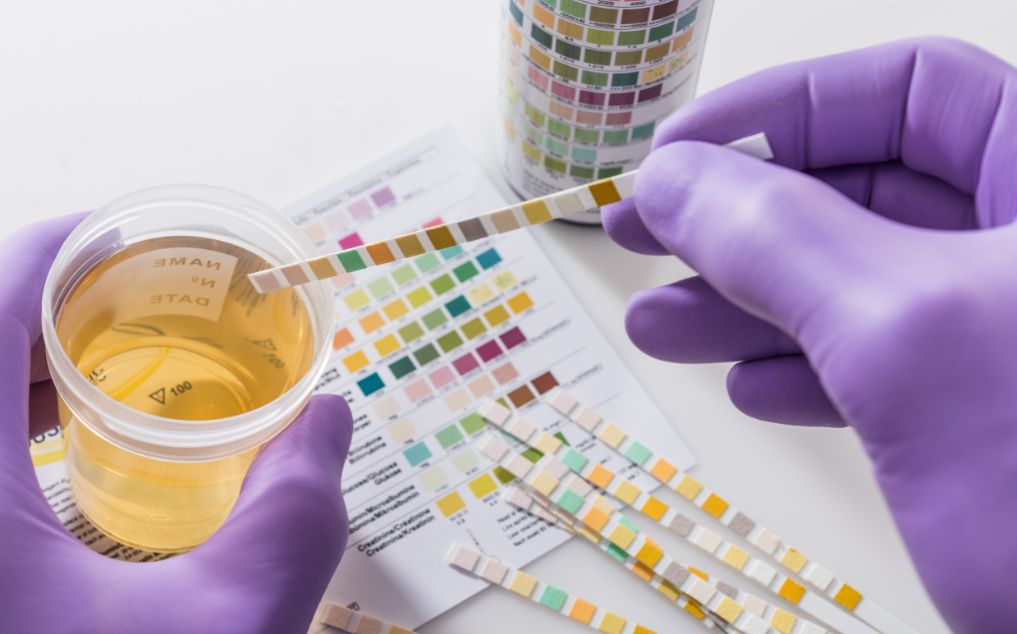
Laboratory analysis typically delivers results within 24 hours. At-home test strips provide immediate readings in approximately two minutes, though professional laboratory confirmation is necessary for abnormal findings.
Can I test my dog's urine at home?
At-home urine test strips are available and affordable. They measure parameters including glucose, ketones, protein, and bacteria indicators. However, they provide rough estimates and cannot replace microscopic examination or bacterial culture performed by veterinary laboratories.
What does high protein in dog urine mean?
High protein may indicate kidney disease, infection, inflammation, or urinary tract trauma. Values above 0.5 warrant protein-to-creatinine ratio testing. In concentrated urine, mild proteinuria may not concern veterinarians, but proteinuria in dilute urine signals potential kidney problems.
Can urine tests detect diabetes in dogs?
Urinalysis reliably detects diabetes. Glucose presence typically indicates diabetes mellitus or kidney disease. Large glucose amounts almost always suggest diabetes and warrant immediate veterinary investigation plus blood tests for confirmation.
What is a normal dog urine color?
Normal urine ranges from pale yellow to light amber and should be clear to slightly cloudy. Dark yellow suggests dehydration. Reddish, greenish, or unusual colors indicate abnormal substances requiring veterinary evaluation.
Does my dog need urinalysis if they seem healthy?
Regular urinalysis detects conditions before symptoms appear. Many urinary problems develop silently. Annual testing serves as preventive screening for kidney disease, urinary tract infections, diabetes, and metabolic conditions that show no obvious signs initially.
How does AI improve urinalysis interpretation?
AI analyzes patterns across multiple urine markers simultaneously, providing context-aware insights. CompanAIn’s AI agents specialize in lab interpretation, clinical triage, and long-term health analysis, enabling faster and more accurate results aligned with veterinary standards.
What if my dog's urinalysis shows abnormal results?
Abnormal results require follow-up testing. Your veterinarian may perform urine culture, blood work, imaging, or bacterial culture depending on specific abnormalities to confirm diagnosis and guide treatment.