
Bringing houseplants into a home with cats always raises the same question: will this greenery harm my pet? Are money trees safe for cats becomes a critical search query the moment that braided trunk catches your eye at the garden center. Your cat’s tendency to nibble, bat, and investigate every new addition makes plant safety a top priority.
The answer depends entirely on which “money tree” you’re actually considering. The true money tree—scientifically known as Pachira aquatica—poses minimal risk to cats. However, several toxic plants masquerade under similar names, creating dangerous confusion for pet owners. CompanAIn’s AI-powered health platform helps cat owners identify risks before they become emergencies, analyzing household hazards and flagging potential dangers through intelligent document review.
Understanding the Money Tree Name Confusion
Walk into any plant shop asking about “money trees” and you might leave with any of several species. This naming ambiguity creates genuine danger for cats.
The Safe One: Pachira Aquatica
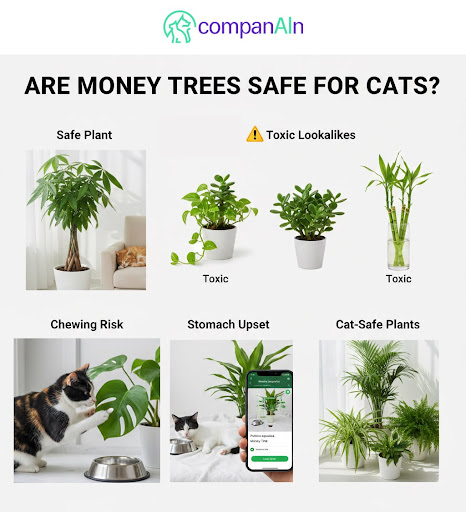
Pachira aquatica—often called the Malabar chestnut or Guiana chestnut—originates from Central and South American swamps. Its distinctive braided trunk and five-lobed leaves earned it the “money tree” nickname through feng shui associations with prosperity.
The ASPCA lists Pachira aquatica as non-toxic to cats, dogs, and horses. While this plant won’t poison your cat, ingesting leaves may trigger mild stomach upset, nausea, or loose stool. The plant contains no toxic compounds, but the fibrous leaves can irritate digestive systems not designed to process vegetation.
The Toxic Imposters
Several genuinely dangerous plants get lumped under “money plant” labels:
- Pothos (Epipremnum aureum): Contains insoluble calcium oxalate crystals causing oral irritation, excessive drooling, vomiting, and difficulty swallowing in cats.
- Jade Plant (Crassula ovata): Causes vomiting, depression, loss of coordination, and slowed heart rate in cats and dogs.
- Lucky Bamboo (Dracaena sanderiana): Produces vomiting, weakness, excessive drooling, dilated pupils, and increased heart rate in cats.
Garden centers don’t always use consistent botanical names, and online sellers frequently mislabel plants.
Why Cats Target Houseplants
Cats chew plants for surprisingly practical reasons. Young leaves offer texture stimulation for teething kittens. Bored cats treat dangling foliage like interactive toys. Some felines genuinely crave plant fiber to aid digestion or relieve stomach discomfort.
Indoor cats deprived of outdoor exploration often redirect curiosity toward anything green and growing. Pachira aquatica presents particular temptation with its glossy, dangling leaves positioned perfectly at cat height. The leaves flutter with air movement, triggering prey drive.
Even non-toxic plants pose mechanical risks. Sharp leaf edges can cut mouths or throats. Swallowed leaves may cause intestinal blockages. Fertilizers and pesticides absorbed into plant tissue introduce chemical hazards separate from natural plant toxins.
How AI Plant Toxicity Scanners Work
Technology now bridges the gap between plant identification and pet safety faster than any veterinary database search.
Image Recognition Technology
Modern AI plant identification apps analyze photos through machine learning algorithms trained on millions of botanical images. You photograph an unknown plant from multiple angles, and the AI matches distinctive features against reference databases.
Apps like PetGuard AI, ToxiPets, and Pet Protect Plan combine plant identification with toxicity databases drawn from ASPCA Animal Poison Control, Pet Poison Helpline, and veterinary toxicology resources. The scan returns both botanical name and immediate safety assessment for cats and dogs.
Real-Time Risk Assessment
Advanced systems don’t just identify plants—they flag specific risks. A scan might reveal: “Pothos (Epipremnum aureum) – TOXIC TO CATS. Contains calcium oxalate crystals. Causes oral irritation, vomiting, difficulty swallowing.”
Some platforms like LetPlant include “Pet Safety Checker” features proactively scanning your entire plant collection, then suggesting non-toxic alternatives for anything flagged as hazardous.
Integration With Pet Health Records
CompanAIn takes plant safety a step further by incorporating environmental hazards into your cat’s complete health profile. When you upload vet notes mentioning unexplained vomiting or mouth irritation, the AI can cross-reference these symptoms against known plant toxicities, potentially identifying overlooked household dangers.
The Living Memory technology tracks your cat’s health patterns over time. If symptoms align with plant exposure timing, the system alerts you to investigate potential botanical causes before they escalate into emergency vet visits.
Protecting Cats From Houseplants
Even confirmed safe plants benefit from thoughtful placement strategies.
Physical Barriers
Elevation eliminates access for most cats. Hanging planters, tall shelving units, and wall-mounted displays keep greenery out of paw reach. Room segregation works when you can dedicate plant-free zones for cat access. Physical deterrents like decorative cloches or wire plant cages allow display while preventing nibbling.
Behavioral Deterrents
Cats dislike citrus scents. Placing orange or lemon peels near plants can discourage investigation, though this requires regular replacement as scents fade. Texture deterrents like aluminum foil laid around pot bases make approaching plants unpleasant.
Environmental Enrichment Alternatives
Providing cat-appropriate alternatives redirects plant obsession. Cat grass (typically wheat, oat, or rye grass) offers safe vegetation for nibbling urges. Interactive toys provide the movement and engagement that makes dangling leaves attractive. Scheduled play sessions burn excess energy that might otherwise channel into plant destruction.
Verified Safe Houseplants for Cat Households
When Pachira aquatica doesn’t suit your space, numerous attractive alternatives pose zero toxicity risk.
Large Statement Plants
- Areca palms (Dypsis lutescens) deliver tropical elegance with complete cat safety
- Parlor palms (Chamaedorea elegans) thrive in low light
- Boston ferns (Nephrolepis exaltata) create lush, cascading greenery
Flowering Options
- Orchids offer stunning blooms lasting weeks or months
- African violets (Saintpaulia) produce vibrant flowers year-round
Trailing and Hanging Plants
- Spider plants (Chlorophytum comosum) remain completely safe for cats
- Burro’s tail (Sedum morganianum) needs minimal water and tolerates bright light
What To Do If Your Cat Ingests Plants
Even safe plants can cause problems in large quantities. Toxic plants require immediate action. Just as some plants pose hidden risks, exposure to chemicals like glyphosate can also threaten feline health—learn more about symptoms of glyphosate poisoning in cats to keep your pet safe at home.
Immediate Response Steps
Remove any remaining plant material from your cat’s mouth. Check for visible leaf fragments stuck in teeth or throat. Don’t attempt to induce vomiting unless specifically instructed by a veterinarian.
Contact the ASPCA Animal Poison Control Center at (888) 426-4435 or the Pet Poison Helpline at (855) 764-7661. These services operate 24/7 and provide immediate guidance based on the specific plant involved.
Symptoms Requiring Emergency Care
Excessive drooling or foaming at the mouth indicates oral irritation. Repeated vomiting or diarrhea can cause dangerous dehydration. Difficulty breathing, swallowing, or signs of throat swelling constitute immediate emergencies. Lethargy, loss of coordination, tremors, or seizures signal serious toxicity.
How CompanAIn Supports Post-Exposure Monitoring
After a plant ingestion incident, CompanAIn helps track your cat’s recovery by organizing vet visit notes, lab results, and symptom progression in one accessible timeline. The AI flags any concerning patterns—repeated vomiting episodes, appetite changes, behavioral shifts—that might indicate complications developing.
AI-Powered Home Safety Audits
Proactive protection beats reactive emergency response every time.
Comprehensive Household Scanning
Modern AI toxicity apps enable room-by-room safety audits. Photograph every plant in your home, letting the identification system flag hazards. This takes minutes but prevents years of potential accidents.
Continuous Monitoring
Pet safety isn’t one-and-done. New plants arrive as gifts, seasonal decorations introduce temporary risks, and outdoor plants drift indoors on shoes or clothing. Setting calendar reminders to re-audit plant safety quarterly catches new additions before cats discover them.
Integration With Veterinary Records
CompanAIn bridges the gap between plant safety awareness and complete pet health management. When you identify household hazards, that information integrates into your cat’s health profile alongside vaccination records, lab results, and behavioral notes.
Building a Cat-Safe Plant Collection
Creating a thriving indoor garden alongside cats requires planning but delivers enormous rewards.
Start with verified safe species. Cross-reference multiple authoritative sources—ASPCA Toxic and Non-Toxic Plants database, Pet Poison Helpline, VCA Animal Hospitals plant toxicity resources—before introducing any plant.
Photograph plants at purchase for reference. Store botanical names and care instructions in CompanAIn’s document system alongside your cat’s health records. This creates easily searchable archives when you need to verify safety months later.
Monitor your cat’s behavior around new plants during initial weeks. Some cats completely ignore vegetation while others obsessively investigate everything green. Knowing your cat’s tendencies helps predict risk levels.
The Future of AI Pet Safety Technology
Plant identification represents just one application of AI protecting household pets.
Emerging technologies combine visual recognition with real-time monitoring. Future systems might use security cameras to alert owners when cats approach dangerous plants, or wearable sensors could detect elevated heart rates indicating toxin exposure before visible symptoms appear.
Machine learning algorithms will increasingly predict individual cat sensitivities based on breed, age, and health history. Integration across pet care platforms continues expanding—imagine plant safety databases automatically updating CompanAIn health records when you photograph new houseplants.
Why Choose CompanAIn for Comprehensive Pet Safety
Plant toxicity represents one piece of the larger pet health puzzle. CompanAIn delivers holistic protection by connecting every aspect of your cat’s wellbeing.
Unified Health Intelligence
Rather than juggling separate apps for plant identification, vet appointment tracking, medication reminders, and symptom monitoring, CompanAIn consolidates everything into one intelligent platform. The multi-agent AI system processes information across categories, identifying connections human observation might miss.
Predictive Risk Assessment
Living Memory technology learns from your cat’s complete health journey. The system recognizes that recurring vomiting coincides with spring blooms, or mouth irritation appeared after you rearranged furniture near houseplants. These insights enable preventive action before patterns become problems.
Veterinary Collaboration
CompanAIn generates clinician-grade health reports veterinarians can immediately understand and act upon. When plant exposure occurs, your vet receives organized documentation of the incident, symptoms, timeline, and relevant health history—everything needed for rapid treatment decisions.
Moving Forward With Plant and Cat Coexistence
True money trees (Pachira aquatica) offer relatively low risk compared to truly toxic alternatives. However, “relatively safe” still requires vigilance, proper placement, and monitoring for individual cat sensitivities.
Pet health platforms like CompanAIn transform guesswork into informed decision-making. These tools don’t replace veterinary care or common sense, but they provide crucial information gaps that traditional pet ownership couldn’t fill.
Whether you’re considering your first houseplant or managing a botanical collection, technology now offers unprecedented support for keeping cats safe. The investment in proper identification, monitoring, and health tracking delivers returns measured in years of stress-free coexistence between your green companions and your feline family members.
Ready to protect your cat with AI-powered health intelligence? Explore how CompanAIn integrates plant safety with complete health monitoring to keep your pets thriving.
Frequently Asked Questions
Are money trees safe for cats to be around?
True money trees (Pachira aquatica) are non-toxic and generally safe for cats to be near. However, ingesting leaves may cause mild stomach upset. Other plants called “money plants” like pothos or jade plants are genuinely toxic and should be kept away from cats entirely.
How can I tell if my cat ate part of a toxic plant?
Watch for excessive drooling, pawing at the mouth, vomiting, diarrhea, loss of appetite, lethargy, or difficulty swallowing. Symptoms typically appear within 2-4 hours of ingestion. Contact your veterinarian or animal poison control immediately if you suspect plant consumption.
What's the difference between money trees and money plants?
“Money tree” typically refers to Pachira aquatica, which is non-toxic. “Money plant” might mean pothos (toxic), jade plant (toxic), or lucky bamboo (toxic). Always verify the scientific botanical name before assuming any plant is safe for cats.
Do AI plant identification apps actually work reliably?
Leading AI plant scanners achieve 80-90% accuracy on common houseplants when provided with clear photos showing distinctive features. Apps like PetGuard AI, ToxiPets, and LetPlant combine identification with toxicity databases, offering reliable safety assessments for pet owners.
Can I keep any toxic plants if I'm careful about placement?
Physical separation—keeping toxic plants in rooms cats cannot access—provides the only truly safe approach. High shelves and hanging planters may work temporarily, but athletic cats can reach surprising heights. The safest choice is eliminating toxic plants entirely from homes with cats.
How does CompanAIn help with plant safety beyond identification?
CompanAIn integrates plant exposure incidents into your cat’s complete health timeline. If symptoms arise, the AI cross-references them against known toxicities and flags potential botanical causes veterinarians might otherwise overlook. This comprehensive approach catches patterns that separate safety tools miss.