

Keeping tabs on your dog’s wellbeing sounds straightforward until life gets busy. Whether you’re managing a senior dog’s arthritis medication schedule, tracking a puppy’s vaccination timeline, or watching for subtle changes after a recent diagnosis, health details slip through the cracks faster than you’d expect. That’s where a dog health monitoring app becomes essential—giving you a centralized place to log symptoms, schedule reminders, and spot patterns before small concerns turn into emergency vet visits.
CompanAIn takes this concept further by combining intelligent tracking with veterinary-grade analytics. From organizing medical records and lab results to highlighting trends your vet needs to see, it’s built to help both pet owners and professionals make sharper decisions. According to the American Pet Products Association, 71% of U.S. households now own a pet, and with total pet industry spending reaching $157 billion in 2025, pet owners are increasingly seeking tools that support proactive health management. With multi-agent AI technology and seamless clinic integration, you’re not just logging information—you’re building a complete health story that supports better care at every stage.
Why Traditional Record-Keeping Falls Short
Most dog owners start with good intentions. Maybe you snap photos of medication labels, save vet invoices in a folder, or jot down symptoms in your phone’s notes app. But when your veterinarian asks about the timeline of your dog’s limping or when that cough started, you’re left scrolling through weeks of fragmented information.
A dedicated dog health monitoring app solves this by giving you one organized system. Everything from weight changes and appetite shifts to medication doses and behavioral quirks lives in a single accessible place. According to VCA Animal Hospitals, monitoring devices objectively track small changes over weeks or months, providing valuable data for evaluating and treating your pet’s condition. No more guessing whether you gave the morning pill or wondering if this lethargy is new or something you noticed last month too.
What Makes a Health Monitoring App Actually Useful
Not all tracking tools deliver the same value. The best apps balance simplicity with depth—easy enough for daily use but powerful enough to support real medical decisions.
Symptom Logging and Timeline Tracking
Recording observations means nothing if you can’t see patterns over time. Quality apps let you note symptoms as they happen, then display them chronologically so you and your vet can identify what’s worsening, improving, or staying consistent. Research from veterinary informatics studies shows that continuous data collection provides more informed health decisions for both owners and veterinarians.
Medication and Appointment Reminders
Missing doses or skipping follow-ups creates gaps in treatment that can set recovery back weeks. Automated alerts keep you accountable without relying on memory alone, especially when managing multiple medications with different schedules.
Weight and Vital Sign Monitoring
Gradual weight loss or gain often signals underlying issues long before obvious symptoms appear. Apps that graph these metrics over months help catch problems early, when intervention is easiest and most effective.
Veterinary Integration and Data Sharing
The most valuable apps don’t trap your data. They let you share reports directly with your vet’s office, ensuring everyone works from the same accurate information. IDEXX research confirms that wearable technology empowers pet owners to adopt a proactive health mindset and increases acceptance of preventive care recommendations. This collaboration eliminates miscommunication and speeds up treatment decisions.
How CompanAIn Elevates Standard Health Tracking
CompanAIn distinguishes itself by merging everyday tracking with professional-grade analytics. While basic apps help you remember when your dog last ate, CompanAIn’s AI examines patterns across appointments, medications, and behavioral notes to surface insights you might miss on your own.
Intelligent Pattern Recognition
The platform analyzes entries over time, flagging unusual trends before they become obvious. Maybe your dog’s appetite has been dropping by small increments for three weeks, or energy levels have declined so gradually you didn’t notice. CompanAIn’s algorithms detect these subtle shifts and alert you to discuss them with your veterinarian. This proactive approach catches problems during early stages when treatment is simpler and outcomes are better.
Veterinary-Grade Organization
CompanAIn structures information the way clinics actually use it. Lab results aren’t just stored—they’re organized by date and test type, making it easy for your vet to compare kidney values from six months ago with today’s bloodwork. Medication histories show exactly what’s been tried, at what doses, and for how long. This professional organization saves time during appointments and reduces the risk of overlooking relevant medical history.
Seamless Clinic Collaboration
Rather than forwarding screenshots or printed documents, CompanAIn lets you share structured data directly with your veterinary team. Your vet accesses complete records, reviews trends, and adds their own notes—all within the same system you’re using at home. This integration eliminates information silos and ensures continuity of care.
Practical Applications Across Different Needs
Managing Chronic Conditions
Dogs with diabetes, heart disease, or kidney problems require consistent monitoring and frequent medication adjustments. A dog health monitoring app helps you track glucose levels, medication responses, and symptom changes, giving your vet the detailed data needed to fine-tune treatment plans. CompanAIn excels here by organizing complex medical timelines and highlighting correlations between interventions and outcomes. Studies on pet health monitoring confirm that continuous, long-term monitoring provides more informative data than occasional clinical assessments.
Supporting Post-Surgical Recovery
After procedures, veterinarians need to know whether healing is progressing normally or if complications are developing. Daily logs of incision appearance, pain levels, activity tolerance, and appetite changes create a clear recovery picture. Apps with photo storage let you document wound healing visually, providing your vet with evidence if you’re concerned about infection or slow progress.
Tracking Behavioral and Anxiety Issues
Behavioral changes can indicate medical problems or psychological stress. Logging when anxiety episodes occur, their triggers, and their duration helps identify patterns that inform treatment approaches. For dogs on behavioral medications, tracking mood and response data shows whether prescriptions are effective at current doses or need adjustment. The American Veterinary Medical Association emphasizes the importance of monitoring pet behavior as part of comprehensive care.
Monitoring Senior Dog Health
Older dogs face multiple age-related changes—arthritis, cognitive decline, organ function deterioration. Tracking mobility, confusion episodes, bathroom habits, and appetite provides early warning of conditions that benefit from intervention. CompanAIn’s trend analysis proves especially valuable for senior dogs, where gradual declines might otherwise go unnoticed until they’ve progressed significantly.
Choosing the Right App for Your Situation
Consider Your Primary Goals
Are you mainly tracking medications and appointments? A simpler app might suffice. Managing a serious diagnosis with multiple specialists? You’ll want comprehensive features and strong veterinary integration like CompanAIn offers. Match the tool to your actual needs rather than choosing based on feature lists you’ll never use.
Evaluate Ease of Use
Complex interfaces defeat the purpose. If logging a symptom takes five taps and three menus, you’ll stop doing it. Look for intuitive designs that make daily entries quick and painless. CompanAIn balances depth with usability—powerful analytics run behind the scenes while the interface stays straightforward for everyday logging.
Check Veterinary Integration Options
Apps that don’t connect with your vet’s system create extra work. You’ll end up printing reports or copying information manually, which defeats the purpose of efficiency. Prioritize platforms your veterinary clinic can access directly. Cornell University’s College of Veterinary Medicine has researched the importance of integrated veterinary data systems for improving patient outcomes.
Review Data Security and Privacy
Your dog’s medical records contain sensitive information. Ensure any app you choose uses encryption, follows privacy standards, and clearly explains how your data is stored and who can access it. CompanAIn maintains veterinary-grade security protocols, treating your pet’s information with the same protection standards medical professionals use for human patient data.
Why Pet Owners and Vets Both Benefit
When owners track health data systematically, veterinarians can make better-informed decisions during appointments. Instead of relying on recalled symptoms or estimated timelines, they work with precise records that reveal patterns and progressions.
This collaboration improves diagnostic accuracy. A vet reviewing three months of documented limping episodes can distinguish between arthritis patterns and neurological issues more confidently than when working from verbal descriptions alone.
For owners, apps reduce anxiety around whether you’re catching problems soon enough or giving medications correctly. You have concrete evidence of what you’re doing and clear data to share when concerns arise.
Getting Started With Health Monitoring
Begin by gathering existing medical records—vaccination certificates, past lab results, surgical reports. Upload these documents to establish a baseline history before starting daily tracking.
Identify which metrics matter most for your dog’s current health status. A diabetic dog needs blood glucose logs. A dog with seizures requires detailed episode tracking. A healthy puppy might just need vaccination schedules and weight tracking.
Start with consistent but simple entries. Logging three key observations daily beats attempting comprehensive tracking that you abandon after a week. As the habit builds, you can expand what you monitor. Review collected data weekly, looking for trends yourself, and use appointment time to discuss patterns with your vet.
The Role of AI in Modern Pet Health Management
Artificial intelligence adds a layer of analysis that manual tracking can’t match. While you might notice your dog seems tired lately, AI can quantify that “lately” means activity dropped 23% over six weeks and correlates with medication timing changes.
CompanAIn’s AI examines relationships across all logged data—medications, symptoms, lab values, behavioral notes—identifying connections that inform treatment adjustments. This analytical power supports earlier interventions and more precise care strategies. The technology doesn’t replace veterinary expertise; it enhances it by providing data analysis that would take hours to perform manually.
Making Health Monitoring a Sustainable Habit
Consistency matters more than perfection. Missing a day’s entry won’t derail the system, but abandoning tracking entirely eliminates its benefits. Build logging into existing routines—maybe you enter data during your morning coffee or right after evening feeding.
Keep the app accessible. If it’s buried three folders deep on your phone, you won’t use it. Put it on your home screen where you’ll see it multiple times daily. Involve other household members who care for your dog so everyone contributes observations, creating a more complete picture.
When Health Monitoring Makes the Biggest Difference
Certain situations amplify the value of systematic tracking. Dogs with multiple conditions benefit enormously—coordinating several medications, tracking various symptoms, managing specialist appointments all becomes manageable with organized digital support.
After major diagnoses, apps provide structure during overwhelming times. When your dog is diagnosed with cancer or heart disease, tracking helps you feel active and informed rather than helpless.
Even with healthy dogs, tracking establishes baselines. If illness strikes later, you’ll have months or years of normal values for comparison, making it easier to identify what’s changed and how significantly.
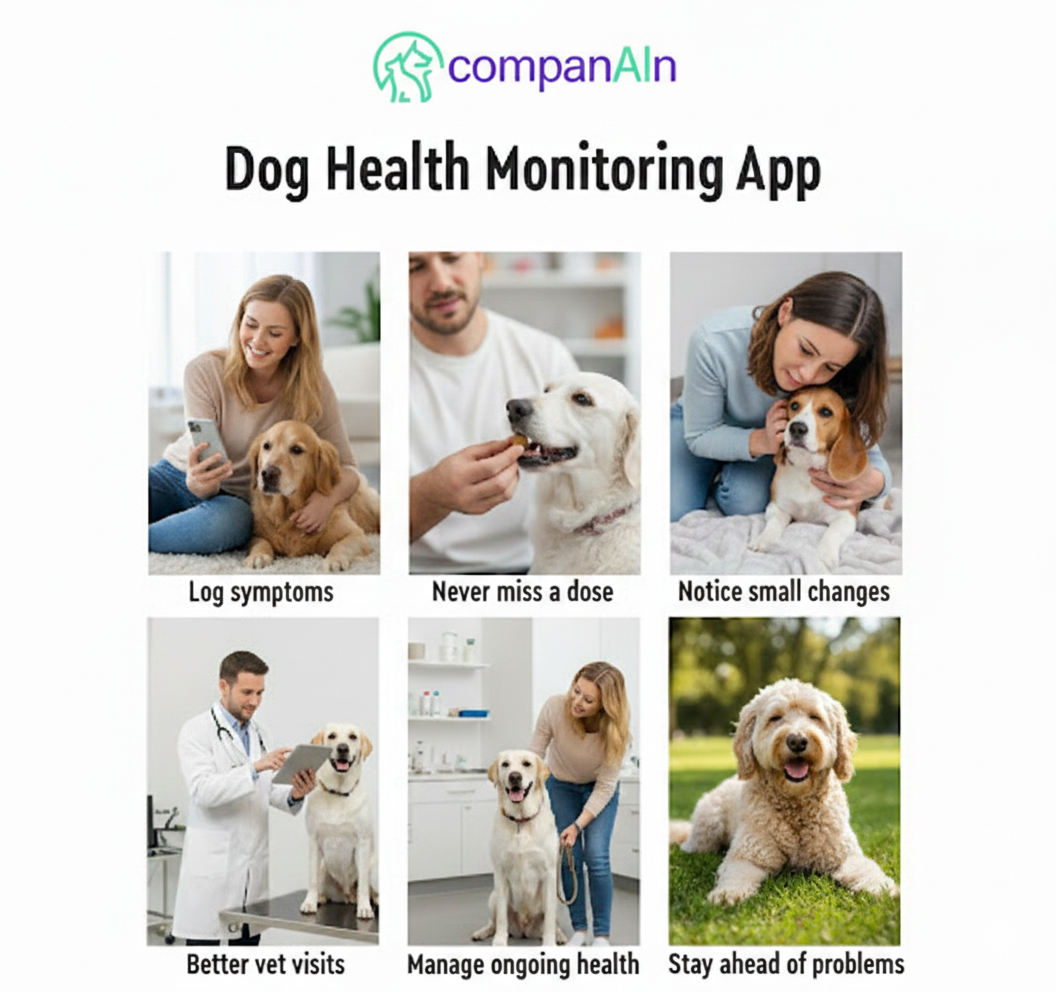
Your Partner in Proactive Pet Healthcare
The right dog health monitoring app should feel like a helpful assistant, not another obligation. Whether you’re navigating a chronic illness, recovering from surgery, or simply want to stay ahead of wellness concerns, the right tool makes responsible pet ownership more manageable.
CompanAIn combines intuitive daily tracking with professional-grade analytics, creating a system that serves both pet owners and veterinary professionals. From catching subtle health changes early to organizing complex medical histories, it’s designed around how people actually care for dogs. When you’re ready to move beyond scattered notes and missed patterns, explore how intelligent health monitoring with CompanAIn can bring clarity and confidence to your pet care routine.
Frequently Asked Questions
What features should I prioritize in a dog health monitoring app?
Focus on symptom logging with timeline views, medication reminders, and the ability to share data directly with your veterinary clinic. Apps with trend analysis and pattern recognition provide additional value by highlighting changes you might miss.
Can a health monitoring app replace regular vet visits?
No. Apps support veterinary care by providing organized data and early problem detection, but they don’t replace professional medical evaluation. Think of them as tools that make vet appointments more productive and help you know when appointments are needed.
How much time does daily health tracking require?
Most owners spend 2-3 minutes per day on basic logging—medication confirmation, quick symptom notes, activity observations. During health crises or with complex conditions, you might spend 5-10 minutes capturing detailed information.
Does CompanAIn work with all veterinary clinics?
CompanAIn integrates with veterinary practices to enable seamless data sharing and collaboration. Contact CompanAIn to discuss compatibility with your specific clinic and how the platform can support your veterinary team’s workflow.
What if my dog is currently healthy—should I still use a health monitoring app?
Yes. Tracking while healthy establishes baseline patterns that become invaluable if illness develops later. You’ll have months or years of normal data for comparison, making it easier to identify concerning changes.
How does AI improve pet health tracking compared to manual logging?
AI analyzes patterns across all health data to identify subtle trends that humans might miss. While you manually log information, AI detects correlations between medications, symptoms, and behaviors, alerting you to potential issues before they become obvious.