

Your dog started coughing during last night’s walk—a harsh, hacking sound followed by gagging like something’s lodged in the throat. This morning it happened again, multiple times. Now you’re watching closely, trying to determine if that cough means a trip to the emergency vet or just monitoring at home. The gagging makes it seem urgent, but your dog’s eating normally and acting fine otherwise.
Dry coughing with gagging points toward several distinct problems. Kennel cough produces that characteristic honking sound, but so does a piece of stick wedged in the soft palate. A collapsed trachea creates similar symptoms, as does early heart disease. Understanding what separates temporary irritation from progressive respiratory conditions determines whether you’re dealing with something that resolves in days or requires immediate intervention.
CompanAIn’s agentic AI platform tracks respiratory episodes alongside your dog’s complete medical history, identifying patterns that single observations miss. When coughing frequency increases or correlates with specific activities, the system’s specialized agents flag these trends for veterinary discussion.
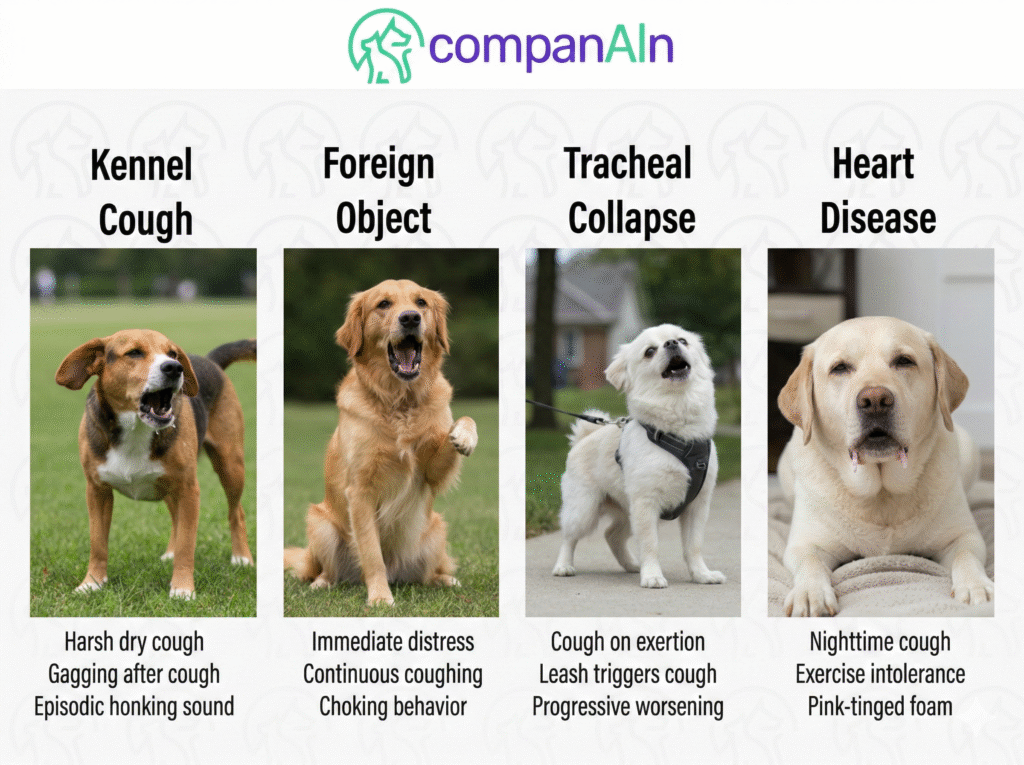
Kennel Cough: The Most Common Culprit
Infectious tracheobronchitis—commonly called kennel cough—ranks as the leading cause of dry cough with gagging in dogs. According to Cornell University’s veterinary resources, this highly contagious respiratory infection spreads rapidly in environments where dogs congregate.
The characteristic sound resembles a goose honk followed by gagging or retching. Many owners describe it as their dog trying to clear something stuck in the throat. That gagging represents the body’s attempt to expel mucus and irritation from inflamed airways.
What Causes Kennel Cough
Multiple pathogens trigger this condition including Bordetella bronchiseptica bacteria, canine parainfluenza virus, canine adenovirus type 2, and canine distemper virus. Most cases involve coinfection with multiple organisms, creating more severe symptoms than either would produce alone.
Incubation takes 3-10 days after exposure. Dogs become contagious before symptoms appear, explaining rapid spread through boarding facilities, dog parks, grooming salons, and training classes. The cough typically emerges suddenly—dogs seem perfectly healthy one day, then wake up coughing the next morning.
Red flags suggesting complications:
- Thick yellow or green nasal discharge
- Lethargy or decreased appetite
- Fever above 103°F
- Labored breathing or increased respiratory rate
- Cough worsening after 5-7 days
Uncomplicated kennel cough resolves within 1-3 weeks. Puppies, senior dogs, and those with compromised immune systems face a higher risk for pneumonia development.
Foreign Objects: When Something Actually Is Stuck
The gagging that accompanies coughing often makes owners suspect a foreign object. Sticks, grass awns, bones, and toys can lodge in the throat, larynx, or trachea.
True airway foreign body obstruction creates life-threatening emergency symptoms. According to BluePearl Pet Hospital veterinary specialists, dogs and cats can inhale objects like balls that lodge in the back of the throat or treats that enter the airway rather than the esophagus. Complete obstruction causes frantic or gasping attempts to breathe with an open mouth, absence of normal air movement, and potential panic behavior.
Foreign body obstruction: Sudden onset during or immediately after eating/playing, continuous distress without relief, difficulty breathing rather than just coughing, and potential pawing at the mouth.
Kennel cough or respiratory conditions: Episodic coughing with normal periods between, triggered by excitement or exercise, no breathing difficulty between episodes, and normal eating and drinking.
Grass awns—barbed plant seeds—create unique problems. These migrate through tissues, initially causing intermittent coughing that worsens over days as the awn burrows deeper. Dogs with sudden-onset coughing after running through tall grass warrant immediate veterinary examination.
Tracheal Collapse: The Progressive Condition
Tracheal collapse affects small breed dogs disproportionately. Yorkshire Terriers, Pomeranians, Chihuahuas, Toy Poodles, and Shih Tzus face elevated risk due to genetic weakening of tracheal cartilage rings.
The trachea maintains its cylindrical shape through C-shaped cartilage rings. When these rings weaken, the trachea flattens during breathing, creating turbulent airflow that triggers coughing.
Characteristic Presentation
The cough sounds nearly identical to kennel cough. However, tracheal collapse shows specific triggering patterns:
- Worsens with excitement or exertion
- Intensifies when pulling on leash
- Occurs during eating or drinking
- Happens more frequently in hot, humid weather
- Progressively worsens over months to years
Tracheal collapse is progressive. Mild cases involve occasional coughing during excitement. Severe cases create constant respiratory distress requiring surgical intervention. Early diagnosis enables management strategies that slow progression—weight control, harness use instead of collars, cough suppressants, and anti-inflammatory medications.
CompanAIn’s agentic technology excels at tracking progressive conditions like tracheal collapse. When you log coughing episodes, the platform’s specialized agents identify specific progression patterns—coughing that initially occurred only during leash walks now happens during normal activity, or 30-second episodes six months ago now persist for two minutes. These quantified changes reveal disease advancement that daily observation misses, enabling veterinary intervention before collapse severity requires surgical stenting.
Heart Disease: The Unexpected Respiratory Trigger
Chronic heart disease causes coughing that many owners mistake for respiratory infection. According to veterinary cardiology research, mitral valve disease—the most common cardiac condition in dogs—produces a dry cough as an early symptom.
As the heart weakens, blood backs up into pulmonary vessels, creating congestion in the lungs. This triggers a cough reflex, particularly when dogs lie down and fluid redistributes.
Heart cough occurs primarily at night or when resting, has a soft moist quality rather than being harsh and dry, may produce white or pink-tinged foam, and is accompanied by exercise intolerance. Small breed dogs and certain large breeds—Cavalier King Charles Spaniels, Dachshunds, Doberman Pinschers, Boxers—face higher risk.
Distinguishing heart cough from kennel cough requires veterinary examination. Auscultation reveals heart murmurs, and chest X-rays show cardiac enlargement plus pulmonary changes.
When Chronic Cough Requires Longitudinal Monitoring
Dogs diagnosed with chronic conditions—tracheal collapse, chronic bronchitis, or heart disease—require ongoing assessment to determine whether management strategies are working or disease is progressing despite treatment.
CompanAIn transforms this monitoring from subjective owner impressions to quantified data veterinarians can act on. When your veterinarian prescribes cough suppressants for tracheal collapse, the platform tracks whether medication actually reduces coughing frequency or simply makes episodes less distressing without changing their occurrence. When cardiac medications are adjusted for heart disease, the system correlates dosage changes with coughing patterns, revealing whether current treatment adequately controls symptoms or progression continues.
This objective tracking catches treatment failures early—before dogs develop pneumonia from untreated kennel cough, before tracheal collapse advances to requiring surgical intervention, or before heart disease progresses to congestive heart failure.
Chronic Bronchitis and Inflammatory Airway Disease
Some dogs develop persistent inflammation in airways, creating chronic coughing without infection. This condition produces a dry cough with occasional gagging as dogs attempt to clear mucus.
Common triggering factors include:
Environmental irritants like smoke and cleaning chemicals, chronic allergen exposure, recurring respiratory infections, or unknown causes trigger persistent inflammation. The cough persists for months despite treatment for infection. Dogs often cough more intensely in the morning after mucus accumulates overnight.
Diagnosis and treatment approach:
Diagnosis requires ruling out other causes through chest X-rays, bronchoscopy, and airway sample analysis. Treatment focuses on reducing inflammation with corticosteroids and controlling coughing with suppressants.
Using AI Pattern Recognition for Respiratory Health
Respiratory symptoms challenge pet owners because subtle progression over weeks appears normal when observed daily. A cough that started with three episodes weekly might now occur eight times daily, but without systematic tracking, the increase goes unnoticed.
CompanAIn’s Living Health Timeline consolidates coughing episodes logged over weeks and months. The platform’s agentic AI system analyzes frequency trends through specialized agents, identifying whether coughing remains stable, improves, or worsens. When patterns emerge—coughing intensifies during specific seasons or increases despite medication—the system generates alerts prompting veterinary follow-up.
Home Assessment Before Veterinary Visits
When coughing starts, systematic documentation helps veterinarians diagnose faster.
Track these details:
- Exact onset date and circumstances
- Cough frequency (episodes per day)
- Sound quality (harsh honk, soft, moist, gagging)
- Triggering factors (excitement, exercise, eating, lying down)
- Other symptoms (nasal discharge, fever, lethargy)
- Recent exposures (boarding, grooming, dog parks)
Perform simple assessments: Gently press the trachea just below the throat. If this immediately triggers coughing, airway inflammation is present. Count breaths per minute at rest—normal is 10-30 for adult dogs. Rates consistently above 35-40 suggest respiratory compromise. Check gum color—healthy gums appear pink and moist, while blue or gray discoloration indicates oxygen deprivation requiring emergency care.
Treatment Varies Dramatically by Cause
Effective treatment depends entirely on accurate diagnosis, as interventions for one condition may worsen another.
Kennel cough typically requires only supportive care—rest, humidity from steam showers, and cough suppressants if sleep is disrupted. Antibiotics help when bacterial infection is severe or dogs are at high risk for complications.
Foreign objects require removal, sometimes under sedation or general anesthesia if deeply lodged. Grass awns demand immediate attention as they migrate deeper into tissues over time.
Tracheal collapse needs weight management, environmental modifications (harnesses instead of collars), medications including cough suppressants and anti-inflammatories, and, in severe cases, surgical stents.
Heart disease treatment targets the underlying cardiac condition with ACE inhibitors, diuretics to reduce fluid accumulation, and cardiac medications to improve heart function.
Chronic bronchitis requires long-term management with anti-inflammatory drugs, bronchodilators, and strict avoidance of environmental irritants.
When Emergency Care Cannot Wait
Seek immediate veterinary attention if your dog cannot catch breath between coughing episodes, gums turn blue or gray, the dog collapses or seems disoriented, breathing becomes rapid and labored even at rest, or there’s a visible object in the mouth or throat.
Prevention Strategies Based on Risk Factors
Vaccination against Bordetella and parainfluenza reduces kennel cough severity. Dogs frequenting boarding facilities, daycare, training classes, or dog parks benefit from vaccination every 6-12 months.
Avoiding neck collars in favor of harnesses protects dogs prone to tracheal collapse. Weight management proves critical for dogs with tracheal issues or heart disease. Air quality control helps dogs with chronic bronchitis—eliminate smoking near dogs, avoid harsh cleaning chemicals, and consider air purifiers.
Making Better Decisions With Complete Context
When your dog coughs and gags, the critical question isn’t just “What’s causing this?” but “Is this getting worse?” Without systematic tracking, progression from manageable symptoms to emergency situations goes unnoticed until intervention options narrow.
CompanAIn’s agentic AI system processes uploaded videos, logged episodes, and medication responses to build comprehensive respiratory profiles that single veterinary visits cannot provide. The platform’s specialized agents identify whether today’s coughing represents a normal recovery trajectory or a concerning progression requiring earlier intervention—catching problems when management strategies are most effective and least invasive.
Whether monitoring kennel cough recovery, tracking tracheal collapse progression, or managing chronic heart disease, CompanAIn’s Living Health Timeline transforms daily observations into actionable veterinary intelligence. Contact CompanAIn today to learn how intelligent monitoring protects respiratory health before emergency situations develop.
Frequently Asked Questions
How can I tell if my dog has kennel cough or something stuck in their throat?
Kennel cough produces episodic dry coughing with gagging that comes and goes, triggered by excitement or exercise, while dogs maintain normal appetite and energy between episodes. True foreign body obstruction causes continuous, frantic coughing with obvious distress, excessive drooling, and no relief between episodes. According to VCA Animal Hospitals, foreign objects create immediate severe symptoms during or right after eating/playing, whereas kennel cough develops gradually over days following exposure to other dogs.
Why does my dog gag after coughing?
Gagging after coughing occurs when airway irritation triggers both cough and gag reflexes simultaneously. The sensation mimics something stuck in the throat even when airways are clear. Conditions causing this include kennel cough (inflamed trachea and bronchi), tracheal collapse (weakened windpipe cartilage), and chronic bronchitis (persistent airway inflammation). The gagging represents the body’s attempt to clear mucus or relieve the irritation triggering the cough.
How long should I wait before taking my dog to the vet for coughing?
Schedule veterinary evaluation if coughing persists beyond 3-5 days, worsens in frequency or severity, or accompanies other symptoms like nasal discharge, lethargy, or decreased appetite. Seek same-day care if coughing is constant and prevents rest, if your dog has difficulty breathing between episodes, or if gums appear blue or gray. Puppies, senior dogs, and those with pre-existing conditions should be evaluated within 24-48 hours of cough onset regardless of severity.
Can kennel cough go away on its own?
Yes. Uncomplicated kennel cough typically resolves within 1-3 weeks without treatment in healthy adult dogs. According to Cornell University veterinarians, supportive care—rest, humidity, and avoiding neck collars—helps most dogs recover naturally. However, veterinary evaluation remains important to rule out complications, confirm diagnosis, and determine whether antibiotics or cough suppressants would improve comfort and speed recovery.
How does CompanAIn help track respiratory symptoms?
CompanAIn’s Living Health Timeline consolidates logged coughing episodes, uploaded videos, and veterinary records to track respiratory patterns over time.
The platform’s agentic AI system deploys specialized agents that analyze whether cough frequency increases, remains stable, or improves, identifying trends invisible to daily observation. For dogs with chronic conditions like tracheal collapse or heart disease, the system correlates symptom changes with medication adjustments and activity levels, generating alerts when patterns suggest progression warranting veterinary consultation.