

Your cat stopped eating yesterday. This morning she’s hiding under the bed, something she never does. You’ve searched “cat not eating” and found everything from hairballs to kidney failure, leaving you more confused than before. Traditional symptom checkers offer generic lists without context—they can’t tell you whether your specific cat with her specific history needs emergency care tonight or monitoring until morning. Most online tools are designed and created for both cat and dog owners to help identify and understand pet health issues, but often lack the depth needed for nuanced feline care.
The challenge with feline health assessment goes beyond identifying symptoms. Cats hide illness instinctively, making early detection difficult. By the time behavioral changes become obvious, conditions often require immediate intervention. The type of pet—cat or dog—also influences how symptoms present and how urgency should be assessed. Generic symptom databases can’t evaluate whether decreased appetite represents minor stress or life-threatening organ failure—they lack the contextual intelligence to interpret symptoms within your cat’s unique health timeline.
CompanAIn’s platform uses agentic AI technology to approach cat symptom analysis differently. Rather than matching symptoms to static databases, specialized agents analyze current symptoms against your cat’s complete medical history, identifying patterns and progressions that determine actual urgency. While the tool helps pet owners identify symptoms and understand urgency, it does not provide diagnosis or treatment advice. The website serves as a trusted resource for pet owners seeking reliable pet health information.
Why Traditional Symptom Checkers Fail Cats
Generic online symptom checkers present alphabetized lists matching keywords to possible conditions. Search “cat vomiting,” and you’ll find dozens of potential causes—from eating too fast (benign) to pancreatitis (serious)—without guidance on which applies to your situation. Typically, these tools prompt users to select the type of pet (such as cat or dog) and choose from a list of common symptoms to begin the process.
Three critical limitations:
- Lack of individual context. Static databases cannot evaluate whether today’s vomiting represents your cat’s third episode this month or the first in three years. That distinction determines whether the situation constitutes an emerging pattern requiring investigation or an isolated incident.
- No pattern recognition across time. Cats developing chronic kidney disease show gradually increasing water consumption over months. A single observation of increased drinking seems unremarkable, but the trend reveals serious disease. Traditional checkers evaluate symptoms in isolation, missing progressive changes.
- Inability to weigh symptom combinations. Decreased appetite alone might warrant monitoring. Decreased appetite plus lethargy plus hiding suggests more serious illness. But decreased appetite plus increased thirst plus weight loss points specifically toward diabetes or hyperthyroidism. Generic tools cannot interpret these combinations within individual contexts. Additionally, these tools do not help users decide on the level of urgency, when to contact a veterinarian, or provide diagnosis or treatment advice.
How Agentic AI Transforms Symptom Analysis
Agentic AI differs fundamentally from simple keyword matching. According to Vetnio’s veterinary platform development, multi-agent systems employ specialized components working collaboratively—each agent handles specific analytical tasks like booking, reminders, or clinical information. The CompanAIn platform is designed and created to help pet owners book appointments and determine when veterinary attention is necessary, ensuring timely and personalized care for their pets.
Building a single agent that specializes in multiple tasks proves difficult, but multi-agent architectures allow each component to maintain its own context and tools while an orchestrator routes requests appropriately.
The Multi-Agent Architecture
CompanAIn deploys three specialized agents working in coordination:
- Data Aggregator Agent consolidates information from multiple sources—veterinary records uploaded as PDFs or photos, symptom observations you log daily, medication schedules, diet changes, and behavioral notes. This component structures unstructured data, creating organized health timelines from scattered documentation.
- Health Analyzer Agent compares current symptoms against your cat’s historical baseline and patterns from millions of similar cases. When you report “my cat seems lethargic,” this agent evaluates whether lethargy represents new behavior or matches previous minor illnesses that resolved without intervention.
- Recommendation Engine Agent translates analytical findings into specific triage guidance—does this situation require emergency care within hours, same-day veterinary consultation, or home monitoring with follow-up if symptoms persist? This agent helps pet owners monitor symptoms and decide if their pet requires immediate attention, ensuring timely action when necessary.
Licensed veterinarians review critical findings and low-confidence assessments, ensuring insights align with clinical expertise. This hybrid approach combines computational pattern recognition with professional medical judgment.
Common Cat Symptoms and What They Actually Mean
Changes in Eating Behavior
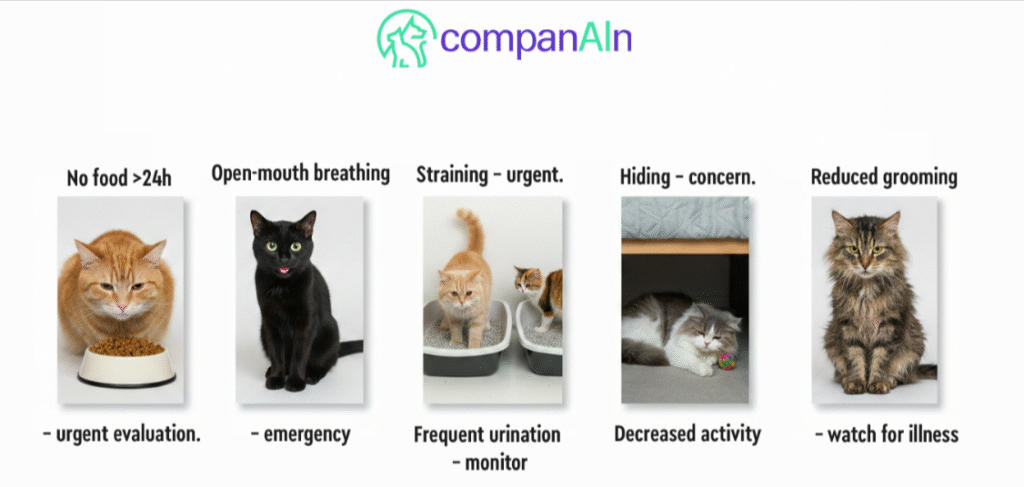
Complete food refusal in cats triggers concern faster than in dogs. While a dog may sometimes skip a meal without immediate alarm, cat owners should be especially concerned if their cat refuses food for more than 24 hours. According to Cornell University College of Veterinary Medicine, cats refusing food for 24-48 hours risk hepatic lipidosis—a life-threatening liver condition where the body metabolizes fat incorrectly during fasting.
Triage factor: Whether your cat refuses all food or shows decreased interest matters enormously. Complete refusal for 24+ hours warrants same-day evaluation. Reduced intake while still eating small amounts allows 48-hour monitoring if no other symptoms appear.
Increased appetite with weight loss suggests hyperthyroidism in middle-aged to senior cats, or diabetes mellitus. Both require diagnosis and treatment but don’t constitute emergencies unless additional symptoms develop.
Respiratory Symptoms
Open-mouth breathing in cats always constitutes an emergency. Unlike dogs who pant normally, cats only breathe through open mouths when experiencing severe respiratory distress, cardiovascular crisis, or extreme stress. notes this symptom requires veterinary care regardless of other factors.
An increased respiratory rate exceeding 40 breaths per minute at rest indicates respiratory compromise, heart disease, or pain. Count breaths for 15 seconds and multiply by 4 while your cat rests calmly.
Coughing in cats is never normal. Unlike dogs who cough from various benign causes, feline coughing typically indicates asthma, heart disease, parasites, or respiratory infection requiring evaluation. Sneezing is another common symptom of upper respiratory infections in cats and, when present with other signs, should prompt further investigation using a feline symptoms checker.
Urination Changes
Straining in the litter box differentiates into two scenarios with vastly different urgency:
- Male cats straining to urinate with little to no urine production face life-threatening urethral obstruction—a medical emergency requiring treatment within hours
- Female cats or males producing urine while straining likely have cystitis or urinary tract infection—uncomfortable but not immediately life-threatening
Increased urination and water consumption suggest diabetes mellitus, hyperthyroidism, or chronic kidney disease. These conditions require diagnosis and management but typically allow scheduled veterinary appointments unless cats show additional symptoms like vomiting or extreme lethargy.
Behavioral Changes
Hiding represents significant illness in cats. Felines instinctively conceal vulnerability—when cats abandon normal routines to hide continuously, they’re signaling substantial discomfort or distress.
Decreased grooming creates unkempt coats with matting. Cats stop grooming when painful (arthritis, dental disease) or systemically ill. According to Cornell University College of Veterinary Medicine, sick cats may stop grooming, resulting in dull, patchy coats—a behavioral change that signals illness before other symptoms become obvious.
Increased vocalization in older cats frequently indicates pain (arthritis), cognitive dysfunction, or hyperthyroidism. Nighttime yowling in senior cats particularly suggests these conditions.
Vomiting and Diarrhea
Acute vomiting (multiple episodes within 24 hours) requires differentiation:
- Cats vomiting undigested food shortly after eating might simply eat too quickly
- Cats vomiting partially digested food or bile, especially with lethargy or hiding, need same-day evaluation
Chronic vomiting (occurring weekly or more frequently over months) suggests inflammatory bowel disease, food sensitivities, or other conditions requiring diagnosis even when cats seem otherwise healthy between episodes.
Diarrhea in cats warrants faster intervention than in dogs. Cats dehydrate rapidly, and diarrhea often indicates parasites, infections, or inflammatory bowel disease requiring treatment.
What Pattern Recognition Detects That Owners Miss
Subtle Progressive Changes
Weight changes of 0.5-1 pound seem negligible but represent 5-10% body weight loss in average cats—clinically significant. Daily observation makes gradual changes invisible. CompanAIn’s agentic technology tracks weight documentation over months, flagging trends that suggest hyperthyroidism, diabetes, cancer, or chronic kidney disease before obvious symptoms develop.
Symptom Clustering
When you log “didn’t finish breakfast” one day, “slept more than usual” another day, and “hid under bed” a third day, these seem like unrelated minor observations. The platform recognizes the cluster—decreased appetite plus increased sleep plus hiding behavior appearing within a 72-hour window—as a pattern suggesting illness requiring evaluation rather than three unrelated minor incidents.
Seasonal or Environmental Patterns
Does your cat develop respiratory symptoms every spring? After using certain cleaning products? Following stressful events like boarding? The system correlates symptom occurrences with environmental variables documented in your records, identifying triggers that explain recurring problems and guide prevention strategies.
Using CompanAIn's Cat Symptom Checker
Document Current Symptoms
When symptoms appear, log specific observations rather than interpretations:
- “Didn’t eat breakfast, left food untouched” (specific) vs “decreased appetite” (interpretation)
- “Found under the bed at 9am and 2pm when normally sleeps on couch” (specific) vs “hiding” (interpretation)
- “Made 4 trips to litter box in 2 hours, small amounts each time” (specific) vs “frequent urination” (interpretation)
Specific documentation allows more accurate analysis.
Upload Relevant History
The more complete your cat’s health timeline, the better the system can contextualize current symptoms. Upload veterinary records from previous visits, lab results, medication lists, and past symptom episodes with outcomes (whether veterinary care was needed and what diagnosis resulted).
Receive Triage Guidance
The platform generates urgency assessments based on symptom severity, progression velocity, and historical context:
Emergency (immediate care):
- Open-mouth breathing
- Inability to urinate in male cats
- Seizures or collapse
- Severe trauma
Urgent (same-day evaluation):
- Complete food refusal 24+ hours
- Lethargy with hiding
- Acute vomiting with other symptoms
- Difficulty breathing
Scheduled (2-5 days):
- Gradual appetite decrease
- Increased water consumption
- Changes in grooming habits
- Mild diarrhea without lethargy
Monitoring (observe at home):
- Single vomiting episode with normal behavior
- Minor decrease in activity
- Slight reduction in food intake with continued eating
Generate Vet-Ready Summaries
When veterinary consultation becomes necessary, CompanAIn creates comprehensive summaries consolidating symptom timelines, medication history, diet information, and relevant past medical events. This documentation eliminates reliance on memory during appointments, ensuring veterinarians receive complete information for accurate diagnosis.
Limitations and When Human Judgment Overrides Technology
Pattern recognition excels at data analysis but cannot replace veterinary examination. The system provides triage guidance based on available information—but you know your cat better than any algorithm.
Trust your instincts when:
- Your cat’s behavior seems “off” in ways you cannot specifically describe
- Symptoms feel more serious than the assessment suggests
- New symptoms develop rapidly
- You’re worried enough that seeking care would provide peace of mind
The platform serves as an intelligent decision-support tool, not a substitute for professional veterinary care or your own judgment as a cat owner. Always consult a veterinarian if you are unsure about your cat’s symptoms, and do not hesitate to seek veterinary attention when your pet’s condition appears urgent or concerning.
Prevention Through Continuous Monitoring
The most powerful application extends beyond symptom triage to preventive health monitoring. By tracking baseline behaviors—normal food intake, typical activity levels, regular grooming patterns, standard litter box habits—the system detects subtle deviations that indicate developing problems before they become obvious.
When CompanAIn’s Living Memory technology maintains years of health context, it identifies trends like gradually increasing water consumption (early kidney disease), slowly decreasing activity (arthritis pain), or progressive weight loss (hyperthyroidism, cancer) that daily observation misses entirely.
This shift from reactive symptom checking to proactive health monitoring represents the fundamental advantage of agentic AI in veterinary care—catching problems when treatment remains most effective rather than waiting for crisis intervention.
Cat owners ready to move beyond generic symptom searches can explore how CompanAIn’s agentic technology transforms feline health management. To support your cat’s long-term wellness, continue monitoring their health and continue adding new observations to the system for the most accurate and timely insights.
Frequently Asked Questions
What symptoms require immediate emergency care for cats?
Open-mouth breathing, inability to urinate (especially in male cats), seizures, collapse, severe trauma, or bleeding require immediate emergency veterinary care. According to VCA Animal Hospitals, cats breathing through open mouths are experiencing severe respiratory or cardiovascular distress. Male cats straining without urine production face life-threatening urethral obstruction requiring treatment within hours to prevent kidney damage and death.
How accurate are AI cat symptom checkers?
AI symptom checkers provide triage guidance—determining urgency levels—but cannot diagnose conditions. Accuracy depends on the quality and completeness of information provided. CompanAIn’s agentic technology analyzes symptoms within your cat’s complete health history rather than matching keywords to generic databases, improving contextual relevance. However, only veterinarians can diagnose disease through physical examination and diagnostic testing.
Can I use a cat symptom checker instead of going to the vet?
No. Symptom checkers help determine when to seek veterinary care, not whether veterinary care is necessary. The technology identifies concerning patterns and symptom combinations suggesting urgency, but cats often hide illness until conditions become severe. When in doubt, veterinary evaluation provides definitive answers that symptom analysis cannot. CompanAIn’s platform helps you make informed decisions about timing—emergency versus scheduled appointments—not whether professional care is needed.
What makes CompanAIn different from free symptom checkers?
Free symptom checkers match keywords to static databases, listing possible conditions without context. CompanAIn’s agentic AI analyzes symptoms against your cat’s complete medical history, medication schedules, and documented baseline behaviors. The multi-agent system detects patterns across time—recognizing whether decreased appetite represents the third episode this month (concerning pattern) or the first instance in years (likely minor). This personalized analysis provides cat-specific guidance rather than generic possibility lists.
How does the system know what's normal for my cat?
As you document observations over weeks and months—food intake, activity levels, litter box habits, grooming patterns—the platform establishes baseline ranges for your individual cat. The system analyzes this historical data to determine what’s normal specifically for your cat rather than relying on generalized feline norms. This personalized baseline allows detection of deviations that indicate developing problems unique to your cat’s health patterns.