
Midnight vomiting. Sudden limping. Decreased appetite lasting three days. You’re typing symptoms into search engines, scanning alphabetized lists of possibilities, and ending up more anxious than informed. Generic symptom checkers present hundreds of conditions without context—they can’t tell whether your 12-year-old Labrador’s limping represents arthritis requiring pain management or an acute injury demanding emergency evaluation.
Traditional symptom checkers match keywords to databases without understanding your dog’s individual history, breed predispositions, or symptom patterns. They generate anxiety through information overload while providing little actionable guidance.
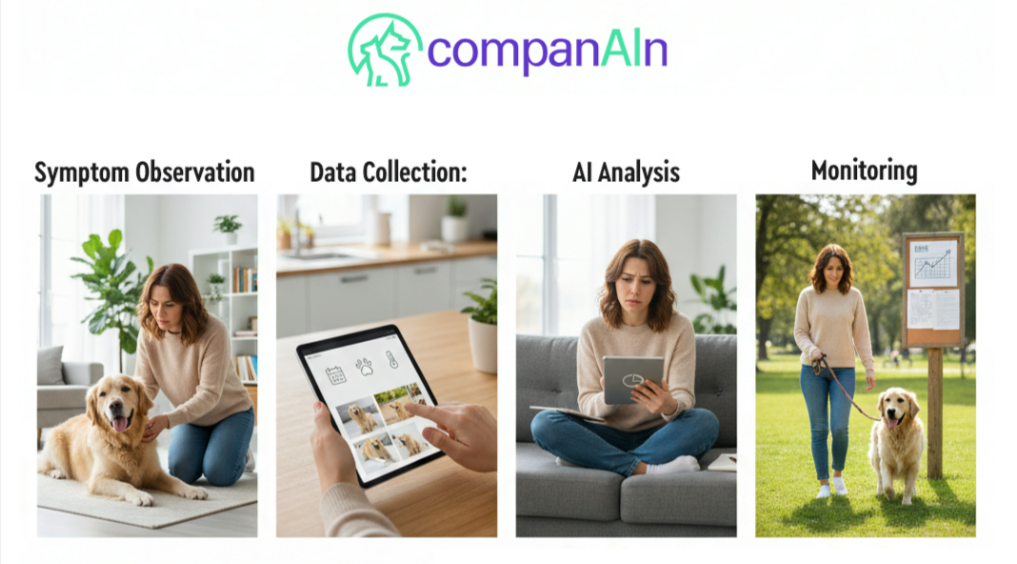
Agentic AI technology works differently. Specialized AI agents collaborate to analyze symptoms within your dog’s complete health context, determining whether you’re facing an emergency, a manageable chronic condition, or something requiring scheduled consultation. CompanAIn transforms scattered observations into intelligent triage guidance through its Living Memory technology and multi-agent system.
Why Traditional Symptom Checkers Fail Dogs
Search “dog vomiting,” and you’ll find everything from eating too fast (benign) to bloat (potentially life-threatening). Symptom databases present these possibilities without weighing likelihood based on your specific situation.
Critical limitations of keyword-based checkers:
- No individual context. Static databases can’t evaluate whether today’s vomiting represents your dog’s first episode in three years or the third this month. That distinction determines whether this constitutes an emerging pattern or is just an isolated incident.
- Missing pattern recognition. Dogs developing chronic kidney disease show gradually increasing water consumption over months. According to VCA Animal Hospitals, one of the earliest clinical signs of kidney failure is increased water consumption and urination—but a single observation seems unremarkable. The trend reveals serious disease. Traditional checkers evaluate symptoms in isolation without longitudinal tracking.
- Inability to assess urgency. Is limping an emergency, or can it wait until morning? According to Cornell University’s veterinary lameness specialists, young dogs with sudden limping are more likely to have suffered injury, while older dogs developing gradual lameness probably have degenerative joint disease—but generic tools can’t weigh factors like pain severity, ability to bear weight, or whether symptoms appeared suddenly versus gradually.
How Agentic AI Transforms Symptom Analysis
Research in veterinary informatics demonstrates that multi-agent AI systems employ specialized components handling distinct analytical tasks. Each agent processes specific information types, collaborating to generate comprehensive assessments single-algorithm approaches cannot achieve.
Agentic AI architecture mirrors how actual veterinary teams function:
- The Data Aggregator Agent consolidates information from veterinary records, daily symptom logs, medication schedules, diet changes, and behavioral observations. This agent structures unstructured data—transforming photos of vet notes, handwritten logs, and scattered observations into organized timelines.
- The Health Analyzer Agent compares current symptoms against your dog’s historical baseline and patterns from large reference datasets. When you report lethargy, the system evaluates whether it represents new behavior or matches previous minor illnesses that resolved without intervention.
- The Recommendation Engine Agent translates analytical findings into specific triage guidance: emergency care within hours, same-day veterinary consultation, scheduled appointment within days, or home monitoring with follow-up if symptoms persist.
Veterinarians review critical findings and ambiguous assessments, ensuring AI insights align with clinical expertise. This hybrid approach combines computational pattern recognition with professional medical judgment—enhancing veterinary care rather than replacing it.
Common Symptoms and What Context Reveals
Vomiting
A single episode with normal behavior otherwise often resolves without intervention. Multiple episodes within 24 hours warrant same-day evaluation. Chronic vomiting occurring weekly over months suggests conditions like inflammatory bowel disease requiring diagnosis.
- Context changes everything: A dog vomiting once after eating grass differs dramatically from a dog vomiting bile three times overnight with lethargy. CompanAIn’s agentic AI weighs these contextual factors—frequency, content, accompanying symptoms, and historical patterns—determining actual urgency.
Limping and Lameness
Cornell veterinary orthopedics research shows that sudden-onset severe limping with inability to bear weight suggests acute injury—torn ligament, fracture, or joint trauma—requiring immediate evaluation. Gradual-onset mild limping worsening over weeks can indicate degenerative conditions like arthritis, making a scheduled appointment appropriate.
Age matters significantly. Young dogs limping suddenly likely suffered injury, while senior dogs developing gradual lameness probably have osteoarthritis or other age-related joint disease. CompanAIn tracks your dog’s activity patterns over time, flagging when normal movement changes in ways that suggest emerging joint problems before obvious limping develops.
Changes in Appetite or Thirst
Complete food refusal lasting 24+ hours in adult dogs (12+ hours in puppies) warrants same-day evaluation regardless of other symptoms. Gradual appetite decrease over weeks suggests chronic conditions.
Increased water consumption paired with increased urination indicates diabetes, kidney disease, or hormonal conditions. VCA Animal Hospitals explains that failing kidneys cannot make concentrated urine, forcing dogs to drink excessively to process the body’s waste chemicals. When documented over time, pattern recognition can track whether water intake increased suddenly (suggesting acute kidney injury) or gradually over months (indicating chronic kidney disease with different intervention timing).
Respiratory Symptoms
Labored breathing with pale or blue gums constitutes an emergency. Chronic coughing developing over weeks requires evaluation but typically allows scheduled appointments. VCA Animal Hospitals notes that distinguishing between tracheal collapse, heart disease, and infectious respiratory disease requires veterinary assessment—but urgency depends on symptom severity and progression rate, precisely the contextual analysis where agentic AI excels.
What Pattern Recognition Detects That Owners Miss
Subtle Progressive Changes
Weight loss of 2-3 pounds seems negligible when observed daily but represents 5-10% body weight loss in medium dogs—clinically significant. Daily observation makes gradual changes invisible.
Agentic AI tracks documented weight measurements over months, flagging trends suggesting hyperthyroidism, cancer, diabetes, or other systemic diseases before obvious symptoms develop. This early detection enables intervention when treatment remains most effective—preventing crisis rather than managing established disease.
Symptom Clustering
When you log “left some breakfast” one day, “slept more than usual” another day, and “seemed quieter during walk” a third day, these appear as unrelated minor observations. Pattern recognition identifies the cluster—decreased appetite plus increased sleep plus reduced activity within 72 hours—as suggesting illness rather than three independent minor incidents.
CompanAIn’s Living Memory technology maintains this context across weeks and months, identifying correlations that wouldn’t be obvious to owners documenting individual observations.
Environmental and Seasonal Patterns
Does your dog develop diarrhea every spring? After boarding? Following specific activities? Agentic AI systems correlate symptom occurrences with environmental variables, identifying triggers that explain recurring problems and guide prevention strategies.
Using AI-Powered Symptom Analysis
Document Specific Observations
Log concrete details rather than interpretations:
- “Didn’t finish breakfast, left half the bowl” (specific) vs “decreased appetite” (interpretation)
- “Favored right front leg, took short steps, sat down twice during walk” (specific) vs “limping” (interpretation)
- “Vomited yellow liquid with foam at 3am and 6am” (specific) vs “vomited twice” (interpretation)
Specific documentation enables more accurate analysis. CompanAIn processes these observations, building the comprehensive health picture needed for intelligent triage.
Provide Complete History
The more comprehensive your dog’s health timeline, the more accurate the assessment. Upload veterinary records from previous visits, lab results, medication lists, and past symptom episodes with outcomes.
CompanAIn’s Smart Upload feature accepts PDFs, PNGs, and JPG files, parsing and interpreting medical documents regardless of format—transforming static records into continuously analyzed health data.
Receive Tiered Triage Guidance
AI-generated urgency assessments incorporate symptom severity, progression velocity, and historical context:
Emergency (immediate): Difficulty breathing, inability to stand, seizures, bloated abdomen, pale gums, collapse
Urgent (same-day): Repeated vomiting with lethargy, sudden severe lameness, eye injury, suspected toxin ingestion
Scheduled (2-5 days): Mild limping, gradual appetite decrease, ear infection symptoms, minor skin irritation
Monitoring (home observation): Single soft stool with normal behavior, mild decrease in activity, minor scratching
Generate Veterinary Summaries
When consultation becomes necessary, AI-compiled summaries consolidate symptom timelines, medication history, diet information, and relevant medical events. This documentation ensures veterinarians receive complete information for accurate diagnosis without relying on memory during appointments.
Limitations and Human Judgment
Technology excels at pattern recognition and data analysis but cannot replace physical examination or your intuition as a dog owner.
Trust your instincts when:
- Your dog’s behavior seems “off” in ways you can’t specifically describe
- Symptoms feel more serious than assessments suggest
- Rapid symptom changes occur
- Seeking care would provide peace of mind
Agentic AI serves as intelligent decision support, not as a substitute for veterinary care or owner judgment. The technology enhances professional care by organizing information and identifying patterns, enabling better-informed decisions by both pet owners and veterinarians.
Prevention Through Continuous Health Monitoring
The most powerful application extends beyond symptom triage to preventive monitoring. By tracking baseline behaviors—normal food intake, typical activity levels, regular elimination patterns—systems detect subtle deviations indicating developing problems before they become obvious.
When years of health context inform analysis through Living Memory technology, gradual trends like slowly decreasing activity (arthritis pain), progressive weight loss (cancer, metabolic disease), or increasing water consumption (kidney disease, diabetes) get identified while treatment options remain most effective.
This shift from reactive symptom checking to proactive health monitoring represents the fundamental advantage—catching problems when intervention prevents crisis rather than managing established disease.
CompanAIn transforms how pet owners and veterinarians collaborate, bridging the gap between daily observations and clinical expertise. When you’re ready to move beyond generic search results to intelligent, personalized health monitoring, explore how CompanAIn’s platform creates a continuously evolving health roadmap for your dog. Contact CompanAIn to learn how agentic AI can provide the clarity and confidence you need when your dog’s health concerns arise.
Frequently Asked Questions
What makes AI symptom checkers different from Google searches?
Google returns keyword-matched articles without analyzing your dog’s specific situation. Agentic AI evaluates symptoms within your dog’s complete health history, breed predispositions, age, and documented baseline behaviors. This contextual analysis determines whether symptoms warrant emergency care or home monitoring rather than presenting generic possibility lists requiring you to guess which applies to your situation.
Can AI symptom checkers diagnose my dog's condition?
No. AI provides triage guidance—determining urgency—but cannot diagnose conditions. Only veterinarians diagnose disease through physical examination, diagnostic testing, and clinical expertise. The technology identifies concerning patterns and symptom combinations, suggesting when professional evaluation becomes necessary rather than replacing veterinary care.
How does the system learn my dog's normal behavior?
As you document observations over weeks and months—food intake, activity levels, elimination habits—the platform establishes baseline ranges specific to your individual dog. This personalized baseline enables detection of deviations that indicate developing problems unique to your dog’s patterns rather than relying on generalized norms that may not apply.
What happens if symptoms change after I receive triage guidance?
Re-evaluate with updated information. If new symptoms develop, existing symptoms worsen, or your concern level increases, reassess urgency. The system provides guidance based on information available at that moment—symptom evolution requires updated analysis. Always prioritize your judgment if worried enough to seek veterinary care regardless of initial assessments.
Does this work for cats and other pets?
While principles of pattern recognition and contextual analysis apply across species, symptom interpretation differs significantly between dogs, cats, and other pets. Cats hide illness differently than dogs, showing distinct symptom patterns requiring species-specific analytical approaches. Effective systems must be trained on species-specific data to provide accurate triage guidance for that particular animal type.