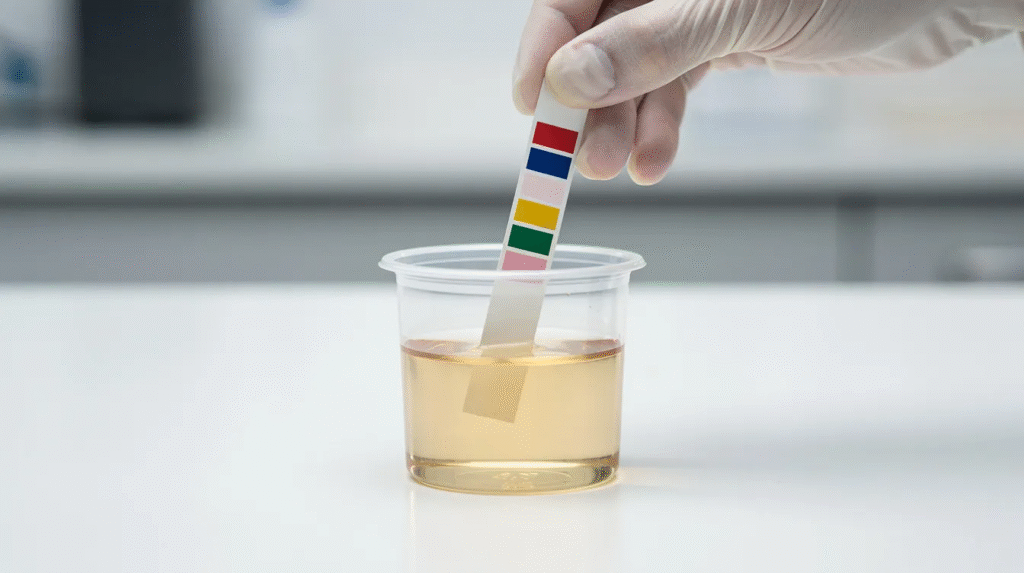

Your dog’s annual wellness exam showed creatinine at 1.4 mg/dL—technically within normal range. Last year it was 1.1. The year before, 0.9. Your veterinarian noted the values but didn’t flag concerns since each result fell within reference ranges. Eighteen months later, your dog is diagnosed with stage 3 chronic kidney disease, raising questions about how gradual but consistent increases over three years went unnoticed while each value remained within reference ranges.
Traditional preventive pet care relies on annual snapshots that miss the gradual trends revealing developing disease. Single data points can’t distinguish between normal variation and concerning trajectories—a creatinine value of 1.4 looks fine until you see it rose from 0.9 over three years.
CompanAIn’s continuous monitoring platform analyzes every lab value against your pet’s individual baseline through its Living Health Timeline, revealing subtle upward or downward trajectories that indicate concerning trajectories months before clinical symptoms are typically recognized. By tracking how creatinine, liver enzymes, thyroid hormones, and blood cell counts shift over time rather than evaluating results in isolation, the platform catches kidney disease, diabetes, thyroid disorders, and cancer at stages when intervention remains most effective.
The Fatal Flaw in Annual Preventive Pet Care
Standard veterinary wellness protocols recommend annual examinations for adult dogs and cats, increasing to twice-yearly visits for senior pets. These exams include physical assessment, vaccination updates, parasite screening, and—ideally—baseline bloodwork measuring organ function, blood cell counts, and metabolic parameters.
The problem isn’t what these exams measure but when they measure it. Twelve-month intervals create enormous blind spots where diseases can progress undetected. Kidney disease shows no visible symptoms until 75% of function is lost. Hyperthyroidism develops gradually over years. Diabetes silently damages blood vessels and organs before glucose levels cross diagnostic thresholds.
Why Single Data Points Fail
Reference ranges represent normal values across thousands of animals—broad statistical populations that may not reflect your specific pet’s healthy baseline. A Labrador with “normal” liver enzymes at 150 U/L might actually be experiencing early hepatic stress if his historical baseline sits at 80 U/L. That 88% increase registers as normal on annual bloodwork because it hasn’t exceeded the upper reference limit of 200 U/L, yet it signals significant change from that individual’s healthy state.
Veterinary literature emphasizes establishing baseline values when pets are healthy specifically to enable meaningful comparison during illness. However, comparing this year’s result to last year’s result during annual exams provides insufficient temporal resolution. Did the change occur gradually over twelve months or suddenly three months ago? Is the trend accelerating or stabilizing? These questions matter enormously for diagnosis and intervention timing, yet annual snapshots can’t answer them.
What Preventive Pet Care Should Detect Early
The conditions that benefit most from early detection progress through measurable stages before symptoms appear:
Chronic kidney disease ranks among the most common causes of death in senior cats and frequently affects aging dogs. Early detection allows environmental and dietary modifications that slow progression, dramatically extending quality of life. Yet kidney values don’t cross diagnostic thresholds until extensive damage has occurred. Tracking the trajectory—how quickly creatinine rises, whether symmetric dimethylarginine (SDMA) elevation precedes creatinine changes, if phosphorus levels increase proportionally—reveals kidney function decline months before diagnosis becomes obvious.
Diabetes mellitus affects approximately 1 in 300 dogs and 1 in 230 cats. Blood glucose fluctuates normally throughout the day, making single measurements unreliable. However, fructosamine levels—reflecting average glucose over 2-3 weeks—show gradual elevation as glucose regulation deteriorates. Detecting this progression early enables dietary intervention and medication before hyperglycemia causes organ damage.
Thyroid disorders present distinctly in dogs versus cats. Dogs develop hypothyroidism, causing weight gain, lethargy, and skin problems. Cats develop hyperthyroidism, producing weight loss despite increased appetite, restlessness, and elevated blood pressure that damages kidneys. Early thyroid screening in breeds predisposed to hypothyroidism—Golden Retrievers, Labrador Retrievers, Dobermans—between ages 4-10 catches dysfunction before clinical signs appear, when treatment prevents irreversible damage.
Cancer develops through accumulating cellular changes that alter blood chemistry and inflammatory markers before tumors become palpable. Thymidine Kinase (TK1) elevation indicates rapid cell division characteristic of malignancy, providing specific tumor marker sensitivity for lymphoma and leukemia. C-Reactive Protein (CRP) measures systemic inflammation that promotes cancer development.
Tracking these markers over time identifies concerning trends warranting advanced diagnostics like imaging or biopsies—catching cancer at stages offering substantially better treatment outcomes.
How CompanAIn's Multi-Agent System Transforms Trend Detection
CompanAIn’s platform analyzes veterinary data differently than traditional approaches. Rather than evaluating whether individual results fall within reference ranges, the system tracks how results change over time relative to each pet’s established baseline—the critical difference between catching disease early and diagnosing it after irreversible damage occurs.
Building Comprehensive Health Timelines
The platform consolidates information from every veterinary visit into organized chronological records. Upload bloodwork results from annual exams, mid-year senior screenings, pre-surgical panels, and urgent care visits. CompanAIn structures this scattered data into searchable health context, enabling longitudinal analysis that single-visit assessments cannot provide.
Every data point gains meaning through comparison. A creatinine value of 1.4 mg/dL tells you nothing in isolation—it falls within normal reference ranges. But when viewed against historical values of 0.9, then 1.1, then 1.4, the 55% increase over three years reveals progressive kidney function decline demanding intervention.
Pattern Recognition Across Multiple Parameters
CompanAIn’s agentic technology identifies correlations between multiple values that signal specific disease patterns invisible to human analysis:
- Gradual hemoglobin decrease plus rising mean corpuscular volume indicates regenerative anemia from chronic blood loss
- Declining albumin with stable globulin suggests protein-losing enteropathy or nephropathy
- Rising glucose with increasing fructosamine reveals early diabetes progression
- Elevated liver enzymes alongside declining cholesterol signals advancing hepatic dysfunction
These multi-parameter trends often appear months before any single value crosses reference limits, creating windows for intervention when treatment remains most effective.
Calculating Disease Trajectories
When creatinine increases from 0.9 to 1.1 to 1.4 mg/dL across three annual exams, CompanAIn’s algorithms calculate the rate of change and estimate trajectory based on current trends. For a 12-year-old cat, this trajectory might predict Stage 2 kidney disease within 18 months—enabling proactive dietary modifications and phosphorus binders before kidney damage becomes advanced.
CompanAIn translates analytical findings into specific guidance for veterinary discussion. If analysis reveals progressive ALT elevation over three tests despite normal total protein and bilirubin, the system flags hepatocellular injury without advanced liver failure—prompting consideration of bile acid testing, abdominal ultrasound, or dietary modification before cirrhosis develops.
The Power of Individual Baselines
Establishing baseline values when pets are healthy provides personalized reference points far more meaningful than population-based reference ranges. A Greyhound’s normal packed cell volume (PCV) runs higher than a Chihuahua’s. A cat’s individual thyroid hormone production varies substantially within the “normal” range. These individual differences mean that significant changes can occur while values remain technically normal.
CompanAIn’s Living Health Timeline maintains these individual baselines across years. When a 3-year-old dog establishes glucose consistently at 85 mg/dL across multiple wellness exams, this becomes his personal reference. If glucose rises to 95 mg/dL at age 5 (still well within the normal range of 70-120 mg/dL), the system flags this 12% elevation as potentially significant—prompting fructosamine testing that might reveal early glucose dysregulation before diabetes develops.
This personalized approach proves particularly valuable for breed-specific variations. Certain breeds show naturally elevated or decreased values for specific parameters. Knowing your Basenji typically runs low-normal thyroid hormone, or your Miniature Schnauzer has characteristically high alkaline phosphatase, enables accurate interpretation of changes that might otherwise be dismissed as breed variations.
Continuous Monitoring vs. Annual Snapshots
The fundamental difference between traditional preventive pet care and AI-enhanced monitoring lies in temporal resolution. Annual exams capture 1-2 data points yearly. Continuous monitoring through CompanAIn’s platform incorporates every veterinary interaction—wellness exams, urgent care visits, pre-surgical screenings, medication monitoring—building complete health trajectories.
Consider diabetes detection: A dog’s wellness exam at age 7 shows glucose of 95 mg/dL. Age 8 shows 105 mg/dL. Age 9 shows 118 mg/dL. Each result falls within normal reference ranges, raising no immediate concern. However, the 24% increase over two years reveals clear progression toward diabetes. With continuous monitoring, this trajectory becomes obvious months earlier, enabling dietary intervention and exercise modifications that might prevent or delay insulin dependence.
The same principle applies across all gradually developing conditions. Thyroid hormone declining 15% annually over three years suggests hypothyroidism well before clinical symptoms appear. White blood cell counts drifting upward suggest chronic inflammation warranting investigation before immune-mediated disease becomes severe. Platelet counts trending downward signal bone marrow problems or consumption disorders before bleeding episodes occur.
Practical Implementation for Pet Owners
Maximizing preventive pet care effectiveness requires systematic documentation and strategic testing. Start by consolidating all existing veterinary records—past bloodwork, vaccination histories, medication changes, documented illnesses. Upload these to CompanAIn’s platform, establishing comprehensive baseline data.
Schedule wellness bloodwork annually for adult pets, every six months for seniors. Request complete blood counts (CBC) and biochemistry profiles measuring kidney function (creatinine, BUN, SDMA), liver enzymes (ALT, ALP, AST), blood glucose, electrolytes, and total protein. For pets over age 7, add thyroid testing. For breeds predisposed to specific conditions, incorporate appropriate screening earlier.
Document observations between veterinary visits. Changes in water consumption, appetite shifts, energy level modifications, or behavioral alterations all provide context for lab value interpretation. When creatinine rises alongside increased water drinking and urination, kidney disease becomes likely. The same creatinine elevation without polydipsia/polyuria suggests different pathology or temporary changes from hydration status.
Moving Beyond Reactive Medicine
The difference between catching kidney disease at Stage 1 versus Stage 3 isn’t just medical—it’s the difference between years of quality life and months of decline. Traditional annual exams attempt proactive care but lack the temporal resolution to catch gradually developing conditions before symptoms force emergency visits. By the time your pet shows visible signs of kidney disease, diabetes, or thyroid dysfunction, 70-80% of organ function may already be compromised.
CompanAIn’s continuous monitoring transforms veterinary care from crisis response to genuine prevention. When you upload every lab result into the Living Health Timeline—not just annual wellness exams but also pre-surgical panels, urgent care bloodwork, and medication monitoring—the platform builds complete disease trajectories that reveal problems while simple interventions still work. Contact CompanAIn today to discover how analyzing trends instead of isolated values protects your pet through early detection that extends both years and quality of life.
Frequently Asked Questions
What bloodwork should my dog have annually?
Annual wellness bloodwork should include a complete blood count (CBC) measuring red and white blood cells and platelets, plus a chemistry panel evaluating kidney function (creatinine, BUN, SDMA), liver enzymes (ALT, ALP, AST), blood glucose, electrolytes, and total protein. Senior dogs over age 7 should add thyroid testing (T4). Breeds predisposed to specific conditions—like Dobermans for thyroid disease or Golden Retrievers for cancer—benefit from earlier targeted screening.
How often should senior pets have bloodwork done?
Senior pets (typically 7+ years for dogs, 8+ years for cats) should have bloodwork every six months rather than annually. Age-related diseases like chronic kidney disease, diabetes, and thyroid disorders develop more rapidly in older animals and respond dramatically better to early intervention. Twice-yearly testing catches progressive changes—like creatinine rising 15% over six months—that annual testing would miss until disease becomes advanced.
Why do reference ranges miss early disease?
Reference ranges represent normal values across thousands of animals—broad statistical populations that may not reflect your specific pet’s healthy baseline. A dog with creatinine at 1.4 mg/dL falls within the normal range of 0.5-1.8, but if his historical baseline was 0.9, that 55% increase signals progressive kidney disease. Reference ranges tell you if a value is abnormal for the population; trend analysis tells you if it’s abnormal for your individual pet.
What is a baseline in pet bloodwork?
A baseline represents your pet’s individual normal values established through bloodwork when healthy. Since pets vary significantly within reference ranges—a Greyhound’s normal red blood cell count runs higher than a Chihuahua’s—knowing your specific pet’s healthy values reveals meaningful changes that might otherwise be dismissed as normal variation. Establishing baselines at ages 1-3 and updating them with each wellness exam creates personalized reference points for accurate disease detection.
Can preventive care really catch cancer early?
Yes, through tracking specific tumor markers and inflammatory indicators. Thymidine Kinase (TK1) elevation indicates rapid cell division characteristic of lymphoma and leukemia. C-Reactive Protein (CRP) measures systemic inflammation promoting cancer development. Complete blood counts showing progressive anemia, abnormal white blood cell counts, or platelet changes signal bone marrow problems or blood cancers. Detecting these trends prompts advanced diagnostics like imaging or biopsies at stages offering substantially better treatment outcomes.