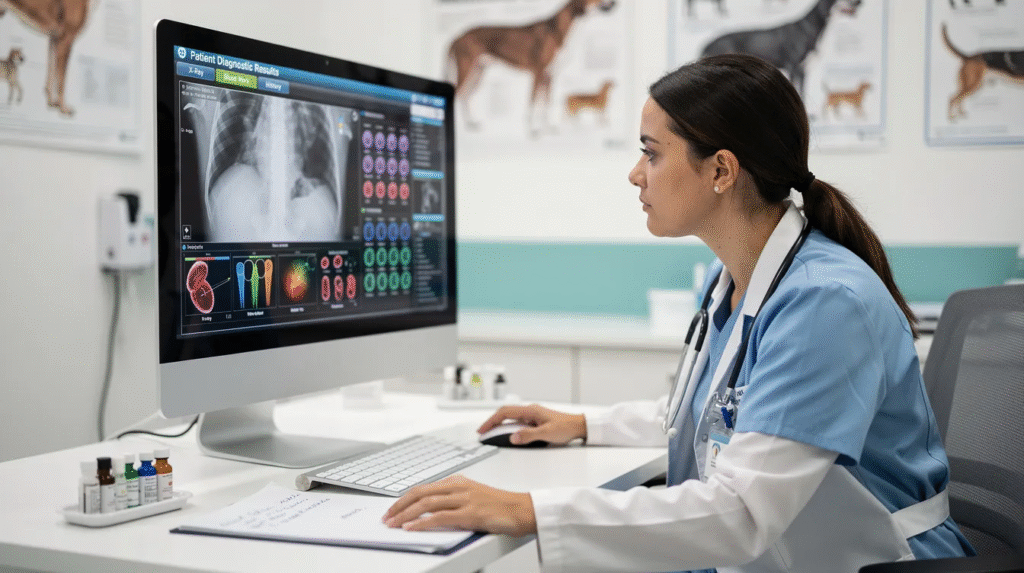

You finally have a telehealth appointment with a vet scheduled. Your dog has been scratching more than usual, your cat skipped a meal, or something just seems off, and you want answers without the stress of a clinic visit. The appointment is booked. Now comes the part most pet owners skip entirely: preparing for it.
A virtual appointment runs anywhere from 10 to 20 minutes. What you bring to that window determines how useful the visit actually is. Vets practicing telemedicine are working from what you tell them, what they observe on camera, and any records you can share.
That information gap is exactly what CompanAIn was built to address. Rather than arriving at a virtual appointment with fragmented memories and a handful of emailed lab results, CompanAIn’s agentic AI platform organizes your pet’s complete health history into a single, continuously updated Living Health Timeline that is ready to share the moment you need it. For pet owners who use telemedicine regularly, or who have pets with ongoing conditions that require consistent oversight, that kind of organized longitudinal record is the difference between a consultation that moves medicine forward and one that spends half its time reconstructing the past.
How Online Vet Consultations Actually Work
Before diving into preparation, it helps to understand what a virtual appointment can and cannot do. According to the AVMA, veterinary telehealth encompasses several distinct service types, and they are not interchangeable.
Teletriage is an assessment that doesn’t require a prior relationship. A veterinary professional evaluates urgency and determines whether your pet needs to be seen in person but cannot diagnose or prescribe. Telemedicine, on the other hand, requires an existing Veterinarian-Client-Patient Relationship (VCPR) and allows the vet to diagnose, recommend treatment, and, in many states, issue prescriptions.
Why does this matter for preparation? Because the type of consultation you are having shapes what your vet can legally do and whether your pet’s prior records even factor into the visit. Most meaningful telemedicine, the kind that results in a diagnosis or treatment plan, happens within an established VCPR. That means your vet already has, or needs access to, your pet’s health history. Showing up with that history organized is the difference between a productive appointment and a guessing session.
What Telemedicine Can and Cannot Handle
VCA Animal Hospitals describes telemedicine as well suited for conditions like mild diarrhea, sudden-onset limping, skin issues, behavioral concerns, coughing, and follow-up monitoring of chronic conditions. It is not a substitute for hands-on diagnostics. Blood draws, imaging, physical palpation, and in-office lab work cannot happen remotely. A vet who suspects something requiring those tools will refer you to an in-person visit regardless of how well prepared you are.
Knowing this upfront prevents frustration. Your goal is not to replace an in-person exam. It is to give the vet enough context to either resolve the issue remotely or make a precise, efficient referral without wasted time or unnecessary follow-up appointments.
The Preparation Gap That Hurts Most Consultations
Bond Vet notes a stark reality about telehealth limitations: a lack of access to complete medical records can result in adverse drug interactions, judgment errors, or missed context during virtual visits. This is not a technology problem. It is an organization problem, and it is almost entirely avoidable.
Most pet owners arrive at online consultations with their memory as their primary record. They know roughly when the last vaccine was given and can describe current symptoms, but cannot recall what last year’s bloodwork showed, what medication their dog was on two years ago, or whether that limp happened once before. Vets working without that context are making educated guesses from partial information.
The fix is documentation, organized before the appointment, not scrambled together during it.
Here’s what a well-prepared online vet consultation should include:
- Recent lab results with dates clearly visible
- A written timeline of when current symptoms started and how they have progressed
- A list of all current medications, supplements, and dosages
- Vaccination and parasite prevention history
- Any photos or short videos capturing the symptom in question, especially for gait abnormalities, skin lesions, or unusual behaviors
- Notes on dietary changes, new foods, or environmental changes in the weeks prior
That list is manageable if the records are already organized. It becomes overwhelming when you are hunting through email inboxes and clinic portals at 9pm the night before the appointment.
How AI-Organized Health Data Changes the Consultation
This is the practical value of CompanAIn’s platform for pet owners who use telemedicine regularly or who have pets with ongoing health concerns. Rather than reconstructing history from memory at each appointment, the platform maintains a continuously updated picture of your pet’s health that is ready to share whenever it is needed.
CompanAIn’s Smart Upload accepts PDF, PNG, and JPG files up to 10MB, including vet notes, lab results, imaging summaries, and medication records. Every document uploaded is parsed, interpreted, and stored in a structured format that the platform’s agentic AI can actually analyze. The result is more than a file cabinet. It’s a living record that provides context.
The Living Health Timeline in a Telehealth Context
The Living Health Timeline organizes your pet’s entire documented health history chronologically, filterable by labs, exams, vaccines, and symptoms. For a telemedicine appointment, this means you can pull up a clear view of the past six months of your cat’s kidney values, or show a vet exactly when your dog’s intermittent coughing was first documented and what the vet noted at that visit.
That kind of organized presentation changes the quality of the consultation entirely. A 15-minute telemedicine window spent building context from scratch is a 15-minute window where the vet is not solving a problem. When you arrive with organized longitudinal data, the vet spends that time on clinical reasoning, not administrative catch-up.
CompanAIn’s Trend Detection also surfaces patterns worth bringing to the appointment proactively. If your pet’s hematocrit has been declining across successive bloodwork panels, the platform flags that trajectory so you can ask the right questions, not just describe a vague symptom.
What to Do the Day Before Your Appointment
Practical preparation matters as much as having the right records. PetHub recommends having your pet’s medical history written down and your questions prepared before the call, not assembled during it. A few additional steps make a meaningful difference:
- Review your pet’s Living Health Timeline in CompanAIn and note any trends worth raising explicitly
- Write down your top three questions in order of priority, since some appointments end sooner than expected
- Test your video setup in good lighting ahead of time so the vet can actually see your pet’s skin, gait, or the area of concern
- Have your pet in the room and as calm as possible before the call begins
- Know the name and contact information for your regular in-person vet in case a referral is needed immediately
If your pet is showing a symptom that only appears in certain conditions, such as limping after exercise or scratching at a specific time of day, capture video of it beforehand. The vet cannot observe behavior that does not appear during the call window.
When Online Consultation Is the Right Call
Telehealth is not appropriate for every situation. It’s important to know when an online visit is appropriate versus when an in-person clinic is the only responsible option. Emergency symptoms, including difficulty breathing, suspected toxin ingestion, severe trauma, collapse, or inability to urinate, require immediate in-person emergency care. No telehealth appointment substitutes for that.
For the broad middle ground, including new symptoms that are not acutely severe, follow-up on ongoing conditions, behavioral concerns, nutritional questions, and chronic condition monitoring, a well-prepared online consultation with organized records is often more efficient and just as clinically useful as an in-person visit for a minor concern.
CompanAIn’s Vet-Ready AI Summary feature generates a clinician-grade report personalized to your pet that you can share directly with a telehealth vet before or during the appointment. Rather than recounting history verbally and hoping nothing important gets left out, the vet arrives at the clinical picture immediately.
Between Consultations: CompanAIn Assist
One of the most useful aspects of telemedicine access is the ability to get guidance between scheduled appointments. But the value of that guidance depends entirely on whether it is grounded in your pet’s specific history or in generic population-level advice.
CompanAIn Assist is a conversational AI agent that reasons from your pet’s documented past and current health before generating responses. When you ask whether your senior dog’s reduced appetite after switching foods is cause for concern, the answer reflects her weight history, her prior bloodwork, and her current medications. That context-aware guidance helps pet owners decide whether a situation warrants a telemedicine call, an in-person visit, or continued home monitoring.
Ready to make every consultation count? Contact CompanAIn today to start building the organized health record that gives your vet what they need and gives you the confidence to show up prepared.
Frequently Asked Questions
What should I have ready before an online vet consultation?
Recent lab results with dates, a current medication and supplement list, vaccination history, and a written timeline of when symptoms started and how they have changed. Photos or short videos of the symptom in question are especially valuable for anything involving gait, skin, or behavior that may not appear during the call window itself.
Can an online vet actually diagnose my pet?
Within an established VCPR, yes. A telemedicine vet can diagnose many common conditions and issue treatment plans. Without a prior relationship, most services are limited to teletriage, which assesses urgency and advises on next steps but cannot diagnose or prescribe. Confirm which type of service you are booking before the appointment.
Can an online vet prescribe medication?
It depends on your state and whether a VCPR exists. Many states require an in-person exam before prescriptions can be issued, though some have expanded telemedicine laws to allow limited prescribing via video visits. Your telehealth provider should clarify what is possible in your state before the appointment begins.
What conditions are best suited to telemedicine?
Minor skin issues, behavioral concerns, digestive symptoms that are not severe, nutritional questions, follow-up on chronic conditions, and post-visit check-ins are all well suited to online consultations. Anything requiring blood work, imaging, or hands-on examination needs in-person care. Emergency symptoms including difficulty breathing, suspected toxin ingestion, collapse, or inability to urinate require immediate in-person emergency care regardless.
What happens if the telehealth vet says my pet needs to be seen in person?
This is a common outcome and not a failure of the appointment. The telehealth visit has still served its purpose by ruling out what can be handled remotely and identifying that hands-on diagnostics are needed. Have the name and contact information for your regular vet and the nearest emergency clinic ready before the call so you can act immediately if the vet recommends it.
Does my regular vet need to be involved in a telehealth appointment?
For teletriage services, no prior relationship is required. For full telemedicine with diagnosis and prescriptions, most states require an established VCPR with the consulting veterinarian. Using a telehealth service connected to your regular clinic produces the most clinically useful result since the vet already has your pet’s history and can act on it immediately.
How does organized health data improve a telehealth visit specifically?
A telehealth vet cannot examine your pet physically, which means the quality of the visit depends almost entirely on the information you can provide. Organized longitudinal records, including past lab values, documented symptoms, and medication history, give the vet the clinical context that a physical exam would normally help establish. According to Bond Vet’s telehealth terms, incomplete medical records can result in adverse drug interactions or judgment errors. The fix is preparation, not better technology on the call itself.