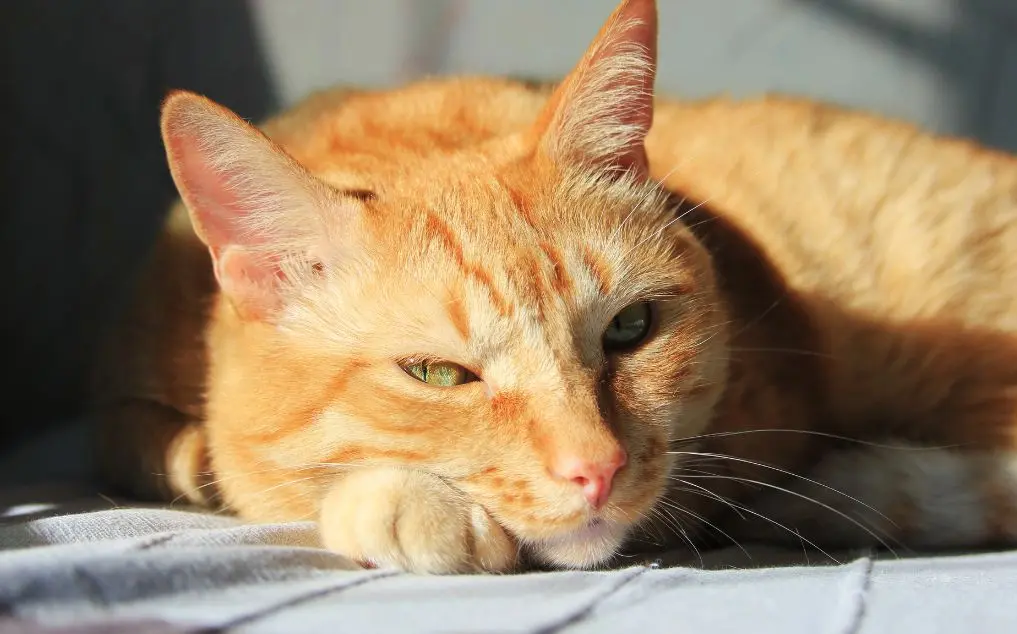

Introduction
Cat body language is the primary way cats communicate their emotions, needs, and intentions to humans and other animals. Through a sophisticated system of physical postures, facial expressions, tail movements, and ear positioning, every cat broadcasts a continuous stream of information about its internal state. Learning to read these signals accurately is one of the most practical skills any cat owner can develop.
This guide covers the interpretation of feline body language from basic signals to complex emotional states, including happy, stressed, fearful, playful, and aggressive postures. It is designed for cat parents, pet professionals, and anyone wanting to deepen their relationship with cats. While this article addresses when body language may indicate illness or pain, it does not replace professional medical diagnosis-those situations call for a veterinarian.
Direct answer: Cat body language involves tail position, ear placement, eye expressions, body posture, and vocalizations that reveal whether cats feel happy, stressed, fearful, playful, or unwell. Cats communicate through subtle body language signals, and reading them requires observing multiple cues simultaneously within context.
By reading this guide, you will be able to:
- Recognize emotional states-from a happy cat to a fearful cat-through specific physical cues
- Prevent aggressive incidents by identifying first signs of escalation
- Strengthen the human-cat bond through responsive, informed interaction
- Identify signs that require veterinary attention, including pain indicators
- Improve overall cat welfare by creating environments that respect feline communication
Understanding Feline Communication Fundamentals
Cat communication is an evolved survival system shaped by the domestic cat’s dual nature as both predator and prey animal. Unlike dogs, which were selectively bred over millennia for cooperative communication with humans, cats retain much of the wild-type signaling of their ancestors. This makes feline body language more subtle, more context-dependent, and easier to misread-particularly for humans accustomed to canine expressiveness.
Understanding your cat’s signals prevents unnecessary stress, reduces the risk of bites and scratches, and builds a relationship grounded in mutual respect rather than guesswork.
Visual Communication Systems
Cats use posture, facial micro-expressions, and spatial positioning to convey information to humans, other cats, and other animals. This visual communication system includes territorial behavior such as cheek rubbing-a way for cats to mark territory and indicate comfort-as well as body orientation, gait, and the position of every major body part from ears to tail tip.
In multi-cat households, these visual signals maintain social hierarchy and regulate proximity. Research published in Animals (2021) examining 254 cat–cat interactions found that specific combinations of ear and tail positions-termed “visual configurations”-reliably predicted whether an encounter would be friendly or hostile. Notably, ear posture proved more predictive of interaction outcomes than tail position in cat-to-cat exchanges, while the tail-up display held greater significance in cat-to-human interactions.
Context-Dependent Signals
Identical body language can carry different meanings depending on the situation. A flicking tail might signal playful engagement during a hunting game or rising irritation during an unwanted petting session. A cat’s posture while sitting on a windowsill watching birds differs fundamentally from the same posture adopted near an unfamiliar person.
Environmental factors profoundly shape how body language manifests. Research from Ohio State University’s College of Veterinary Medicine demonstrated that even minor environmental disruptions-moving furniture, changing routines, switching caretakers-trigger not only behavioral changes but measurable physiological responses including elevated cortisol and altered immune markers. This means that the environment in which you observe a cat’s body is inseparable from interpreting what that body is saying.
With these foundational principles established, the next step is learning to read each body part individually before combining them into complete emotional pictures.
Reading Key Body Parts and Signals
Building on the fundamentals of cat communication, this section breaks down the specific signals produced by each major body part. Accurate reading requires close attention to all of these simultaneously, but understanding them individually is the necessary first step.
Tail Positions and Movements
A cat’s tail is one of the most expressive and visible communication tools in the feline repertoire.
- High and upright: A happy cat’s tail is pointed straight up. High and upright tails indicate a confident and happy cat approaching a social interaction. A slight curve at the tip often adds a note of friendliness.
- Quivering: Quivering tails suggest extreme excitement or a desire to mark territory. This rapid vibration at the base, sometimes seen during greetings, signals intense positive arousal.
- Tail flick or swish: A flicking tail can indicate engagement in play, but a more forceful swishing or lashing signals irritation or overstimulation. Aggressive cats may flick or thrash their tails as a warning. Pay close attention to velocity and amplitude.
- Tucked tail: Tucked tails signify anxiety, fear, or insecurity in cats. A fearful cat wraps its tail tightly around its body or tucks it beneath, reducing its visible profile. A sick cat’s tail may also be held underneath their body.
- Puffed “bottle-brush” tail: Piloerection along the tail-fur standing on end-occurs when a cat feels threatened and is attempting to appear larger. This is a defensive posture often seen alongside an arched back.
Cornell University’s Feline Health Center documents these tail positions as part of a spectrum from friendly approach to defensive aggression, emphasizing that tail signals should always be read alongside other body parts.
Ear Positioning and Orientation
A cat’s ears function like mobile radar dishes, and their position reveals emotional state with remarkable precision.
- Ears forward and relaxed signify curiosity and contentment in cats. Happy cats have their ears upright and facing forward, oriented toward whatever has captured their interest.
- Airplane ears-rotated sideways to form a flat, plane-like silhouette-indicate mild discomfort, agitation, or uncertainty. A stressed cat’s ears may be angled backward or rotated to the sides.
- Flattened ears indicate fear, anger, or irritation in cats. Ears pinned back indicate a terrified cat, and a cat’s ears will be flat against their head when aggressive. This is among the clearest early warning signs.
- Swiveling ears suggest environmental scanning, often seen when a cat is on high alert, processing sounds from multiple directions.
Research from the UC Davis School of Veterinary Medicine comparing feline behavior during clinic visits versus home video sessions found that cats showed significantly more negative ear positions, larger pupil dilation, and elevated respiratory rates in clinical environments. This underscores how setting dramatically influences visible body language and why observing cats in their normal cat space provides more accurate behavioral data.
Eye Expressions and Pupil Changes
Cat eyes communicate trust, fear, aggression, and everything between.
- Slow blink: Slow blinking indicates a happy and trusting cat. Often called a “kitty kiss,” this deliberate narrowing and reopening of the eyes signals relaxation and affection. Reciprocating a slow blink can strengthen your bond.
- Half closed eyes: A happy cat’s eyes may be round or partially closed. Half closed, relaxed lids indicate contentment and comfort with the surroundings.
- Dilated pupils: Dilated pupils can indicate a cat is feeling stressed, fearful, or highly aroused. A fearful cat’s eyes widen and pupils dilate. A playful cat’s eyes are also big with dilated pupils-context distinguishes the two states.
- Narrow pupils with direct stare: Aggressive cats often have narrowed eyes with dilated pupils, though constricted pupils can also occur during offensive aggression. A sustained direct stare from a cat is typically a threat display.
- Squinted or glassy eyes: Their eyes may appear squinted or glassy when unwell, making eye expression a valuable early indicator of illness.
The University of Edinburgh’s feline body language guide advises avoiding direct eye contact with unfamiliar cats unless the cat initiates it, as prolonged staring can escalate tension.
These individual body part signals become most meaningful when combined into complete emotional pictures, which the next section addresses in detail.
Interpreting Different Emotional States
Now that each body part’s signal vocabulary is established, interpreting a cat’s overall emotional state means reading the full constellation of cues-tail, ears, eyes, body, and sounds-within the context of the environment and the individual cat’s baseline behavior.
Happy and Relaxed Behavior Patterns
Recognizing happy cat body language provides the baseline against which all other states are measured. When a cat shows contentment, the signals align consistently across the entire body:
- Observe loose, fluid body movements and upright tail with curved tip. A happy cat carries itself with relaxed, untensed limbs and a gentle sway. The tail straight up or with a slight curve at the tip signals confidence and social willingness. Rolling on their back signifies a cat is happy and relaxed.
- Look for forward-facing ears and half-closed eyes or slow blinking. Ears forward and upright, combined with soft, partially closed eyes or deliberate slow blinks, form the hallmark of feline contentment. The “loaf” position-where a cat sits with paws tucked under its body-indicates a cat feels safe and content.
- Listen for purring and watch for kneading behaviors. A happy cat may knead their paws on soft surfaces, often called “making biscuits,” which traces back to kitten nursing behavior. Purring frequently accompanies this state, though purring alone is not definitive (see Common Challenges below).
- Note exposure of belly and relaxed facial expressions. Exposed bellies may indicate trust but are not always an invitation for petting. Whiskers in neutral position, relaxed muzzle, and absence of tension in the face complete the picture of a cat feeling happy and secure.
Ohio State University research into feline life stressors confirms that relaxed behavior includes regular grooming, loose resting postures, and consistent eating patterns. Any deviation from these baselines-tenseness in the cat’s body, changes in grooming frequency, altered sleeping patterns-may indicate elevated stress even when other signs appear normal.
Cheek rubbing against furniture, walls, or your hand is another reliable sign of comfort. This behavior deposits pheromones from facial scent glands, marking the environment as safe and familiar.
Fear, Anxiety, and Stress Indicators
Fear and stress exist on a spectrum. Recognizing where a cat falls on that spectrum determines the appropriate response-from giving space to seeking emergency veterinary care.
Body Part | Mild Stress | High Fear |
|---|---|---|
Ears | Slightly back or sideways (airplane ears) | Flattened against head, pinned back |
Eyes | Rapid blinking, dilated pupils | Wide eyes, extreme pupil dilation |
Body | Tense, low posture, stiff body | Crouched position, trembling, pressed to ground |
Tail | Twitching, held tightly close to body | Tucked under body, wrapped around legs |
Fur | Normal or slightly raised | Puffed-up fur, piloerection along spine |
Sounds | Quiet, possible low growl | Hissing, growling, spitting |
Stressed behaviors in cats include hiding and overgrooming. A stressed cat may crouch low to the ground with a stiff and tense body posture. Excessive grooming can be a coping mechanism for stressed cats, sometimes resulting in bald patches or skin irritation-a form of displacement behavior where the cat redirects anxiety into repetitive action.
Puffed-up fur indicates a cat is scared or threatened, as the piloerection reflex makes the cat appear larger to potential threats. A fearful cat may also hiss or growl when feeling threatened-these are not acts of aggression but defensive vocalizations designed to create distance.
The American College of Veterinary Behaviorists emphasizes that accurate assessment requires reading multiple signals simultaneously. A single sign-like dilated pupils-could indicate fear, excitement, play, or simply low light conditions. The combination of cues, evaluated within environmental context, determines meaning.
When you notice clear signs of stress, the appropriate response is to reduce stimulation: avoid sudden movements, provide a safe space for retreat, lower noise levels, and give the cat control over the interaction. Many cats recover quickly when the source of stress is removed, but chronic stress requires environmental modifications and potentially professional behavioral consultation.
Aggressive and Defensive Postures
Aggression in cats divides into two distinct categories, each with characteristic body language:
Offensive aggression: An aggressive cat displaying offensive postures stands with a stiff, upright stance-rear end raised, back sloped downward. Ears may be erect but rotated slightly forward. The tail is stiff and low or held straight. The cat stands square, making direct eye contact, sometimes with constricted pupils. This cat is asserting dominance or territorial control.
Defensive aggression: An arched back with raised fur signals a defensive posture in cats. The cat turns sideways to appear larger, ears flattened, mouth open showing teeth, hissing or growling. A hissing cat in a defensive posture is communicating “back away”-not seeking confrontation but prepared for it. Aggressive cats may arch their backs and puff up their fur when they feel cornered with no escape route.
A cat may hiss or growl as a warning before attacking. These vocalizations are critically important early warning signs. Recognizing the first signs of escalation-ear flattening, tail lashing, stiff posture-allows you to intervene before aggression becomes physical. The appropriate response is to remove the stimulus calmly, avoid sudden movements, and never physically punish an aggressive cat, as this escalates the situation.
Pain-related aggression deserves special mention. Sick cats may hunch their body with legs tucked underneath. Increased vocalization may indicate a cat’s distress or pain. If a previously gentle cat shows sudden aggression-particularly when touched in specific areas-a vet visit is warranted to rule out underlying medical conditions.
Playful Behavior Patterns
Playful body language can superficially resemble hunting or even aggressive postures, making it important to distinguish. Playful cats crouch low with raised back legs, and playful cats may wiggle their rear-end before pouncing. A playful cat’s eyes are big with dilated pupils, and a flicking tail indicates a cat is engaged in play.
Cats display hunting behaviors like stalking during play. Stalking, chasing, and pouncing are part of cats’ play behavior and reflect the cat’s predatory instincts being channeled into safe, social activity. The key distinguishing features of play versus true aggression include: relaxed ears (not flattened), retracted claws during contact, absence of hissing or growling sounds, and a bouncy, exaggerated quality to movements.
Common Challenges and Solutions
Even experienced cat parents encounter interpretation difficulties. These three misunderstandings are the most prevalent and consequential.
Misreading Mixed Signals
A cat may display a relaxed body but hold its ears backward due to background noise, or carry its tail high while its pupils are dilated. These mixed signals are common and lead to misinterpretation when observers focus on a single body part in isolation.
Solution: Always evaluate the whole cat-ears, eyes, tail, body posture, vocalizations, and whisker position-as a unified system. Then factor in environmental context: what just happened, what sounds are present, who else is in the room. The illustrator Lili Chin has created widely shared visual guides that help cat parents practice reading multiple signals at once, reinforcing that no single cue tells the complete story.
Confusing Purring with Happiness
While purring is strongly associated with contentment, cats also purr when stressed, in pain, or seeking comfort. A cat at a veterinary clinic may purr intensely-not from happiness but as a self-soothing mechanism. Sick or injured cats have been documented purring during significant distress.
Solution: When you hear purring, check additional body language cues. Is the cat’s body relaxed or tense? Are the ears forward or flattened? Are the eyes half closed in contentment or wide with dilated pupils? A purring cat with a stiff body, tucked tail, and flattened ears is not a happy cat-it is a cat in need of attention and possibly veterinary care.
Assuming Belly Exposure Means Invitation
Exposed bellies may indicate trust but are not always an invitation for petting. Many cats will react defensively-claws out, teeth engaged-if you reach for a belly rub when they haven’t solicited one. This is one of the most common causes of scratches among well-meaning cat owners.
Solution: When a cat shows its belly, observe the accompanying signals. If the cat’s body is loose, eyes are soft, and ears are forward, the cat is displaying trust. Respect that trust by offering a slow blink or a gentle head scratch rather than going directly for the belly. If in extreme cases you do attempt a belly rub, watch for any tail flick, ear rotation, or body tensing-these are immediate signals to stop. Let the cat define the interaction rather than assuming human preferences for touch apply.
Observation over assumption is the principle that connects all three of these challenges-and it is the foundation of everything this guide recommends.
Conclusion and Next Steps
Cat body language is a complete communication system that evolved over thousands of years. Every tail position, ear angle, pupil change, and body posture carries information-but that information only becomes meaningful when you read multiple signals together within the context of your cat’s environment, history, and individual personality. Whether you’re interpreting happy cat body language, recognizing a fearful cat’s distress signals, or distinguishing play from aggression, the skill is the same: patient, holistic observation.
Start applying what you’ve learned with these immediate steps:
- Establish your cat’s baseline. Spend several days consciously observing your cat’s body language during relaxed states-sleeping, grooming, sitting in a favorite spot. Notice the normal ear position, tail carriage, and eye expression.
- Practice identifying emotional states. Use the body part checklists and comparison table from this guide during daily interactions. Start with the easiest distinctions (happy versus stressed) before attempting subtler reads.
- Create a stress-free environment based on your cat’s signals. If your cat frequently hides, shows displacement behavior, or displays flattened ears in certain rooms or situations, modify the environment-add safe spaces, reduce sudden movements, and maintain consistent routines.
- Document concerning behaviors. Keep notes on any body language changes that persist, especially signs of pain like hunched posture, squinted eyes, or increased vocalization. Share these observations with your vet.
For deeper exploration, consider studying multi-cat household dynamics-where reading body language between other cats becomes essential for preventing conflict-and kitten socialization, where early experiences shape how cats express and interpret signals throughout their lives. Individual differences in breed, temperament, and history mean that understanding your cat’s unique communication style is an ongoing practice, not a one-time lesson.
Additional Resources
- Feline Grimace Scale: Developed by researchers at Université de Montréal and University of Calgary, this validated clinical tool assesses acute pain in cats through five facial action units (ear position, orbital tightening, muzzle tension, whisker changes, and head position). A score above 0.39 out of 1 indicates the need for pain relief. A mobile application is available for cat parents and veterinary professionals.
- American College of Veterinary Behaviorists (ACVB): Provides science-based guides on feline body language and aggression, along with a directory for finding board-certified veterinary behaviorists for complex behavioral issues.
- International Association of Animal Behavior Consultants (IAABC): Offers certification programs for professionals and educational resources for pet owners seeking advanced understanding of animal behavior.
- University veterinary resources: UC Davis School of Veterinary Medicine, Cornell University College of Veterinary Medicine, and the University of Edinburgh all publish accessible, research-backed guides on cat communication and welfare that are regularly updated with current findings.