
Veterinarians have always been detectives. They piece together subtle behavioral shifts, lab values, and fragments of medical history to arrive at a diagnosis, often without their patients being able to say a single word. In 2026, artificial intelligence is transforming this detective work by reviewing thousands of similar veterinary cases in seconds and flagging hidden patterns that might take a clinician hours to see. AI does not replace clinical judgment in veterinary medicine; it helps connect symptoms across time, visits, and data sources to improve care. Platforms like CompanAIn give both pet owners and veterinarians AI tools, including dynamic health timelines, lab interpretation, and a secure vet portal, to connect the dots earlier.
This article covers:
- Why symptom connection is so difficult in veterinary practice
- How AI links symptoms across a pet’s full history
- Predictive analytics and risk scoring
- AI-enhanced labs and imaging evaluation
- Behavior, nutrition, and daily life data
- Vet–owner communication, ethics, and the future of AI in animal health
Why Connecting Symptoms Is So Hard in Veterinary Medicine
Animals cannot describe their pain, timeline, or severity, so vets must infer everything from scattered clues and incomplete medical history. Unlike human patients who can recount a family medical history or list current medications, pets rely entirely on what their owners observe and what clinicians can measure during a visit.
Several factors make pattern recognition difficult:
- Brief appointments leave little time to trace long-term trends across past records
- Fragmented records spread across multiple clinics, emergency hospitals, and specialist referrals
- Siloed electronic medical records that store notes chronologically but rarely surface cross-visit symptom clusters
Consider a concrete example: a dog seen in 2023 for intermittent vomiting, in early 2024 for gradual weight loss, and in 2025 for mild kidney value changes. Each visit looks minor on its own, but viewed together, these symptoms suggest developing chronic kidney disease. Traditional record systems rarely connect such dots automatically. AI highlights trends that might otherwise be missed during routine examinations, acting as a pattern amplifier that can synthesize data over months or years.
How Artificial Intelligence Connects Symptoms Across a Pet's Medical History
AI reads and structures unstructured data, including PDFs, handwritten notes, lab reports, and imaging summaries, into a unified, searchable medical history. Machine learning algorithms allow pattern recognition across various clinical data, while natural language processing extracts symptoms like “increased thirst,” “night coughing,” or “intermittent lameness” from visit notes and groups them into meaningful clusters. AI integrates multiple data streams to create unified patient profiles that no single paper chart could match.
AI-powered timelines link symptoms with life events: a new food in March 2024, travel in July, a vaccine reaction in October, lab abnormalities in early 2025. These connections help clinicians and pet parents determine whether patterns point to a chronic condition or a series of coincidences.
Detailed example: A cat presents with chronic diarrhea over 18 months. AI connects a diet change (spring 2024), a stress event from moving homes (summer 2024), recurring elevated fecal markers, and periodic mild hypoalbuminemia on lab checks. Rather than treating each episode as an acute infection, the system provides differential diagnoses by correlating symptoms with historical cases and suggests inflammatory bowel disease. The veterinarian reviews this context, agrees, and adjusts the treatment plan accordingly.
AI also helps identify subtle behavioral changes in pets through pattern recognition and can assist in monitoring changes over time from multiple health indicators, helping address gaps in how AI is applied in veterinary medicine.
Imagine a horizontal timeline with icons: a food bowl (diet change), a suitcase (travel), a syringe (vaccine), a stomach icon (vomiting episodes), and a lab flask (creatinine, albumin). Lines drawn by AI connect labs and symptoms over months, revealing the pattern a busy clinician might not have time to trace manually.
From Clues to Predictions: Using AI and Predictive Analytics to Improve Care
Predictive analytics in veterinary medicine uses algorithms trained on thousands of cases to estimate the risk of specific diseases before they become clinically obvious. These tools guide preventive care and allow earlier interventions in pet healthcare by identifying health risks before symptoms fully appear.
A landmark study trained a recurrent neural network on data from more than 106,000 feline records to predict chronic kidney disease. Near the time of diagnosis, sensitivity reached 90.7% with specificity of 98.9%. Remarkably, AI can predict chronic kidney disease in cats two years earlier, with sensitivity of about 44% even at that horizon, giving clinicians a significant head start.
AI can assign a risk score, from 0 to 100, for conditions such as diabetes in overweight dogs, laminitis in horses, or cancers in aging animals. In human medicine, predictive models similarly flag conditions like gestational diabetes in expectant parents; veterinary predictive models now forecast potential disease outbreaks and individual patients’ risks with comparable sophistication.
CompanAIn surfaces these risk indicators in a pet’s timeline, prompting conversations about prevention through diet changes, nutritional supplements, or earlier imaging. Early prediction directly improves patient outcomes: earlier diagnostics mean gentler treatment options, lower costs, fewer complications, and better long-term quality of life. This is how AI improves early detection of chronic or degenerative illnesses in pets and helps clinicians determine the most effective medications and treatment plans before diseases advance.
Making Sense of Labs and Imaging: AI as a Second Pair of Eyes
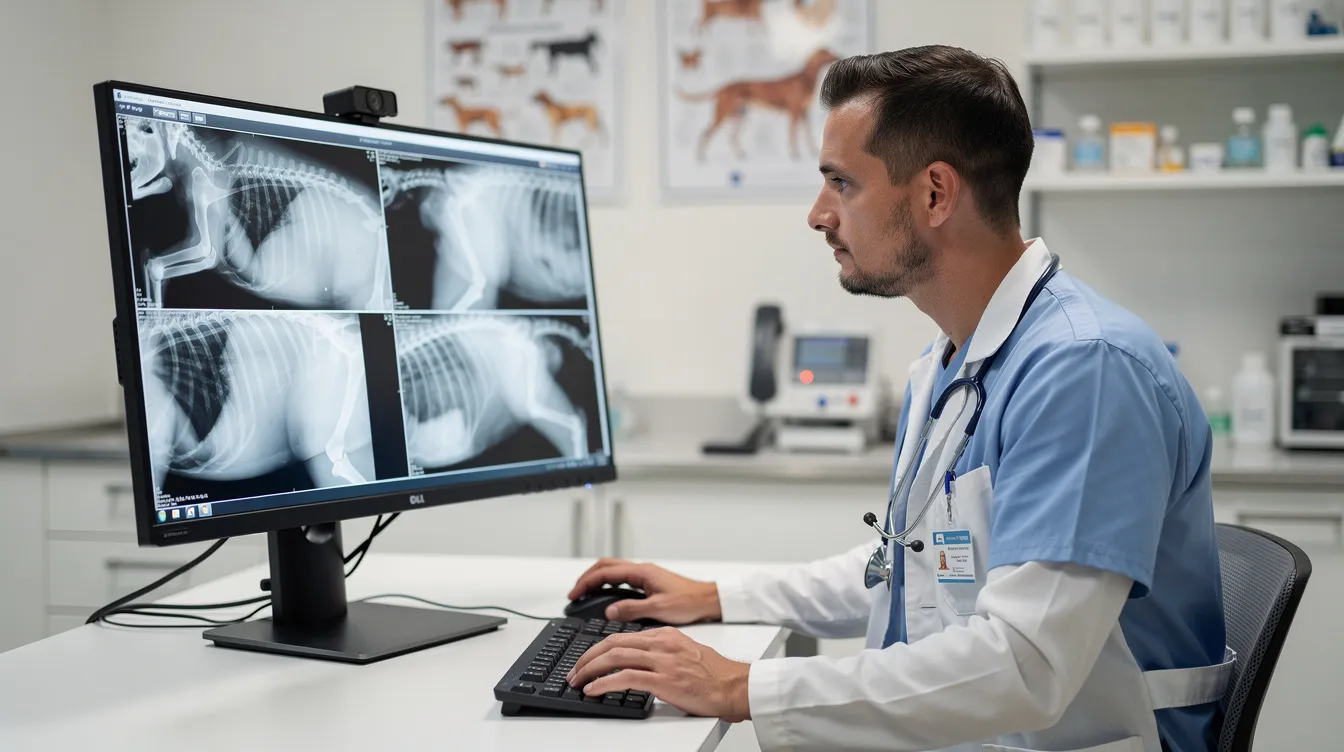
Lab work and imaging are often where subtle disease first appears, yet busy clinicians may not always spot every mild but meaningful shift. AI tools can interpret lab results for pets by automatically trending values over years and connecting them with recorded symptoms. AI can track health trends from lab results over time, for example flagging a gradual hematocrit drop from 43% to 38% to 33% before a dog becomes visibly anemic. AI improves accuracy in interpreting veterinary lab results and can reduce human error in interpreting lab results, including catching overlooked shifts in liver enzymes or kidney markers.
On the imaging side, deep learning tools analyze diagnostic images to detect abnormalities like tumors or fractures. Research shows deep learning is now used across radiography, cytology, ultrasound, and MRI in veterinary practice, with the veterinarian always making the final call. AI diagnostic tools reduce human error in imaging and lab results, enhancing the accuracy of veterinary diagnostics while supporting, never replacing, clinical decision making.
Case vignette: A 10-year-old dog presents with mild persistent weight loss and slight anemia across three visits. AI flags the trend: progressive hematocrit decline, mildly elevated BUN, occasional soft stools. It suggests checking for chronic gastrointestinal bleeding or early cancer treatment eligibility. Abdominal ultrasound reveals a small intestinal mass, caught months earlier than it otherwise might have been.
Workflow | Manual Review Only | Manual + AI Support |
|---|---|---|
Lab trending | Vet reviews each visit separately | AI plots multi-year trends, flags deviations |
Cross-visit symptom linking | Relies on memory or chart scanning | Automated symptom clustering |
Time to pattern recognition | Minutes to hours per patient | Seconds |
Accuracy | Dependent on clinician bandwidth | Enhanced by algorithmic consistency |
AI tools improve accuracy and efficiency in veterinary care and veterinary patient care by giving clinicians a second pair of eyes exactly when they need it. Predictive analytics can also forecast health risks from lab data, making each visit more productive.
Connecting Symptoms With Behavior, Nutrition, and Daily Life Data
Modern pet care generates continuous data outside the clinic. Wearable devices track pets’ activity and health metrics for continuous monitoring, while smart feeders and litter boxes capture eating and elimination behaviors between visits. AI pet health tools merge clinical records with owner-logged observations such as changes in sleep, water intake, stool consistency, or coughing episodes.
A 2026 study on smart litter box monitoring for feline chronic kidney disease detection achieved a weighted F1-score of approximately 92.7% during training, using behavioral features like urination frequency and post-elimination covering behavior. For horses, a subtle decrease in training performance combined with slight weight loss and mild hoof temperature changes can flag early laminitis risk when AI analyzes these data streams together.
Nutrition patterns logged in CompanAIn, such as introduction of new proteins, changes to high-carbohydrate diets, or allergies to specific substances, can be correlated with symptom flares like itching, diarrhea, or vomiting. The system curates and summarizes owner-generated data so veterinarians see only the most relevant behavioral and lifestyle trends during a consult, including awareness of drugs or effective medications the pet is currently taking.
Strengthening Vet–Owner Communication With AI-Generated Summaries
Miscommunication between vet and owner, whether from vague descriptions or forgotten episodes, can delay diagnosis or lead to repeated testing. AI tools improve communication between veterinarians and pet owners by transforming scattered notes, lab results, and messages into concise clinician-grade summaries before an appointment.
For example, CompanAIn might generate: “In the last 9 months, Bella has had 3 vomiting episodes, 2 diet changes, one elevated lipase result, and 5% body weight loss.” This kind of summary helps veterinarians quickly connect symptoms, ask targeted questions about family members in the household or environmental changes, and improve patient care overall. AI tools help veterinarians manage pet health data effectively, supporting faster decision-making by summarizing medical records.
Before AI: Owner says, “She’s just off lately, less playful, eats less.” After AI summary: “Reduced play since March 2025, appetite dips in May and July, weight down 5%, creatinine creeping up across last two lab tests, mild dehydration signs at last visit.”
This structured delivery of information benefits the practice, the pet owner, and ultimately the animal’s health outcomes.
Ethical and Clinical Safeguards: Keeping Veterinarians in Control
AI in veterinary medicine is a support tool. Veterinarians use AI-derived insights alongside their clinical judgment for diagnosing pets and remain accountable for every diagnosis and treatment decision. AI acts as a decision-support system, not an autonomous practitioner.
Key risks to address include overreliance on AI suggestions, potential bias in training data (e.g., models developed mostly from urban dog and cat records), and the need for transparent, explainable recommendations. The ACVR/ECVDI position statement emphasizes that no commercially available AI diagnostic tool in imaging yet meets required standards for full transparency. AI requires high-quality veterinary data to provide reliable outputs, and its limitations must be acknowledged.
Data privacy matters too. Platforms like CompanAIn use encryption and owner consent to protect sensitive information, in line with emerging healthcare data protection standards.
Do/Don’t guidance for clinicians:
- Do use validated AI tools as a second opinion and document when AI insights influenced decisions
- Do communicate AI’s role to pet owners transparently and maintain a clear audit trail
- Do account for breed, species, and environmental bias when interpreting AI outputs
- Don’t rely exclusively on AI output for diagnosis or prescribing drugs
- Don’t use unvalidated tools without understanding their limitations and training data
- Don’t skip critical evaluation of AI-generated recommendations
How CompanAIn Helps Vets and Pet Owners Connect Symptoms Today
CompanAIn is a human-centered AI platform focused on companion animals, including dogs, cats, and horses, and on collaboration between pet owners and veterinary teams. It is designed to improve patient outcomes through integrated technology that fits naturally into existing routines.
Concrete capabilities relevant to symptom connection include:
- Dynamic health timeline tracking every lab, visit, and owner input
- Cross-clinic medical history consolidation
- Lab result interpretation and trend detection
- Clinician-grade AI summaries and action plans
- A secure vet portal for practice-level access
Real-to-life example: A cat with recurring urinary issues seen at two clinics over three years. CompanAIn links behavioral signs (litter box avoidance), a stress event (house move in 2024), and intermittent urinary lab markers to support a vet’s diagnosis of feline idiopathic cystitis rather than repeated bacterial infections. The vet portal lets the practice review this AI-organized history before the appointment, saving time and improving consultation quality. Learn more about why CompanAIn is different.
Getting started:
- Owner uploads past records from all clinics into CompanAIn
- Vet connects their practice through the vet portal
- Both review the AI timeline together at the next wellness check
- Start with the free plan; upgrade for advanced trend detection or multiple pets
Looking Ahead: The Future of AI-Connected Symptom Mapping in Veterinary Medicine
AI-driven symptom connection is expected to become a routine part of veterinary medicine by the late 2020s, much like digital radiographs are standard today. A 2026 systematic survey of veterinary digital health found that emerging technologies span diagnostic imaging, clinical text analysis, wearable monitoring, and more, with rapid development across species.
Near-term advances include multi-species models that learn from dogs, cats, and horses simultaneously; real-time alerting when a new lab result shifts a pet’s risk profile; and tighter integration with practice management systems. Education is shifting too: vet students are learning to read AI dashboards, interpret predictive scores tied to diseases and illnesses, and communicate these insights ethically to clients, including explaining how cancer treatment decisions or choices among most effective medications may be informed by data patterns.
The most powerful future model is a partnership: veterinarian clinical reasoning combined with owner observations and AI-connected data streams, all focused on earlier detection and more personalized prevention. Whether you are a pet owner tracking your animal’s life milestones or a clinician analyzing research-backed risk scores, tools like CompanAIn can be incorporated into your routines now.
Start preparing for this data-rich future today. Upload your pet’s records, explore the AI timeline, and bring those insights to your next vet visit. Better-connected symptoms mean better-connected care.