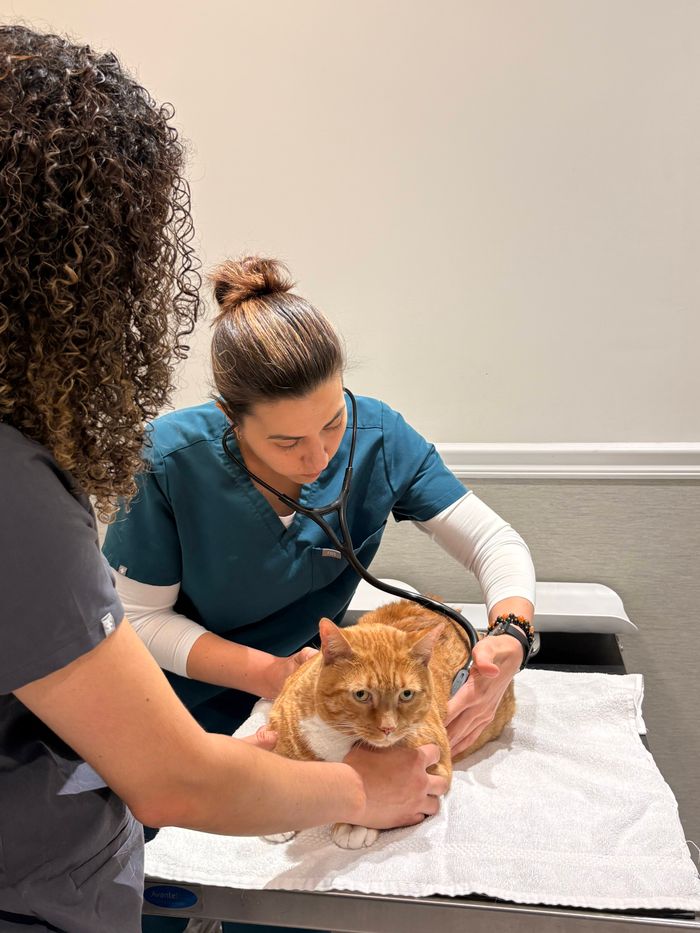

Your dog has been eating a little slower lately. Your cat sleeps more than she used to. These shifts feel small, almost too small to mention at the next vet visit. But in aging pets, small shifts are often where the story begins.
The problem isn’t that pet owners aren’t paying attention; it’s that the healthcare system built around our pets was never designed to catch the quiet, gradual changes that predict serious illness. Annual checkups take snapshots. Disease unfolds over time. And somewhere in the gap between those two things, early opportunities for intervention disappear.
That gap is exactly what modern AI for animals is built to close. CompanAIn was purpose-built for this challenge, designed around veterinary care from the ground up so that the health picture your vet sees is always complete, always current, and always moving forward. Its agentic AI platform gives you and your veterinarian the longitudinal picture a single appointment can never provide, not by replacing clinical expertise but by ensuring the full health story is never lost between visits. See how CompanAIn is building the gold standard for pet wellness.
Why Pet Longevity Is Rising, and What Comes Next
Pets are living longer than ever before, and the data is striking. Analysis of IDEXX records from over two million patients collected between 2010 and 2023 shows the average lifespan of dogs increased 12%, from 11.6 years to 13.0 years. Cats improved even more dramatically, climbing 15% from 12.3 years to 14.2 years over the same period.
Improved nutrition, wider access to veterinary care, and advances in diagnostics are all driving this trend. But there’s a ceiling to how far reactive care can take us.
The next leap in pet longevity won’t come from better treatments alone. It will come from catching disease earlier, weeks or months before clinical signs emerge, when intervention is least invasive and most effective. That’s where AI for animals enters the picture in a fundamentally new way.
The Problem With Snapshot-Based Care
Traditional veterinary medicine is built around the annual exam. Your vet sees your pet, reviews current symptoms, runs whatever bloodwork seems indicated, and makes decisions based on what’s in front of them that day.
What that model misses is velocity. A lab value sitting at the high end of normal means something very different depending on whether it’s been stable for three years or has been climbing steadily for six months. The number looks identical. The trajectory doesn’t.
The problem isn’t veterinary skill; it’s fragmented records. Most pets don’t have a coherent, accessible health timeline that makes gradual change visible. Their records live across years of paper files, different clinics, and owners’ scattered memories.
How Agentic AI Builds the Health Picture Veterinarians Need
The most effective AI for animals doesn’t work as a single model trying to answer every question at once. It works as a coordinated system, with different AI components specializing in specific tasks and collaborating across a pet’s full health picture before generating guidance.
CompanAIn was built on exactly this multi-agent foundation. Unlike static record-keeping tools or one-off Q&A apps, CompanAIn’s specialized AI agents work together behind the scenes, connecting health history over time, lab data, and species and breed-specific information grounded in evidence-based research. The result is context-rich guidance that shows owners what’s changing, why it matters, and what to do next.
Licensed veterinarian oversight is built into the process. Low-confidence or critical findings can be escalated for review by licensed DVMs. This is AI enhancing clinical judgment, not replacing it.
Smart Upload: Where the Process Starts
Most health record systems expect clean, formatted data. Real veterinary records are messy. They arrive as scanned handwritten notes, inconsistently formatted lab printouts, and emails from specialists using different terminology than the primary care vet.
CompanAIn’s Smart Upload accepts all of it. The system parses, interprets, and securely stores uploaded documents, turning scattered inputs into structured health data that the AI agents can actually use. It accepts PDF, PNG, and JPG files up to 10MB, because the goal is to capture a pet’s complete history, not just the easy parts.
The Living Health Timeline: Making Trends Visible
The centerpiece of CompanAIn’s platform is the Living Health Timeline, a dynamic, filterable view of a pet’s entire health journey, organized chronologically and searchable by labs, exams, vaccines, and symptoms.
This is where the longitudinal power becomes tangible. When kidney values have been creeping upward across three annual panels, the Living Health Timeline makes that trend immediately visible. When a cat’s weight has declined slightly at each of the last four visits, each loss individually may seem unremarkable, but the cumulative pattern is clearly significant; the timeline shows it. The system attaches AI insights to individual data points, giving veterinarians context rather than isolated numbers.
For pet owners, this kind of visibility changes the quality of every veterinary conversation. You stop relying on memory to describe what’s changed. You arrive at appointments with an organized, clinically relevant narrative that helps your vet ask better questions and make faster decisions.
Living Memory Technology
What makes the Living Health Timeline more than a filing system is the Living Memory technology underlying it. Rather than treating each upload as a standalone entry, the platform maintains context across years of health data, so every new document adds to a continuously evolving picture rather than existing in isolation.
This matters most for the conditions that are hardest to catch. Gradual changes in thyroid values, slowly declining hematocrit, year-over-year shifts in body condition score. These are the patterns that fall through the cracks of annual checkups but become unmistakable when viewed across a complete longitudinal record.
Trend Detection: The Early Warning System
Beyond the timeline, CompanAIn’s Trend Detection feature uses AI-powered alerts to flag emerging issues as they develop. Visual indicators categorize findings as improving, stable, concerning, or declining, giving both owners and veterinarians an at-a-glance read on where each health metric stands relative to baseline.
The AVMA’s reporting on AI in veterinary medicine highlights this predictive capability as one of the most meaningful near-term contributions of the technology to animal health. The shift from reactive to anticipatory care, catching risks before clinical signs develop, is where AI for animals delivers outcomes that annual checkups alone simply can’t match.
Consider what this means practically. CompanAIn’s platform detected a gradual hematocrit drop from 43% to 38% to 33% across successive visits and flagged the decline early, explaining reduced stamina before visible symptoms appeared. That kind of early signal, easy to miss when each individual reading looks borderline rather than alarming, is exactly what the Trend Detection system is designed to surface.
CompanAIn Assist: Context-Aware Answers Between Appointments
One of the hardest parts of pet ownership is the uncertainty between veterinary visits. Something seems off, but you’re not sure if it warrants a call. You want answers grounded in your pet’s actual history, not generic information from a search engine.
CompanAIn Assist is a conversational AI agent designed for exactly this purpose. It collaborates with specialized sub-agents, reasoning from a pet’s past and current health to deliver context-aware answers that reflect that individual animal’s record rather than generic population-level advice.
The difference is significant. A question about whether your senior Labrador’s recent appetite change is concerning gets answered in the context of her weight history, her recent bloodwork, her current medications, and her documented baseline, not as an abstract question about senior dogs in general. That kind of personalized, evidence-grounded response is what separates agentic AI from a search bar.
What This Means for the Vet Relationship
A common misconception about AI for animals is that it positions technology against veterinary medicine. The reality is the opposite. Research consistently shows that earlier detection means less invasive and less expensive care, while veterinarians benefit from fewer unnecessary tests and better resource allocation at appointments.
CompanAIn’s platform is built around this collaborative model. The Vet-Ready AI Summary feature generates clinician-grade reports personalized to each pet, designed to be shared directly with a care team. Rather than a vet spending the first ten minutes of an appointment reconstructing history from a pet owner’s memory, they arrive at the clinical picture immediately and spend that time doing what they trained for.
The platform bridges clinic and home, capturing the observations and data points that owners notice between appointments but that rarely make it into a medical record in any organized form. When that information is structured and viewed longitudinally, veterinarians can make faster, better-informed decisions. Everyone benefits, especially the pet.
Building Toward Longer, Healthier Lives
Research on life expectancy in dogs and cats makes one thing clear: the gains we have seen in pet longevity over recent decades are real, and they are not accidental. They came from better nutrition, wider access to care, and smarter diagnostics. What AI for animals adds to that equation is the ability to make preventive care more continuous and more personalized than a once-a-year appointment allows.
Every insight the piece has built toward comes down to one practical question: What are you actually doing with your pet’s health data right now? For most owners, the honest answer is nothing systematic. Records scattered across clinics, observations that never make it into a file, patterns that only become obvious in hindsight.
CompanAIn exists to change that and to make the kind of proactive, data-driven care that was once reserved for specialty practices accessible to every pet owner. Contact CompanAIn today and start building the Living Health Timeline that turns your pet’s health history into something that actually works for them.
Frequently Asked Questions
What does AI for animals actually do in veterinary health?
In a meaningful veterinary context, AI for animals analyzes health records, lab results, and owner observations over time to identify patterns that predict emerging disease. The most effective systems maintain longitudinal context across years of data, so subtle trends become visible well before clinical symptoms develop.
How is AI-powered health record analysis different from just storing records digitally?
Digital storage and intelligent analysis are not the same thing. A scanned PDF sitting in a cloud folder is still a static document. A true AI health platform actively parses uploaded records, extracts clinically relevant data, and continuously cross-references it against a pet’s full history. The difference is between a filing cabinet and a system that reads the files, understands them, and tells you what they mean together over time.
Does AI replace the veterinarian?
No, and any platform suggesting otherwise warrants skepticism. AI in veterinary health is designed to enhance clinical decision-making by organizing data, flagging trends early, and generating summaries that support more productive appointments. Diagnosis, treatment, and clinical judgment remain the veterinarian’s domain.
What kinds of health changes can AI flag early?
The most valuable signals are the gradual ones: slowly rising enzyme values, progressive weight loss, declining hematocrit, year-over-year shifts in body condition score. These are the patterns most likely to be missed at isolated appointments but become unmistakable when viewed across a complete longitudinal record.
How does AI handle breed-specific health risks?
Breed matters enormously in veterinary medicine. A mildly elevated heart enzyme reading means something very different in a Cavalier King Charles Spaniel than in a mixed-breed dog with no relevant cardiac history. Effective veterinary AI incorporates breed-specific risk profiles into its analysis so guidance is calibrated to the individual animal rather than a generic population average.
At what age should I start using an AI health platform for my pet?
The earlier the better, and not because young pets are likely to be sick. The platform becomes most powerful when it has years of baseline data to compare against. Starting when your pet is young means that by the time age-related changes begin, the system has a detailed picture of what normal looks like for that specific animal, making deviations far easier to detect and act on.
What happens if my pet sees multiple veterinarians or specialists?
Fragmented care is one of the biggest information problems in veterinary medicine. When a primary vet, an emergency clinic, and a specialist are each working from their own records, no one has the complete picture. Consolidating records from every source into a single health timeline means the full history is always in one place regardless of how many providers a pet sees.