
Artificial intelligence is reshaping industries across the globe, and veterinary medicine is no exception. Veterinary AI refers to intelligent systems and tools designed to assist veterinary professionals in diagnosing, monitoring, and managing animal health.
This transformation addresses critical industry pain points: veterinarian shortages (with only 1 veterinarian per 1,500 pets in underserved areas), diagnostic delays that can prove fatal, and the emotional toll of reactive care on both pets and their families.
By integrating CompanAIn into everyday veterinary practice, clinics can enhance diagnostic accuracy, optimize treatment plans, and provide proactive care that improves outcomes for pets and other animals alike. From advanced imaging analysis to predictive health modeling, AI in veterinary practice is transforming how veterinarians approach animal care.
CompanAIn: Leading the Way in Veterinary AI
CompanAIn is at the forefront of veterinary AI, developing intelligent tools that help veterinarians and pet owners make smarter, data-driven decisions.Our platform integrates advanced machine learning and predictive analytics to analyze medical records and lab results, highlight early warning signs, and support veterinarians and owners in making informed decisions.”
By combining veterinary expertise with cutting-edge technology, CompanAIn empowers clinics and owners alike to provide proactive, personalized care that improves outcomes for every pet. Discover more about how artificial intelligence in veterinary medicine is transforming diagnostics, monitoring, and preventive care.
The Growing Need for AI in Veterinary Medicine
The demand for veterinary services has been increasing steadily, driven by rising pet ownership and the growing recognition of animals’ roles in human lives. According to the American Pet Products Association, nearly 70% of U.S. households own a pet, and spending on pet healthcare is projected to exceed $130 billion by 2025.
As pets live longer and owners expect more sophisticated care, veterinarians face higher caseloads, complex diagnoses, and rising client expectations.
AI addresses these challenges by streamlining workflows, augmenting clinical decision-making, and enabling more precise, individualized care. In addition, AI tools provide veterinarians with continuous insights that go beyond what is possible through traditional observation alone. This sn’t replace the expertise of veterinary professionals—it amplifies it, offering data-driven guidance that supports faster, more accurate decisions.
How AI Works for Veterinarians
CompanAIn leverages machine learning and predictive analytics to help users interpret medical images, lab results, behavioral data, or longitudinal health records.
By analyzing patterns within this data, AI systems can assist veterinarians and users in detecting diseases early, monitoring chronic conditions, and identifying subtle behavioral changes that might indicate underlying health issues.
For example, AI-powered diagnostic tools can analyze radiographs, ultrasounds, and CT scans in a fraction of the time it would take a human clinician, highlighting areas of concern that may be difficult to detect manually.
Similarly, predictive analytics can assess risk factors for chronic conditions such as kidney disease, diabetes, or arthritis, allowing for preemptive interventions that improve outcomes.
The Future of AI in Veterinary Care
AI in veterinary practice is not just a technological novelty—it is the next step in responsible, data-driven animal care. As machine learning algorithms evolve and AI analytics technology improves, AI will play a central role in:
- Enhancing diagnostic precision and reducing human error
- Supporting remote consultations and telemedicine
- Optimizing nutrition, weight, and preventive care plans
- Tracking behavioral health and emotional well-being
- Predicting disease progression and treatment responses
The integration of AI into routine veterinary practice allows for continuous, individualized care, bridging the gaps between traditional check-ups and providing actionable insights that enhance every stage of an animal’s life.
Key Applications of Veterinary AI
1. Diagnostic Imaging
One of the most impactful uses of AI in veterinary practice is in imaging diagnostics. Veterinary AI systems can:
- Identify fractures, tumors, or organ abnormalities on X-rays and ultrasounds.
- Highlight subtle changes in imaging over time, supporting early detection of disease.
- Assist in triaging cases by flagging critical conditions for urgent attention.
By providing rapid, highly accurate image analysis, AI reduces diagnostic errors and ensures that veterinarians can focus on treatment planning rather than spending hours reviewing scans.
2. Predictive Analytics for Preventive Care
CompanAIn can analyze large datasets of health records to predict which pets are at risk for certain conditions. For instance, machine learning models can detect early signs of heart disease or obesity by combining activity patterns, weight trends, and genetic predispositions.
Predictive insights help veterinarians recommend preventive interventions, from dietary adjustments to exercise plans, before a condition escalates. This proactive approach reduces emergency visits, lowers treatment costs, and improves the overall quality of care.
3. Chronic Condition Monitoring
For pets with ongoing health issues such as diabetes, kidney disease, or arthritis, AI tools provide continuous analysis of health patterns, activity data, and response to treatment. AI analytics systems can alert owners and veterinarians to deviations from expected patterns, enabling timely adjustments in medication or therapy.
For example, AI-driven analysis of glucose patterns for diabetic pets allow veterinarians to fine-tune insulin dosing with greater precision. Similarly, AI-assisted monitoring of mobility in arthritic pets can inform physical therapy or medication adjustments before the condition worsens.
4. Behavioral Analysis
Behavioral health is a critical, often under-monitored aspect of animal care. Veterinary AI tools like CompanAIn help surface potential behavioral or wellness concerns documented in veterinary notes or trends in health data. Early detection of behavioral issues allows for targeted interventions, such as environmental enrichment, training programs, or medical evaluation for underlying conditions.
By providing objective behavioral data, AI supports veterinarians in making more informed decisions and helps owners understand and respond to their pets’ needs effectively.
5. Nutrition and Weight Management
AI can also optimize nutrition and weight management. By analyzing feeding habits, activity levels, and metabolic data, AI tools generate personalized dietary recommendations. These insights help veterinarians guide pet owners in maintaining healthy weight, preventing obesity-related complications, and managing nutritional needs for specific breeds, ages, or medical conditions.
6. Telemedicine and Remote Monitoring
Veterinary AI supports collaboration between owners and clinics by organizing and sharing structured insights from records and labs. This reduces unnecessary visits and ensures important health details aren’t overlooked.
CompanAIn: Pioneering AI in Veterinary Practice
CompanAIn is at the forefront of veterinary AI, providing intelligent tools that enhance animal healthcare through data-driven insights and predictive analytics. The company’s platform integrates advanced algorithms and veterinary-grade analytics to support veterinarians in delivering precise, proactive care.
Health Monitoring
CompanAIn provides timely insights by analyzing and organizing health records and lab results, generating clear summaries that owners can share with veterinarians. Alerts are sent directly to veterinarians and pet owners, allowing for immediate intervention if abnormal patterns are detected. This continuous monitoring ensures that health changes do not go unnoticed, supporting both recovery and ongoing wellness.
Predictive Analytics
CompanAIn uses machine learning to analyze historical and real-time data, predicting potential health risks before they become serious. This enables preventive care strategies that reduce chronic disease progression, minimize emergency visits, and improve overall animal health.
Behavioral Insights
Beyond physical health, CompanAIn evaluates behavioral trends, identifying stress, anxiety, or deviations from normal activity. Early behavioral intervention supports mental well-being, prevents destructive habits, and promotes positive interactions between pets and their owners.
Veterinary Integration
The platform seamlessly integrates with veterinary clinics, providing professionals with detailed reports, trend analysis, and predictive insights. This collaboration enhances diagnostic accuracy, informs treatment decisions, and facilitates ongoing care plans tailored to each animal.
User-Friendly Technology
CompanAIn prioritizes ease of use, offering intuitive dashboards, actionable notifications, and clear visualizations. Veterinarians and owners can quickly understand insights without needing advanced technical knowledge, making AI adoption accessible for clinics and households alike.
Benefits for Veterinary Professionals
Veterinarians gain a powerful assistant in AI, enabling:
- Faster and more accurate diagnosis
- Proactive management of chronic and acute conditions
- Data-driven treatment planning and decision-making
- Streamlined clinic operations and reduced administrative burden
- Enhanced client communication and satisfaction
Benefits for Pet Owners
Pet owners experience peace of mind knowing their animals are continuously analyzed and supported by expert AI systems. They benefit from:
- Early alerts about potential health issues
- Personalized recommendations for diet, exercise, and preventive care
- Data-driven insights to inform discussions with their veterinarian
- Reduced stress through continuous real-time insights and predictive alerts
Benefits for Animals
Ultimately, pets are the direct beneficiaries. AI tools help:
- Detect diseases earlier, improving outcomes
- Maintain healthy weight and nutrition
- Monitor and improve behavioral health
- Reduce risk of emergency medical issues
- Increase overall longevity and quality of life
Why Choose CompanAIn for Veterinary AI
CompanAIn is uniquely positioned to lead the veterinary AI market due to:
- Expertise in veterinary AI: Combining machine learning with veterinary knowledge for accurate, actionable insights.
- Comprehensive approach: Integrating physical and behavioral health monitoring into one platform.
- Data-driven insights: Continuous analytics to support proactive care decisions.
- Seamless veterinary integration: Enables collaboration and precision across clinics.
- User-friendly tools: Intuitive dashboards and notifications for easy adoption.
Looking Ahead
As veterinary AI becomes more sophisticated, its role in routine practice will continue to expand. AI-powered diagnostics, predictive analytics, and behavioral monitoring are setting new standards for care, enabling veterinarians to act with precision, owners to make informed decisions, and pets to live healthier, longer lives.
The future of veterinary practice is intelligent, connected, and data-driven. CompanAIn is helping clinics and pet owners embrace this future, transforming animal care through AI and ensuring that every pet receives personalized, proactive, and high-quality health management.
FAQs
What is veterinary AI?
Veterinary AI refers to artificial intelligence systems that assist in diagnosing, monitoring, and managing animal health through data analysis, predictive modeling, and behavioral assessment.
How can AI improve veterinary diagnostics?
AI enhances diagnostic accuracy by analyzing medical images, lab results, and health records to detect conditions earlier and more precisely than traditional methods alone.
Can AI monitor chronic conditions in pets?
Yes. AI tools like CompanAIn can provide ongoing analysis of lab results and medical histories, highlighting trends that owners and veterinarians may want to act on.
Do I need special equipment to use veterinary AI?
Many AI systems integrate with existing diagnostic devices and data sources. User-friendly dashboards make data accessible without technical expertise.
Will AI replace veterinarians?
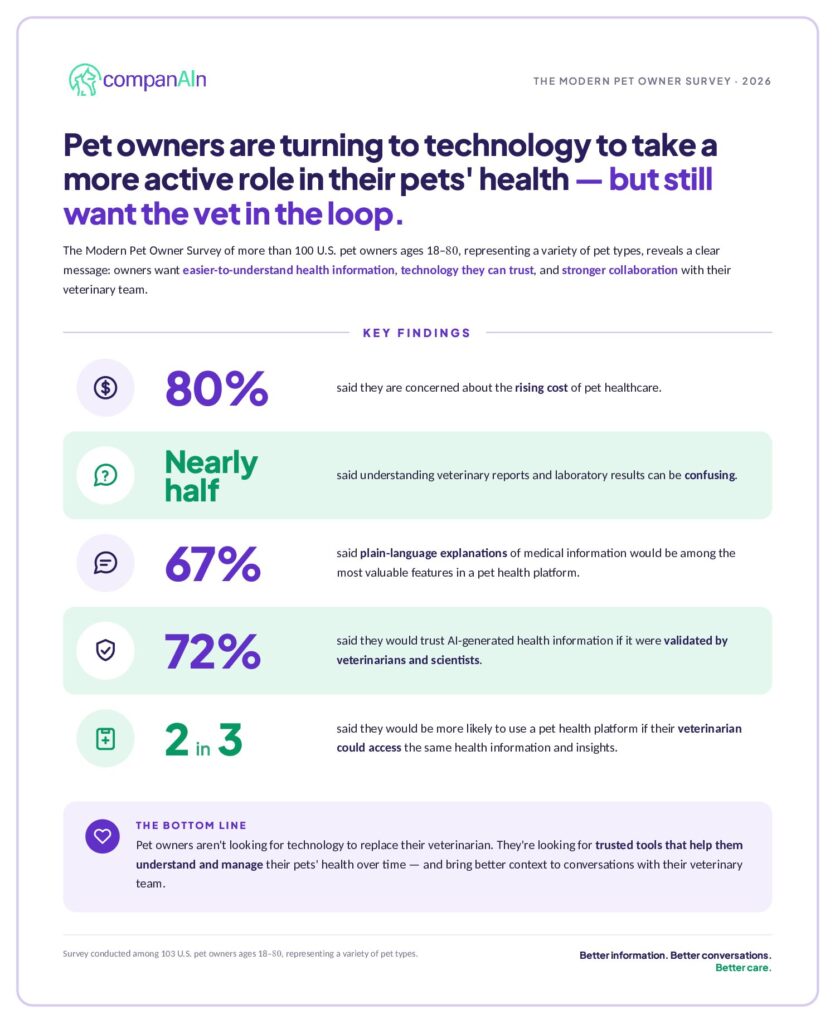
No. AI is a tool to support veterinary decision-making, providing insights and predictive analysis. Professional oversight and expertise remain essential.
How does AI help with preventive care?
By analyzing health trends and risk factors, AI predicts potential issues and recommends interventions before conditions worsen, reducing emergency visits and improving long-term health.