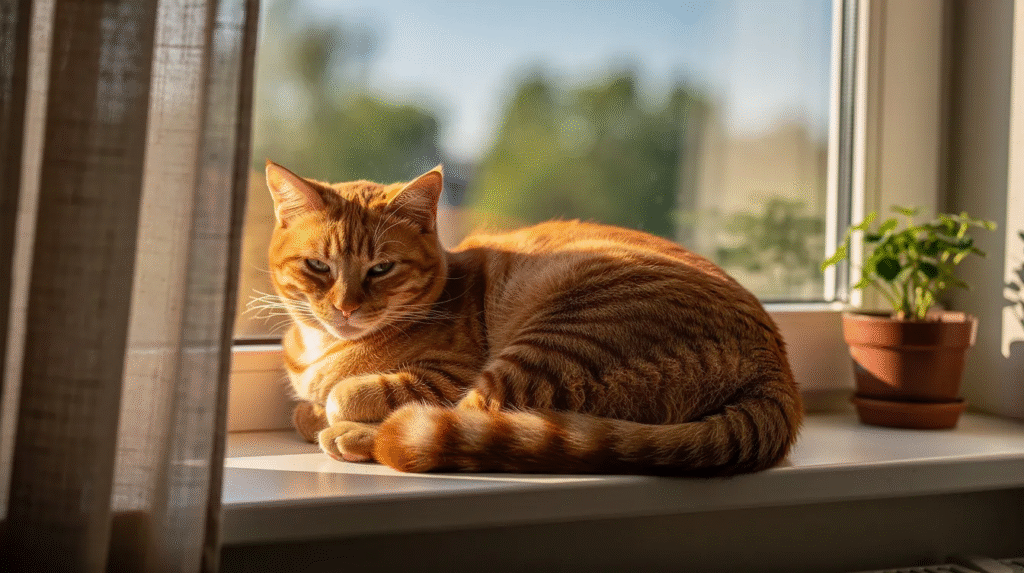

Your cat finishes a spirited run down the hallway, flops on the floor, and starts breathing with her mouth open. You freeze. You’ve never seen her do that before. Is this something cats just do, or is this the moment you grab the carrier and head straight to an emergency clinic?
That uncertainty is one of the more unsettling experiences in pet ownership, because unlike a dog who pants openly after every walk, a cat breathing with her mouth open is genuinely uncommon. Cats don’t pant to cool down the way dogs do, and any open-mouthed breathing in a resting or calm cat deserves real attention. Context matters here, because the difference between normal panting and a medical emergency often only becomes clear over time.
That’s where CompanAIn brings something different to the table. By organizing years of veterinary records, documented symptoms, and health observations into a continuously evolving Living Health Timeline, CompanAIn’s agentic AI helps veterinarians recognize whether a cat’s breathing changes represent a new development or the progression of something that’s been quietly building.
Why Cat Panting Is Different From Dog Panting
A healthy cat at rest breathes through the nose, taking somewhere between 15 and 30 breaths per minute with no visible effort and no sound. The chest rises and falls smoothly. The mouth stays closed.
When a cat breathes through its mouth, the body is communicating something worth listening to. Open-mouthed breathing in cats happens for one of a few reasons: the cat is in genuine physiological distress, responding to intense short-term stress, recovering from vigorous play, or managing heat that has pushed the body past its normal regulation capacity. The first scenario demands urgent veterinary attention. The others are transient and resolve on their own within minutes.
The distinction matters enormously, because misreading a serious respiratory event as post-play panting, even by 20 or 30 minutes, has the potential to change outcomes dramatically.
When Cat Panting Is Considered Normal
There is a narrow window of circumstances where open-mouthed breathing falls within acceptable feline behavior. Cats who have been running hard may pant briefly afterward, but it should settle within five to ten minutes once the cat rests in a cool, calm space. Car rides, vet visits, or introductions to new animals can trigger temporary open-mouthed breathing through a combination of heat, confinement, and fear. When ambient temperatures climb high enough, cats may resort to open-mouthed breathing as a last resort for temperature regulation.
The common thread in all three scenarios is brevity and an obvious cause. Once the trigger is removed, breathing returns to normal quickly. When panting appears without a clear trigger, persists past that window, or occurs in a cat that was resting quietly, the situation changes entirely.
What Resting Respiratory Rate Reveals—and Where Single Snapshots Fail
Most cat owners don’t think to count their cat’s breaths until something already looks wrong. By then, the information they needed existed months earlier.
Resting respiratory rate (RRR) is one of the only home-observable signals that can flag developing cardiac or respiratory disease before a crisis arrives. The measurement is simple: count chest rises for 30 seconds while your cat sleeps, then double the number. Research published in PMC confirms that cats with subclinical heart disease generally maintain a sleeping rate below 30 breaths per minute, and consistent readings above that threshold can precede congestive heart failure.
A single reading tells you almost nothing. The pattern it forms over time tells you nearly everything.
Why a Single Number Isn't Enough
A general-purpose tool given a resting rate of 28 can tell you whether it falls within a reference range. It cannot tell you whether that cat has been quietly climbing toward heart failure for two years.
Multi-agent AI cross-references that rate against the cat’s own documented baseline, then correlates it with other signals in the record: a murmur noted 18 months ago, owner observations about reduced activity, an occasional nighttime cough. The difference between a stable cat and a deteriorating one often lies in that correlation, not in any individual value.
- A rate of 28 following three years of readings at 20, 22, and 24 is a trajectory that warrants investigation.
- The same rate of 28 following readings of 27, 26, and 27 is noise.
No single appointment captures that distinction. For feline respiratory disease specifically, multi-agent architecture isn’t a convenience feature. It’s the mechanism that turns scattered observations into a coherent clinical picture.
Medical Causes That Make Cat Panting an Emergency
Several serious conditions present as open-mouthed breathing or labored respiration in cats. These aren’t rare edge cases; they represent the most common reasons cats arrive at emergency clinics in respiratory distress.
Feline Asthma
According to Cornell University’s College of Veterinary Medicine, feline asthma affects between 1% and 5% of domestic cats, making it the most commonly diagnosed respiratory disorder in the species. During an attack, the airways constrict and fill with mucus, forcing cats to work hard for every breath. Many affected cats crouch close to the ground with the neck extended forward while struggling to inhale. Siamese and Himalayan breeds are overrepresented, and most cats are diagnosed between two and eight years of age.
Mild asthma is frequently mistaken for hairball coughing, which is part of why cases go undetected until an acute episode arrives. A recurring cough, occasional wheeze, or increased respiratory effort at night should prompt a workup before a crisis forces the conversation.
Hypertrophic Cardiomyopathy and Heart Failure
Hypertrophic cardiomyopathy (HCM) is the most common cardiac disease in cats, characterized by thickening of the left ventricular wall that progressively impairs the heart’s ability to fill and pump effectively. As the disease advances, fluid accumulates around the lungs in a condition called pleural effusion, making breathing increasingly difficult.
Research published in BMC Veterinary Research found that congestive heart failure accounts for over half of all feline pleural effusion cases, with a 90% positive predictive value when an enlarged cardiac silhouette appears on chest radiographs. Cats with HCM often show no outward symptoms until they’re suddenly in distress, which is exactly why longitudinal data matters so much in this disease. HCM is more common in male cats and in breeds including Maine Coons, Ragdolls, and British Shorthairs.
Warning Signs That Demand Immediate Veterinary Attention
Some findings eliminate the need to wait and see. If you observe any of the following, go directly to an emergency veterinary clinic:
- Blue, grey, white, or pale gums, which indicate oxygen deprivation and constitute a medical emergency
- Open-mouthed breathing at rest with no recent exercise or stress exposure
- Breathing rate consistently above 40 breaths per minute at rest (normal is 15 to 30)
- Visible abdominal effort with each breath, or the sides heaving dramatically
- Neck extended forward, elbows out, hunched posture, a classic indicator of significant respiratory distress
- Audible wheezing, crackling, or gurgling with each breath
- Sudden collapse, extreme lethargy, or unresponsiveness
Counting your cat’s resting respiratory rate is one of the most practical tools available to owners. Count breaths for 30 seconds and double the result. A sleeping cat normally breathes 15 to 20 times per minute. If the resting rate consistently exceeds 30 to 35 breaths per minute, contact your veterinarian that day rather than waiting for a scheduled appointment.
How CompanAIn's Agentic AI Supports Respiratory Health Over Time
CompanAIn’s agentic AI approaches respiratory health the way a specialist would: not by evaluating individual findings, but by examining what they mean in sequence. A murmur noted in year one, combined with an owner report of reduced activity in year two and a resting respiratory rate of 38 in year three, tells a very different story than any single entry. CompanAIn’s agentic technology identifies these longitudinal patterns and surfaces them for the veterinarian in a format that supports faster, more informed clinical decisions.
Flagging Changes Before They Escalate
CompanAIn’s Trend Detection alerts flag emerging changes across health data, marking whether findings are improving, stable, concerning, or declining. For respiratory conditions specifically, gradual increases in resting respiratory rate, recurring documentation of coughing or wheezing, or a pattern of reduced activity in a cat with a known cardiac murmur can all generate proactive alerts.
Feline HCM is notoriously difficult to catch early because cats compensate well until the disease is advanced. The same is true for progressive asthma, which can smolder for months before a severe episode. CompanAIn’s Living Memory technology maintains context across every health data point, giving veterinarians the longitudinal view that periodic wellness exams alone cannot provide.
Supporting the Veterinary Visit
When a cat arrives at the clinic in respiratory distress, the minutes spent gathering history are minutes the patient may not have. CompanAIn’s Vet-Ready AI Summary consolidates the cat’s relevant health history, documented symptoms, and identified trends into a clinician-grade report the care team can access immediately. Every murmur ever recorded, every respiratory rate logged, and every owner observation documented are ready to inform the clinical picture the moment they’re needed.
CompanAIn Assist helps owners document what they’ve been observing between appointments. If a cat has been breathing fast during sleep three nights running, that observation becomes part of the record rather than disappearing from memory before the next exam.
What to Do If Your Cat Is Panting Right Now
Most respiratory crises in cats don’t materialize without warning. The warning signs are simply scattered across appointments, owner observations, and records that no one has assembled into a single picture yet.
For cats with a known respiratory diagnosis, every observation logged between appointments is data your veterinarian may not have yet. Contact CompanAIn today to turn those observations into the longitudinal health picture that catches problems before they become emergencies.
Frequently Asked Questions
How do I tell the difference between normal panting and a breathing emergency in my cat?
Normal panting in cats is rare, brief, and tied to an obvious cause such as intense play, heat, or acute stress. It resolves within five to ten minutes once the trigger is removed. Emergency-level breathing involves a cat at rest, shows visible effort with each breath, and may include abnormal gum color. When in doubt, count resting breaths. Anything consistently above 30 to 35 per minute warrants a call to your veterinarian.
Can a cat with asthma look normal between attacks?
Yes, and this is one of the most challenging aspects of the disease. Feline asthma can smolder as low-grade inflammation for months before producing an acute episode. Some cats show only occasional coughing that owners attribute to hairballs. Documenting a baseline of normal respiratory rates and noting any recurring cough or wheeze helps identify the disease before it escalates.
What should I do if my cat starts panting in the car on the way to the vet?
Keep the carrier in the coolest part of the vehicle, cover it with a breathable cloth to reduce visual stimulation, and drive as smoothly as possible. If the panting is severe or accompanied by gum color changes, call ahead so the clinic can prepare oxygen support and have staff ready on arrival.
Does HCM always cause breathing symptoms early on?
Not initially. HCM often progresses silently for years before producing respiratory signs, and many cats are diagnosed incidentally when a murmur or gallop rhythm is detected at a routine exam. A single abnormal finding at one appointment may not convey the same urgency it does when viewed against a trend of prior normal exams and recent behavioral changes, which is precisely where longitudinal health data changes the clinical picture.
How does CompanAIn help with a cat that has a known respiratory condition?
For cats already diagnosed with asthma, HCM, or other respiratory diseases, CompanAIn’s Living Memory technology maintains the full context of the condition across every exam, medication change, and documented symptom. Trend Detection alerts flag when resting respiratory rates appear to be climbing, and the Vet-Ready AI Summary gives the care team an immediate picture of the cat’s history at every visit.