
Introduction
Newborn kittens between 0-8 weeks of age require specialized, round-the-clock care that addresses their complete dependency on external support for feeding, warmth, and elimination. Whether you’ve found orphaned kittens, are supporting a mother cat with her litter, or fostering through a rescue organization, understanding these critical first weeks determines survival outcomes.
This guide covers comprehensive neonatal kitten care for both orphaned kittens requiring full intervention and litters with mom cat support, including feeding protocols, temperature management, developmental milestones kittens reach, and health monitoring. Advanced veterinary treatments and surgical interventions fall outside this scope. The target audience includes new kitten owners, shelter volunteers, foster parents resident pets households, and anyone who discovers abandoned young orphan kittens needing immediate help.
Direct answer: Newborn kittens need warmth (85-90°F environment), feeding every 2-3 hours with kitten milk replacer—never cow’s milk which can cause life-threatening diarrhea—elimination stimulation before and after each feeding, and veterinary checkups within the first week of care (American Association of Feline Practitioners [AAFP] Feline Life Stages Guidelines). Kitten feeding is a critical aspect of newborn kitten care, requiring proper technique and strict adherence to frequent feeding schedules to ensure healthy development. Monitoring kitten weight gain daily is essential, as steady increases in weight are a key indicator of adequate nutrition and overall health.
By following this guide, you’ll gain:
- Proper bottle feeding kittens techniques and kitten formula preparation
- Temperature regulation strategies to keep kittens warm safely
- Recognition of weekly developmental milestones kittens achieve
- Health monitoring skills to identify ill kittens early
- Complete weaning kittens protocols for successful transition to solid food
Understanding the Newborn Kitten Period
The newborn period spans 0-8 weeks and represents the most critical dependency phase in a cat’s life. During this time, kittens transition from completely helpless neonates to miniature cats capable of independent survival. Understanding this progression helps caregivers provide appropriate support at each stage.
The difference between mother-raised and orphaned kittens care requirements is substantial. Mother cats provide colostrum (antibody-rich first milk), constant warmth, elimination stimulation through grooming, and early social learning. Orphaned kitten care requires humans to replicate all these functions artificially—a demanding but achievable responsibility when done correctly (Veterinary Partner, 2023).
Neonatal Stage (0-2 weeks)
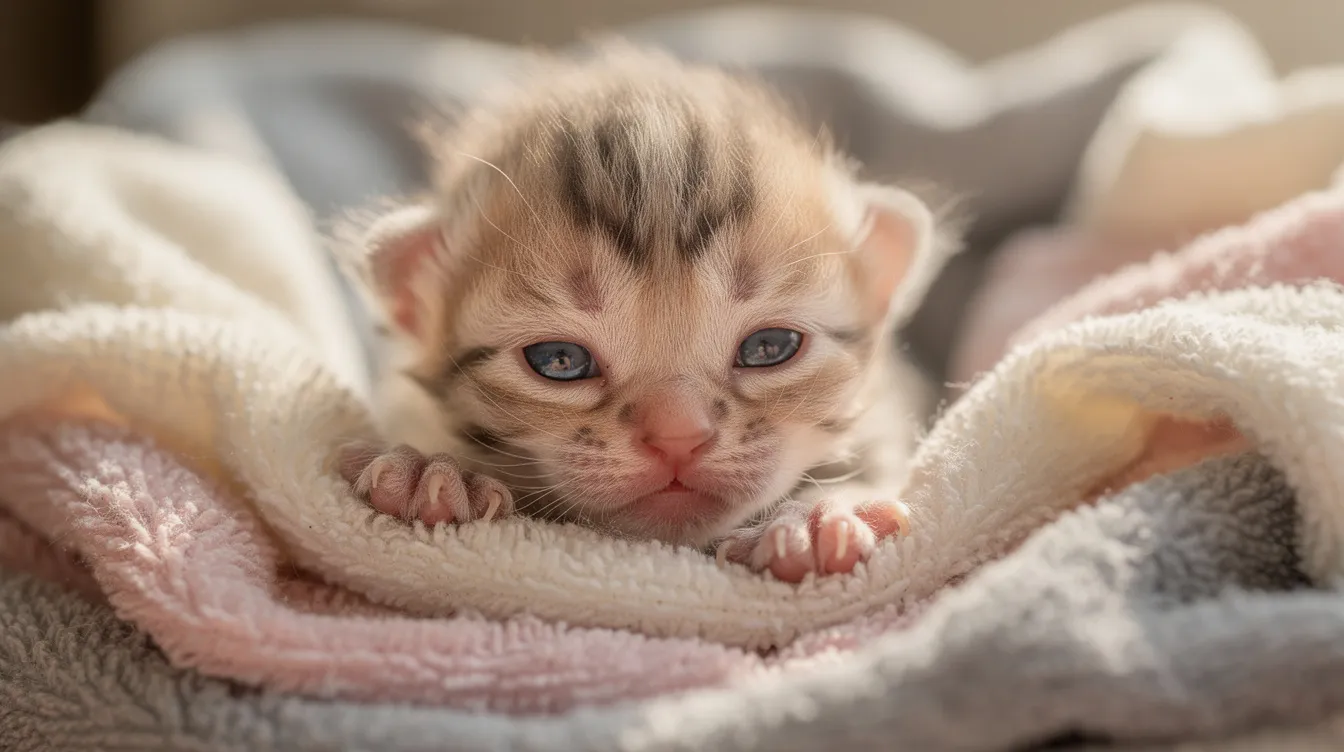
Kittens spend about 90% of their time sleeping and nursing during the first week and rely entirely on their mother for warmth and waste management. During this neonatal stage, kittens are born blind and deaf with eyes and ears sealed shut. They possess limited mobility beyond crawling toward warmth and cannot regulate body temperature independently.
Very young orphan kittens will not be able to urinate and defecate without your help, so this is a crucial part of neonatal kitten care. Without stimulation mimicking defecation mother cats groom behaviors, these essential functions simply don’t occur. This complete dependency on external support makes the neonatal stage the highest-risk period for survival.
Transitional Stage (2-4 weeks)
Kittens’ vision remains blurry for weeks after their eyes fully open at 10–14 days, and they develop better balance and coordination as they grow. The ears unfold and begin processing sound, while younger kittens recently immobile start attempting wobbly first steps. Baby teeth emerge around weeks 3-4.
The socialization period for kittens begins around 2 weeks and is crucial for introducing them to human touch and various sounds. Gradual development of elimination control begins, though manual stimulation remains necessary until approximately 3 weeks of age. Temperature regulation improves but remains unreliable. This transition explains why feeding and care requirements become more complex—kittens are developing rapidly but haven’t yet achieved independence.
Essential Feeding Requirements for Bottle Feeding Kittens
As kittens progress through developmental stages, their nutritional needs shift dramatically. What works for a one-day-old kitten differs substantially from requirements at 6 weeks of age, making understanding these changes essential for healthy kittens outcomes. When bottle-feeding, gently position the nipple in the kitten’s mouth and stimulate suckling by moving the nipple slightly or allowing the kitten to pull on it, ensuring proper latch and reducing the risk of aspiration.
Kitten Milk Replacer Selection and Preparation
A specialized kitten milk replacer (KMR) should be used for feeding, as cow’s milk can cause life-threatening diarrhea. Commercial kitten formula products are available at pet stores and veterinary clinics, formulated to match the protein, fat, and nutrient profile of mother cat milk. According to veterinary guidelines from VCA Animal Hospitals, formulas should meet AAFCO growth standards and include essential amino acids like taurine.
To prepare kitten milk replacer properly:
- Mix prepared kitten formula according to package directions
- Warm to approximately 100°F (38°C)
- Test temperature on your inner wrist—it should feel neutral, not hot
- Never microwave formula, as it creates dangerous hot spots
For emergency after-hours situations when pet stores are closed, temporary recipes exist (see Additional Resources), but these should only bridge gaps until proper kitten formula becomes available (Alley Cat Allies, 2022).
Feeding Frequency and Amounts
Newborn kittens require frequent kitten feeding every two to three hours, typically gaining about 10 to 15 grams each day and doubling their birth weight by two weeks of age. This means neonates need roughly 6-8 feedings daily, including overnight sessions. Yes, you may need to wake sleeping kittens for scheduled kitten feeding during the first week.
Kittens should gain about ½ ounce (14 grams) per day or 4 ounces (113 grams) per week, and monitoring kitten weight gain is crucial to ensure their nutritional needs are being met. Weigh kittens daily using a kitchen scale to track kitten weight gain and progress. Birth weight typically ranges 80-120 grams (3-4.5 ounces), with doubling expected by day 14.
When bottle feeding, hold the bottle at a 45-degree angle and allow the kitten to suckle at its own pace to prevent aspiration and ensure proper feeding. Make sure the nipple fits comfortably in the kitten’s mouth. Kittens naturally suckle when positioned on their bellies—never feed a kitten on its back, as this dramatically increases aspiration risk. The nipple hole should allow milk to drip slowly when inverted; if a kitten requires syringe feeding due to weakness, this should be done under veterinary guidance as noted by PetMD’s bottle-feeding protocols (PetMD, 2023).
When feeding multiple kittens, establish a rotation system. Kittens begin suckling with varying vigor; weak kittens may need longer feeding sessions. Feed remaining foster mates while maintaining warmth for those waiting.
Weaning Process (4-8 weeks)
The weaning process for kittens begins around 4–5 weeks, transitioning them to wet food. A kitten is ready for the weaning process when they are litter box trained and begin biting the nipple often and forcefully—signs of readiness rather than arbitrary timing.
For weaning orphaned kittens, the first step is to get the kitten to lap up formula or gruel from your finger and then a spoon before introducing it to a shallow dish. During this stage, kittens catch on to eating by lapping, licking, and handling food in different forms until they become comfortable with solid foods. This gruel mixture combines kitten formula with warm canned kitten food, creating an intermediate texture.
Gradually reduce the amount of formula mixed with canned food until the kitten is eating just the food, ensuring they have fresh water available in a low spill-resistant bowl. By weeks 6-8, healthy kittens should be eating dry kitten food (moistened initially) and wet food independently, with bottle feeding eliminated.
Critical Care Procedures and Development Tracking for Orphaned Kittens
Building on proper feeding foundations, comprehensive care encompasses temperature management, elimination support, and milestone monitoring that together determine whether kittens mature successfully.
Temperature Regulation and Housing
Kittens under four weeks of age cannot thermoregulate and require external heat sources to maintain their body warmth, ideally in an environment of 100-103°F (38-39°C) for body temperature. A warm, non-drafty room for kittens should ideally be maintained at around 85°F (29°C), especially for those under six weeks of age, to prevent hypothermia.
Using a heating pad on a low setting under a crate or cage, covered with a soft towel, can help maintain warmth for kittens, but care must be taken to ensure they can move away from the heat if it becomes too warm. Pet heating pads designed for animals are safer than human versions; some shelters carry pet heating pads specifically for foster situations. A pet heating pad wrapped in fleece provides gentle warmth without burn risk.
To keep a newborn kitten warm properly:
- Place heating pad under only half the bedding area
- Monitor kitten body temperature (should feel warm, not hot)
- Provide soft, absorbent bedding materials changed frequently
- Maintain humidity around 55-60% to prevent dehydration
- Ensure draft-free nesting space
As kittens age, gradually decrease ambient temperature: 80-85°F by week 2, 75-80°F by week 3, and room temperature (70-75°F) by week 6 for healthy kittens. A cold kitten cannot digest food properly, making warmth the first priority before any feeding attempt (Shelter Medicine Guide, University of Wisconsin, 2023).
Litter Box Training, Elimination Stimulation, and Hygiene
Before and after each feeding, gently rub the kitten on their lower abdomen, as well as the genitals and rectum with a cotton round, or toilet paper dipped in warm water to stimulate urination and defecation. This mimics defecation mother cats groom behaviors essential for waste elimination.
Kittens should urinate during each stimulation and defecate at least once daily; it is normal for a kitten that just comes into your care to not defecate for up to 48 hours due to transition stress. Use gentle circular motions; excessive pressure isn’t necessary. Clean and dry the area afterward to prevent skin irritation.
Transition to litter training begins around 4-5 weeks of age. Introduce a shallow litter box with non-clumping litter or shredded newspaper—clumping litter poses ingestion risks for curious kitten explorers. According to veterinary resources from Napoleon Veterinary Hospital, most kittens instinctively use litter boxes with minimal training once developmentally ready.
Weekly Development Milestones
Kittens develop rapidly, reaching milestones such as opening their eyes around 2 weeks, walking by 3 weeks, and full socialization between 2 and 7 weeks. The following table helps identify normal versus concerning development patterns:
Week | Weight Range | Physical Development | Care Requirements |
|---|---|---|---|
0-1 Week | 3-4 oz (80-120g) | Eyes/ears closed, umbilical cord attached, limited movement | Feed every 2-3 hours, maintain 85-90°F, stimulate elimination |
2-3 Week | 8-12 oz (200-350g) | Eyes opening (remain blurry), ears unfolding, beginning to crawl | Feed every 3-4 hours, reduce temperature to 80-85°F, continue stimulation |
4-5 Week | 13-16 oz (450-650g) | Standing, playing, baby teeth present, litter box trained | Begin weaning kittens, introduce shallow litter box, socialize kittens actively |
6-8 Week | 1.5-2 lbs (700-950g) | Full mobility, adult behaviors, all baby teeth erupted | Complete weaning, eating solid food, ready for adoption and first vaccinations |
Male kittens and female kittens develop at similar rates, though individual variation exists. Older kittens who miss milestones may need veterinary evaluation. For comprehensive health monitoring including vaccination scheduling, consult CompanAIn’s kitten health services. | |||
 |
Common Challenges and Solutions
Even experienced foster parents encounter obstacles with neonatal kitten care. Recognizing problems early and responding appropriately significantly improves outcomes.
Sometimes, bathing kittens becomes necessary if they become soiled or dirty. When bathing kittens, especially young or underage kittens, use warm water, a gentle kitten-safe shampoo, and ensure the kitten is kept warm and dried thoroughly afterward to prevent chilling.
Feeding Refusal or Difficulty
When a kitten refuses to latch, stimulate natural nursing instincts by gently stroking the forehead and cheeks before offering the bottle. Position kittens on their bellies at a slight incline—flat positioning or back-feeding creates aspiration risk. If kittens begin lapping but won’t suckle, the nipple hole may need enlargement.
For feed weak kittens situations, syringe feeding under veterinary guidance provides nutrition when bottle feeding fails. Deliver tiny amounts (0.25-0.5 ml) slowly along the kitten’s mouth side, allowing swallowing between drops. Traditional kitten toys or textures aren’t appropriate at this age—focus entirely on warmth and nutrition.
Failure to Thrive or Weight Loss
Kittens failing to gain weight or losing weight require immediate veterinary consultation. Fading kitten syndrome presents as lethargy, constant crying, loss of righting reflex, and poor suckle response. According to VCA Animal Hospitals’ guidelines on orphaned kitten care, causes include infection, congenital defects, parasites, or inadequate nutrition.
Supportive measures include increased feeding frequency, ensuring adequate warmth (cold kitten symptoms prevent digestion), and nutritional supplementation pastes. However, same age kittens thriving while one fails often indicates underlying illness requiring professional diagnosis.
Hypothermia and Temperature Regulation Issues
A cold kitten feels cool to touch, becomes stiff or limp, and demonstrates weak or absent suckle reflex. Never feed a hypothermic kitten—formula won’t digest and may cause aspiration.
Gradual rewarming protocols include:
- Hold kitten against your body under clothing
- Use warm (not hot) towels, replacing as they cool
- Place near (not on) a heating pad
- Warm over 1-2 hours gradually; rapid warming causes shock
Prevention through proper housing setup eliminates most hypothermia risks in foster settings.
Elimination Problems
If stimulation doesn’t produce urination after several attempts, the kitten may be dehydrated—check for skin tenting and dry gums. Constipation lasting beyond 48 hours requires veterinary attention; gentle abdominal massage sometimes helps.
Diarrhea in young orphan kittens often results from overfeeding, cold formula, or parasites. Reduce feeding volume slightly, ensure formula warmth, and seek veterinary evaluation if diarrhea persists beyond one day or contains blood.
Early Illness Recognition
Warning signs requiring immediate veterinary attention include:
- Lethargy beyond normal sleeping
- Changed vocalization (constant crying or silence)
- Appetite loss lasting more than one feeding
- Labored breathing or discharge from nose/eyes
- Unattended kittens becoming wet kittens (incontinence)
- If kitten appears food possessive then suddenly stops eating
Vaccinations are essential to protect kittens from diseases, and it is important to consult a veterinarian to determine when the vaccination course should begin. Core FVRCP vaccines typically start at 6-8 weeks of age, with boosters every 3-4 weeks until 16 weeks. Flea and worming treatments may be recommended for kittens as young as two days old, depending on the risk to the kittens (American Association of Feline Practitioners [AAFP] Feline Life Stages Guidelines, 2024). Early veterinary relationship establishment enables prompt intervention when ill kittens present.
Conclusion and Next Steps
Successful newborn kitten care centers on three non-negotiable elements: consistent warmth appropriate to age, proper feeding with kitten milk replacer on schedule, and vigilant health monitoring including daily weight tracking. When these foundations remain solid, most kittens mature through developmental milestones toward healthy independence.
Immediate next steps:
- Establish a veterinary relationship before emergencies arise
- Create a written feeding schedule posted where visible
- Set up appropriate housing with heating pad, thermometer, and scale
- Stock sufficient kitten formula and feeding supplies
- Learn elimination stimulation technique before first feeding
As kittens mature beyond 8 weeks, related considerations include introducing foster kittens to adult cats safely, socialization protocols with foster parents resident pets, and appropriate spay/neuter timing. Kittens should be neutered when they are around four months old to prevent unwanted litters and inbreeding, and it is advisable to consult a veterinarian for guidance on this process. For information on surgical services including pediatric spay/neuter, visit CompanAIn’s surgical services.
Additional Resources
Emergency Kitten Formula (temporary use only):
- 1 cup whole goat’s milk
- 1 egg yolk (no white)
- 1 tablespoon corn syrup
- Mix thoroughly, warm to 100°F, discard after 24 hours
Daily Weight Tracking: Weigh kittens nursing or bottle-fed daily at the same time. Record weights to identify trends. Failure to gain over 2 consecutive days warrants veterinary consultation.
Veterinary Emergency Guidelines: Seek immediate care for: body temperature below 97°F, bloody stool or vomit, difficulty breathing, seizures, or complete feeding refusal lasting over 8 hours. Keep emergency veterinary contact numbers accessible at all times.