
Introduction
Most dogs need 10-14 days of restricted activity, incision monitoring, and prescribed pain management after spay surgery. Post spay care for dogs is not complicated, but it does need to be consistent because spaying is a major surgery for female dogs, not a minor skin procedure.
This guide covers the full recovery period after your pet’s surgery, from bringing your dog home from the veterinary clinic through the second week, when many dogs are ready for a follow-up check and gradual return to normal activity. It is written for pet parents and pet owners caring for a recently spayed dog at home, especially owners who need to know what is completely normal, what needs monitoring, and what requires immediate veterinary attention.
The direct answer: dog spay post-operative care requires a strict 10 to 14-day recovery period to allow both the external incision and internal uterine tissues to heal completely. During recovery, dogs must not be allowed to run, jump, or engage in rough play to prevent complications.
By the end of this guide, you will know how to:
- Understand the spay recovery timeline from Day 0 through two weeks
- Monitor the incision site for proper healing and warning signs
- Manage restricted activity, potty breaks, and confinement at home
- Give pain medications safely and support your dog’s recovery
- Know when to contact your vet, visit the vet’s office, or seek urgent care
Understanding the Post-Spay Recovery Process
Spaying is the surgical sterilization of female animals, most commonly involving removal of the ovaries and uterus. In dogs, this procedure helps prevent unwanted litters and offers long-term health benefits, but it also creates a surgical site that needs both external and internal healing. According to the American Veterinary Medical Association (AVMA), spaying is routine in veterinary medicine, yet it is still a full abdominal surgery.
Good post op care matters because the skin incision is only the visible part of the healing process. Internal sutures close deeper tissue layers, and too much physical activity can strain those layers before they are strong enough. Veterinary instructions should always be followed to ensure a smooth, complication-free recovery after spaying.
What Happens During Spaying Surgery
A traditional spay is an ovariohysterectomy, meaning the veterinarian removes the ovaries and uterus. Some veterinarians perform an ovariectomy, which removes only the ovaries, depending on the dog’s age, breed, health status, and surgical plan. Either way, the procedure involves general anesthesia, an abdominal incision, closure of internal tissues, and closure of the skin with sutures, staples, or surgical glue.
Because general anesthesia affects the whole body, many dogs seem sleepy, unsteady, nauseated, or quieter than usual for the first 12-24 hours. These anesthesia effects can also cause a reduced appetite and mild nausea, so offering small portions of water and food is advised initially. Hydration and a limited, bland diet are recommended for the first evening after anesthesia is administered.
Normal Recovery Timeline Phases
Day 0-1 is the post-anesthesia phase. Your dog may come home the same day or after a short stay at the veterinary clinic, depending on the clinic protocol and how your pet appears after surgery. Mild grogginess, shivering, whining, or reduced appetite can be completely normal, but breathing trouble, collapse, pale gums, or uncontrolled bleeding are warning signs.
Days 2-7 are the first major healing phase. Appetite often improves, but the incision area may still show mild bruising, firmness, or swelling. This is when strict restricted activity matters most: limit your dog to short, leashed bathroom breaks for the first week after surgery, avoiding running, jumping, and rough play for 10-14 days to prevent complications. Daily monitoring of the incision site is essential to check for signs of infection or complications.
Days 8-14 are the later external healing phase. The incision site should look cleaner, drier, and less inflamed, though internal healing is still underway. The University of California Davis Veterinary Medicine also emphasizes continued incision checks, medication compliance, and activity restriction through this period, even when dogs bounce back and start acting normal.
Factors Affecting Individual Healing Rates
Age, size, breed, and body condition can change a dog’s recovery timeline. Puppies and young adult dogs may show faster healing externally, while older dogs, large-breed dogs, and dogs with thick skin folds or excess weight may need closer monitoring. Larger dogs can place more tension on the surgery site simply because of body size and movement.
Health issues can also slow proper healing. Obesity, diabetes, Cushing’s disease, immune suppression, poor nutrition, pregnancy, or being in heat at the time of surgery may increase surgical risk or delay recovery. Most veterinarians recommend at least 7-10 days of restricted activity after neutering, but this can vary depending on the dog’s age, breed, and overall health; the same principle applies to spay or neuter recovery plans, including most male dogs after neuter surgery and female cats after spay surgery.
Critical First 48 Hours After Surgery
The first 48 hours after surgery are about observation, comfort, hydration, and preventing sudden movement. Your dog is transitioning from clinic monitoring to home care, and post operative complications are easiest to address when pet owners notice changes early. The American College of Veterinary Surgeons (ACVS) recommends careful postoperative monitoring, activity restriction, and following discharge instructions closely.
This early window is also when pain relief and rest have the biggest impact. A calm environment promotes faster healing because your dog is less likely to jump, pace, or lick the incision daily. Your main job is to make rest easy and physical exertion difficult.
Post-Anesthesia Monitoring and Comfort
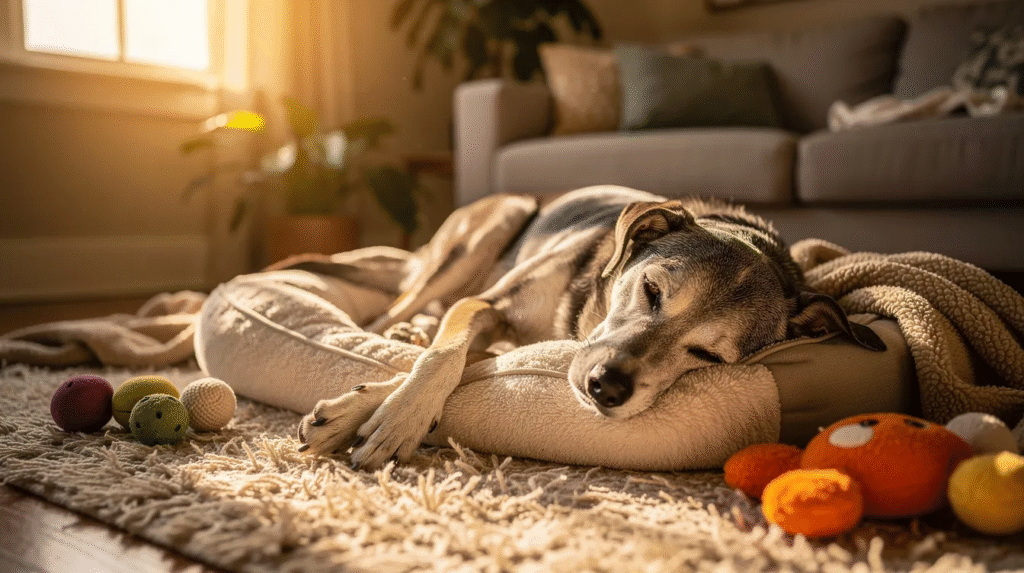
When you bring your dog home, transform a corner of your home into a peaceful sanctuary where your dog can rest undisturbed, away from high-traffic areas and loud noises. Choose a warm, dry space where you can supervise your pet without constant interruptions. Maintain a consistent, warm temperature in the recovery area, as post-surgery dogs often feel colder due to the effects of anesthesia.
Provide a calm environment with a soft bed to cushion the incision area and prevent pressure sores, limiting interactions with other pets during recovery. A crate, recovery pen, or small room with baby gates can keep your dog from climbing stairs, jumping on furniture, or greeting other animals too energetically. For the first night, keep your dog close enough that you can monitor breathing, comfort, and the surgical site.
Initial Behavior and Appetite Management
Mild sleepiness, clinginess, whining, or restlessness can be normal after general anesthesia, but symptoms should gradually improve. Anesthesia can cause mild nausea in dogs, so offering small portions of water and food is advised initially. Do not force a full meal; small bland portions are usually better tolerated.
Hydration and a limited, bland diet are recommended for the first evening after anesthesia is administered. If your dog drinks too quickly, offer smaller amounts more frequently to reduce vomiting. Persistent vomiting or diarrhea after surgery can indicate complications that require veterinary attention.
Emergency Signs Requiring Immediate Veterinary Attention
Some signs should not wait for the next routine appointment. Contact your vet immediately if your dog has difficulty breathing, pale or bluish gums, collapse, extreme weakness, or persistent lethargy that seems beyond normal anesthesia recovery. Excessive swelling, bleeding, or lethargy requires urgent veterinary care after a dog’s neuter surgery, and the same urgency applies after spay surgery.
Call the vet immediately if the incision starts to pull apart, bleed, or ooze pus. Contact your veterinarian immediately if you notice signs of infection such as redness, discharge, or a foul odor from the incision site. A small amount of redness or swelling at the incision site may be normal, but contact your vet immediately if you notice excessive redness, discharge, or a foul odor.
Essential 14-Day Post-Spay Care Protocol
The full post operative recovery period is usually two weeks, even if your dog seems better after a few days. Even if your dog seems energetic, avoid allowing them to run, jump, or engage in rough play for at least 10-14 days post-surgery to ensure proper healing. The goal is to prevent complications while giving the incision, internal sutures, and deeper abdominal tissues enough time to stabilize.
This protocol focuses on four daily priorities: incision care, activity control, medication compliance, and preventing licking or chewing. Used together, these steps support faster healing and reduce the risk of infection, seroma, suture damage, and incision reopening.
Daily Incision Site Management
Monitor the incision site twice daily for signs of proper healing, looking for minimal swelling and a clean, dry appearance. Daily monitoring of the incision site is essential to check for signs of infection or complications. The University of Minnesota Veterinary Medical Center explains that normal healing changes over time, so comparing the incision daily helps you spot new swelling, drainage, or separation.
Use this simple inspection process:
- Wash your hands before checking the incision site. Clean hands reduce the chance of introducing bacteria to the surgical site.
- Look at the incision edges. They should stay closed, with minimal swelling and a clean, dry appearance. Mild pinkness can be normal, but excessive redness is not.
- Check for discharge. A tiny amount of clear or lightly blood-tinged fluid early on may be expected, but yellow, green, thick, bloody, or foul-smelling discharge needs veterinary attention.
- Gently assess the surrounding area without pressing hard. Warmth, excessive swelling, pain, hard lumps, or sudden changes should be reported to your veterinarian.
- Take a daily photo in the same lighting. This makes it easier to notice whether the incision area is improving or worsening.
Only clean the incision if your veterinarian tells you to. In most cases, keep the surgery site clean and dry, and avoid creams, ointments, hydrogen peroxide, alcohol, or human antiseptics unless prescribed. Dogs should not be bathed or allowed to swim for at least 10 to 14 days post-surgery to prevent infection.
Activity Restriction Guidelines
Activity restriction is one of the most important parts of your dog’s recovery. Movement places tension on the abdominal wall, and internal healing lags behind what you can see on the skin. Even one jump onto a sofa can strain internal sutures before the incision is fully healed.
Activity Type | Week 1 Status | Week 2 Status | Notes |
|---|---|---|---|
Leash walks for bathroom breaks only | Allowed, very short | Gradually increase if healing well | Keep potty breaks calm; avoid pulling |
Running, jumping, play, roughhousing | Strictly prohibited | Still restricted until vet clearance | Rough play can damage internal healing |
Stairs and climbing stairs | Avoid or minimize | Reintroduce slowly under supervision | Use baby gates, ramps, or carry small dogs |
Furniture, beds, and car seats | Block access | Allow only after healing and vet approval | Dogs often jump before pet parents can stop them |
Crate rest, pen, or small room | Strongly recommended | May relax gradually near the end | Helpful for active dogs and multi-pet homes |
Training sessions and mental stimulation | Calm, stationary only | Continue low-impact enrichment | Use puzzle toys, chews, and quiet scent games |
Crate training, baby gates, and confinement are not punishments; they are safety tools. Many dogs feel ready for normal activity before their tissues are ready for physical exertion. If your pet needs enrichment, use puzzle toys, gentle handling, and quiet training sessions that do not involve jumping, spinning, chasing, or excitement. |
Pain Management and Medication Administration
Pain management is essential after spay surgery. The American Veterinary Medical Association (AVMA) notes that analgesia after ovariohysterectomy or ovariectomy is a key part of post-surgical care, and many dogs receive pain relief for several days after surgery. In many clinic protocols, all pets will receive 5 days of medications to help them with the healing process after surgery, and it is crucial to administer these medications as directed by the veterinarian.
Follow your veterinarian’s medication schedule precisely and do not skip doses, as proper pain management is essential for your dog’s recovery. Never give human pain medications such as aspirin, Tylenol, or ibuprofen to dogs, as these can be harmful or even deadly. If managing pain seems difficult or your dog remains restless, panting, hunched, trembling, or unwilling to move, contact your vet for guidance.
Prevent your dog from licking or chewing the incision site by using an Elizabethan collar or a protective garment for at least 10-14 days post-surgery. An elizabethan collar, e collar, recovery suit, or protective garment keeps bacteria from the mouth away from the incision and prevents pulled sutures or disrupted surgical glue. If your dog can still reach the incision, the device is not working and needs adjustment.
Common Post-Spay Issues and Immediate Solutions
Most post spay problems are easier to fix when they are caught early. Pet parents should not panic over every small change, but they should take warning signs seriously. A clean, dry incision site with mild swelling is very different from a hot, painful, draining, or opening incision.
Recent research on laparoscopic ovariectomy reported a 7.2% surgical site infection rate among 208 dogs, with most infections described as superficial and with improper e-collar use listed as a modifiable risk factor. That finding reinforces a practical point: preventing licking or chewing and monitoring the incision daily can reduce avoidable risk.
Incision Site Complications
A small amount of redness or swelling at the incision site may be normal, especially early in the healing process. However, excessive redness, excessive swelling, heat, thick discharge, bleeding, a foul odor, or pus are not normal. Contact your veterinarian immediately if you notice signs of infection such as redness, discharge, or a foul odor from the incision site.
If an incision starts to pull apart, bleed, or ooze pus, immediate veterinary attention is necessary. Suture problems can include missing stitches, loose staples, disrupted surgical glue, or a gap in the incision edges. Do not try to glue, tape, bandage, or treat the wound at home unless your veterinarian specifically instructs you to do so.
Behavioral and Activity Challenges
Many dogs bounce back mentally before the body is fully ready. Restlessness, pacing, whining, barking, or sudden bursts of energy can make restricted activity difficult, especially for young or high-drive dogs. The solution is environmental control: block furniture, use baby gates, keep other pets away, and schedule calm potty breaks on leash.
Depression or anxiety symptoms can also occur. Some dogs hide, sleep more, or seem unsettled because of pain, anesthesia effects, the e collar, or changes in routine. A calm environment, soft bed, predictable schedule, gentle reassurance, mental stimulation, and veterinarian-approved calming support can help your pet recover without unsafe physical activity.
Appetite and Digestive Concerns
Reduced appetite for the first 24 hours can be completely normal after anesthesia. Offer small amounts of water and bland food, then return gradually to the normal diet as tolerated. If your dog refuses food for more than 24-48 hours, cannot keep water down, or seems painful, call the vet’s office.
Constipation can happen after surgery because of anesthesia, pain medications, reduced movement, and less food intake. Mild diarrhea can also occur after stress, medication, or diet changes. Persistent vomiting or diarrhea after surgery can indicate complications that require veterinary attention, so do not ignore ongoing digestive signs.
Return to Normal Activity and Long-Term Care
A successful recovery usually means the incision is fully closed and dry, swelling is minimal or gone, appetite and bowel movements are normal, and your dog walks comfortably without stiffness. If external sutures or staples were used, your veterinarian may remove them around Day 10-14. If absorbable internal sutures or surgical glue were used, your veterinarian will still want to confirm that proper healing is progressing.
Your immediate next steps are to schedule or attend the follow-up appointment, continue restricted activity until your veterinarian clears your dog, and reintroduce normal activity gradually. Start with longer leash walks, then controlled movement, and only later allow running, jumping, climbing stairs, or rough play. Full recovery is not just about how the skin looks; internal healing must be protected too.
Long term, spaying helps prevent unwanted litters and removes the risk of ovarian and uterine disease. It can also reduce the risk of some mammary tumors when performed before early heat cycles. After recovery, continue routine wellness care, weight monitoring, and activity management because some spayed dogs may gain weight more easily if calorie intake is not adjusted.
Frequently Asked Questions
How long until my dog can jump on furniture again?
Most dogs should not jump on furniture for at least 10-14 days after surgery. Even if your dog seems energetic, jumping can strain the incision area and internal sutures before full recovery. Wait for your veterinarian to confirm that normal activity is safe.
When can I bathe my dog after spay surgery?
Dogs should not be bathed or allowed to swim for at least 10 to 14 days post-surgery to prevent infection. Water can soften healing tissue, introduce bacteria, and interfere with surgical glue or sutures. If the area gets dirty, ask your veterinarian whether gentle cleaning with a vet-approved method is appropriate.
Is it normal for my dog to be less active for several days?
Yes, many dogs are quieter for two or three days because of general anesthesia, soreness, and pain medications. Mild reduced appetite and extra sleep can be completely normal early on. Persistent lethargy, collapse, pale gums, or worsening weakness needs veterinary attention.
What should the incision look like as it heals?
The incision site should stay closed, clean, and dry, with minimal swelling. Mild redness or bruising can be normal early in the healing process, but excessive redness, discharge, bleeding, pus, or a foul odor is not normal. Monitor the incision site twice daily for signs of proper healing, looking for minimal swelling and a clean