
White flakes scattered across your couch caught your attention first. Then you noticed them accumulating in your dog’s bedding, along the back, and concentrated near the tail base. Your dog’s been scratching more than usual, the coat looks dull despite regular brushing, and now you’re trying to figure out whether the problem stems from diet, environment, or something requiring veterinary attention.
Dry skin and dandruff in dogs rarely have single causes. Food sensitivities create inflammation that manifests as flaking, but so does low humidity during winter months. Parasites trigger identical symptoms, as do hormonal imbalances and nutritional deficiencies. Distinguishing between dietary triggers and environmental factors determines whether switching food solves the problem or wastes months while the real cause continues.
CompanAIn’s agentic AI platform tracks skin changes alongside diet modifications, seasonal transitions, and environmental factors documented across months, revealing patterns that show whether food, environment, or disease drives the symptoms.
Understanding Normal Skin Function vs. Dysfunction
Healthy canine skin maintains a protective lipid barrier that retains moisture while preventing irritation from environmental exposures. Specialized glands secrete oils that coat hair shafts, creating the glossy appearance of well-maintained coats.
Dandruff—visible flaking of dead skin cells—occurs when this system fails. Excessive flaking results from accelerated skin cell turnover, inadequate oil production, or inflammation disrupting normal shedding processes. According to veterinary dermatologists, sebaceous glands that produce too much or too little sebum create imbalances leading to seborrheic dermatitis—the medical term for dandruff.
Two distinct presentations:
- Dry dandruff: White flakes resembling human dandruff, indicating inadequate oil production or environmental dryness
- Greasy dandruff: Yellowish flakes with odor, suggesting yeast overgrowth or bacterial complications
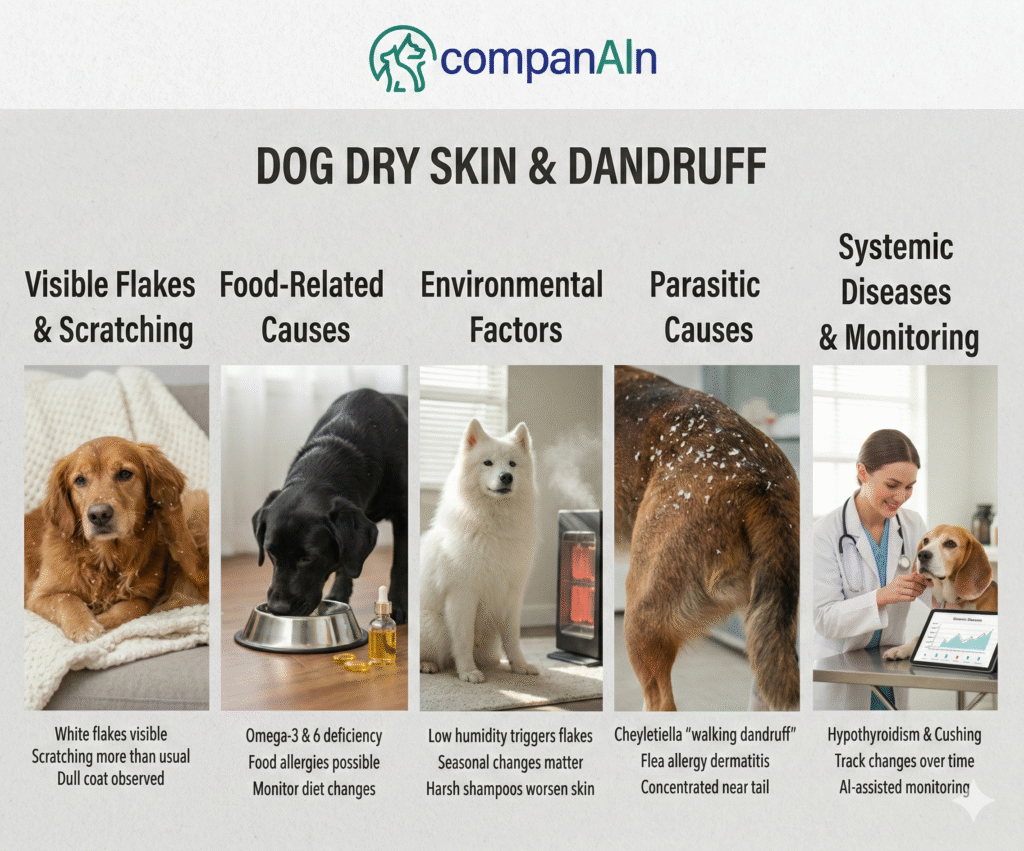
Location patterns provide diagnostic clues. Generalized flaking across the entire body suggests systemic causes like nutritional deficiencies or hormonal problems. Localized patches concentrated on the back or near the tail point toward parasites or contact reactions.
Food-Related Causes
Essential Fatty Acid Deficiency
Dogs require both omega-6 and omega-3 fatty acids for maintaining healthy skin barriers. These essential fats cannot be synthesized by the body—they must come from diet.
Omega-6 fatty acids (particularly linoleic acid) maintain the skin’s waterproof barrier and regulate inflammation. Deficiency creates dry, flaky skin with a dull, brittle coat, increased infection susceptibility, and chronic itching despite the absence of parasites.
Omega-3 fatty acids (EPA and DHA from marine sources) reduce inflammatory responses that damage skin. Research in Veterinary Dermatology shows supplementation improves coat quality and reduces itching in dogs with inflammatory skin disease.
Most commercial dog foods formulated to meet AAFCO standards provide adequate fatty acids. However, deficiency develops from:
- Improperly stored foods where fatty acids oxidize
- Low-fat diets prescribed for pancreatitis
- Home-prepared diets without proper supplementation
- Digestive diseases impairing fat absorption
Food Allergies and Sensitivities
True food allergies affect roughly 1-2% of dogs, according to veterinary dermatology research. Food sensitivities causing inflammatory responses without classical allergy mechanisms occur more frequently.
Common dietary allergens:
- Beef (most common)
- Dairy products
- Chicken
- Wheat
- Egg
Contrary to popular belief, dogs typically develop allergies to proteins they’ve eaten regularly for extended periods—not new ingredients. The immune system requires repeated exposure to develop allergic responses.
↪ Critical distinction: Food allergy symptoms are identical to environmental allergies. The only reliable differentiation requires elimination diet trials lasting 8-12 weeks using novel proteins or hydrolyzed protein diets. CompanAIn’s Living Health Timeline tracking becomes invaluable during these lengthy trials, documenting whether skin improvements occurred at week 4, week 8, or never—evidence your veterinarian needs to determine whether the trial succeeded or another cause requires investigation.
Food allergies usually cause year-round itching without seasonal variation, along with skin inflammation affecting the paws, face, ears, and groin. Gastrointestinal symptoms occur in approximately 20–30% of cases.
Zinc-Responsive Dermatosis
Certain breeds—particularly Siberian Huskies, Alaskan Malamutes, and Samoyeds—require higher dietary zinc than other dogs. According to VCA Animal Hospitals, genetic variations affect zinc absorption or utilization, creating deficiency despite adequate dietary intake.
Type I (breed-associated): Affects northern breeds regardless of diet quality. Symptoms emerge in young adults, creating thick, crusty lesions around the face, elbows, and pressure points. Lifelong zinc supplementation resolves symptoms within weeks.
Type II (diet-associated): Occurs in rapidly growing puppies fed diets marginally adequate in zinc or excessively high in calcium. Correcting diet resolves symptoms without lifelong supplementation.
Environmental Factors
Low Humidity and Seasonal Changes
Winter heating systems dramatically reduce indoor humidity, often dropping levels below 30%. Healthy skin requires 40-50% relative humidity to maintain adequate moisture. Extended exposure to low humidity increases water loss from skin, creating dry, flaky conditions even in dogs with perfect nutrition.
Dogs in heated homes during winter commonly develop seasonal dandruff that resolves once outdoor temperatures rise. This pattern—flaking appearing from November through March, clearing April through October—strongly suggests environmental rather than dietary causes.
Bathing Frequency and Product Selection
Over-bathing strips natural oils faster than glands can replace them. Weekly bathing using harsh shampoos formulated for humans (inappropriate pH for canine skin) creates chronic dryness and compensatory flaking.
Under-bathing allows environmental allergens, dirt, and dead skin cells to accumulate, potentially triggering inflammatory responses and secondary infections.
Most dogs benefit from bathing every 4-8 weeks using shampoos specifically formulated for canine pH (around 7.5 versus human pH of 5.5). Dogs with skin conditions may require more frequent bathing with medicated products containing chlorhexidine for bacterial control, ketoconazole for yeast, or colloidal oatmeal for soothing inflammation.
Contact Irritants and Allergens
Dogs develop contact dermatitis when skin encounters irritating substances. Unlike food or environmental allergens causing systemic reactions, contact irritants create localized inflammation where skin touches the offending material.
Common contact irritants:
- Lawn chemicals (fertilizers, herbicides, pesticides)
- De-icing salts during winter
- Cleaning products on floors
- Laundry detergents on bedding
- Carpet deodorizers
Contact reactions typically concentrate on sparsely haired areas—belly, inner thighs, paws, muzzle—where skin directly contacts surfaces.
Parasitic Causes
Cheyletiella mites—”walking dandruff”—create visible flaking along the back and shoulders. According to The Merck Veterinary Manual, these large mites are occasionally visible as moving white specks among skin flakes.
Symptoms include excessive dandruff concentrated along the back and mild to moderate itching. The condition is highly contagious to other pets and may cause temporary skin irritation in humans. Diagnosis requires microscopic examination of skin scrapings or tape preparations.
Flea allergy dermatitis produces inflammatory scaling even when only a few fleas are present. A single flea bite can trigger allergic reactions lasting days, creating scratch damage and secondary flaking concentrated near the tail base.
Systemic Diseases Manifesting as Skin Problems
Hypothyroidism
Classic presentation includes symmetric hair loss along the body and tail, dry flaky skin despite normal grooming, thickened skin with reduced elasticity, recurrent bacterial infections, and increased pigmentation.
Blood testing measuring total T4, free T4, and TSH confirms diagnosis. Thyroid supplementation typically improves skin condition within 6-8 weeks.
Cushing's Disease and Diabetes
Hyperadrenocorticism creates characteristic skin changes including thinning, increased infection susceptibility, and poor coat quality with scaling. Affected dogs typically show increased thirst, urination, and appetite alongside skin symptoms.
Uncontrolled diabetes impairs skin barrier function and infection resistance. Dogs show recurrent infections, delayed wound healing, and chronic dry, flaky skin alongside increased thirst, urination, and weight loss despite a good appetite.
Differentiating Food vs. Environmental Triggers
Timeline and Pattern Analysis
CompanAIn’s Living Health Timeline tracks skin condition photos, environmental changes, and diet modifications across months. When you log “switched to salmon-based food” or “turned on heat for winter,” the platform’s agentic AI system analyzes whether skin changes followed these modifications, revealing patterns memory alone cannot detect.
Response to Intervention
Elimination diet trials represent the gold standard for identifying food allergies. This requires feeding either novel protein sources the dog has never consumed (kangaroo, rabbit, venison) or hydrolyzed protein diets for 8-12 weeks with absolutely no other food sources.
If symptoms resolve during the trial and return when the original diet resumes, food allergy is confirmed. If symptoms persist despite strict dietary control, environmental factors or systemic disease become likely.
Environmental modifications—adding humidifiers, changing cleaning products, avoiding treated lawns—that resolve symptoms within 2-4 weeks suggest environmental rather than dietary causes.
Treatment Strategies Based on Underlying Causes
Dietary management for confirmed food allergies requires permanent diet changes avoiding trigger proteins. Novel protein diets or hydrolyzed formulas prevent allergic responses. Essential fatty acid supplementation—fish oil providing EPA and DHA—reduces inflammation and improves coat quality regardless of underlying cause.
Environmental control includes humidifiers maintaining 40-50% relative humidity, switching to veterinary-formulated shampoos with appropriate pH, eliminating harsh cleaning chemicals, and avoiding treated lawns during application periods.
Parasitic treatment requires appropriate antiparasitic medications effective against the specific parasite identified. Environmental treatment eliminates mites from bedding and living spaces.
Systemic disease management addresses underlying conditions. Thyroid supplementation for hypothyroidism, trilostane for Cushing’s disease, and insulin for diabetes resolve skin symptoms as metabolic function normalizes.
Long-Term Monitoring Changes Outcomes
Single episodes of dandruff might represent temporary environmental dryness resolving with seasonal changes. Recurring problems suggest persistent triggers requiring identification.
When you photograph today’s flaking and note, “Seems worse than last month,” CompanAIn’s agentic AI system deploys specialized agents that objectively compare the current presentation against historical images, determining whether progression has occurred. The platform correlates skin changes with documented diet modifications, seasonal timing, bathing frequency changes, and environmental factors occurring simultaneously.
Stop guessing whether diet changes are working. CompanAIn’s intelligent analysis shows definitively whether food modifications improved your dog’s skin or seasonal humidity shifts created the illusion of progress. Contact CompanAIn to transform months of trial-and-error into data-driven decisions that solve skin problems faster.
Frequently Asked Questions
Why does my dog have dry skin and dandruff?
Multiple factors cause dry skin and dandruff including essential fatty acid deficiency, low environmental humidity, food allergies, parasites like Cheyletiella mites, and hormonal conditions like hypothyroidism. According to Cornell veterinary dermatologists, identifying the specific cause requires evaluating symptom patterns, distribution, seasonal variation, and often diagnostic testing including skin scrapings, blood work, or elimination diet trials.
Can dog food cause dry skin and dandruff?
Yes. Foods deficient in essential fatty acids cannot maintain healthy skin barriers. Additionally, food allergies to proteins like beef, chicken, or dairy create inflammatory skin disease manifesting as flaking and itching. However, environmental factors cause identical symptoms. Veterinary nutritionists recommend 8-12 week elimination diet trials using novel proteins to determine whether food drives symptoms.
How do I know if my dog's dandruff is from food or the environment?
Food-related dandruff shows year-round consistency without seasonal variation and typically affects the face, paws, ears, and groin. Environmental dandruff shows seasonal patterns (worsening during winter heating), affects the entire body evenly, and improves when humidity changes. CompanAIn’s agentic technology correlates symptom intensity with diet changes and seasonal factors, identifying patterns that reveal whether food or environment drives the condition.
How long does it take for dog dandruff to go away?
The timeline depends on the underlying cause. Environmental dryness improves within 1-2 weeks of adding humidifiers. Essential fatty acid supplementation shows effects after 6-8 weeks. Food allergies resolve 4-8 weeks after eliminating trigger proteins. Parasitic infections clear 2-4 weeks after treatment. Hypothyroidism-related dandruff improves 6-8 weeks after starting thyroid supplementation.
Does CompanAIn help identify what's causing my dog's skin problems?
CompanAIn’s agentic AI platform analyzes uploaded skin condition photos, diet logs, and veterinary records across months to identify correlations between symptom changes and specific variables. The system tracks whether flaking worsens seasonally, suggesting environmental causes; follows diet changes suggesting food triggers; or progresses despite interventions, suggesting systemic disease requiring veterinary investigation.