
You wiped the crust from your dog’s eye last Tuesday. And the Tuesday before that. It’s back again this morning, but this time it looks different. It’s thicker and darker, and your dog keeps rubbing the same eye with her paw. Something feels off, but you’re not sure how long this has been building or whether last month’s exam would have caught it if it had looked like this then.
That uncertainty frustrates many pet owners. Eye discharge in dogs ranges from completely normal to a sign of serious, vision-threatening disease, and the difference lies in the details: color, consistency, which eye is affected, and whether anything has been slowly changing over weeks. Most of those details never make it into the vet appointment. They accumulate between visits, in moments only you witness.
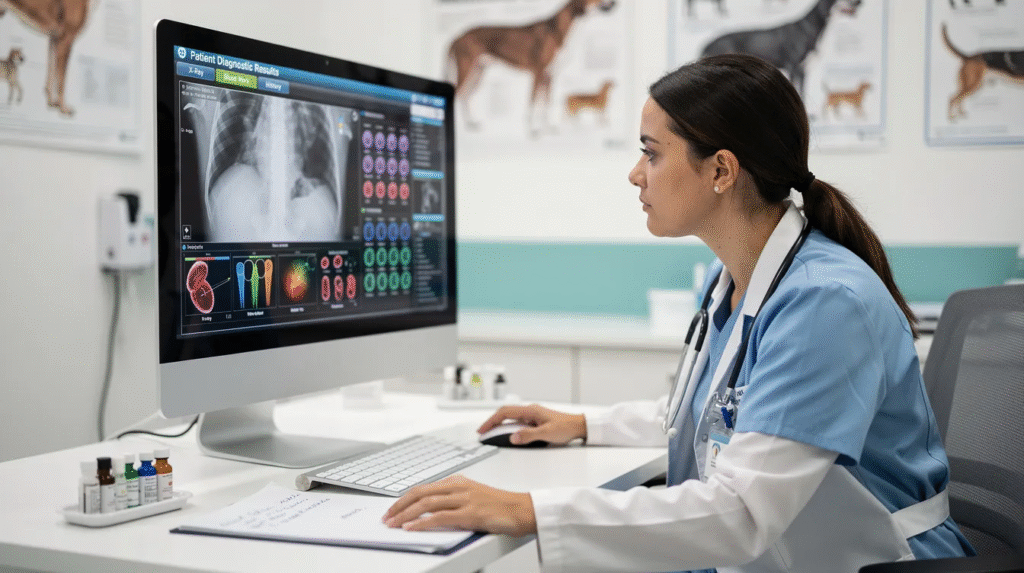
That is exactly the kind of gap that CompanAIn was built to address. By organizing veterinary records, symptom observations, and health notes into a continuously evolving picture of your dog’s well-being, CompanAIn’s agentic AI platform helps pet owners and veterinarians identify patterns behind recurring dog eye discharge before it escalates. If you have been noticing changes, the data you need to ask smarter questions may already exist. It just needs to be connected.
What Dog Eye Discharge Actually Tells You
A dog’s eyes naturally produce a small amount of debris each day: mucus, shed cells, and residual tear film. In healthy dogs this appears as a light tan or brownish crust in the inner corners overnight, wiping away cleanly each morning. That type of discharge on its own is not a cause for concern.
The three variables that matter most are color, consistency, and frequency. Clear discharge after a windy walk is not the same concern as an eye that has been watering steadily for three weeks. White sticky mucus that started when your dog’s eyes began looking dull points toward a different condition than a sudden onset of yellow-green matter following a corneal scratch. Each combination suggests a different underlying cause, and reading that accurately requires knowing what changed and when. For dog eye discharge specifically, that history is often the most diagnostically useful thing a pet owner can bring to an appointment.
Veterinarians evaluate discharge within the full context of a physical exam, but that picture is only complete when paired with an accurate history of what has been happening at home. Dogs cannot describe when symptoms started or how they have shifted. That responsibility falls to the owner, and it’s harder than it sounds when changes build gradually over months.
- CompanAIn’s Living Health Timeline organizes every uploaded record, exam note, and observation into a chronological health narrative. When a veterinarian documented mild discharge eight months ago and you are now reporting that the same eye looks worse, the platform surfaces that history rather than leaving your vet to reconstruct it from a fragmented file. Small details, documented consistently, give veterinarians the context to distinguish a stable condition from one that has been quietly progressing.
A Color-by-Color Guide to Dog Eye Discharge
Clear or Watery Discharge
Clear, watery discharge often reflects a mild irritant response to pollen, dust, or wind and typically resolves within a day or two. When it persists, the clinical term is “epiphora,” and causes range from blocked nasolacrimal ducts and entropion to corneal ulcers and glaucoma. VCA Animal Hospitals notes that persistent tearing in brachycephalic breeds often stems from anatomical drainage problems rather than active disease, though the chronic skin dampness it creates still warrants consistent management.
White or Gray Mucus
White or grayish sticky discharge is a hallmark of keratoconjunctivitis sicca, commonly called dry eye or KCS. The condition results from immune-mediated destruction of the lacrimal glands, causing the aqueous tear layer to fail. The eye overproduces mucus in compensation, creating that distinctive grayish paste.
Cornell University College of Veterinary Medicine describes KCS as a progressive disease leading to corneal ulcers and permanent vision loss if unmanaged, with a reported incidence of up to 1.5% in North American dogs. Its early stages are easy to dismiss as routine crust, which is why trending Schirmer Tear Test results across annual exams matter.
Yellow or Green Discharge
Yellow or green discharge is the most urgent visual signal and warrants prompt veterinary attention. Paired with redness, squinting, or pawing at the eye, it typically indicates active bacterial infection, either as a primary problem or on top of a condition like dry eye or corneal injury that has lowered the eye’s defenses. As the Merck Veterinary Manual’s guide to canine conjunctivitis notes, what appears to be a straightforward eye infection can indicate generalized disease, which is why a thorough exam matters more than guessing at topical treatment from home.
Red-Brown Tear Staining
Reddish-brown discoloration near the inner corner of the eye is caused by porphyrins, pigment compounds in tears that oxidize to a rust color when exposed to air. On its own, this is cosmetic, but persistent overflow that keeps surrounding skin chronically damp creates conditions for secondary yeast or bacterial infection in the skin folds beneath the eye.
Bloody Discharge
Any discharge containing visible blood is never normal and warrants same-day veterinary care. It may reflect trauma, a severe corneal ulcer, or a structural problem within the eye requiring immediate assessment.
The Conditions Most Often Behind Dog Eye Discharge
Conjunctivitis is inflammation of the conjunctival tissue lining the inside of the eyelids and is one of the most frequently diagnosed eye conditions in dogs. Bacterial conjunctivitis produces thick, colored discharge that requires antibiotic treatment and spreads between dogs easily, making prompt action worthwhile.
Keratoconjunctivitis sicca causes corneal ulceration, pigmentation, and vascularization without treatment. VCA details how immunosuppressant drops like cyclosporine or tacrolimus form the foundation of lifelong management, with meaningful improvement in tear production appearing within four to six weeks in roughly 80 to 90% of affected dogs.
Corneal ulcers are painful sores on the eye’s surface that develop from trauma, chronic KCS, entropion, or distichiasis. Without treatment, they can progress to corneal perforation and loss of the eye, making them urgent regardless of how mild symptoms appear initially.
Glaucoma can cause permanent vision damage within hours of acute onset. Diagnosis requires tonometry, and a dog showing a suddenly painful, cloudy, or dramatically red eye needs same-day care.
Entropion is the inward rolling of an eyelid margin, causing lashes and lid skin to rub against the cornea with every blink. It is common in Shar-Peis, Chow Chows, Bulldogs, and Rottweilers and typically requires surgical correction to prevent progressive corneal damage.
How CompanAIn's Agentic AI Connects the Dots
A veterinarian sees your dog for 15 to 20 minutes a few times each year. Reconstructing a gradual change that unfolded across six or eight months is genuinely difficult without a detailed record of what those months looked like. Most conditions that threaten ocular health do not announce themselves suddenly. They shift slowly, in increments that feel unremarkable until they aren’t.
CompanAIn’s Living Memory technology maintains context across years of uploaded data, identifying how findings relate to each other over time rather than evaluating each visit in isolation. A note from 14 months ago documenting mild white discharge, paired with a current observation of dull corneas and increased morning crust, tells a very different story than either entry alone. CompanAIn’s agentic AI surfaces those connections and generates trend detection alerts when patterns suggest it is time to involve your veterinarian before a manageable condition progresses further.
Some causes of dog eye discharge have nothing to do with the eye itself. Hypothyroidism, immune-mediated disease, and canine distemper can all manifest through ocular symptoms. Because CompanAIn’s agentic AI considers a dog’s full health history, a change in eye discharge that coincides with shifts in bloodwork or energy level gets flagged as part of a broader pattern rather than treated as an isolated finding.
Pet owners notice the earliest signs of change, but without a structured way to log and share those observations, the details fade by appointment day. CompanAIn’s Smart Upload accepts PDFs, clinical summaries, and record photos, organizing them into a structured health profile your veterinarian can review before you walk through the door.
What Veterinary Diagnosis Looks Like
A thorough workup for eye discharge typically includes a Schirmer Tear Test to measure aqueous tear production, fluorescein staining to detect corneal ulcers, tonometry to rule out glaucoma, eyelid and nasolacrimal examination, and a discharge culture when bacterial infection is suspected. Describing changes accurately, including when they started and whether your dog seems uncomfortable, helps your veterinarian reach a diagnosis more efficiently.
Seek same-day veterinary care if you notice any of the following:
- Yellow or green discharge appearing for the first time
- Sudden cloudiness, swelling, or dramatic redness of the eye
- Your dog squinting, pawing at the eye, or avoiding light
- Discharge worsening noticeably within 24 to 48 hours
- Any bloody discharge
Start Building the Full Picture
Eye conditions that threaten vision rarely announce themselves dramatically. They build in increments, across visits, in the gap between what your dog shows you and what a fifteen-minute exam can capture. By the time the signals are obvious, the window for straightforward intervention has often already closed.
The owners who catch these problems early are not the ones who worry more. They are the ones with better records. Contact CompanAIn today to start building a Living Health Timeline for your dog and give your veterinarian the longitudinal picture that makes early action possible.
Frequently Asked Questions
How do I know if my dog's eye discharge is normal or a problem?
A small amount of tan or brownish crust in the inner corners overnight is normal and clears easily each morning. The signals that warrant veterinary attention are a shift in color toward white, yellow, or green; discharge appearing throughout the day rather than just overnight; and any change in behavior around the eye like rubbing, squinting, or avoiding light.
Volume matters less than direction. Discharge that is clearly increasing over days or weeks deserves a call regardless of color.
Can allergies cause eye discharge in dogs?
Allergens are one of the most common triggers for clear or watery discharge and are easy to overlook because the discharge often looks mild. Seasonal patterns, reactions to dust or mold, and exposure to smoke or household chemicals can all produce persistent tearing that owners attribute to the environment rather than a condition worth treating.
The clinical risk is secondary infection. Allergic eye disease that goes unmanaged lowers the eye’s defenses over time, creating an opening for bacterial infection on top of the original irritation. Persistent clear discharge that keeps returning, even when it looks minor, is worth raising with your veterinarian rather than wiping it away and waiting it out.
Can eye discharge in dogs be contagious to other pets?
It depends on the cause. Bacterial conjunctivitis can spread between dogs through direct contact or shared bedding and water bowls. Viral causes like canine distemper are also transmissible. Conditions like dry eye, entropion, and glaucoma are not contagious since they stem from structural or immune-mediated causes rather than infection. If you have multiple dogs and one develops colored discharge, keep them separated and wash shared items until a veterinarian confirms the cause.
Is it safe to clean my dog's eyes at home?
Wiping away surface discharge with a clean damp cloth is generally safe and helps prevent skin irritation from prolonged moisture contact. What is not safe is using over-the-counter human eye drops, using medicated wipes not formulated for dogs, or continuing home management when discharge is worsening. Several conditions that look like minor irritation, including corneal ulcers and early glaucoma, can deteriorate rapidly with delayed treatment. Home cleaning is appropriate for maintenance, not for diagnosis or treatment.
How does CompanAIn help with recurring eye problems?
CompanAIn’s Living Health Timeline organizes your dog’s complete health history into a chronological record that makes gradual shifts visible across months and years. For recurring eye issues specifically, this means:
- Discharge documented at one exam gets connected to observations from six or twelve months prior
- Trend Detection alerts flag when a pattern is worsening rather than stable
- Your veterinarian arrives at appointments with organized longitudinal data rather than fragmented notes