

Your dog’s limping after yesterday’s park visit. Is it serious, or did he just overdo it? That vomiting this morning—emergency room, or wait and see? The scratching won’t stop, but you can’t tell if it’s fleas, allergies, or something requiring immediate attention. Questions multiply faster than answers, and suddenly you’re second-guessing everything. That’s where a dog symptom checker offers clarity when you need it most.
From quick triage questions to comprehensive health analysis, the right platform keeps your decisions informed and your dog protected. With AI-powered health monitoring, veterinary-validated analysis, and personalized care recommendations, it’s a tool that works quietly in the background. Knowing when symptoms warrant immediate attention, which signs suggest monitoring at home, and how your dog’s unique medical history affects interpretation can help you respond appropriately and avoid unnecessary stress.
Why Standard Symptom Checkers Fall Short
Every dog shows signs differently. A Labrador’s normal energy differs from a senior Chihuahua’s baseline. Most symptom checkers evaluate what you report right now, lacking broader context about your dog’s health trajectory, previous diagnoses, or patterns emerging over weeks.
But dogs aren’t interchangeable. That slightly elevated thirst combined with increased urination could signal diabetes, kidney disease, or a urinary tract infection. Without access to your dog’s lab work from six months ago showing borderline glucose levels, or notes about recent medication changes, recommendations remain superficial.
How CompanAIn Transforms Symptom Analysis
CompanAIn operates differently by building complete health intelligence around your dog’s unique medical story. Instead of isolated symptom evaluation, you get context-aware analysis that accounts for past diagnoses, medication responses, and longitudinal trends.
Living Memory Technology
The platform maintains a dynamic health timeline that never forgets. Every veterinary visit note, lab result, medication adjustment, and symptom report feeds into an evolving portrait. When you describe new concerns, CompanAIn’s system recognizes patterns invisible to both generic tools and even veterinarians seeing your dog periodically.
Multi-Agent AI Analysis
CompanAIn employs specialized AI agents collaborating simultaneously: Data Aggregators organizing medical information, Health Analyzers detecting patterns, Recommendation Engines suggesting interventions, and Specialized Pathologist Agents evaluating diagnostic concerns. One agent might notice medication interactions while another identifies seasonal symptom patterns. Together, they construct more complete diagnostic pictures than single-model systems achieve.
Veterinary Validation Layer
Critical alerts and uncertain assessments route to licensed veterinarians for review. This human oversight ensures accuracy on complex cases where AI faces limitations. CompanAIn never replaces professional judgment—it enhances it by surfacing information buried in scattered records.
Common Dog Health Concerns Symptom Checkers Evaluate
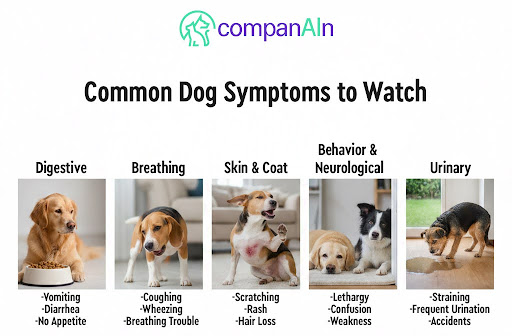
Digestive Problems
Vomiting, diarrhea, appetite changes, and abdominal discomfort top the list of owner concerns. These symptoms range from minor dietary indiscretion to serious conditions like pancreatitis, intestinal blockages, or parvovirus infections.
According to the American Animal Hospital Association, distinguishing urgency levels matters enormously. Occasional vomiting after grass consumption differs dramatically from persistent vomiting with bloody content.
Respiratory Issues
Coughing, wheezing, labored breathing, or unusual respiratory sounds trigger justified concern. Kennel cough presents with characteristic honking sounds. Heartworm disease manifests through exercise intolerance and persistent coughing.
The ASPCA emphasizes that AI platforms assess severity by evaluating accompanying symptoms—is breathing rapid but regular, or is your dog struggling with each breath? Are gums turning blue?
Skin and Coat Changes
Excessive scratching, hair loss, rashes, hot spots, and unusual odors point toward allergies, infections, parasites, or systemic problems. Ear infections—particularly common in dogs with floppy ears—cause head shaking, scratching, and foul-smelling discharge.
Research from Cornell University College of Veterinary Medicine shows symptom checkers help determine whether skin issues stem from environmental allergies, food sensitivities, bacterial infections, or parasites.
Behavioral and Neurological Signs
Lethargy, disorientation, seizures, unusual aggression, or sudden behavioral shifts often indicate underlying health problems. Pain manifests behaviorally—dogs hide, avoid interaction, or snap when touched in sensitive areas.
Urinary and Kidney Concerns
Frequent urination, straining, bloody urine, or accidents in house-trained dogs signal urinary tract infections, bladder stones, kidney disease, or diabetes. According to VCA Animal Hospitals, these symptoms escalate quickly. Urinary blockages, particularly in male dogs, constitute life-threatening emergencies.
How AI Dog Symptom Checkers Work
These platforms function through algorithms trained on extensive veterinary data—thousands of cases cataloging symptoms, diagnoses, and outcomes. When you input observations, the system compares descriptions against its knowledge base to identify potential matches.
The process unfolds through structured questions about duration, intensity, accompanying behaviors, and recent changes. Advanced checkers ask follow-up questions based on initial responses, narrowing possibilities systematically.
Research shows platforms like Petriage report 97% accuracy for triage decisions—determining whether immediate care is warranted versus monitoring at home. The technology relies on natural language processing to interpret descriptions, even when you’re not using precise medical terminology.
Practical Steps for Using Symptom Checkers Effectively
Document Observations Systematically
Before consulting any platform, gather specific details:
- Timeline: When did symptoms begin? How long have they persisted?
- Frequency: Constant, intermittent, or episodic?
- Severity: Mild discomfort or obvious distress?
- Changes: Improving, worsening, or stable?
- Triggers: Associated with meals, activity, time of day?
Precise descriptions yield better guidance. “My dog has diarrhea” provides less actionable information than “My dog has had loose, dark stool with mucus three times today.”
Upload Supporting Evidence
Many platforms accept photos. Clear images of rashes, eye discharge, abnormal stool, or wounds enhance diagnostic accuracy. For CompanAIn, uploading veterinary records and lab results creates comprehensive context.
Follow Recommended Actions
If the system suggests monitoring with follow-up parameters, adhere to that guidance. If urgent care is recommended, don’t delay hoping symptoms resolve spontaneously.
Share Results With Your Veterinarian
Bring symptom checker reports to appointments. They provide structured documentation of observations and formulated questions. Many veterinarians appreciate clients arriving prepared with organized information.
When to Use Digital Tools Versus Seeking Immediate Care
Appropriate Situations for Symptom Checkers
- Minor concerns where symptoms are mild and you’re determining whether veterinary consultation is needed
- Preparation for vet visits by organizing observations
- Second opinions after diagnosis when considering treatment options
- Monitoring known conditions to identify changes requiring adjustments
Situations Demanding Immediate Veterinary Care
- Difficulty breathing or gasping
- Seizures or collapse
- Severe injury including lacerations or fractures
- Suspected poisoning or toxin ingestion
- Bloat symptoms (distended abdomen, unproductive vomiting) in deep-chested breeds
- Prolonged vomiting or diarrhea causing dehydration
- Inability to urinate especially in male dogs
- Profuse bleeding that doesn’t stop with pressure
Symptom checkers assist with triage but should never delay emergency care when instinct tells you something’s seriously wrong.
Understanding Limitations All Pet Owners Should Know
AI Cannot Replace Physical Examination
No digital tool can palpate for masses, auscultate heart murmurs, assess gait abnormalities, or evaluate pain responses. Critical diagnostic information comes only through hands-on veterinary examination.
Training Data Determines Accuracy
AI systems perform only as well as their training datasets. Rare conditions poorly represented in historical data may be missed. Atypical presentations might not match algorithmic expectations.
Generic Tools Lack Breed Context
Brachycephalic breeds (Pugs, Bulldogs) experience respiratory issues differently than other dogs. Giant breeds face unique orthopedic concerns. Senior dogs require different evaluation criteria than puppies.
User Input Quality Affects Results
Symptom checkers depend on accurate reporting. Misinterpreting behaviors, vague descriptions, or overlooking symptoms produces flawed guidance.
The Role of Veterinary Professionals in AI-Assisted Care
Veterinarians increasingly view AI tools as collaborative partners rather than competitors. These platforms handle time-consuming tasks—organizing records, identifying patterns, generating preliminary assessments—freeing veterinarians to focus on clinical decision-making and client communication.
The American Animal Hospital Association emphasizes that AI should support veterinary expertise, not substitute for it. Forward-thinking practices integrate AI tools into workflows, using them to enhance diagnostic accuracy and improve patient outcomes.
Privacy and Data Security Considerations
Quality platforms implement robust security measures including end-to-end encryption, secure storage with access controls, compliance with data protection standards, and user control over information sharing. CompanAIn adheres to industry-leading privacy standards, ensuring medical records remain confidential and accessible only with permission.
Ready to Experience Smarter Pet Health Management?
A dog symptom checker serves as your first line of health assessment—helping you distinguish between minor concerns manageable at home and situations requiring professional intervention. CompanAIn elevates standard symptom checking by incorporating your dog’s complete medical history into every analysis.
Instead of evaluating symptoms in isolation, you get context-aware guidance that accounts for past diagnoses, medication responses, behavioral patterns, and longitudinal health trends. Whether you’re managing a chronic condition, investigating new symptoms, or monitoring overall wellness, intelligent health tools empower you to advocate effectively for your dog.
Explore CompanAIn’s health intelligence platform to experience the difference complete medical context makes in protecting your dog’s health and your peace of mind.
Frequently Asked Questions
How accurate are AI dog symptom checkers?
Accuracy varies by platform and symptom complexity. Research shows well-designed systems like Petriage achieve 97% accuracy for triage decisions determining care urgency. CompanAIn enhances accuracy by incorporating your dog’s complete medical history rather than evaluating symptoms in isolation.
Can a symptom checker replace my veterinarian?
No. These tools support decision-making but cannot replace physical examination, diagnostic testing, or clinical judgment. Veterinarians assess subtle findings invisible to digital platforms. Use symptom checkers to determine when veterinary care is needed and to organize observations before appointments.
What symptoms should I never try to evaluate with a checker?
Seek immediate veterinary care for breathing difficulties, seizures, inability to stand, suspected poisoning, bloat symptoms, profuse bleeding, or inability to urinate. These emergencies require immediate professional intervention.
How does CompanAIn differ from free symptom checkers?
CompanAIn analyzes symptoms within your dog’s complete medical context—past diagnoses, lab trends, medication responses, veterinary notes. Generic checkers evaluate each symptom report independently without historical reference. CompanAIn’s Living Memory technology identifies patterns across time, while multi-agent AI provides specialized analysis. Critical assessments receive veterinary review for added accuracy.
Should I use symptom checkers for puppies?
Yes, but with extra caution. Puppies experience rapid health changes and possess less developed immune systems. Symptoms that might be minor in adults can escalate quickly in young dogs. Use symptom checkers to gather information, but maintain a lower threshold for seeking veterinary care.
Are these tools useful for senior dogs?
Absolutely. Older dogs develop chronic conditions requiring ongoing monitoring. Symptom checkers help track gradual changes—mobility decline, cognitive shifts, appetite variations—that might otherwise go unnoticed. CompanAIn’s longitudinal tracking proves particularly valuable for senior pets, identifying subtle deterioration patterns that prompt timely intervention.