
Your dog just vomited blood. Your stomach dropped. Now you’re staring at the mess on the floor, heart racing, wondering whether you need to grab your keys immediately or whether this is one of those scary-looking things that turns out to be nothing.
There is no safe “wait and see” with hematemesis. Blood in a dog’s vomit always warrants a veterinary call, even when your dog seems fine minutes later. Not every case requires a midnight sprint to the emergency clinic, but every case deserves professional guidance. Knowing the difference, and being able to describe exactly what you’re seeing, gives your veterinarian the information needed to triage your dog correctly.
That’s where CompanAIn changes the picture. By organizing years of health records, medication histories, and documented symptoms into a single continuously updated timeline, CompanAIn’s agentic AI helps veterinarians move from “We need more information” to informed clinical decisions faster. If your dog has a history of NSAID use, a prior GI diagnosis, or recurring digestive symptoms, that context should be part of the clinical picture during a crisis.
How AI-Assisted Triage Changes the First Five Minutes
When a dog arrives vomiting blood, the veterinarian’s first questions are always about history. Is this dog on NSAIDs? Any prior GI episodes? What did the bloodwork look like six months ago? Those answers determine whether this is a manageable ulcer or an unfolding emergency, and they are almost never available in full at the moment they matter most.
AI-powered health records change that. Rather than reconstructing a dog’s history from a stressed owner’s memory, a complete longitudinal record surfaces the context that shapes triage decisions immediately. A dog with three years of documented NSAID use and progressively declining red blood cell counts presents a fundamentally different clinical picture than a dog with no medication history and a single episode.
The patterns AI catches before the crisis:
- Gradual RBC decline across successive annual panels, each value technically within range but trending downward
- NSAID or corticosteroid use documented alongside owner notes about intermittent appetite loss or soft stools
- Recurring GI symptoms logged across multiple visits that individually looked minor
- Fasting lab values showing early kidney or liver changes that increase ulcer risk
This is where longitudinal AI analysis earns its place in emergency medicine. Research in the Journal of Veterinary Internal Medicine found that 83% of dogs on chronic NSAID treatment had detectable GI erosions, with none of their owners having noticed any symptoms. The kind of bleeding that brings a dog to an emergency clinic at midnight has often been developing silently for months. A system reading that arc of data, rather than isolated snapshots, is what catches it early enough to intervene.
When Dog Vomiting Blood Is a True Emergency
Some presentations demand immediate emergency care, not a call to your regular vet in the morning. The Merck Veterinary Manual’s guide to dog and cat emergencies is clear: signs of shock, including pale gums, rapid heart rate, and weak pulses, indicate a condition that causes organ failure and death if untreated. Treat any dog vomiting blood as an emergency until proven otherwise.
Go to an emergency clinic immediately if your dog shows any of the following:
- Large volume of blood in the vomit, or repeated bloody vomiting in a short window
- Pale, white, or bluish gums (a sign of shock or severe blood loss)
- Weakness, collapse, or difficulty standing
- Bloody or black, tarry stools alongside the vomiting
- Significant lethargy or inability to keep water down
- Your dog is a puppy or unvaccinated
- Known or suspected ingestion of rat poison, NSAIDs like ibuprofen, or other toxins
Even a single small streak of blood in an otherwise normal-acting dog still warrants a same-day call. Bond Vet notes that the volume of visible blood may not reflect the severity of what’s happening internally.
The Most Common Causes of Dog Vomiting Blood
Hematemesis is a symptom, not a diagnosis. A wide range of underlying conditions can produce it, which is exactly why the history your veterinarian receives matters as much as the physical exam findings.
Gastrointestinal Ulcers
Gastric and duodenal ulcers are among the most frequent causes of hematemesis in dogs. The Merck Veterinary Manual identifies NSAID use, neoplasia, and hepatic disease as the leading reported causes. NSAIDs disrupt the protective prostaglandins that keep the stomach lining intact, allowing acid to erode the tissue beneath.
A 2021 study in the Journal of Veterinary Internal Medicine found that 83% of dogs on chronic NSAID treatment had GI erosions on capsule endoscopy, and critically, none of their owners had noticed any symptoms. That silent progression is exactly the kind of pattern a longitudinal health record is built to catch.
Hemorrhagic Gastroenteritis (HGE/AHDS)
Acute hemorrhagic diarrhea syndrome (AHDS), still widely called HGE, is a potentially life-threatening condition that strikes otherwise healthy dogs without warning. According to VCA Animal Hospitals, it most commonly affects small and toy breeds including Yorkshire Terriers, Miniature Schnauzers, and Dachshunds, though any dog can be affected. Without aggressive IV fluid therapy, dogs can deteriorate into shock within 24 hours.
Foreign Bodies and Toxins
Sharp objects, bones, and non-digestible materials can lacerate the esophagus, stomach, or upper intestine. On the toxin side, anticoagulant rodenticides interfere with clotting throughout the body, and GI bleeding is often among the first visible signs. Human NSAIDs like ibuprofen and naproxen are toxic to the canine stomach lining even at relatively low doses and should never be given to dogs.
Infectious Disease and Systemic Illness
Parvovirus is one of the most serious infectious causes of hematemesis in dogs, particularly in puppies and unvaccinated dogs. The virus attacks the intestinal lining and immune system simultaneously, causing rapid deterioration. Beyond infection, kidney disease, liver disease, and certain cancers can all produce secondary GI bleeding as organ function becomes compromised.
What to Do Before You Leave for the Vet
Before heading out, take photos of the vomit and collect a small sample in a bag if possible. Note the approximate volume, whether it looks bright red or coffee-ground, and whether your dog has vomited more than once. The Merck Veterinary Manual advises withholding food and limiting water access until your dog is evaluated, and avoiding any medications without veterinary instruction. Human antacids and pain relievers can make the situation significantly worse.
While you gather your dog’s records, take a few minutes to write down or photograph the following before you leave:
- Current medications and dosages, including any NSAIDs, steroids, or supplements
- The brand and type of food your dog has been eating, including any recent changes
- Any other symptoms you have noticed in the past 48 hours, including lethargy, diarrhea, or changes in appetite
- Whether your dog could have accessed toxins, garbage, sharp objects, or human medications
This information shapes the first questions your veterinarian will ask. Arriving with it organized rather than trying to reconstruct it under stress meaningfully speeds up triage. If your dog’s records are in CompanAIn, your Living Health Timeline, medication history, and prior lab results are already accessible and shareable with the care team before you walk through the door.
Do not drive to a regular clinic if your dog is showing signs of shock. Pale gums, weakness, collapse, or difficulty breathing mean the nearest emergency facility is the right destination regardless of the time of day.
What Your Veterinarian Will Do
A dog presenting with hematemesis will receive a systematic diagnostic workup. Dogs showing signs of shock or severe blood loss receive IV fluids immediately to restore circulation before any diagnostics are run. A blood transfusion may be necessary in severe hemorrhage cases.
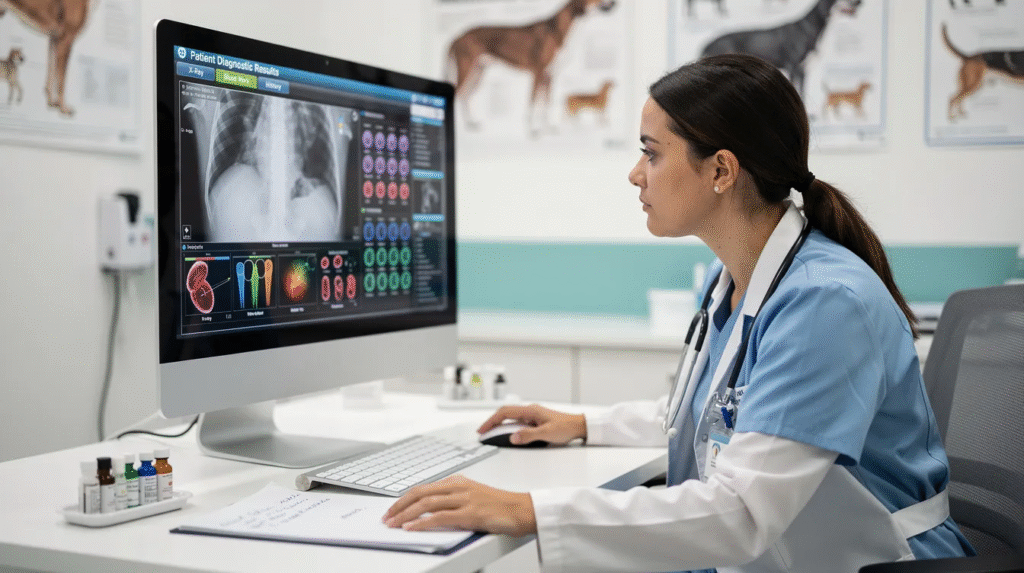
Once stable, diagnostic testing typically includes a complete blood count to assess for anemia and infection, a biochemistry panel to evaluate kidney and liver function, and a clotting profile when a bleeding disorder is suspected. Abdominal X-rays or ultrasound help identify foreign bodies, masses, or organ abnormalities. Endoscopy provides direct visualization of the esophagus, stomach, and upper intestine when the cause remains unclear.
Treatment targets both stabilization and the underlying cause. Common interventions include proton pump inhibitors like omeprazole to reduce gastric acid, sucralfate to coat and protect damaged mucosal tissue, anti-nausea medications, and IV fluid therapy. Foreign bodies may require endoscopic or surgical removal.
How CompanAIn Supports Emergency Triage and Recovery
Veterinarians working without a complete patient history have to build context from scratch, asking owners to recall medication names, prior diagnoses, and recent symptoms under pressure. CompanAIn’s agentic AI platform eliminates that gap.
The platform accepts uploaded veterinary records, lab results, and owner observations in PDF, JPG, and PNG formats, organizing everything into a Living Health Timeline that your entire care team can access. When a dog arrives at an emergency clinic with a history of chronic NSAID use, prior GI episodes, or recent dietary changes, that context shapes every decision the veterinarian makes.
Pattern Recognition Before the Crisis Hits
The most valuable work CompanAIn does happens long before an emergency visit. A dog’s bloodwork might show slightly declining red blood cell counts across three consecutive annual panels, each value technically within range but gradually declining. NSAID use documented across multiple records might correlate with subtle owner notes about intermittent appetite loss.
CompanAIn’s Living Memory technology maintains context across years of health data, identifying those gradual trajectories that isolated appointments miss entirely. When the platform flags a concerning pattern, it prompts veterinary consultation at the stage when medication adjustments or dietary changes can prevent the acute episode from happening at all.
Medication History and Post-Crisis Monitoring
Knowing what a dog has been given is critical when evaluating GI bleeding. A dog currently taking NSAIDs or corticosteroids presents a very different diagnostic picture than one with no medication history. CompanAIn organizes complete medication records alongside lab results and symptom notes, giving veterinarians the full picture in one place.
Recovery from hematemesis also requires close follow-up. Ulcers need time to heal, and recurrence is possible if the underlying cause is not fully addressed. CompanAIn’s Trend Detection uses visual indicators to flag whether health markers are improving, stable, concerning, or declining across follow-up visits, helping catch any regression before it escalates again.
When Records Are Ready, Care Moves Faster
A crisis is the worst time to reconstruct your dog’s health history from memory. The medications, prior diagnoses, and subtle patterns that change a veterinarian’s first decisions are exactly the details that disappear under pressure.
CompanAIn’s agentic AI organizes everything into a Living Health Timeline that travels with your dog’s care, accessible to any member of the team when it matters most. The work you do uploading records between appointments is what makes an emergency visit faster, more informed, and less frightening.
Start building your dog’s health record with CompanAIn before you need it.
Frequently Asked Questions
Is a dog vomiting blood always an emergency?
Any blood in a dog’s vomit warrants veterinary attention, but urgency depends on the presentation. Large volumes of blood, pale gums, weakness, collapse, or known toxin exposure require immediate emergency care. A small streak of blood in an otherwise normal-acting dog still needs a same-day veterinary call, as the underlying cause may be more serious than it appears.
What does coffee-ground vomit mean in dogs?
Coffee-ground material indicates partially digested blood, meaning bleeding originated in the stomach or upper intestine and the blood was exposed to gastric acid before being expelled. This presentation often suggests ulceration and generally warrants urgent evaluation rather than monitoring at home.
Can NSAIDs cause a dog to vomit blood?
Yes. NSAIDs like ibuprofen and naproxen can damage the protective lining of the stomach and upper intestine, leading to erosions and ulcers that bleed. Research published in the Journal of Veterinary Internal Medicine found that over 83% of dogs on chronic NSAID treatment had detectable GI erosions, most without any visible symptoms. Never give human NSAIDs to a dog.
What is HGE in dogs?
Hemorrhagic gastroenteritis, now more accurately called Acute Hemorrhagic Diarrhea Syndrome (AHDS), is a sudden-onset condition involving bloody vomiting and profuse bloody diarrhea that can cause life-threatening dehydration within 24 hours. As described by VCA Animal Hospitals, it most commonly affects small and toy breeds and requires aggressive IV fluid therapy. Most dogs recover well with prompt treatment.
How does CompanAIn help with GI emergencies?
CompanAIn organizes a dog’s complete health history, including medications, lab results, prior diagnoses, and owner-documented observations, into a Living Health Timeline accessible to any member of the care team. In an emergency, this eliminates the need to reconstruct a dog’s medical history from memory. and ensures veterinarians have the context needed to make faster, better-informed decisions.
Between appointments, CompanAIn’s agentic AI identifies patterns that may predict GI issues before they become acute, supporting proactive, data-driven wellness that keeps dogs out of the emergency clinic in the first place.