
The flakes started appearing on your couch cushions first—tiny white specks that looked like dandruff. Then you noticed the scabs during belly rubs, rough patches hidden under your dog’s coat that hadn’t been there last month. Now you’re parting the fur, finding more crusty areas along the back and behind the ears, and trying to figure out whether this needs a vet visit or just a better shampoo.
When dry skin and scabs keep returning despite treatment attempts, recognizing whether frequency is increasing or triggers remain consistent becomes critical. CompanAIn’s agentic AI platform organizes photos, vet notes, and environmental observations into chronological context, with specialized agents analyzing whether current flaking matches past minor incidents or signals escalating problems worth discussing with your veterinarian.
Seborrhea: When Skin Cell Turnover Goes Wrong
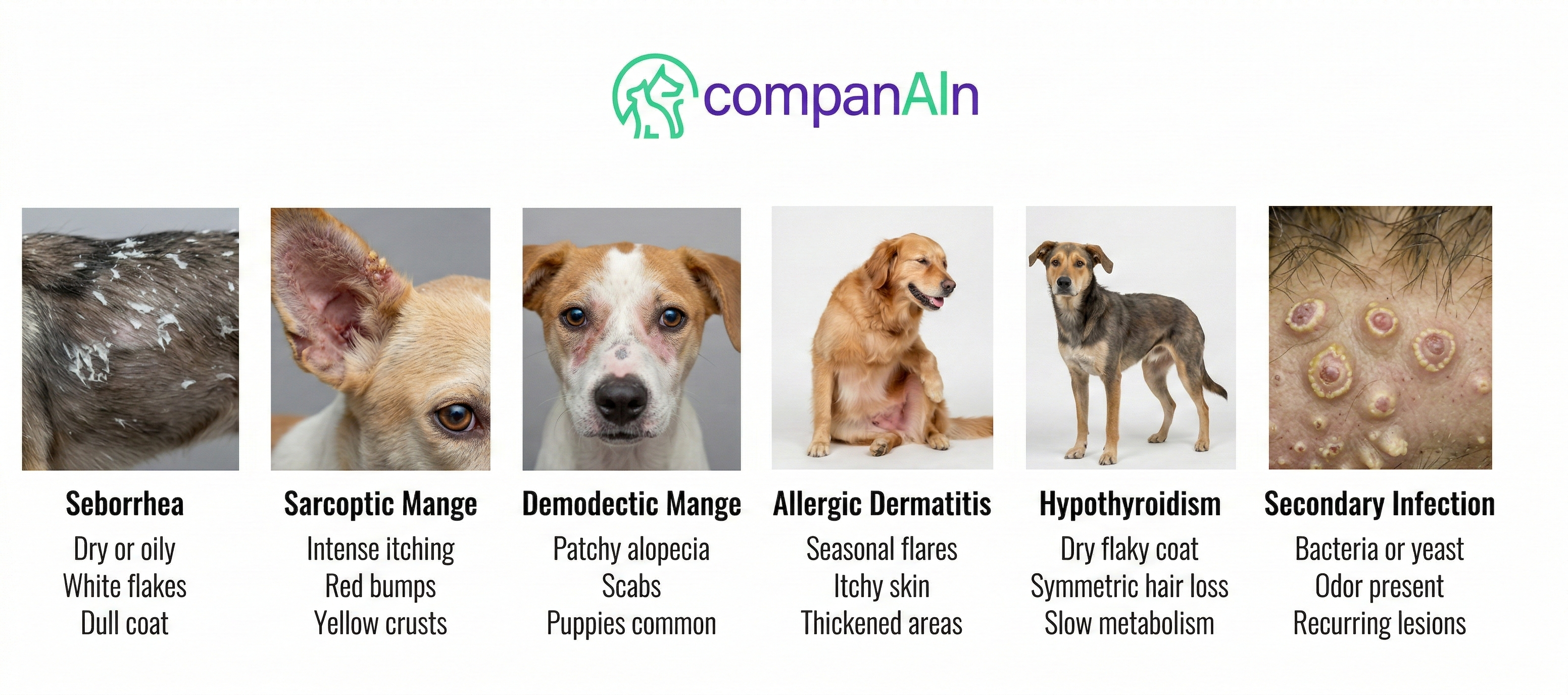
Seborrhea represents abnormal skin cell production creating excessive scaling. According to Cornell University’s veterinary dermatology resources, the condition appears in two distinct forms.
- Seborrhea sicca (dry seborrhea) produces white to gray flakes resembling dandruff, accompanied by a dull, dry coat texture. Dogs often show increased scratching despite minimal visible inflammation.
- Seborrhea oleosa (oily seborrhea) creates greasy, yellowish scales that stick to hair and skin. Affected dogs develop a distinctive rancid odor, and the coat feels oily to the touch.
Primary vs Secondary Seborrhea
Primary seborrhea—inherited genetic conditions—affects specific breeds disproportionately:
- American Cocker Spaniels
- English Springer Spaniels
- Basset Hounds
- West Highland White Terriers
- Dachshunds
Symptoms typically emerge before age two in primary cases. Secondary seborrhea develops as a consequence of underlying disease—hormonal imbalances, nutritional deficiencies, parasites, and allergies all trigger seborrheic changes. Treatment requires addressing the root cause rather than just managing visible symptoms.
Mange: Microscopic Parasites Creating Visible Damage
Two types of mange produce dry, flaky skin with crusty lesions, though their severity and contagion risk differ dramatically.
Sarcoptic Mange (Scabies)
Sarcoptic mange causes intense itching disproportionate to visible skin damage. Sarcoptes scabiei mites burrow into skin, triggering severe allergic reactions.
Early warning signs include:
- Small red bumps concentrated on ear margins, elbows, hocks, and belly
- Intense scratching that disrupts sleep and normal activities
- Hair loss in affected areas
- Thick yellow crusts as the condition progresses
- Skin thickening in chronic cases
This condition spreads rapidly between dogs and temporarily affects humans handling infected animals. Veterinary diagnosis requires skin scrapings examined under a microscope, though mites aren’t always visible even when present.
Demodectic Mange
Demodex mites normally inhabit healthy dog skin in small numbers. When immune systems weaken—whether from stress, illness, genetics, or medications—these mites multiply uncontrollably.
Localized demodectic mange typically affects puppies, creating small patches of hair loss around the eyes, muzzle, or front legs. Most cases resolve spontaneously as immune systems mature. Generalized demodectic mange affects extensive regions of the body, resulting in widespread alopecia, scabbing, and secondary bacterial infections that often require aggressive treatment.
Nutritional Deficiencies Affecting Skin Health
Essential fatty acid deficiency creates dry, flaky skin with poor coat quality. Dogs require both omega-6 and omega-3 fatty acids for maintaining the skin’s lipid barrier. Commercial diets formulated to meet AAFCO standards typically provide adequate fatty acids, but certain conditions interfere with absorption.
Zinc-responsive dermatosis affects northern breeds like Siberian Huskies, Alaskan Malamutes, and Samoyeds. These dogs require higher dietary zinc than other breeds. Deficiency creates thick, crusty lesions around the face, elbows, and pressure points. Supplementation under veterinary guidance typically resolves symptoms within weeks.
Vitamin A deficiency rarely occurs in dogs fed complete commercial diets but can develop with unbalanced homemade feeding. Affected dogs show excessive scaling, poor coat quality, and increased susceptibility to skin infections.
Tracking whether zinc or fatty acid supplementation actually improves your dog’s skin condition requires systematic documentation over weeks. CompanAIn’s Living Health Timeline consolidates photos showing coat quality changes alongside supplement start dates, revealing whether improvements correlate with nutritional interventions or coincide with seasonal humidity shifts unrelated to supplementation.
Allergic Skin Disease: The Itch-Scratch Cycle
Atopic dermatitis represents one of the most common causes of chronic itching in dogs. Environmental allergens—pollen, dust mites, mold spores—trigger immune responses creating inflammation, itching, and secondary skin damage.
The constant scratching creates micro-trauma that allows bacteria to penetrate skin barriers. Scabs form over these minor wounds while continued irritation prevents healing. Over time, affected areas develop thickened, darkened skin called lichenification.
Environmental vs Food Allergies
Food allergies produce similar presentations. Contrary to popular belief, dogs develop allergies to proteins they’ve eaten regularly for extended periods rather than new ingredients.
Most common dietary allergens:
- Beef
- Dairy products
- Wheat
- Chicken
- Eggs
Geographic patterns help differentiate environmental problems from food allergies. CompanAIn’s agentic technology identifies these patterns by correlating flaking intensity with seasonal data—when spring arrives and symptoms worsen despite a consistent diet, environmental triggers become likely. When symptoms persist year-round regardless of pollen counts or humidity levels, food sensitivities warrant investigation.
Dogs with seasonal flare-ups—spring through fall worsening, winter improvement—likely react to environmental triggers. Year-round symptoms suggest food allergies or indoor allergens like dust mites.
Hypothyroidism: The Metabolic Connection
Thyroid hormone deficiency slows cellular processes throughout the body, including skin cell turnover and sebum production. According to veterinary endocrinology research, hypothyroid dogs frequently present with skin problems as the primary complaint.
Classic presentation includes:
- Symmetric hair loss on trunk and tail
- Dry, flaky skin despite normal grooming
- Thickened skin with poor elasticity
- Recurrent skin infections
- Increased pigmentation in affected areas
Blood testing measuring T4, free T4, and TSH levels confirms the diagnosis. Thyroid supplementation typically improves skin condition within 6-8 weeks, though hair regrowth takes longer.
Bacterial and Fungal Secondary Infections
Dry, damaged skin provides entry points for opportunistic pathogens. Staphylococcus pseudintermedius—normal canine skin bacteria—multiplies problematically when skin barriers fail, creating pustules, crusts, and circular lesions.
Yeast organisms—particularly Malassezia—colonize damaged skin, producing greasy scales, rancid odor, and intense itching. These secondary infections often overshadow underlying primary conditions, requiring treatment of both the infection and root cause.
Why Secondary Infections Complicate Diagnosis
The visible symptoms from bacterial or yeast overgrowth frequently mask the underlying trigger. A dog might present with obvious infection signs—oozing lesions, crusts, odor—leading to antibiotic treatment that temporarily resolves surface problems. However, without addressing the primary cause like allergies or hormonal imbalance, infections return within weeks.
Using Agentic AI to Identify Root Causes
The challenge with recurring skin problems lies in distinguishing cyclical environmental triggers from progressive systemic disease. Your dog’s flaking might follow a pattern—worsening every spring, improving by summer—but without years of documented observations, these cycles remain invisible during individual veterinary visits.
Pattern Recognition Beyond Human Memory
CompanAIn’s multi-agent system excels at precisely this type of temporal analysis. When you upload photos documenting today’s scabs alongside environmental notes, the platform’s specialized agents compare the current presentation against every previous flaking episode in your dog’s history.
The system identifies relationships that human memory cannot track reliably:
Environmental trigger patterns emerge when flaking consistently intensifies 48-72 hours after specific activities—boarding visits, lawn treatments, or seasonal allergen exposure.
Treatment response trajectories reveal whether medicated shampoos provide sustained improvement or only temporary relief before symptoms return worse than before.
Progressive disease indicators surface when symptom-free intervals shorten over time—flaking episodes occurring every six months, then every three months, then monthly despite consistent management.
Intervention correlation analysis determines whether eliminating specific triggers actually resolved symptoms or whether improvements coincided with seasonal changes unrelated to attempted interventions.
Distinguishing Environmental From Systemic Disease
This temporal analysis becomes particularly valuable when distinguishing between environmental dryness responding to humidity adjustments versus hypothyroidism requiring lifelong medication, or between contact dermatitis from lawn treatments versus food allergies demanding dietary trials.
CompanAIn’s agentic technology correlates symptom timing with documented variables across months and years, revealing patterns that guide veterinarians toward accurate diagnosis before skin damage requires aggressive intervention.
When Veterinary Evaluation Becomes Necessary
Schedule appointments if:
- Flaking persists beyond two weeks despite bathing adjustments
- Scabs increase in number or size
- Hair loss accompanies scaling
- Odor develops from affected areas
- Scratching intensifies or disrupts sleep
Emergency care is needed if:
- Skin feels hot and painful to touch
- Oozing or bleeding develops from lesions
- Facial swelling appears
- Lethargy and appetite loss accompany skin changes
What Veterinarians Look For
Skin cytology—pressing clear tape against lesions or collecting samples with swabs—reveals bacteria, yeast, or inflammatory cells under microscopic examination. This simple test guides initial treatment within minutes.
Skin scrapings test for mites. Multiple samples from different body areas increase detection rates, as parasites distribute unevenly.
Blood work evaluates thyroid function, liver and kidney health, and immune system status. These tests identify systemic conditions manifesting through skin symptoms.
Allergy testing—either blood panels or intradermal skin testing—determines specific environmental triggers when atopic dermatitis is suspected.
Prevention Strategies That Actually Work
Omega-3 fatty acid supplementation supports skin barrier function. Fish oil providing EPA and DHA reduces inflammation and improves coat quality in many dogs, though effects require 6-8 weeks to become apparent.
Without systematic tracking, determining whether fish oil supplementation actually improved your dog’s skin or symptoms resolved coincidentally becomes impossible. CompanAIn documents baseline skin condition before supplementation begins, then tracks changes weekly, providing objective evidence of whether the intervention deserves continuation.
Regular bathing with appropriate shampoos removes allergens and supports skin health. Contrary to common belief, bathing doesn’t dry skin when using veterinary-formulated products designed for canine pH. Dogs with skin conditions often benefit from weekly bathing using medicated shampoos containing ingredients like chlorhexidine or ketoconazole.
Environmental Management
Humidity control during winter months prevents environmental dryness that exacerbates flaking. Humidifiers maintaining 30-50% relative humidity help, particularly for dogs in heated indoor environments.
Consistent parasite prevention eliminates fleas as triggers for allergic reactions and prevents mange transmission. Even indoor dogs benefit from year-round prevention, as fleas survive in protected outdoor microclimates through winter months in many regions.
Making Informed Decisions With CompanAIn's Health Intelligence
Determining whether dry, flaky skin with scabs represents minor irritation or progressive disease requires tracking changes over time rather than relying on snapshot observations during veterinary visits.
CompanAIn’s Living Memory technology, powered by agentic AI, maintains context across years, recognizing when similar presentations occurred previously and which interventions proved effective.
When veterinary consultation becomes necessary, vet-ready summaries consolidate symptom timelines, treatment history, environmental factors, and photographic documentation into comprehensive reports that enable faster, more accurate diagnosis. Veterinarians immediately see which treatments were attempted, how long improvements lasted, and what environmental changes coincided with relapses—transforming scattered observations into actionable clinical intelligence.
Frequently Asked Questions
Why does my dog have dry, flaky skin and scabs?
Multiple conditions cause this combination including seborrhea (abnormal skin cell turnover), mange (parasitic mites), allergies creating itch-scratch cycles, nutritional deficiencies affecting skin barrier function, and hypothyroidism slowing cellular processes. According to Cornell University veterinary dermatologists, identifying the underlying cause requires evaluating distribution patterns, accompanying symptoms, and often diagnostic testing including skin scrapings, cytology, or blood work.
Can dry dog food cause flaky skin and scabs?
Dry food itself doesn’t cause skin problems, but nutritional inadequacy can. Foods not meeting AAFCO standards may lack essential fatty acids necessary for healthy skin. Additionally, dogs can develop allergies to specific proteins in any food format—dry, wet, or raw. If diet-related skin problems are suspected, veterinary nutritionists recommend systematic elimination diets lasting 8-12 weeks to identify triggers.
How long does it take for dog skin conditions to heal?
Healing timeframes depend entirely on underlying causes. Simple environmental dryness improves within days of increased humidity or appropriate bathing. Bacterial infections typically respond within one week of antibiotic treatment. Mange requires 4-8 weeks of treatment. Allergic skin disease needs ongoing management, with improvement developing over 4-6 weeks as inflammation subsides and skin barriers repair.
Are certain breeds more prone to dry, flaky skin?
Yes. Breeds with primary seborrhea—Cocker Spaniels, Springer Spaniels, Basset Hounds, West Highland White Terriers—develop flaking due to genetic skin conditions. Northern breeds like Huskies and Malamutes face higher zinc deficiency risk. Breeds prone to hypothyroidism—Golden Retrievers, Dobermans, Dachshunds—often present with skin symptoms as the first sign of metabolic disease.
How does CompanAIn help manage recurring skin problems?
CompanAIn’s agentic AI system deploys specialized agents that track skin conditions through uploaded photos and veterinary records, identifying patterns invisible to human observation. The platform correlates flaking episodes with seasonal changes, dietary modifications, medication schedules, and environmental factors documented in health timelines.