
Feeding the foal is a step-by-step process: colostrum at birth, mare’s milk through early life, then careful introduction of creep feed, forage, and weaning support. The goal is not maximum growth, but steady growth that builds strong bones, healthy affected joints, and a sound adult horse.
- Newborn foals rely on milk first, then gradually learn to digest nutrients from forage and concentrate.
- Most foals are weaned at 4–6 months of age, often near autumn when grass quality is declining.
- Overfeeding energy and underfeeding minerals can contribute to Developmental Orthopaedic Disease (DOD), which includes epiphysitis, angular and flexural limb deformities, and osteochondrosis dissecans (OCD). The AAEP explains DOD in this evidence-based overview.
- This guide follows veterinary and nutrition standards such as the NRC’s Nutrient Requirements of Horses.
Introduction: Why Foal Nutrition Matters From Day One
Proper nutrition affects immunity, long bones, growth plates, tendon strength, and future performance. A balanced diet for growing horses must provide key nutrients, calories, protein, vitamins, calcium, and trace minerals without creating rapid growth spikes. Feeding growing horses is different from feeding adult horses because the growing foal is building bone and muscle at a young age.
The general rule is simple: support optimum growth at a steady rate. Too much digestible energy from starch and sugar, especially with poor mineral balance, raises risk. High starch diets combined with insufficient mineral intake are linked to the development of DOD in foals, showing why balanced nutrition matters for musculoskeletal health.
The First 24 Hours: Colostrum, Standing, and Nursing
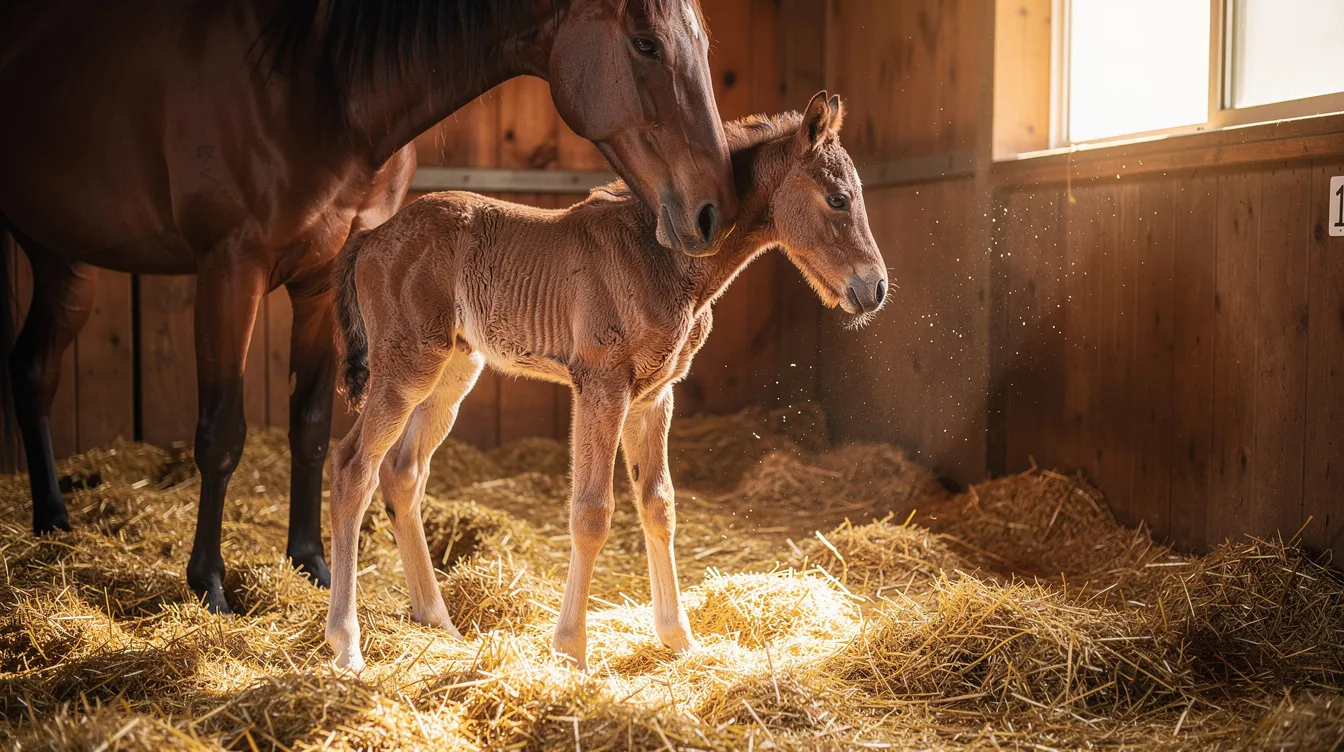
The first day is urgent. A foal should stand within about 1 hour and nurse high-quality colostrum within 2 hours of birth. Colostrum is the mare’s first milk, rich in IgG antibodies, energy, fat, vitamins, and factors that support immunity. High-quality colostrum consumption within the first 12 to 24 hours of life provides critical maternal antibodies for the foal’s immune system; antibody absorption is best in the first 6–12 hours and nearly closed by 18–24 hours, as outlined in Merck Veterinary Manual neonatal foal care.
For a 45 kg foal, aim for roughly 2–3 quarts, or 2–3 L, of good colostrum in the first 6–8 hours. Weak suckle, failure to nurse, or a sleepy foal is an emergency. A veterinarian may run an IgG blood test at 12–24 hours and recommend frozen colostrum or plasma transfusion if transfer fails. The University of Minnesota has a practical foal immune system and colostrum guide.
Watch for:
- Standing within 1 hour
- Nursing every 1–2 hours
- First urination and manure
- Bright attitude and warm limbs
- Strong suckle and interest in the mare
Days 1–14: Feeding the Normal Nursing Foal
The primary nutrition for foals comes from milk until they are about 1 to 2 weeks old, although they may start nibbling on solids earlier. Healthy suckling foals may nurse 4–6 times per hour, and mare’s milk usually meets early protein and energy needs.
Foals often consume 15–25% of body weight in milk daily. A 50 kg foal may drink about 7.5–12.5 kg, or liters, of milk daily and gain about 0.9–1.4 kg, or 2–3 lb, per day in the first month. Mare’s milk is high in lactose, modest in fat, and species-specific; cow’s milk and goat’s milk have different sugar, fat, and amino acids profiles and need modification if used, as Penn State notes in its foal nutrition factsheet.
Do not judge milk supply only by the mare’s udder. Track body condition, hydration, manure, attitude, and whether the foal grows along a sensible growth curve. By the end of the second week, many foals nibble hay or the mare’s feed, but this is exploration, not a replacement for milk.
When Mare’s Milk Is Not Enough: Orphan Foals and Poor Lactation
Orphaned foals include true orphans, rejected foals, and foals whose mare has poor lactation. The best options are a foster mare, commercial equine milk replacers, or carefully modified goat’s milk or cow’s milk. Commercial equine milk replacer is preferred because it is formulated closer to mare’s milk.
Feed 20–25% of the foal’s body weight per day in milk replacer, divided into small meals. For example, a 45 kg foal may need 9–11 L daily, offered every 2 hours during the first 1–2 weeks. Older foals, usually after 7–10 days, can gradually learn bucket feeding. Keep buckets, nipples, and mixing tools clean to prevent diarrhea.
Colostrum is still essential in the first 24 hours. If natural intake fails, use frozen colostrum or veterinary plasma. Washington State University explains these options in its guide to raising the orphan or rejected foal. Monitor skin tent, gum moisture, manure, and appetite; involve a vet early. Milk-based creep feeds can begin at 2–3 weeks to ease the move away from liquid feed.
Introducing Solid Feed: Creep Feeding and Early Forage
From 3–4 weeks of age, most foals benefit from creep feed made for young horses. Use a foal-only area with a low entrance or bars spaced so the mare cannot enter. When managing multiple foals, it’s important to monitor feeding to ensure timid foals get their fair share and avoid overfeeding dominant foals.
Start with 0.25–0.5 kg, or 0.5–1 lb, per day split into small meals. To support smooth weaning, foals should ideally be eating about one pound of a properly-formulated foal feed per month of age per day by the time they are two months old.
Foals should receive 14% to 16% crude protein in their diet derived from highly digestible sources for proper muscle development. Good formulas also provide lysine, controlled starch and sugar, and minerals including calcium, phosphorus, copper, zinc, and selenium. A proper calcium-to-phosphorus ratio of 1.5:1 to 2:1 is essential for strong bone architecture in growing foals.
Providing access to clean, dust-free forage or quality hay is crucial for foal health and development. Long-stem forage should be available from the first month, and hydration is important; foals should have unlimited access to clean, fresh water to support proper digestion and overall health. Foals should not be fed standard adult horse grain as it triggers dangerous energy spikes.
Monitoring Growth and Body Condition in the Growing Foal
Feeding decisions should follow weight, height, and body condition, not guesswork. Small foals can be weighed on a scale with a board; older foals can be tracked with a weight tape every 2–4 weeks.
By 6 months, many foals reach about 80% of mature height and around 50% of expected mature weight, though breed matters. Keep a growth chart and adjust feed intake before a growth rate becomes excessive. Monitoring and adjusting feed intake is necessary to prevent rapid weight gain and associated developmental orthopedic diseases (DOD) in foals.
Use the 1–9 body condition score. Around 5/9 is ideal for most foals; 4.5–5/9 is often safer than overfat. Check ribs, neck, behind shoulders, loin, and tailhead. Foals that experience rapid growth spurts or are overweight are at increased risk for developmental orthopedic diseases, including physitis and contracted tendons. Clinical signs such as swollen growth plates, crooked limbs, lameness, or contracted tendons need prompt veterinary care.
Weaning at 4–6 Months: Nutrition and Stress Management
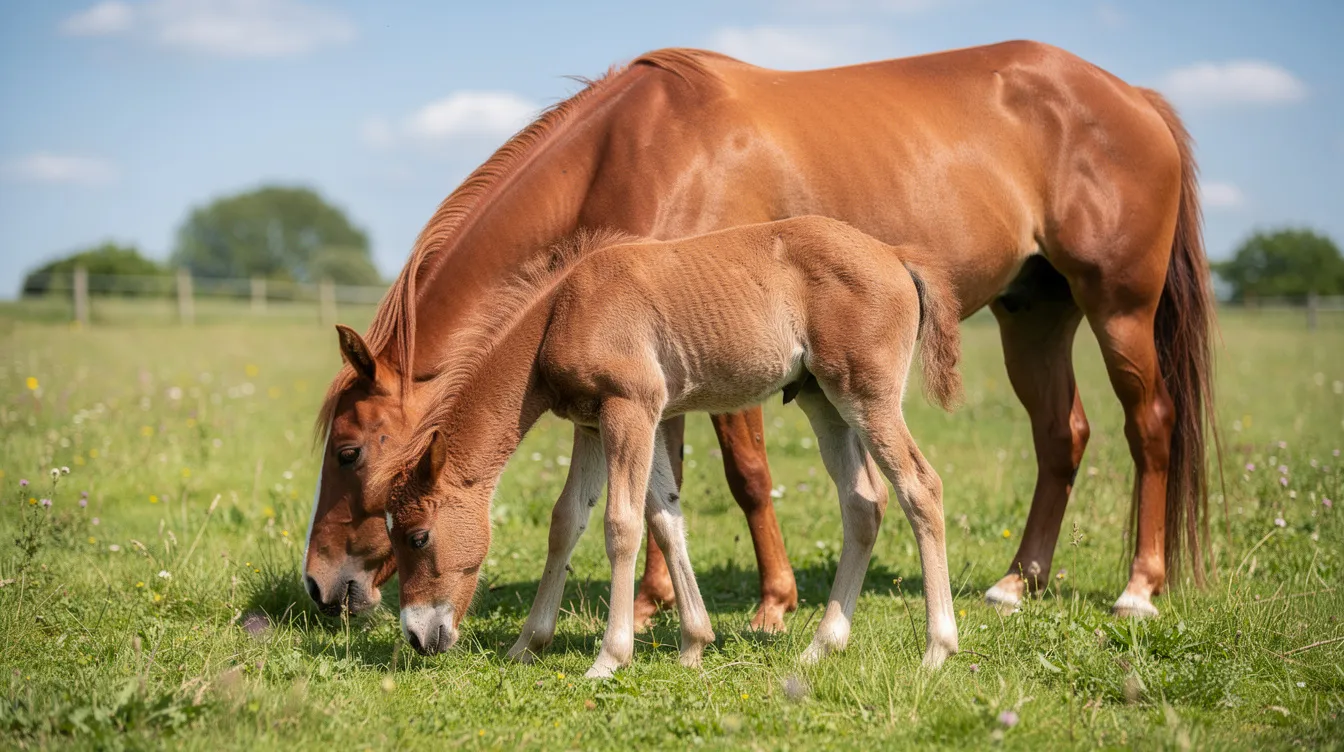
Most foals are weaned between 4 and 6 months, when the ability to use forage and concentrates is stronger and mare’s milk declines. A mare’s milk production typically begins to decline between 2 to 3 months after foaling, necessitating creep feed introduction. Foals naturally begin nibbling on solid food around 2 to 3 months of age, coinciding with a decline in mare’s milk production.
Before weaning, the foal should eat 1–1.5 kg, or 2–3 lb, of suitable growth feed plus forage for a few weeks. Foals should be introduced to a bucket feed before weaning to support their adaptation to a non-milk based diet and minimize weight loss post-weaning. Keep the same feed and schedule for 1–2 weeks after separation.
Gradual separation, fence-line contact, and group housing often reduce stress. Research indicates that foals consuming a high fiber and oil diet may be less distressed around the time of weaning compared to those fed a high starch and sugar ration. Continuous forage, low-starch meals, and ulcer awareness matter; the AAEP has a useful resource on gastric ulcers in horses. A digestive aid supplement that includes live yeast and prebiotics can help foals adjust to dietary changes during weaning.
Monitor weekly after weaning. If a foal starts to lose weight, shows weight loss over about 5% of body weight, looks tucked up, or stops eating, call your veterinarian.
Special Situations: Sick, High-Risk, and Performance-Bred Foals
Premature foals, twins, post-surgical foals, and performance-bred foals need individual plans. Hospitalized foals often do best with enteral nutrition when the gut works, but the total diet must be coordinated with the attending veterinarian.
Feeding a foal requires a strict balance between steady bone growth and muscle development to avoid rapid growth spikes that cause Developmental Orthopedic Disease (DOD). Large-frame foals and heavily muscled types may be at higher risk for physitis, OCD, wobbler syndrome, and limb deformities if energy intake is pushed too hard.
For endocrine issues, muscle disorders, major limb deformities, or affected joints, work with an equine nutritionist and veterinarian. In all cases, necessary nutrients, forage quality, a well balanced diet, free choice movement, and controlled calories matter more than fashionable supplements. Foals should be allowed to exercise and engage in free choice movement, as this is essential for bone density and tendon strength. Reviews in sources such as the equine veterinary journal and veterinary nutrition literature repeatedly point back to steady growth rate, minerals, and appropriate digestible energy.
Putting It All Together: A Practical Feeding Timeline
From birth to 24 hours, prioritize colostrum, IgG testing, warmth, nursing, and the mare-foal bond. In weeks 1–2, milk remains the main feed while you watch hydration, manure, and attitude. By 3–4 weeks, introduce creep feed and clean forage. By 2–3 months, as mare’s milk declines, increase suitable foal feed carefully. By weaning, most foals should rely confidently on forage, fresh water, and a balanced growth ration.
The key benchmarks are simple: colostrum early, 20–25% of body weight per day in milk or milk replacer when needed, creep feed by 3–4 weeks, solid feed readiness by 4–6 months, and regular body condition checks. Every foal is an individual, so use monitoring instead of rigid formulas.
Careful feeding the foal practices pay off for life: stronger bones, healthier joints, better development, and young horses that can gain weight without being pushed beyond safe limits. When in doubt, use reputable veterinary and university extension resources, and ask your veterinarian before small problems become lasting ones.