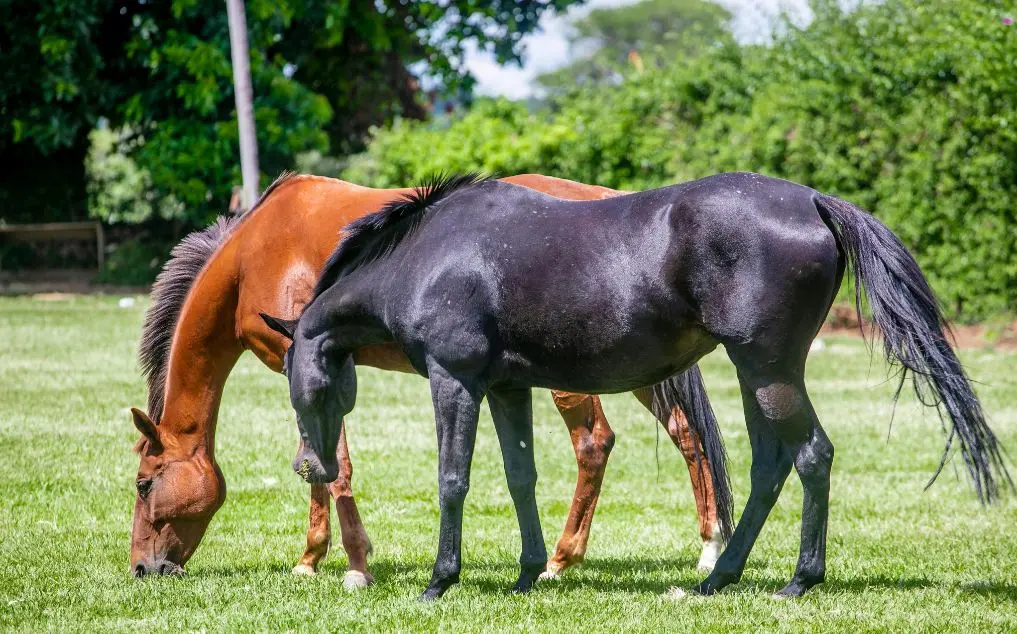

Your mare’s ribs have disappeared under a thick crest and rounded belly. Your gelding’s backbone protrudes despite eating everything you offer. Your young horse bounces off the walls after his grain meal, while your performance horse seems perpetually tired. These signals point to nutrition problems—often the difference between a thriving horse and one struggling with preventable health issues.
Equine nutrition operates on principles fundamentally different from human or other animal nutrition. Horses evolved as continuous grazers, designed to consume small amounts of fibrous forage 16+ hours daily. Feed a horse like a carnivore or omnivore, and you create metabolic disasters.
This guide addresses what horses actually need nutritionally, how much to feed based on individual requirements, how to objectively assess body condition, and how to safely manage weight problems in both directions. Understanding that nutrition errors cause more health problems than almost any other management factor transforms how you approach feeding.
Struggling to determine if your feeding program meets your horse’s needs? CompanAIn’s nutrition tracking correlates feed amounts, body condition changes, and behavioral patterns, revealing whether current feeding supports optimal health or requires adjustment.
What Should I Feed My Horse?
Horses evolved as continuous grazers consuming fibrous plants, and their digestive tract requires constant forage intake. The minimum forage requirement is 1.5 percent of body weight daily, though 2 percent or more proves ideal for most horses.
A 1,000 pound horse needs 15 to 20 pounds of hay daily as the absolute foundation. This provides structural carbohydrates for hindgut fermentation, physical fill satisfying the psychological need to chew, saliva production buffering stomach acid, and gut motility stimulation preventing colic.
Hay types offer different nutritional profiles:
● Grass hays (timothy, orchard grass, brome, bermuda) contain 8 to 12 percent protein and moderate calories. They suit easy keepers, metabolic horses requiring low sugar and starch, and most adult horses in light work.
● Legume hays (alfalfa, clover) provide 15 to 20 percent protein, higher calories, and significantly more calcium. They benefit hard keepers struggling to maintain weight, growing horses, lactating mares, and performance horses with high energy demands.
● Mixed hays combine grass and legume, balancing the benefits of each.
● Quality indicators separate excellent hay from problematic hay: Color should be green, not brown or yellow. The smell should be sweet and fresh, never musty or moldy. Texture should feel soft and leafy rather than coarse and stemmy, and the hay should be clean—free from dust, mold, and weeds.
For horses with metabolic issues requiring strict sugar and starch control, hay analysis reveals actual non-structural carbohydrate (NSC) content. Labs test for digestible energy, protein, calcium, phosphorus, and NSC levels.
● Pasture provides fresh forage but requires management. Fresh grass often contains higher protein and sugars than hay. Spring grass poses particular laminitis risk for metabolic horses due to elevated NSC content. Rotational grazing maintains pasture quality while preventing overgrazing.
● Concentrates (grain and pelleted feeds) become necessary when forage alone can’t meet energy demands. Many pleasure horses thrive on quality forage without any grain. Concentrates prove necessary for hard keepers with high metabolism, horses in heavy work, growing horses, late pregnancy and lactation, or when only poor quality forage is available.
● Water represents the most critical nutrient. Horses need 5 to 10 gallons daily minimum, increasing to 20+ gallons during hot weather, heavy work, or lactation. Dehydration causes impaction colic. Clean, fresh water must be available 24/7.
How Much Should I Feed?
Energy requirements vary enormously based on individual factors. A typical 1,100 pound horse at maintenance needs approximately 16,000 to 20,000 kilocalories daily. Light work increases requirements 20 to 30 percent. Moderate work increases needs 40 to 50 percent. Heavy work requires 60 to 90 percent more than maintenance.
But these represent averages. Individual metabolism varies tremendously—some horses maintain perfect weight on minimal feed while others need substantial calories to avoid weight loss. Cold weather increases energy needs. Age affects efficiency.
Protein requirements shift with life stage:
● Maintenance: 8 to 10 percent of diet
● Growth: 12 to 16 percent
● Lactation: 12 to 14 percent
● Heavy work: 10 to 12 percent
The critical principle: Feed the individual horse, not the average requirement. Body condition scoring provides objective assessment. A horse maintaining ideal body condition on current feed is getting the right amount regardless of what feeding charts suggest.
CompanAIn tracks feed amounts alongside body condition scores and weight measurements over months, identifying when gradual changes indicate feeding adjustments are needed before dramatic weight shifts occur.
My Horse Is Too Thin – How Do I Add Weight Safely?
Causes of poor body condition require identification before simply adding feed. Inadequate feed quantity or poor quality forage represent obvious culprits. Dental disease preventing proper chewing causes weight loss despite eating everything offered. Internal parasites rob nutrients. High metabolism creates hard keepers. Chronic diseases including Cushing’s disease, kidney disease, or cancer cause weight loss. Social dynamics where dominant horses push submissive horses away from food create thin horses.
Management strategies follow a logical progression:
● Increase forage quantity—offer free-choice quality hay
● Switch to higher-calorie hay like alfalfa or grass/alfalfa mix
● Add concentrates formulated for weight gain (multiple small meals, maximum 5 pounds per meal for 1,000 pound horses)
● Add calorie-dense supplements (vegetable oil starting at 1/4 cup, gradually increasing to 2 cups; rice bran; commercial high-calorie supplements)
● Feed 3 to 4 times daily rather than twice daily
● Address dental disease aggressively
● Deworm based on fecal egg count testing
● Diagnose and treat underlying diseases
● Separate thin horses from aggressive herd members during feeding
Safe weight gain occurs gradually. Expect 0.5 to 1 percent body weight gain weekly (5 to 10 pounds weekly for a 1,000 pound horse). Rapid weight gain risks metabolic issues.
CompanAIn documents weight trends and correlates feeding adjustments with actual weight responses, revealing whether increased feed produces expected gains or indicates underlying problems requiring veterinary evaluation.
My Horse Is Overweight – How Do I Manage Weight Loss?
Excess weight creates serious health risks beyond cosmetic concerns. Laminitis represents the most dangerous consequence—potentially career-ending or fatal. Insulin dysregulation and metabolic syndrome develop with obesity. Increased joint stress worsens arthritis. Reduced athletic performance affects working horses.
Causes of excess weight include overfeeding, unrestricted access to rich pasture, metabolic issues causing easy weight gain, insufficient exercise, and genetic predisposition. Certain breeds—ponies, many draft crosses, and some Quarter Horse bloodlines—are notorious easy keepers.
Management strategies require commitment:
● Measure hay—weigh it rather than estimating (most need 1.5% body weight)
● Use slow feeders or small-hole hay nets extending eating time
● Eliminate grain entirely unless medically necessary
● Restrict pasture access (grazing muzzles, limited turnout hours, dry lot with measured hay)
● For metabolic horses: soak hay 30 to 60 minutes to reduce sugars, choose low-NSC hay (<10-12% NSC)
● Increase exercise gradually
● Divide herds if necessary
● Perform body condition scoring monthly
Safe weight loss proceeds slowly. Target 0.5 to 1 percent body weight loss weekly. Never drop forage below 1.2 to 1.5 percent body weight—starvation triggers metabolic problems. Never restrict water. Crash diets cause muscle loss rather than optimal results.
What Feeding Schedule Should I Use?
Frequency matters more than total daily amount for digestive health. The equine stomach produces acid continuously whether feed is present or not. Long periods without forage allow acid to damage the stomach lining, causing gastric ulcers. Multiple small meals optimize digestion and reduce colic risk.
Ideal schedules provide:
● Free-choice hay or frequent hay meals (minimum 3 to 4 times daily)
● Concentrates split into 2 to 4 meals if needed
● Maximum 5 pounds concentrate per meal for 1,000 pound horses
● No more than 4 to 6 hours between forage meals
Timing relative to exercise matters. Feed 2+ hours before work or after work. A full stomach compresses the diaphragm, reducing respiratory efficiency.
Consistency reduces stress. Feeding at the same times daily establishes routine, reducing gastric acid exposure between meals and minimizing stress. Horses are creatures of habit—irregular schedules increase anxiety and ulcer risk.
How Should I Feed By Life Stage?
Weanlings and yearlings navigate critical skeletal development. They need 12 to 16 percent protein for tissue building. Balanced calcium to phosphorus ratios (1.5:1 to 2:1) prove essential for proper bone development. However, overfeeding causes rapid growth that increases developmental orthopedic disease (DOD) risk. Feed formulated specifically for growth. Monitor growth rate carefully—faster isn’t better.
Young horses entering training (2 to 4 years) still develop skeletally while facing increased energy demands from work. Balanced rations prove critical. Avoid overfeeding concentrates.
Adult horses at maintenance (idle or light work) often thrive on forage alone. Many need minimal to no grain. Free-choice quality hay or pasture provides adequate nutrition.
Performance horses in moderate to heavy work require 20 to 90 percent more energy than maintenance. They may need concentrates to meet demands. Easily digestible energy sources prevent digestive upset. Adequate protein supports muscle recovery.
Pregnant mares experience modest increased demands. The first 8 months require only maintenance nutrition. The last 3 to 4 months demand increased energy (10 to 20% above maintenance) and protein (10% increase) as the fetus grows rapidly.
Lactating mares face the highest nutritional demands of any life stage. Producing 3+ gallons of milk daily requires 70 to 90 percent more energy than maintenance and 12 to 14 percent protein. Free-choice quality hay (often alfalfa) forms the foundation. Concentrates prove necessary for most mares.
Senior horses (15+ years) face decreased digestive efficiency and dental challenges requiring specialized feeding approaches.
What Grain and Concentrates Should I Feed My Horse?
Many horses don’t need grain. Horses evolved consuming forage, not grain. Their digestive system tolerates limited grain, but will rebel against excess.
Concentrates become necessary when forage alone can’t meet energy demands: hard keepers with high metabolism, horses in heavy work, growing horses, pregnant mares in late pregnancy, and lactating mares.
Types include:
● Whole grains: Oats (safest, most digestible), corn (energy-dense but harder to digest), barley
● Pelleted and textured feeds: Complete formulations with vitamins/minerals (performance feeds, maintenance feeds, senior feeds, low-starch feeds)
● Beet pulp: Digestible fiber (soak before feeding)
● Rice bran: High calorie content
Critical feeding rules prevent problems:
Maximum 0.5 percent body weight per meal (5 pounds for a 1,000 pound horse). Exceeding this overwhelms small intestine capacity. Undigested starch reaches the hindgut, causing acidosis, colic, or laminitis.
If more concentrate is needed, feed multiple small meals (3 to 4 daily) rather than increasing meal size. Never free-feed grain. Transition to new feeds gradually over 7 to 10 days minimum.
Do I Need Supplements?
Supplements serve specific purposes but aren’t universally necessary. Quality forage plus appropriate concentrate (if used) provides most nutrients.
Salt represents the only universally necessary supplement. Horses require sodium and lose significant amounts through sweat. Provide free-choice loose salt or salt blocks.
Common supplements include:
● Vitamin and mineral mixes balance forage deficiencies
● Electrolytes replace losses from heavy work or hot weather
● Joint supplements (glucosamine, chondroitin, MSM, hyaluronic acid) are widely used though scientific evidence is limited
● Hoof supplements (biotin, methionine, zinc, copper) support hoof quality but require 6 to 9 months to see results
● Omega-3 fatty acids provide anti-inflammatory effects
What to avoid: Over-supplementation creates problems. More is not better. Excess selenium, vitamin A, and vitamin D cause toxicity.
What Are Common Feeding Mistakes?
Overfeeding grain damages more horses than any other feeding error. Excess grain causes colic, triggers laminitis, creates gastric ulcers, causes tying-up in susceptible horses, and produces excitability.
Insufficient forage leads to gastric ulcers from continuous acid production, stereotypies (cribbing, weaving) from psychological distress, and increased colic risk.
Rapid diet changes cause colic through microbial population disruption. Always transition feeds gradually over 7 to 10 days minimum—this applies to hay changes, pasture introduction, and grain changes.
Free-feeding grain creates overload risk. Accidental access to grain bins has killed horses through colic and laminitis. Store grain securely.
Poor quality hay causes respiratory disease from mold and dust, fails to provide adequate nutrition, and may contain toxic weeds.
Inconsistent feeding schedules increase stress and elevate ulcer risk.
Feeding immediately before work compresses the diaphragm, reducing respiratory efficiency. Feed 2+ hours before work or after work.
Neglecting water causes dehydration that triggers impaction colic. Clean, fresh water 24/7 isn’t optional.
Ignoring individual variation leads to feeding by bag instructions rather than the horse’s actual needs. Body condition score matters more than weight or feed amount charts.
How Do I Feed Horses With Special Conditions?
Metabolic syndrome and insulin dysregulation require strict dietary management preventing laminitis. Low NSC diets (less than 10 to 12% NSC) prove essential. Hay analysis determines actual sugar and starch content. Restricted or no pasture prevents intake of high-sugar grass. No grain—use low-NSC pelleted feeds if supplementation is necessary.
Equine Cushing’s Disease (PPID) may require restricted NSC like metabolic horses, though some horses have increased caloric needs from muscle wasting. Quality protein helps rebuild lost muscle.
Gastric ulcers respond to feeding management changes. Free-choice hay keeps the stomach buffered. Alfalfa hay provides calcium that buffers stomach acid. Reduce or eliminate grain. Feed frequent small meals if grain is necessary. Avoid long fasting periods exceeding 4 to 6 hours.
Tying-up (exertional rhabdomyolysis) requires reducing grain and increasing dietary energy from sources other than starch. Adequate vitamin E and selenium support muscle function.
Developmental orthopedic disease (DOD/OCD) prevention requires avoiding overfeeding weanlings and yearlings. Balanced calcium to phosphorus ratios prove critical. Slow, steady growth rate prevents skeletal abnormalities.
How Does AI Technology Help With Nutrition Management?
Traditional feeding management relies on estimating feed amounts, remembering schedule consistency, and guessing whether body condition changes over months. Did that feeding adjustment three weeks ago produce the expected weight response? Has grain intake increased without realizing it?
CompanAIn’s nutrition tracking transforms guesswork into precision through systematic documentation. The platform logs exact feed amounts daily—hay by the flake or pound, grain by the scoop or pound, supplements administered. Body condition scores entered monthly reveal gradual changes invisible day-to-day. Weight measurements track actual pounds gained or lost.
The system correlates feeding patterns with outcomes. When hay quality changed six weeks ago, did body condition score decline? When grain was increased to support heavier work, did the horse develop loose manure suggesting digestive upset?
Pattern recognition reveals relationships memory can’t track. Generated reports provide veterinarians and equine nutritionists with comprehensive feeding history during consultations. When management changes are implemented, continued tracking reveals whether interventions produce expected results or require further adjustment.