

Your dog feels hot to the touch. The ears seem warmer than usual, the nose is dry, and there’s a lethargy you can’t quite explain. You don’t have a rectal thermometer handy, and even if you did, the thought of using one doesn’t appeal. Now you’re searching for signs that confirm whether your dog actually has a fever or if you’re overreacting to normal body temperature fluctuations.
Fever in dogs signals the immune system fighting infection, inflammation, or other disease processes. While a thermometer provides the only definitive measurement, specific behavioral changes and physical signs indicate elevated temperature with reasonable accuracy. Understanding what separates normal warmth from a true fever helps determine whether your dog needs immediate veterinary care or careful home monitoring.
Temperature tracking matters beyond single episodes. CompanAIn’s agentic AI platform consolidates fever observations, behavioral changes, and symptom patterns through its Living Health Timeline, helping identify whether isolated incidents represent minor illness or concerning trends requiring veterinary investigation.
Normal Dog Temperature vs Fever
Dogs maintain a higher baseline body temperature than humans. Normal canine temperature ranges from 101°F to 102.5°F (38.3°C to 39.2°C). Anything above 103°F constitutes a fever, and temperatures exceeding 106°F create life-threatening emergencies causing organ damage.
According to VCA Animal Hospitals, fever represents the body’s deliberate response to infection or inflammation. The hypothalamus—the brain’s temperature control center—raises the body’s set point, creating an environment less hospitable to pathogens while enhancing immune function.
This differs from hyperthermia, where body temperature rises due to external heat or inability to cool down. Heatstroke creates hyperthermia, not fever. The distinction matters because treatment approaches differ dramatically—fevers often require treating underlying infection, while hyperthermia demands immediate aggressive cooling.
Physical Signs Suggesting Fever
Hot, Dry Nose
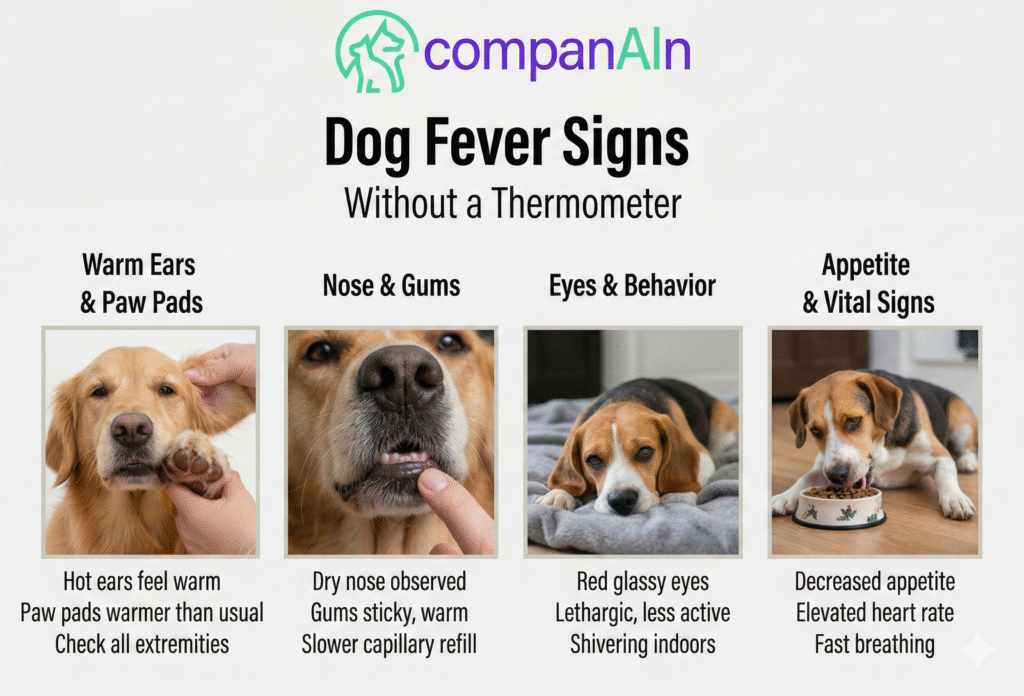
The “warm, dry nose equals fever” belief oversimplifies reality, but it provides one useful data point. Healthy dogs typically maintain cool, moist noses through constant mucus secretion. When fighting infection, reduced fluid secretion and increased body temperature create warm, dry nasal tissue.
However, environmental factors also dry noses. Dogs sleeping in sunny spots, near heaters, or in low-humidity environments develop dry noses without fever. Consider this sign alongside others rather than solely relying on it.
Warm Ears and Paw Pads
Ears and paw pads contain extensive blood vessel networks near the surface, making them sensitive indicators of body temperature changes. Research from Cornell University College of Veterinary Medicine shows that noticeably hot ears—particularly the inner ear flaps—often accompany fever.
Compare both ears and all four paw pads against your baseline knowledge of your dog’s normal temperature. One hot ear might indicate localized infection or inflammation, while all extremities feeling warmer than usual suggests systemic fever.
Red or Glassy Eyes
Fever increases blood flow throughout the body, including the eyes. Dogs with fever often show:
- Bloodshot appearance with visible red vessels in the sclera
- Glassy, unfocused look suggesting discomfort
- Excessive tearing or watery discharge
- Squinting or sensitivity to light
The sclera—the white part of the eye—may appear distinctly redder than normal, and dogs might blink more frequently or avoid bright light.
Warm, Dry Gums
Press your finger against your dog’s gums. Healthy gums feel cool and moist, returning to normal pink color within 2 seconds after pressure (capillary refill time). Feverish dogs often have:
- Warm, tacky gums that feel sticky rather than slippery
- Darker pink or red color due to increased circulation
- Slower capillary refill time
- Dry texture indicating dehydration
This assessment also reveals hydration status—a critical concern since elevated temperature increases fluid loss through increased respiratory rate and metabolism.
Behavioral Changes Indicating Fever
Lethargy and Weakness
Dogs with fever conserve energy to fuel immune responses. According to veterinary internal medicine research, this manifests as:
- Reluctance to engage in normal activities (walks, play, training)
- Sleeping significantly more than usual
- Slow or absent response to commands or interaction
- Difficulty rising from lying position
- Choosing to remain in one spot rather than following family members
↪ The key distinction: feverish lethargy persists even after adequate rest. Dogs lack enthusiasm for favorite activities, showing little interest in things that normally excite them.
Shivering and Shaking
Paradoxically, dogs with fever often shiver as if cold. This occurs when the hypothalamus raises the body’s temperature set point—the current body temperature now registers as “too cold” compared to the new target, triggering shivering to generate heat.
Dogs may:
- Seek warm spots near heaters or in sunny areas
- Burrow under blankets or into beds
- Curl into tight balls trying to conserve heat
- Tremble continuously despite warm environment
This shivering differs from cold-weather shivering or anxiety shaking. It persists indoors at comfortable temperatures and continues even after warming efforts.
Decreased Appetite
Fever suppresses appetite through multiple mechanisms. The immune system releases cytokines—signaling proteins that reduce hunger while fighting infection. Additionally, many conditions causing fever create pain or nausea that discourages eating:
- Respiratory infections make chewing and swallowing difficult
- Gastrointestinal disease causes nausea
- Dental infections create mouth pain
- Systemic inflammation reduces gastric motility
Complete food refusal lasting more than 24 hours in adult dogs or 12 hours in puppies warrants veterinary evaluation regardless of other symptoms.
Increased Heart and Respiratory Rates
Elevated body temperature forces the heart to work harder, increasing heart rate to circulate blood for cooling. Similarly, respiratory rate climbs as dogs attempt to dissipate heat through panting.
Normal resting rates:
- Heart rate: 60-140 beats per minute (smaller dogs higher, larger dogs lower)
- Respiratory rate: 10-30 breaths per minute
To measure respiratory rate, count chest rises and falls for 15 seconds and multiply by 4. Consistently elevated rates exceeding 40 breaths per minute at rest suggest fever or respiratory compromise requiring evaluation.
Vomiting and Diarrhea
Gastrointestinal symptoms frequently accompany fever, particularly when infection involves the digestive system. However, inflammation from various diseases triggers nausea and diarrhea even when the GI tract isn’t primarily affected. The immune response produces compounds that irritate gastric and intestinal linings regardless of infection location.
What Causes Fever in Dogs
Bacterial and Viral Infections
Common infectious causes:
- Respiratory infections (kennel cough, pneumonia)
- Urinary tract infections
- Skin and wound infections
- Tick-borne diseases (Lyme disease, ehrlichiosis, anaplasmosis)
- Viral diseases (parvovirus, distemper, influenza)
- Gastrointestinal infections
The immune response to pathogen invasion triggers temperature elevation as a defense mechanism. Research shows elevated temperature actually enhances immune cell function while creating hostile conditions for bacteria and viruses.
Inflammation From Injury or Disease
Conditions causing tissue inflammation often produce fever even without infection:
- Pancreatitis (pancreatic inflammation)
- Inflammatory bowel disease
- Arthritis flares
- Trauma and tissue injuries
- Post-surgical inflammation
The inflammatory cascade releases prostaglandins and cytokines that signal the hypothalamus to raise body temperature.
Toxin Exposure
Ingesting poisonous substances sometimes triggers fever as part of systemic toxicity. According to veterinary toxicology research, certain toxins directly affect temperature regulation centers in the brain, while others cause tissue damage leading to inflammatory fever. Common culprits include certain plants, rodenticides, and medications.
Immune-Mediated Diseases
Autoimmune conditions where the immune system attacks the body’s own tissues frequently cause chronic or recurring fevers:
- Immune-mediated hemolytic anemia (IMHA)
- Systemic lupus erythematosus
- Immune-mediated polyarthritis
- Inflammatory myopathies
These conditions produce fever through continuous inflammatory responses rather than infection.
Cancer
Some cancers produce fever through multiple mechanisms. Tumor tissue breakdown releases inflammatory substances, and certain cancers directly secrete fever-inducing compounds called pyrogens. Lymphoma, leukemia, and other blood cancers commonly present with recurring unexplained fevers that don’t respond to antibiotics.
Understanding Fever Patterns Through Intelligent Monitoring
Does your dog develop a fever during seasonal allergies? After boarding at kennels? Following strenuous exercise in hot weather? Single fever episodes might represent acute illness, but patterns reveal underlying conditions requiring different management approaches.
CompanAIn’s agentic AI system identifies fever triggers that scattered observations miss. When you document “Dog seemed feverish after daycare visit,” the platform’s Data Aggregator consolidates this observation with historical incidents, environmental factors, and veterinary records. The Health Analyzer examines whether fever episodes cluster around specific exposures—revealing that your dog’s immune system consistently reacts to particular stressors like boarding facilities, seasonal pollen, or medication changes.
This pattern recognition catches trends memory cannot. If fever episodes gradually increase in frequency—occurring every three months, then every six weeks, then monthly—the progression suggests an underlying disease requiring investigation before complications develop. The Recommendation Engine translates these patterns into specific veterinary discussion points: “Fever episodes correlate with spring pollen season—discuss allergy testing” or “Three fever incidents within two weeks of boarding—evaluate immune stress response.”
For dogs with diagnosed conditions requiring temperature monitoring, CompanAIn tracks whether management strategies actually work. When your veterinarian prescribes antibiotics for recurring infections, the system correlates medication timing with fever resolution speed. When fever returns despite completing treatment courses, documented patterns help veterinarians identify antibiotic resistance or misdiagnosis early—before chronic infection causes permanent damage.
Home Care for Low-Grade Fever
When veterinary care isn’t immediately accessible and fever appears mild (dog still eating, drinking, and responsive), supportive home care helps:
Ensure constant access to fresh water. Fever increases fluid loss through increased respiratory rate and metabolism. Dehydration worsens rapidly with elevated temperature, creating secondary complications. Offer water frequently and consider adding low-sodium chicken broth to encourage drinking.
Provide a cool, comfortable resting environment. Avoid forcing ice baths or extreme cooling measures, which can cause shivering that paradoxically raises core temperature. Instead, provide cool (not cold) surfaces, good air circulation, and shaded resting areas.
Withhold food if nausea is present, but never restrict water. Once vomiting stops for 6-8 hours, offer small amounts of bland food—boiled chicken with white rice—in multiple small meals rather than normal portions.
Monitor closely for worsening symptoms. If lethargy deepens, appetite disappears completely, or new symptoms develop (vomiting, diarrhea, difficulty breathing), veterinary care becomes necessary regardless of initial fever severity.
When Veterinary Care Cannot Wait
Seek immediate emergency care if your dog shows:
- Difficulty breathing, gasping, or blue/pale gums
- Seizures, collapse, or loss of consciousness
- Temperature you can confirm exceeds 106°F
- Complete refusal of water for more than 12 hours
- Bloody vomit or diarrhea
- Extreme lethargy with inability to stand
- Crying or signs of severe pain
These symptoms indicate severe illness or organ compromise requiring stabilization and aggressive treatment. Temperatures above 106°F cause protein breakdown, brain damage, and multi-organ failure—minutes matter in these situations.
Making Decisions With Better Information
Without a thermometer, physical assessment provides clues but not certainty. CompanAIn transforms these observations into actionable intelligence. The platform’s Living Health Timeline consolidates every fever-related symptom you document—lethargy duration, appetite changes, behavioral shifts—building the complete picture that single observations miss.
When you’re deciding between monitoring at home or seeking emergency care, CompanAIn’s historical data shows how your specific dog responded to similar symptoms previously. The agentic AI system identifies whether current patterns match past incidents that resolved naturally or those requiring veterinary intervention, removing guesswork from critical health decisions.
Ready to stop relying on memory and start tracking patterns that protect your dog’s health? Contact CompanAIn to learn how intelligent fever monitoring catches problems early—before emergency situations develop and treatment options narrow.
Frequently Asked Questions
What temperature is considered a fever in dogs?
Normal dog temperature ranges from 101°F to 102.5°F. Temperatures above 103°F constitute fever. Readings between 103 and 104°F indicate mild fever manageable with home care and veterinary guidance. Temperatures of 104-106°F represent moderate to severe fever requiring same-day veterinary evaluation. Anything exceeding 106°F creates medical emergencies requiring immediate care due to the risk of organ damage.
Can I give my dog Tylenol or ibuprofen for fever?
Never give dogs human medications like ibuprofen (Advil), acetaminophen (Tylenol), or naproxen without veterinary guidance. These medications are toxic to dogs and can cause vomiting, diarrhea, intestinal bleeding, kidney failure, and death—even in small doses. Always contact your veterinarian before administering any medication for fever or pain.
Is it normal for dogs to get a fever after vaccinations?
Yes. Low-grade fever accompanied by mild lethargy and discomfort commonly occurs 24-48 hours after vaccination as the immune system responds appropriately. These mild symptoms typically resolve within one to two days. If fever persists beyond 48 hours or your dog shows severe symptoms like vomiting, difficulty breathing, or facial swelling, contact your veterinarian immediately.
How can I help my dog at home if they have a mild fever?
Ensure constant access to fresh water, as fever increases fluid loss. Provide a cool, comfortable resting environment with good air circulation. Offer water frequently and consider low-sodium chicken broth to encourage drinking. Never force ice baths or extreme cooling, which can cause shivering that raises core temperature. Monitor closely for worsening symptoms requiring veterinary care.
How does CompanAIn help track fever episodes?
CompanAIn’s Living Health Timeline consolidates documented fever episodes alongside environmental factors, activity logs, and veterinary records. The platform’s agentic AI system analyzes patterns—identifying whether fever episodes cluster around specific exposures like boarding or seasonal triggers. When fever frequency gradually increases over time, specialized agents flag these concerning progressions automatically, generating alerts for veterinary consultation before complications develop.