

Your dog’s been scratching for three days. You’ve checked the coat thoroughly but haven’t found any fleas. The itching could be dry skin, allergies, or a reaction to new products—but it’s getting worse. Your dog chews at the tail base, scratches behind the ears constantly, and small black specks are appearing on the bedding.
Fleas are frustratingly elusive. Adult fleas spend only a fraction of their time on dogs, making visual detection unreliable. They’re fast-moving, dark brown insects barely larger than sesame seeds that hide in dense fur near the skin. By the time you can actually see them, infestations have often exploded—what started as a few hitchhikers has become thousands of eggs, larvae, and pupae colonizing your home.
Understanding flea biology, recognizing indirect evidence like flea dirt, and performing simple diagnostic tests transforms guesswork into definitive identification. When you document scratching patterns and environmental factors through CompanAIn’s health tracking, the agentic AI correlates flea episodes with seasonal timing and treatment effectiveness, revealing patterns that guide prevention strategies.
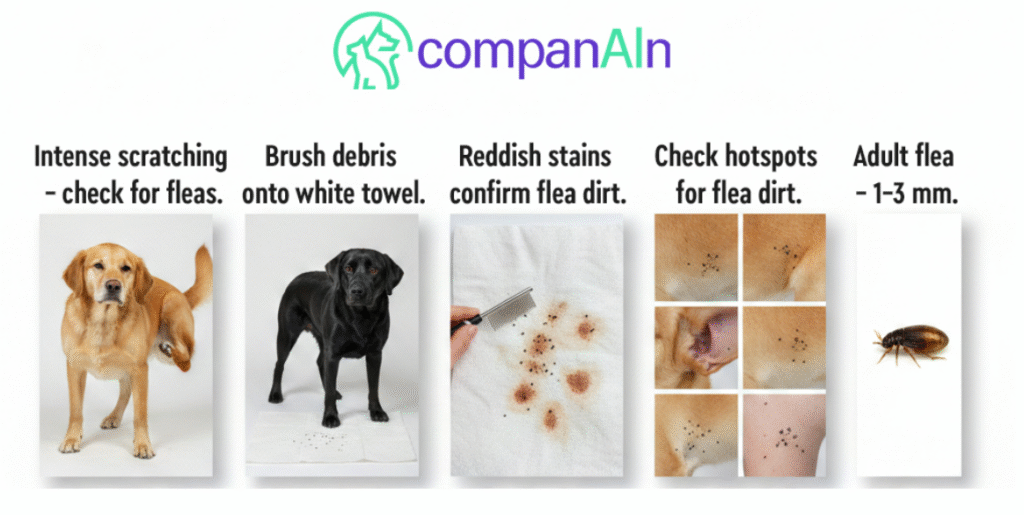
The Paper Towel Test: Definitive Flea Detection
You don’t need to see live fleas to confirm infestation. Flea dirt—digested blood excreted by adult fleas—provides unmistakable evidence.
How to Perform the Test
Position your dog on a white surface (towel, sheet, or paper) in good lighting. Vigorously brush or comb through the coat, particularly around the tail base, lower back, belly, and behind ears—areas fleas prefer. Focus on regions where skin meets fur rather than outer coat layers.
Examine collected debris on the white surface. Look for small black or dark brown specks resembling coarse ground pepper. Place suspect specks on a damp white paper towel and wait 30-60 seconds.
↪ The definitive indicator: Flea dirt dissolves into reddish-brown stains—the digested blood rehydrating and spreading. Regular dirt remains black and doesn’t dissolve or create colored halos. Red or rust-colored dissolution confirms flea presence even when no live fleas are visible.
What Fleas Actually Look Like
Adult fleas are dark reddish-brown, flattened side-to-side, 1-3 millimeters long, and have powerful hind legs built for jumping. According to Cornell University’s College of Veterinary Medicine, fleas can jump vertically up to 8 inches and horizontally up to 16 inches—proportionally equivalent to humans jumping over 300 feet.
They move extremely fast through fur, making them difficult to catch or observe. You’re most likely to spot them during grooming, when startled fleas jump away, or in areas where fur is thinnest—groin, armpits, belly.
What fleas are NOT:
- Slow-moving like ticks
- Light-colored or translucent
- Stationary for long periods
- Easily visible without parting fur
Many owners mistake scabs, skin flakes, or other debris for fleas. Live fleas move deliberately and rapidly away from light and disturbance.
Flea Dirt: The More Reliable Evidence
Flea dirt appears as small black specks concentrated in areas where fleas feed most actively—along the spine from shoulders to tail base, around the tail base and rump, on the belly and inner thighs, and behind the ears and on the neck.
The quantity of flea dirt doesn’t always correlate with visible flea numbers. According to VCA Animal Hospitals, heavy flea dirt presence with few visible fleas suggests either early infestation before populations explode or effective grooming removing adult fleas while missing their excrement.
Visual characteristics:
- Appears comma-shaped or elongated (not perfectly round)
- Dark brown to black color
- Accumulates near skin rather than on outer fur tips
- Often found in clumps rather than evenly distributed
Run a flea comb through suspect areas. Flea dirt collects between teeth, making it easier to transfer to paper towels for testing.
Physical Signs Beyond Scratching
Flea Allergy Dermatitis
Some dogs develop severe allergic reactions to flea saliva. According to VCA Animal Hospitals, flea allergy dermatitis is a leading cause of allergic reactions in dogs, with reactions disproportionate to actual flea numbers—a single flea bite can trigger itching for several days.
Classic presentation includes hair loss concentrated at the base of the tail, lower back, and hind legs; red, inflamed skin with hot spots (moist, oozing lesions); thickened, darkened skin from chronic inflammation; and scabs and crusts from repeated scratching.
Flea-allergic dogs often show severe symptoms with minimal flea evidence because constant grooming removes most adult fleas before you observe them.
Anemia in Severe Infestations
Heavy flea burdens—particularly in puppies, small dogs, or dogs with chronic untreated infestations—can cause anemia through blood loss. Each adult flea consumes approximately 15 times its body weight in blood daily.
Anemia indicators include pale gums (normally pink, becoming white or pale pink), lethargy and weakness, rapid heart rate, and cold ears and paws. Puppies under six months are especially vulnerable. Anemia from fleas constitutes a medical emergency requiring immediate veterinary care.
Tapeworm Segments
Fleas serve as intermediate hosts for tapeworms. Dogs ingesting fleas during grooming acquire tapeworms that mature in the intestines, shedding egg-filled segments resembling grains of rice.
Finding these segments—either fresh (mobile, cream-colored) in feces or dried (hard, golden) around the anus or in bedding—confirms flea exposure even if you haven’t detected fleas directly.
Where to Look for Fleas on Your Dog
Tail base and rump: Fleas congregate here where dogs struggle to groom effectively. Part fur in multiple spots along the spine from mid-back to tail, looking for movement or flea dirt accumulation.
Belly and groin: Sparse fur and proximity to the ground make these prime feeding areas. Check inner thighs where legs meet the body—fleas cluster in warm, protected areas.
Neck and behind ears: Areas dogs scratch frequently develop secondary skin damage, attracting more fleas. Look behind and inside ear bases, under collar lines, and along the neck close to shoulders.
Armpits: Similar to groin areas, armpits provide warm, protected environments where front legs join the body.
Using a Flea Comb Effectively
Metal flea combs with teeth spaced 0.1-0.2mm apart trap adult fleas and flea dirt that regular combs miss. Effective combing requires working in small sections, parting fur to reach skin level, combing slowly with firm pressure against skin, and cleaning comb teeth after each pass.
Have a bowl of soapy water nearby to drown captured fleas immediately. Spend 10-15 minutes covering the dog’s entire body for both diagnostic and therapeutic purposes.
The Complete Flea Life Cycle Explained
Understanding flea biology explains why you might find abundant evidence with few visible adults and why infestations persist despite treating your dog.
Adult fleas live 2-3 months on average, feeding on blood and mating. Females begin laying eggs within 24-48 hours of their first blood meal, producing 40-50 eggs daily.
Eggs fall off dogs within hours, hatching into larvae in 2-12 days depending on temperature and humidity. Eggs comprise roughly 50% of the flea population at any time.
Larvae develop through three stages over 5-11 days, feeding on organic debris and adult flea feces. They avoid light, burrowing deep into carpets and cracks, representing about 35% of flea populations.
Pupae form protective cocoons where larvae develop into adults. This stage lasts 5-14 days under ideal conditions but can persist for months in unfavorable environments. Pupae are nearly indestructible—resistant to insecticides, desiccation, and pressure, comprising approximately 10% of populations.
Environmental triggers like vibration, carbon dioxide, or pressure stimulate adult emergence from cocoons. This explains sudden flea appearances in vacant homes—pupae waited in suspended animation for host presence.
Treatment Requires Multi-Pronged Approach
Finding fleas means treating the dog and the environment, as well as maintaining prevention to stop reinfestation.
On-Pet Treatment
Modern flea preventatives work through multiple mechanisms. Oral medications containing nitenpyram kill adult fleas within 30 minutes but provide no residual protection. Monthly oral products with spinosad or afoxolaner kill fleas within hours and provide 30-day protection.
Topical products applied between shoulder blades absorb into skin oils, killing fleas on contact. According to veterinary parasitology research, products combining adulticides with insect growth regulators provide superior environmental control.
Environmental Treatment
Indoor treatment requires vacuuming thoroughly and frequently, immediately disposing of vacuum bags or emptying canisters outside. Wash all pet bedding, blankets, and removable fabric items in hot water weekly. Use premise sprays or foggers containing both adulticides and insect growth regulators, focusing on areas under furniture, along baseboards, and in cracks.
Outdoor treatment targets shaded, moist areas where larvae develop—under decks, porches, bushes, and in tall grass. Sunny, open areas rarely harbor fleas as larvae desiccate in direct sunlight.
Preventive Maintenance
Year-round prevention proves more effective and economical than treating established infestations. Geographic location determines whether year-round or seasonal prevention suffices—warmer climates require continuous protection, while areas with hard freezes may allow winter breaks.
CompanAIn’s agentic technology tracks prevention schedules and breakthrough infestations, helping identify when products fail or application timing needs adjustment. The Living Health Timeline shows whether flea problems correlate with gaps in prevention or suggest product resistance requiring alternative treatments.
How Pattern Recognition Reveals Flea Triggers
Do fleas appear annually around the same time? After visits to specific dog parks or boarding facilities? Despite year-round preventatives during certain seasons?
CompanAIn’s specialized agents analyze documented flea incidents alongside environmental variables—seasonal timing, travel history, yard treatment schedules, and prevention product usage. When you log “found flea dirt after hiking,” the system correlates this with similar past incidents, identifying whether flea problems cluster around specific exposures or times of year.
This pattern recognition reveals gaps in prevention strategies. If fleas appear consistently 2-3 weeks after monthly applications, the analysis suggests more frequent application or switching products. If infestations follow boarding stays, the data supports requesting proof of flea prevention from facilities.
Frequently Asked Questions
How do I know if my dog has fleas if I can't see them?
Perform the paper towel test—brush your dog over white paper, collect black specks, and place them on a damp paper towel. If specks dissolve into reddish-brown stains, that’s flea dirt (digested blood), confirming flea presence. Other indicators include intense scratching at the tail base, hair loss on the lower back, and finding rice-like tapeworm segments in feces. Cornell University veterinarians note flea dirt is more reliable than spotting live fleas since adults spend limited time on dogs.
What does flea dirt look like on dogs?
Flea dirt appears as small black or dark brown specks resembling coarse ground pepper, concentrated near the tail base, along the spine, on the belly, and behind ears. Unlike regular dirt, flea dirt is comma-shaped or elongated and dissolves into rust-colored stains when moistened. Use a flea comb to collect suspect debris, then test on a damp white paper towel to distinguish flea dirt from environmental debris definitively.
Can dogs have fleas without scratching?
Yes. Not all dogs react to flea bites with visible itching, particularly in early infestations before allergic responses develop. Some dogs have higher itch thresholds or effective grooming habits that remove fleas before bites cause irritation. Check for flea dirt and eggs regularly regardless of scratching behavior to catch infestations early before they explode.
How fast do fleas reproduce on dogs?
Female fleas begin laying 40-50 eggs daily within 24-48 hours of their first blood meal. These eggs fall off dogs within hours, hatching into larvae in 2-12 days. Under ideal conditions, fleas complete their life cycle in 2-3 weeks—meaning a few fleas can become thousands within a month. VCA Animal Hospitals notes that visible fleas represent only 5% of total infestations, with eggs, larvae, and pupae comprising 95% in carpets and bedding.
Does CompanAIn help track flea prevention effectiveness?
CompanAIn’s agentic AI analyzes flea incidents documented over time, correlating them with prevention product usage, application timing, seasonal factors, and environmental exposures. The system identifies patterns like breakthrough infestations occurring consistently after monthly applications or fleas appearing after specific activities. This analysis reveals whether current prevention strategies work effectively or require adjustments—switching products, increasing application frequency, or adding environmental treatments.