
Cleaning the litter box reveals watery stool instead of the usual firm, segmented waste. Your cat ate breakfast normally, groomed herself after, and now lounges on the windowsill watching birds. Everything appears fine except for what you just discovered in the litterbox. When feline diarrhea strikes without accompanying symptoms, determining whether this needs immediate veterinary intervention or careful home monitoring creates real uncertainty.
This protocol walks through exactly what separates temporary dietary upset from conditions requiring professional diagnosis. Understanding why cats develop loose stools more easily than dogs—and knowing when symptoms outweigh normal behavior—helps you make decisions that protect both your cat’s health and your own peace of mind.
CompanAIn’s Living Health Timeline tracks gastrointestinal episodes alongside complete medical records and dietary changes through its multi-agent system, identifying potentially concerning trends that may warrant earlier veterinary consultation before complications develop. When you need guidance on whether symptoms require immediate attention, connecting with CompanAIn’s platform provides context-aware analysis built through agentic technology that reasons across years of health data.
Why Cats Develop Diarrhea More Easily
Feline digestive systems operate with less flexibility than canine counterparts. The shorter, more sensitive gastrointestinal tract processes food quickly, leaving minimal margin for dietary indiscretions. Where dogs might tolerate sudden food changes or minor dietary transgressions, cats frequently respond with immediate diarrhea.
Cats are obligate carnivores requiring specific amino acids (like taurine) found only in animal tissue. Their digestive enzymes and gut bacteria evolved to process meat-based diets. Plant proteins, dairy products, and carbohydrate-heavy foods overwhelm systems not designed to handle them.
Stress profoundly affects feline GI function. According to VCA Animal Hospitals, environmental changes—boarding, moving, new family members, or even litter box location shifts—can trigger diarrhea in susceptible cats. The stress response directly impacts intestinal motility and bacterial balance.
Rapid diet transitions cause predictable problems. Changing food brands abruptly alters the intestinal environment, disrupting bacterial populations adapted to previous nutrition. Veterinarians recommend 7-10 day transitions, gradually mixing increasing proportions of new food with decreasing amounts of old formula.
Single Episode vs. Concerning Patterns
One bout of soft stool in an otherwise healthy cat rarely signals serious problems. Multiple episodes within hours, however, escalate concern regardless of behavior.
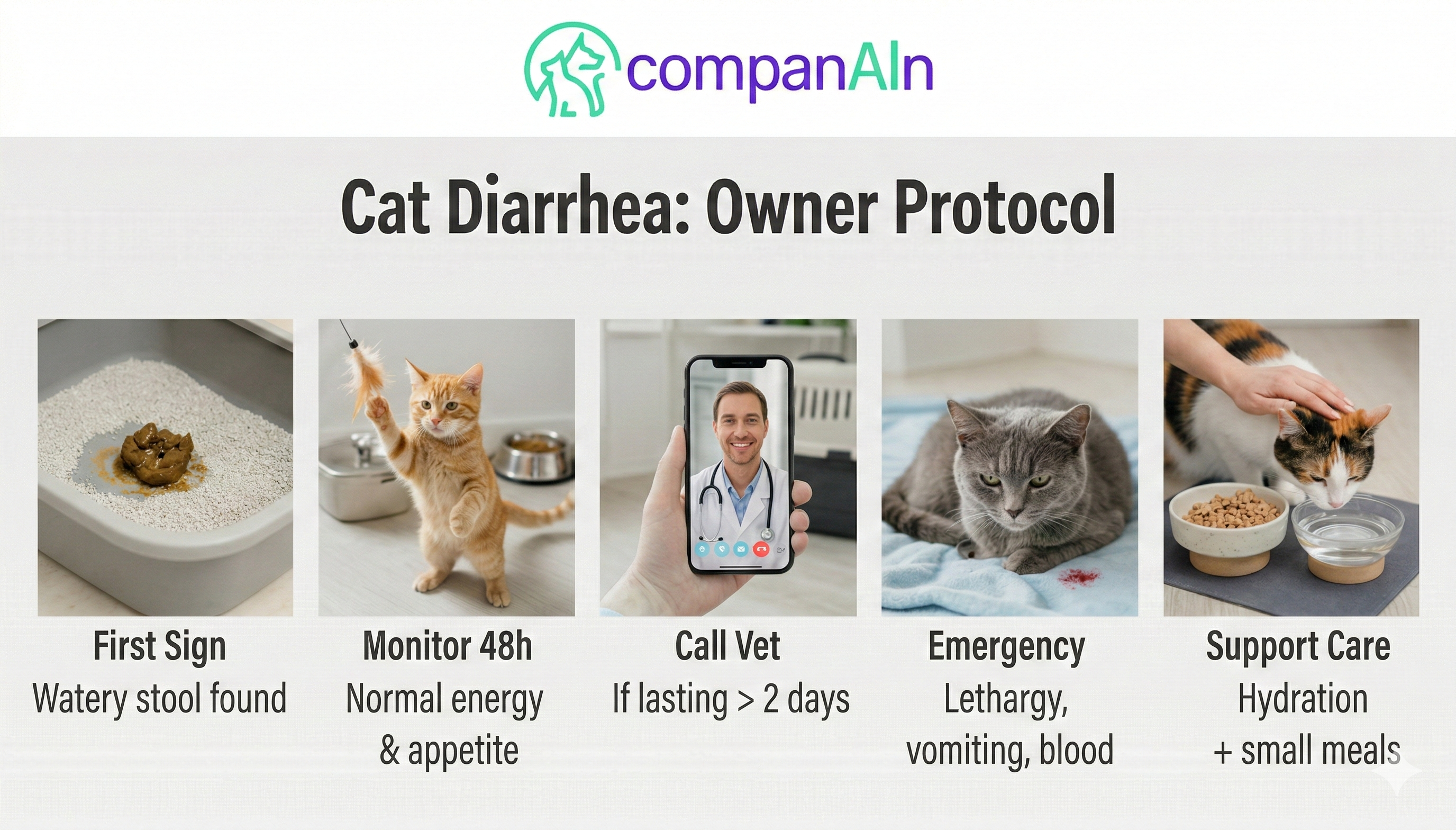
Monitor for 24-48 hours if:
- Single loose stool with normal consistency otherwise
- Cat maintains normal appetite and energy
- No vomiting accompanies diarrhea
- Behavior remains unchanged
- Hydration appears adequate
Contact your veterinarian within 24 hours if:
- Diarrhea persists beyond 48 hours
- Two or more episodes occur within 12 hours
- Straining produces only small watery amounts (possible obstruction)
- Blood appears in stool (bright red or black/tarry)
- Appetite decreases or disappears
Seek emergency care immediately if:
- Lethargy accompanies diarrhea
- Vomiting occurs repeatedly
- Gums appear pale, tacky, or dry (dehydration signs)
- Abdomen feels distended or painful
- Kitten under six months develops any diarrhea
Kittens and senior cats dehydrate rapidly. According to Hill’s Pet Nutrition veterinary advisors, smaller cats and kittens with diarrhea face particular dehydration susceptibility and should always receive veterinary evaluation.
Common Causes Requiring Different Approaches
Dietary Indiscretion and Food Changes
Table scraps, dairy products, or novel proteins trigger most acute diarrhea cases. Cats lack enzymes to digest lactose properly, making milk and cream common culprits despite the popular misconception that cats thrive on dairy.
Switching food brands without a gradual transition disrupts intestinal bacterial populations. Even premium foods cause upset when introduced abruptly. The solution involves returning to previous food and monitoring resolution over 24-48 hours.
Intestinal Parasites
Roundworms, hookworms, and giardia commonly cause feline diarrhea, especially in cats with outdoor access or those from shelters. Parasites undergo intermittent shedding, meaning single fecal examinations sometimes miss active infections.
Most veterinarians recommend routine deworming for any cat experiencing chronic diarrhea, as parasites can be missed on standard fecal float examinations even when present.
Inflammatory Bowel Disease: The Chronic Challenge
According to Cornell University College of Veterinary Medicine, IBD represents the most common cause of chronic diarrhea in cats.
IBD involves chronic inflammation where specific inflammatory cells invade GI tract walls. As these cells accumulate, the lining thickens, making nutrient absorption and food movement progressively difficult.
Visual presentation depends on the affected location:
- Stomach inflammation causes chronic vomiting
- Small intestine involvement produces large-volume diarrhea
- Colon inflammation triggers frequent small amounts with blood/mucus
- Many cats experience both vomiting and diarrhea
Middle-aged cats face the highest IBD risk, though the condition affects felines of any age. Certain breeds (Siamese and other Asian breeds) show predisposition, but any cat can develop IBD.
Diagnosis requires intestinal biopsy collected via endoscopy or surgery. Blood tests, ultrasound, and fecal examinations help rule out other conditions but cannot definitively confirm IBD.
Treatment involves dietary management with hypoallergenic or hydrolyzed protein diets, immunosuppressive medications like corticosteroids, and antibiotics with anti-inflammatory properties such as metronidazole. Most cats require long-term therapy, though some respond to diet modification alone.
Bacterial Overgrowth and Infections
Changes in intestinal bacterial populations occur after antibiotic treatment, dietary shifts, or stress. According to research in the Journal of Feline Medicine and Surgery, antibiotic-associated diarrhea affects a significant percentage of cats during and after treatment courses.
Probiotics help restore healthy bacterial balance. Several veterinary formulations show benefit in cats with diarrhea, though quality and effectiveness vary between products. Always consult your veterinarian before supplementing.
Food Allergies and Sensitivities
True food allergies remain uncommon in cats, but dietary sensitivities causing GI upset occur frequently. Veterinary dermatology research indicates that food sensitivities account for a notable portion of chronic gastrointestinal complaints in felines. Cats can develop reactions to proteins fed for years—chicken, beef, fish—as immune systems become sensitized over time.
Elimination diets using novel proteins (rabbit, duck, venison) help identify triggers. These trials require strict adherence for 7-10 days minimum, eliminating all other food sources including treats, flavored medications, and table scraps.
Home Management for Mild Cases
When diarrhea remains mild with no concerning symptoms, supportive care often resolves the problem within 48 hours.
Hydration takes priority. Ensure constant access to fresh water. Some cats drink more from fountains than bowls—moving water appeals to feline instincts and tastes fresher. Consider offering diluted chicken or beef broth alongside plain water.
Switching from dry to canned food increases moisture intake. You can temporarily add extra water (1-2 tablespoons) to canned food to boost hydration.
Continue feeding rather than fasting. Unlike outdated recommendations suggesting GI rest through fasting, current veterinary understanding recognizes that intestines need nutrition to heal. Feed multiple small meals (4 per day) of easily digestible food.
Easily digestible options include:
- Plain boiled chicken with small amounts of white rice
- Low-fat turkey with pasta
- Meat-based baby food (check ingredients for onion/garlic)
- Veterinary prescription GI diets
Never administer human anti-diarrheal medications without veterinary approval. Pepto Bismol and Kaopectate contain salicylates causing respiratory failure, bleeding problems, and liver damage in cats. Imodium carries similar risks in felines.
What Veterinarians Look For
Physical examination provides initial assessment, but specific diagnostics confirm underlying causes.
Fecal examination identifies parasites through microscopic analysis. Bring a fresh sample (collected within 12 hours) to your appointment for immediate testing.
Blood work evaluates organ function and screens for conditions like hyperthyroidism, kidney disease, and liver problems that present with diarrhea as a primary symptom.
Abdominal imaging through X-rays or ultrasound visualizes intestinal patterns, checks for obstructions, and assesses organ structure. Ultrasound particularly helps identify intestinal wall thickening suggestive of IBD or masses indicating cancer.
Endoscopy with biopsy becomes necessary when chronic diarrhea persists despite treatment or when IBD/lymphoma remains suspected. Tissue samples examined under a microscope reveal inflammatory cell types and severity.
CompanAIn’s agentic AI platform processes veterinary records, lab results, and treatment notes through specialized agents trained in longitudinal pattern recognition across feline health data. When inflammatory markers gradually increase or treatment responses diminish over multiple episodes, the platform’s Living Memory technology—maintaining context across months and years—identifies these trajectories before they become clinically obvious.
Chronic Diarrhea Requires Systematic Investigation
Diarrhea persisting beyond two weeks despite basic intervention signals underlying conditions requiring a thorough workup.
Inflammatory Bowel Disease demands dietary trials, medication protocols, and often lifelong management. Success requires patience—dietary responses take 2-4 weeks to manifest, and finding effective medications may require multiple adjustments.
Intestinal lymphoma, particularly difficult to distinguish from severe IBD in cats, requires histopathologic examination with immunohistochemistry or PCR testing. Both conditions cause similar symptoms—chronic vomiting, diarrhea, and weight loss—making definitive diagnosis essential for appropriate treatment.
Hyperthyroidism in senior cats frequently presents with diarrhea alongside increased appetite, weight loss, and hyperactivity. Simple blood tests diagnose thyroid disease, and treatment typically resolves GI symptoms.
Exocrine pancreatic insufficiency prevents proper fat and protein digestion due to inadequate enzyme production. Affected cats show large-volume, greasy diarrhea with significant weight loss despite ravenous appetites.
Prevention Strategies That Work
Gradual diet transitions prevent most food-related diarrhea. Mix 25% new food with 75% old food for days 1-2, then 50/50 for days 3-4, progressing to 75% new/25% old for days 5-6, before completing the transition.
Consistent high-quality nutrition matters more than brand name. Choose foods meeting AAFCO standards with named meat sources as primary ingredients. Avoid frequent brand switching.
Stress reduction supports GI health. Maintain consistent routines, provide adequate vertical territory, ensure clean litter boxes (one per cat plus one extra), and minimize household disruptions when possible.
Regular veterinary visits catch developing problems early. Annual examinations with routine fecal testing and bloodwork identify issues before symptoms become severe.
Pattern Recognition Through Agentic AI Analysis
Single diarrhea episodes might represent isolated dietary indiscretions, but recurring problems suggest triggers requiring identification. Does your cat develop loose stools every spring? After specific food rotations? During household changes?
CompanAIn’s platform analyzes these patterns through agentic technology that correlates GI episodes with seasonal changes, dietary modifications, stress events, and medication adjustments documented across your cat’s complete health timeline. The system’s agentic AI architecture—modeled after real veterinary teams—deploys specialized agents focusing on data aggregation, health analysis, and recommendation generation
When you upload today’s observation noting “loose stool again,” the platform compares the current presentation against historical occurrences, analyzes whether episode frequency is increasing, and assesses whether patterns match previous minor incidents or show progressions warranting veterinary consultation before chronic conditions develop.
Contact CompanAIn to learn how agentic AI-powered longitudinal pattern recognition transforms scattered observations into health intelligence supporting earlier intervention—catching escalating GI problems before they require aggressive treatment.
Frequently Asked Questions
How long can cat diarrhea last before I need to worry?
According to VCA veterinary guidelines, if liquid or semi-liquid stools persist beyond 48 hours, veterinary consultation becomes necessary. Single episodes in otherwise healthy cats rarely indicate serious problems, but two or more bouts within 12 hours escalate concern even when cats maintain normal behavior. Kittens, senior cats, and those with chronic conditions require evaluation within 24 hours of any diarrhea onset.
Can I give my cat yogurt for diarrhea?
No. Unlike humans, cats lack the specific beneficial bacteria strains that support feline digestive systems. Yogurt doesn’t provide appropriate probiotic support for cats and may worsen symptoms due to lactose content. Use only veterinary-formulated feline probiotics recommended by your veterinarian for appropriate bacterial species and concentrations.
What's the difference between small bowel and large bowel diarrhea?
Small intestine diarrhea produces large volumes of watery stool, typically 2-3 times daily, sometimes with weight loss. Large bowel (colon) diarrhea causes frequent small amounts with straining, often containing mucus or blood. Location determines treatment approach—small bowel issues may require nutritional support and fluid therapy, while large bowel problems respond to different medications and fiber supplementation.
Should I change my cat's food if they have diarrhea?
If diarrhea began after recent food changes, return to the previous diet and monitor for improvement over 24-48 hours. If feeding the same food consistently, don’t switch brands during active diarrhea—this typically worsens symptoms. Once resolved, if you suspect food sensitivity, work with your veterinarian on appropriate elimination diet trials using novel proteins.
When is cat diarrhea an emergency?
Seek emergency care if diarrhea accompanies lethargy, repeated vomiting, pale or tacky gums, abdominal distension/pain, or if your cat cannot keep water down. Black tarry stool (melena) indicates upper GI bleeding requiring immediate evaluation. Kittens under six months with any diarrhea need same-day veterinary assessment due to rapid dehydration risk.