
Your golden retriever wolfed down that pizza crust you dropped. Now, eight hours later, loose stool appears in the backyard. Yet he’s wagging at the door, ready for his evening walk like nothing happened. When diarrhea strikes but energy stays normal, the disconnect between symptoms and behavior creates real confusion about what needs attention and what resolves on its own.
This guide breaks down exactly when single episodes warrant observation versus immediate veterinary care. From understanding why healthy behavior doesn’t guarantee a minor problem to recognizing subtle warning signs that precede serious complications, making informed decisions protects both your dog’s well-being and your peace of mind.
CompanAIn’s agentic AI platform tracks gastrointestinal episodes alongside a complete health timeline, observing potentially concerning patterns that may warrant earlier veterinary consultation. When you need guidance on whether symptoms require immediate attention, CompanAIn provides context-aware insights that turn scattered observations into clearer next steps for discussion with your veterinarian.
When Normal Behavior Masks Underlying Problems
Dogs instinctively hide discomfort as a survival mechanism inherited from wild ancestors. A dog acting fine doesn’t confirm the absence of a developing issue—it confirms your dog’s remarkable ability to maintain normal routines despite internal distress.
Single episodes often resolve without intervention. According to Cornell University College of Veterinary Medicine, many diarrhea cases in dogs are mild and self-limiting. Dr. Meredith Miller, associate clinical professor of small animal medicine, notes that if a pet stops eating, shows lethargy, or the diarrhea doesn’t resolve in 48-72 hours, veterinary care becomes necessary.
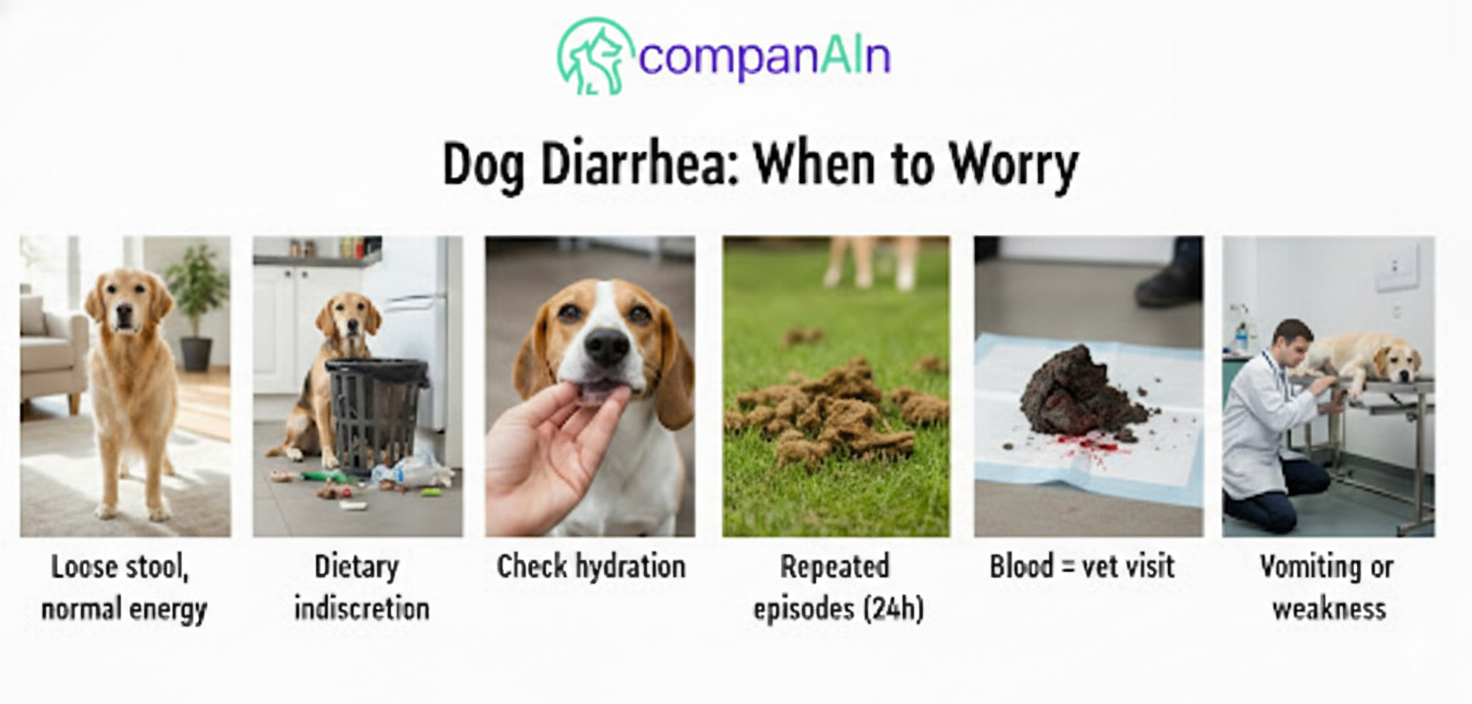
- The key distinction: one bout of soft stool with otherwise normal behavior suggests transient gastrointestinal upset. Multiple episodes within 24 hours, even without behavioral changes, signal escalating problems.
The Most Common Culprit: Dietary Indiscretion
Veterinarians call it “dietary indiscretion” or “garbage gut”—the tendency for dogs to consume inappropriate items. This represents the most frequent cause of acute diarrhea in otherwise healthy dogs.
What triggers dietary indiscretion:
- Table scraps with high fat content
- Garbage raiding (spoiled food, packaging, bones)
- Sudden food brand switches
- Consuming foreign objects during walks
- Access to other animals’ feces
Research in veterinary gastroenterology confirms that dietary indiscretion and food intolerance occur more commonly in dogs than true food allergies. The resulting gastrointestinal irritation typically resolves within 24-48 hours as the offending material passes through the digestive tract.
When your dog raids the trash and develops one episode of loose stool six hours later but maintains appetite and energy, the timeline and circumstances point toward dietary indiscretion rather than infectious disease or serious pathology.
Red Flags That Override Normal Behavior
Even when energy and appetite remain normal, certain characteristics of the diarrhea itself demand immediate veterinary attention.
Blood in Stool Creates Two Distinct Scenarios
- Bright red streaks coating formed or soft stool typically indicate minor irritation in the lower digestive tract. This often resolves without intervention.
- Black, tarry stool (melena) signals partially digested blood from the upper GI tract. Cornell veterinarians explain that melena can originate from foreign bodies, infections, inflammation, trauma, tumors, or ulcers. Despite normal behavior, melena always requires same-day veterinary evaluation.
Volume and frequency matter more than single episodes. Two or more bouts of diarrhea within several hours escalate concern regardless of behavior. The compounding fluid loss accelerates dehydration risk.
Straining with minimal output suggests obstruction. If your dog repeatedly attempts to defecate but produces only small amounts of watery diarrhea, foreign object blockage becomes likely. This constitutes an emergency even when energy seems normal initially.
The Dehydration Timeline Nobody Explains
Your dog can act completely normal while dehydration develops. By the time behavioral changes appear—lethargy, decreased appetite, reluctance to move—dehydration has already progressed to moderate or severe stages.
Early dehydration signs to check at home:
Skin elasticity test: Lift the skin at your dog’s neck. In well-hydrated dogs, skin snaps back immediately. If skin returns slowly or stays “tented,” dehydration has begun. This simple test reveals fluid loss before behavioral changes manifest.
Gum moisture check: Healthy gums feel slippery-wet. Tacky, sticky gums indicate early dehydration. Completely dry gums signal 5% or greater dehydration—a veterinary emergency according to veterinary emergency medicine specialists.
Dehydration creates electrolyte imbalances that stress the kidneys and can lead to organ failure. Cornell researchers note that vomiting combined with diarrhea accelerates dehydration dramatically, creating dangerous situations within hours rather than days.
When 24 Hours Changes Everything
The 24-hour mark represents a critical threshold in canine diarrhea. What begins as seemingly minor intestinal upset can escalate to serious dehydration, especially in vulnerable populations.
High-Risk Groups Need Faster Intervention
Puppies under six months dehydrate rapidly due to smaller body mass and limited fluid reserves. Even single episodes of diarrhea in puppies often warrant same-day veterinary consultation.
Senior dogs over 8 years old often have compromised kidney function that makes them less resilient to fluid loss.
Dogs with chronic conditions like diabetes, kidney disease, or immune disorders require immediate evaluation when diarrhea develops, regardless of behavior.
According to VCA veterinary hospitals, diarrhea lasting longer than 24 hours becomes concerning even without other symptoms. If your regular veterinarian is unavailable or your dog shows any additional symptoms, emergency care becomes necessary.
How Pattern Recognition Changes Home Monitoring
Traditional approaches to monitoring diarrhea rely on memory and subjective assessment. Owners struggle to recall the exact frequency, duration, and characteristics of previous episodes. This incomplete information makes distinguishing between isolated incidents and developing patterns difficult.
CompanAIn’s Living Health Timeline consolidates photos of stool samples, veterinary visit notes, and daily observations into one chronological record. The platform’s agentic AI system deploys specialized agents that analyze this data continuously, comparing new episodes against historical baselines to identify whether current symptoms match previous minor incidents or show concerning progressions in duration, severity, or frequency.
When diarrhea occurs every 4-6 weeks and always resolves within 24 hours, the system recognizes this pattern. If a new episode extends to 36 hours or occurs just two weeks after the previous incident, CompanAIn flags the deviation and generates alerts prompting veterinary consultation before dehydration develops.
According to veterinary emergency guidelines, uncontrollable diarrhea where the dog cannot reach the outdoors in time signals a medical emergency requiring immediate intervention.
- Puppies showing any diarrhea should be evaluated within 24 hours regardless of behavior, as parvovirus and parasites cause rapid deterioration in young dogs.
Safe Home Management for Truly Mild Cases
When your dog has one bout of soft stool but maintains normal appetite, energy, and hydration, home management provides appropriate first-line care.
The 12-24 Hour Fast Approach
Withholding food for 12-24 hours allows the GI tract to rest and reset. According to Cornell veterinary guidance, this approach works well for mild cases in adult dogs. Fasting should not be attempted in puppies without veterinary guidance, as young dogs are at higher risk for dangerous drops in blood sugar.
Provide constant access to fresh water during fasting periods. Some dogs benefit from diluted chicken broth or ice chips if plain water doesn’t appeal to them.
Bland Diet Reintroduction
After 12-24 hours without food (and no additional diarrhea), introduce small amounts of easily digestible foods:
- Boiled chicken (skinless, boneless) with white rice
- Low-fat ground beef with white rice
- Cooked pasta with lean protein
- Plain canned pumpkin (not pie filling)
Feed 3-4 small meals rather than normal portions. If stool firms up over 24-48 hours, gradually transition back to regular food by mixing increasing amounts with the bland diet.
What Not to Do
Never administer human anti-diarrheal medications without veterinary approval. Drugs like Imodium can be harmful to certain dogs and may mask symptoms of serious conditions requiring different treatment.
Don’t assume probiotics are universally safe. While many veterinary probiotics support GI health, some human formulations contain additives harmful to dogs.
What Veterinarians Look For During Evaluation
When you bring your dog in for a diarrhea assessment, veterinarians conduct several examinations to determine the underlying cause.
Physical examination includes:
- Hydration status assessment (skin elasticity, gum moisture)
- Abdominal palpation checking for pain, masses, or foreign objects
- Temperature measurement (fever suggests infection)
- Heart rate and respiratory rate (elevated in dehydrated dogs)
Fecal examination identifies parasites. Microscopic analysis detects eggs from intestinal worms even when parasites aren’t visible in stool. This test takes minutes and provides immediate answers about common causes like roundworms, hookworms, and giardia.
Blood work evaluates organ function. Complete blood counts (CBC) reveal infection or inflammation. Chemistry panels assess kidney and liver function, particularly important when dehydration is suspected.
Imaging may be necessary. Radiographs (X-rays) help identify foreign object obstructions, intestinal masses, or signs of inflammatory bowel disease.
CompanAIn generates vet-ready summaries that consolidate dates of all previous GI episodes, exact foods consumed before onset, medication history, and environmental changes. This comprehensive documentation eliminates reliance on memory and ensures no critical details are missed during the diagnostic process.
Prevention Strategies That Work
Most diarrhea episodes stem from preventable causes. Strategic management reduces frequency dramatically.
Dietary consistency matters more than food quality alone. Even premium dog foods cause upset if introduced abruptly. When changing foods, transition over 7-10 days by gradually increasing the proportion of new food while decreasing the old formula. Avoid table scraps entirely—human food often contains fat levels and seasonings that overwhelm canine digestive systems.
Environmental management prevents dietary indiscretion:
- Secure garbage cans with locking lids
- Supervise dogs during walks with “leave it” training
- Keep compost bins inaccessible
- Store food in sealed containers
- Prevent access to other animals’ feces
Stress reduction supports GI health. Research shows stress significantly contributes to diarrhea in dogs. Major life changes—moving, new family members, boarding—often trigger episodes even in dogs fed consistent diets.
CompanAIn’s agentic AI technology helps implement prevention strategies by identifying your dog’s specific triggers through pattern analysis. If episodes consistently occur after high-activity days or during seasonal transitions, the system flags these correlations and generates personalized recommendations for modified protocols.
From Observation to Action
Single diarrhea episodes might resolve with home care, but patterns across months reveal important health information. Does your dog develop food sensitivities? Do episodes cluster during allergy seasons? Does stress consistently trigger GI upset?
CompanAIn consolidates veterinary records, home observations, and dietary logs into one Living Health Timeline. When you upload today’s stool sample, noting “seems about the same as last time,” the platform’s agentic technology analyzes whether it actually matches or shows progression—determining whether the observation remains appropriate or veterinary consultation becomes necessary before complications develop.
Contact CompanAIn to learn how Living Memory technology catches escalating patterns earlier, enabling veterinary involvement before symptoms become severe.
Frequently Asked Questions
How long can a dog have diarrhea and still be okay?
According to Cornell University veterinarians, mild diarrhea can resolve within 24-48 hours without intervention if the dog maintains normal appetite, energy, and hydration. However, any diarrhea lasting beyond 48-72 hours requires veterinary evaluation regardless of behavior. Puppies, senior dogs, and those with chronic conditions need faster assessment—within 24 hours of onset, even for mild symptoms.
What does it mean if my dog has diarrhea but is eating and drinking normally?
Normal appetite and hydration are positive signs suggesting mild gastrointestinal upset rather than serious systemic illness. However, maintained eating and drinking don’t guarantee a minor problem. Continue monitoring for changes in stool consistency, blood in stool, increased frequency, or development of other symptoms. If diarrhea persists beyond 48 hours despite normal behavior, veterinary evaluation becomes necessary.
Can stress cause diarrhea even when my dog acts normal?
Yes. Veterinary research confirms that stress significantly contributes to diarrhea in dogs. Major changes like boarding, moving, or new household members can trigger episodes even in dogs maintaining normal energy and appetite. Stress-induced diarrhea typically resolves within 24-48 hours after the stressor is removed, but persistent symptoms require veterinary assessment to rule out other causes.
When is blood in dog stool an emergency?
Black, tarry stool (melena) always constitutes an emergency regardless of behavior, as it indicates upper GI tract bleeding. Bright red streaks coating otherwise formed stool often resolve without intervention, but veterinary consultation within 24 hours remains advisable. Large amounts of bright red blood, blood with mucus, or blood accompanied by vomiting, lethargy, or multiple episodes require immediate emergency care.
How does CompanAIn help manage recurring diarrhea episodes?
CompanAIn’s agentic AI system deploys specialized agents that track gastrointestinal episodes across time, identifying patterns invisible to human memory. The platform correlates diarrhea with dietary changes, stress events, medication schedules, and seasonal factors documented in health timelines. When new episodes occur, the system compares them against historical baselines to determine if characteristics match previous minor incidents or show concerning progressions requiring veterinary attention.