
The rash seemed to appear overnight. Red bumps scattered across your dog’s belly, creeping toward the inner thighs where skin meets leg. Your pup hasn’t changed food, hasn’t started new medications, and yesterday seemed perfectly normal. Now you’re photographing the affected areas, searching for visual matches online, and trying to determine if this needs immediate attention or home management.
Belly and inner thigh rashes develop in these specific locations for anatomical reasons—thin fur coverage, frequent ground contact, warmth retention, and moisture accumulation all create ideal conditions for various skin problems. From bacterial infections requiring antibiotics to contact reactions resolving with simple allergen removal, accurate identification determines appropriate response.
CompanAIn’s agentic AI platform consolidates photos of skin changes alongside veterinary records and environmental factors through its Living Health Timeline, helping identify patterns that single observations miss. When you need guidance on whether a rash warrants immediate veterinary attention, connecting with CompanAIn’s platform provides context-aware analysis that recognizes potentially concerning trends warranting earlier consultation.
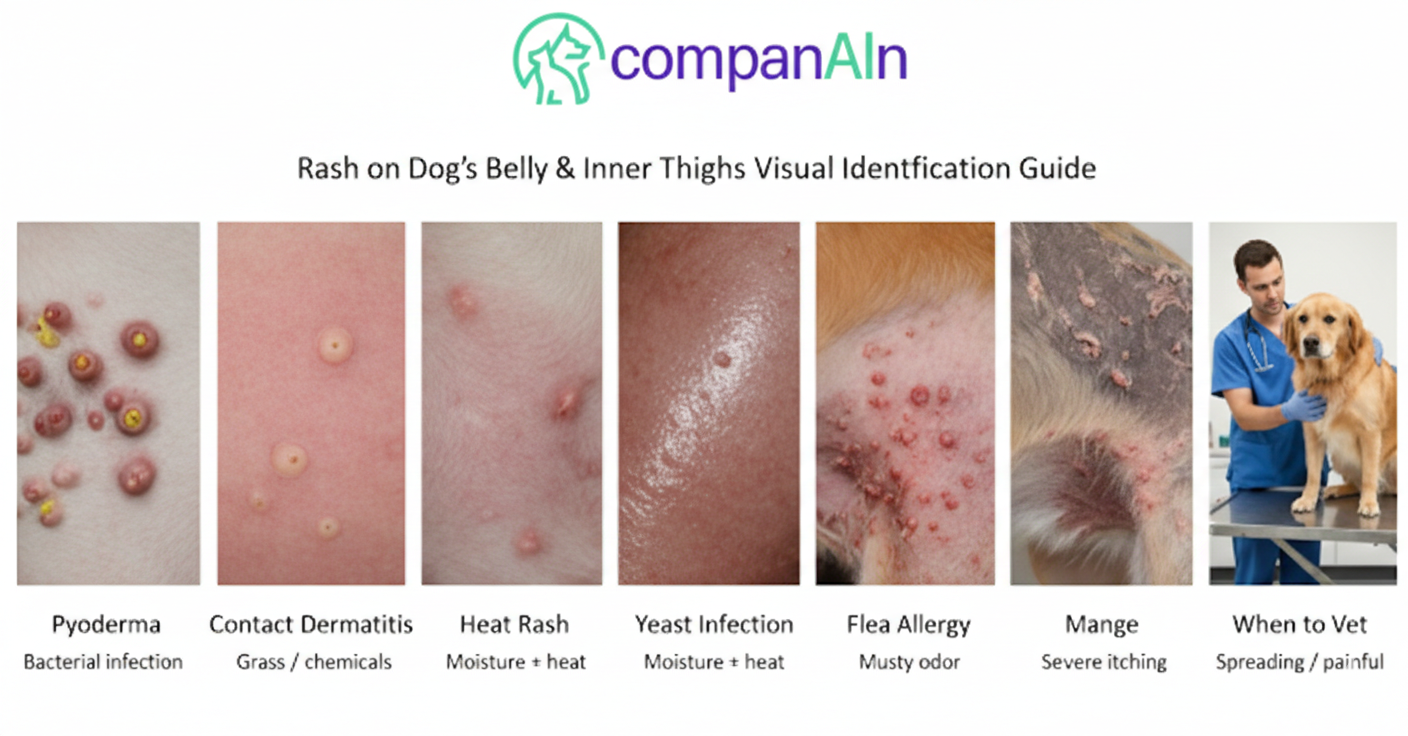
Why Belly and Inner Thigh Rashes Develop
These body regions share characteristics, making them particularly vulnerable to skin problems:
Sparse hair coverage leaves skin more exposed to allergens, irritants, and pathogens. While dense fur on the back and sides provides protective barriers, belly skin contacts environmental triggers directly.
Ground contact during lying down exposes these areas to grass, pollen, cleaning chemicals on floors, and lawn treatments. Dogs spending time outdoors on treated lawns frequently develop localized reactions on ventral surfaces.
Warmth and moisture retention occurs naturally in the groin and between skin folds. Bacteria and fungi thrive in these conditions, explaining why infections often begin in these specific locations.
Friction from movement where legs meet the body creates minor trauma that allows normal skin bacteria to penetrate and multiply.
Pyoderma: The Most Common Bacterial Culprit
Bacterial skin infections (pyoderma) represent one of the most frequent causes of belly rashes in dogs. The term literally means “pus in the skin.”
Visual characteristics of pyoderma:
- Red bumps resembling pimples (papules and pustules)
- Circular crusts forming as lesions heal
- Patchy hair loss creating “moth-eaten” appearance
- Dry, flaky skin surrounding lesions
- Odor in severe cases
According to PetMD veterinary resources, Staphylococcus pseudintermedius causes more than 90% of canine pyoderma cases. This bacteria normally inhabits healthy dog skin but multiplies problematically when skin barriers become damaged or unhealthy.
Puppy pyoderma (impetigo) specifically affects young dogs. Small pustules appear on sparsely haired areas like the belly, often due to developing immune systems. Affected puppies typically remain healthy overall, and mild cases may need only topical treatment.
What triggers bacterial overgrowth:
- Allergies causing scratching that damages skin
- Moisture from swimming or bathing without thorough drying
- Hormonal conditions like hypothyroidism or Cushing’s disease
- Parasites creating entry points for bacteria
- Skin folds trapping warmth and humidity
Pyoderma requires veterinary treatment with antibiotics for a minimum of three to four weeks. Stopping treatment when skin appears normal, but before completing the full course, increases the risk of antibiotic resistance and rapid relapse.
Contact Dermatitis: Localized Allergic Reactions
Contact dermatitis develops when skin encounters irritating substances or allergens. Unlike systemic allergies affecting the entire body, contact reactions remain localized to areas touching the triggering substance.
Common contact allergens:
- Grass types (kikuyu, buffalo, couch grass)
- Fertilizers and lawn treatments
- Floor cleaning products
- Laundry detergents on bedding
- Carpet deodorizers
- Grooming products containing specific ingredients
- Certain plants (poison ivy, oak)
According to veterinary dermatology research, contact dermatitis affects approximately 10% of dogs. The protective fur coat prevents more widespread occurrence, which explains why symptoms concentrate on poorly haired regions—muzzle, paws, armpits, groin, and belly.
Visual presentation:
- Red, inflamed skin patches
- Intense itching leading to licking and scratching
- Small blisters or pustules
- Symmetrical patterns on both sides of the body
- Hair loss from repeated trauma
Symptoms typically appear 4-72 hours after allergen contact. Dogs lying on newly treated lawns might not show reactions until the following day, making cause-and-effect connections difficult without systematic tracking.
CompanAIn’s agentic technology correlates rash occurrences with environmental changes documented in health records—new cleaning products, seasonal lawn treatments, boarding facility stays, or grooming appointments—identifying triggers that memory alone struggles to connect across weeks or months.
Heat Rash: Moisture and Temperature Combined
Warm weather combined with retained moisture creates perfect conditions for heat rash, particularly in areas where air circulation remains limited.
High-risk factors:
- Dogs with skin folds (Bulldogs, Pugs, Shar-Peis)
- Summer months with high humidity
- Swimming followed by incomplete drying
- Dense coats preventing evaporation
- Obesity creating additional skin folds
Appearance characteristics:
- Pink or red irritated-looking skin
- Small pimple-like spots concentrated in groin or belly
- Moist, weepy areas
- Increased scratching or licking
Prevention focuses on keeping dogs cool during hot weather and thoroughly drying skin after water exposure, especially in folds and between legs.
Yeast Infections: The Sweet-Smelling Problem
Yeast (Malassezia) naturally inhabits canine skin but overgrows when conditions favor proliferation. Warm, moist areas like the groin provide ideal environments.
Identifying yeast infections:
- Distinctive sweet or musty odor
- Red, inflamed skin with greasy texture
- Intense itching
- Darkened skin pigmentation in chronic cases
- Hair loss in affected regions
Yeast infections often develop secondary to allergies or after antibiotic treatment that disrupts normal bacterial balance. Treatment requires antifungal medications—topical for mild cases, oral for severe or persistent infections.
Flea Allergy Dermatitis: Disproportionate Reactions
Even dogs on preventive medications can experience flea allergy dermatitis if a single flea bites before dying. According to American Kennel Club resources, flea saliva triggers severe allergic reactions in sensitive dogs.
Distribution pattern:
- Base of tail (most common)
- Inner thighs and groin
- Lower back
- Belly
The allergic reaction causes inflammation far exceeding what the actual bite would produce. One flea bite can trigger days of itching and secondary skin damage from scratching.
Mange: Mite Infestations Requiring Immediate Care
Sarcoptic mange (scabies) and demodectic mange both cause severe itching and rash-like symptoms. Sarcoptic mange is highly contagious and requires immediate veterinary treatment.
Warning signs:
- Intense itching disproportionate to visible skin changes
- Hair loss beginning on elbows, belly, or ear margins
- Crusty skin lesions
- Thickened skin in chronic cases
Mange diagnosis requires skin scraping examined under a microscope. Mites aren’t always visible even when present, sometimes requiring multiple tests for confirmation.
When Rashes Signal Systemic Disease
Occasionally, belly rashes indicate underlying hormonal or immune conditions rather than simple skin problems.
Cushing’s disease (hyperadrenocorticism) causes thinning skin, hair loss, and increased susceptibility to infections. Dogs often show increased thirst, urination, and appetite alongside skin changes.
Hypothyroidism reduces the skin’s ability to fight infections, leading to recurrent pyoderma. Affected dogs typically show weight gain, lethargy, and coat quality decline.
Autoimmune conditions like pemphigus produce blistering lesions that may concentrate on the belly and inner thighs. These require specialized diagnosis and treatment.
Home Assessment Before Veterinary Consultation
Before your veterinary visit, systematically documenting symptoms can help your veterinarian reach a diagnosis more quickly.
Photograph comprehensively. Take clear images showing the rash’s full extent across the belly and inner thighs, plus close-ups revealing whether lesions appear as flat patches, raised bumps, pustules, or crusts. If the rash appears symmetrical on both sides, photograph both areas—symmetry often indicates contact allergens rather than infection.
Track behavioral changes. Note scratching and licking frequency throughout the day. Dogs waking repeatedly to scratch suggest more severe irritation than occasional daytime scratching. Record any changes in activity level, appetite, or energy coinciding with the rash’s appearance.
Document environmental exposures. Consider recent lawn treatments, new floor cleaning products, laundry detergent changes on bedding, boarding stays, grooming appointments, or outdoor activities in new locations where your dog encountered unfamiliar surfaces.
CompanAIn’s agentic AI system deploys specialized agents that process this information through advanced algorithms, comparing current presentations against historical patterns. The platform’s Living Memory technology maintains context across years, recognizing when similar rashes occurred previously and what treatments proved effective.
Determining Appropriate Care Timing
Schedule same-day appointments if the rash spreads rapidly over hours, pustules rupture and ooze, skin feels hot to touch, your dog shows pain when the area is touched, or behavioral changes like lethargy or appetite loss accompany the rash.
Seek care within 24-48 hours if the rash persists beyond 2-3 days, itching prevents normal activities, hair loss develops, odor emanates from affected areas, or previous home treatment attempts failed.
Emergency care is required if facial swelling develops, suggesting a severe allergic reaction; breathing difficulty accompanies the rash; collapse or severe lethargy occurs; or your dog cannot rest due to itching intensity.
Diagnostic Approach Veterinarians Use
Physical examination provides initial insights, but specific tests confirm diagnosis.
Skin cytology involves pressing clear tape against lesions or collecting samples with swabs. Microscopic examination reveals bacteria, yeast, or inflammatory cells guiding treatment selection.
Skin scraping tests for mites. Multiple scrapings may be necessary, as mites hide deep in hair follicles.
Fungal culture identifies ringworm when suspected based on presentation.
Bacterial culture and sensitivity testing identifies the bacteria present and indicates which antibiotics are likely to be effective. This becomes particularly important in chronic or recurrent cases where antibiotic resistance may exist.
Treatment Varies By Underlying Cause
Bacterial infections require oral antibiotics for 3-4 weeks minimum, often combined with medicated shampoos containing chlorhexidine.
Contact dermatitis resolves with allergen removal plus symptomatic treatment—antihistamines for itching, topical steroids for inflammation.
Yeast infections need antifungal medications—topical for localized cases, oral for widespread involvement.
Mange requires specific anti-parasitic medications, with environmental decontamination for sarcoptic mange.
Underlying conditions demand treatment targeting root causes—thyroid supplementation for hypothyroidism, trilostane for Cushing’s disease.
Pattern Recognition Prevents Recurrence
Single rash episodes might represent isolated incidents, but recurring problems suggest triggers requiring identification. Does your dog develop belly rashes every spring? After boarding? Following specific outdoor activities?
CompanAIn’s agentic technology identifies these patterns through longitudinal analysis that human memory cannot reliably provide. The platform’s AI-powered recommendation engine correlates rash occurrences with environmental factors.
When you upload photos of today’s rash and note “looks similar to last time,” the system objectively compares presentations, analyzes whether recurrence intervals are shortening, and flags whether interventions that worked previously remain appropriate or if escalation to veterinary care becomes necessary.
Transforming isolated observations into data-driven health intelligence means never guessing whether this episode differs from the last. Contact CompanAIn to learn how agentic AI analysis catches escalating skin problems before they become chronic conditions requiring aggressive intervention.
Frequently Asked Questions
What does a bacterial skin infection look like on a dog's belly?
Bacterial pyoderma typically appears as red bumps resembling pimples, often with white or yellow centers. Circular crusts may form as lesions heal, and affected areas show patchy hair loss. According to VCA veterinary hospitals, the belly and groin are among the most frequently infected spots. Odor may develop in moderate to severe cases, and dogs usually scratch or lick affected areas intensively.
Can I treat my dog's belly rash at home?
Mild rashes may respond to gentle cleansing with hypoallergenic shampoo and preventing further irritation with an Elizabethan collar. However, veterinary evaluation is essential for accurate diagnosis. What appears as simple irritation might represent a bacterial infection requiring antibiotics, mange needing anti-parasitic medication, or underlying conditions demanding specific treatment. Home treatment delays can allow simple problems to progress into complicated infections.
Why does my dog keep getting rashes on the same areas?
Recurring rashes in identical locations suggest either repeated allergen exposure or underlying predisposing conditions. Dogs may repeatedly contact the same grass type, causing reactions—or hormonal conditions like hypothyroidism may compromise the skin’s ability to resist infections. CompanAIn’s pattern recognition technology identifies correlations between rash occurrences and environmental factors, helping pinpoint triggers that isolated observations miss.
How long does it take for a dog's belly rash to heal?
Healing time depends entirely on the underlying cause. Contact dermatitis may resolve within days after allergen removal. Bacterial infections typically improve within one week of appropriate antibiotic treatment but require 3-4 weeks of complete therapy. Yeast infections might need 2-4 weeks of antifungal treatment. Chronic cases involving underlying conditions require longer management addressing root causes.
Are belly rashes contagious to other pets or humans?
Most belly rashes are not contagious. Bacterial pyoderma and yeast infections involve organisms that don’t spread between animals. However, sarcoptic mange (scabies) is highly contagious to other dogs and can temporarily affect humans. Ringworm, though less common, also spreads to people and other pets. If multiple household animals develop similar symptoms, veterinary examination becomes essential for all affected pets.