
Lower leg wounds in horses don’t follow normal healing rules. A seemingly simple pasture injury that should close within weeks instead builds excessive pink tissue that rises above the skin surface, blocking epithelial cells from completing their migration. What causes proud flesh in horses starts with anatomy: distal limbs lack the soft tissue cushioning and robust blood supply that supports rapid repair elsewhere on the body.
Predicting which wounds will develop exuberant granulation tissue before it emerges changes outcomes dramatically. CompanAIn’s agentic AI platform analyzes wound characteristics, location data, and healing progress patterns to flag complications days before they become visible—creating the intervention window that can help prevent months of delayed healing.
The Biological Mechanics Behind Exuberant Granulation
Normal wound healing progresses through three overlapping phases: inflammation, proliferation, and remodeling. During the proliferative phase, granulation tissue forms to fill the wound gap—a temporary scaffold rich in blood vessels and collagen that prepares the foundation for new skin.
In properly healing wounds, granulation tissue stops growing once it reaches the level of surrounding skin edges. Epithelial cells then migrate across this surface, forming new skin that closes the wound permanently.
Proud flesh occurs when granulation tissue continues proliferating beyond this endpoint, creating a raised, bumpy mass that prevents epithelial migration. The tissue appears bright pink or red due to dense capillary networks, and its cobblestone texture distinguishes it from normal healing tissue.
Key biological disruptions include:
- Prolonged inflammatory signaling that fails to transition to remodeling phase
- Overproduction of transforming growth factor-beta (TGF-β) stimulating fibroblast activity
- Reduced oxygen tension in distal limb wounds affecting cellular regulation
- Persistent bacterial contamination maintaining chronic inflammation
- Myofibroblast dysfunction preventing normal wound contraction
Research published in PMC’s comprehensive review of equine wound protocols documents that horses demonstrate weaker acute inflammatory responses compared to other mammals, paradoxically leading to prolonged inflammation that triggers excessive tissue formation.
Why Distal Limb Wounds Are Most Vulnerable
Anatomical differences between body and limb wounds explain why exuberant granulation tissue affects lower legs almost exclusively. Wounds below the carpus (knee) and tarsus (hock) face multiple healing disadvantages.
Structural Challenges of Lower Limbs
Minimal soft tissue coverage means skin lies directly over bone with little cushioning. This creates high tension across wound edges, forcing wounds to heal primarily through epithelialization: a process responsible for 70% of lower limb healing compared to just 30% wound contraction.
Limited vascular supply reduces oxygen and nutrient delivery to healing tissue. Poor perfusion creates the hypoxic environment that promotes excessive granulation formation.
Constant motion from normal locomotion disrupts newly forming tissue, creating micro-tears that restart inflammatory cascades. Even stall rest doesn’t eliminate flexion forces across joints during weight-shifting.
Proximity to ground contamination exposes wounds to dirt, manure, and environmental bacteria. Persistent infection maintains chronic inflammation, which is the primary driver of proud flesh development.
Research examining New Zealand equine wounds found that 85% of veterinarians identified distal limb wounds as their most frequently encountered injury type, with the longest treatment periods and highest complication rates.
Risk Factors Beyond Location
Full-thickness injuries penetrating through the dermis and epidermis create larger tissue gaps requiring extensive granulation tissue formation. Superficial abrasions heal rapidly without developing proud flesh.
Contaminated wounds with embedded foreign material maintain persistent inflammation. Dirt, gravel, or fabric fragments act as continuous irritants, preventing the inflammatory phase from resolving.
Delayed veterinary treatment allows wound edges to dry and contract, making primary closure impossible. Wounds left open beyond 8-12 hours must heal by second intention—the healing method most prone to complications.
A large wound surface area requires weeks of tissue formation to fill the gap. Wounds exceeding 10 cm² show particularly high proud flesh rates.
Wounds over high-motion areas like pasterns, knees, and hocks experience continuous flexion forces. A comprehensive veterinary review notes that movement disrupts granulation tissue integrity and perpetuates inflammation.
When Multiple Risk Factors Combine
The challenge with distal limb wounds is that these risk factors rarely appear in isolation. A pastern wound in an older horse with a previous proud flesh history, sustained during wet conditions, over a high-motion joint, tells a very different story than a clean laceration on a young horse with no complications in his record. Evaluating that combination accurately in the moment is hard. Evaluating it against years of documented health history is harder still.
This is where specialized AI agents add genuine value. Rather than applying a standard protocol to every lower limb wound, these agents consider the full profile of each horse, including prior healing patterns, wound location, and documented risk factors, and surface that context for the veterinarian. They help to inform earlier, smarter decision-making.
How Specialized AI Predicts Wound Healing Complications
Proud flesh rarely announces itself. The visible tissue overgrowth that makes the problem obvious is the end result of a process that began days or weeks earlier, during a window when intervention is far simpler than surgical debridement.
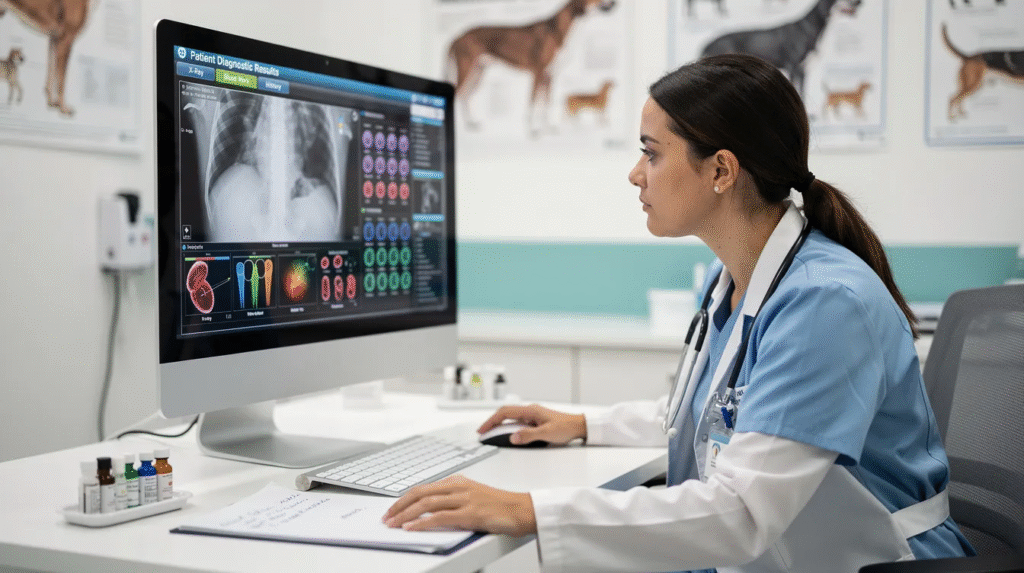
CompanAIn’s agentic AI is designed to operate in that window. By continuously analyzing wound photographs, healing rate measurements, and veterinary observations, the platform identifies deviation from expected healing trajectories before the deviation becomes a clinical problem. When granulation tissue is filling appropriately but epithelialization hasn’t begun on schedule, that gap gets flagged. When tissue color or exudate character shifts in ways that precede overgrowth, that pattern gets surfaced.
What makes this genuinely predictive rather than just reactive is the platform’s ability to weigh multiple variables together. Wound size, location, contamination history, the horse’s age and breed, and prior healing patterns all factor into how the platform interprets what it’s seeing. A healing trajectory that looks acceptable in isolation may read as concerning when placed against that horse’s full profile.
The practical result: veterinarians get earlier, more specific information. Rather than discovering proud flesh at a scheduled visit two weeks after it became established, the care team can act on documented warning signs, while corticosteroid therapy alone may still be sufficient.
How CompanAIn's Agents Monitor Healing Trajectories
Traditional wound management relies on weekly veterinary assessments—discrete snapshots that miss the gradual transitions signaling developing complications. Proud flesh becomes obvious only after it protrudes significantly above skin level, when intervention requires surgical debridement.
Pattern Recognition Operating Continuously
CompanAIn’s Health Analyzer Agent transforms this reactive approach through continuous pattern recognition operating between veterinary visits. The system analyzes documented wound progression, comparing healing rate and tissue appearance against expected trajectories.
When wound photographs show granulation tissue approaching skin edges but epithelialization hasn’t begun, the platform flags this as a warning pattern. Normal healing demonstrates visible epithelial advancement by the time granulation tissue fills 80% of the wound depth.
Temperature data from bandage changes provides another early indicator. Wounds developing proud flesh maintain elevated temperature longer than properly healing wounds as persistent inflammation continues.
Integrating Multiple Data Sources
CompanAIn pulls together information from multiple sources into a single organized picture: wound measurements documenting healing rate, veterinary notes describing tissue quality, owner observations about exudate volume and character, and photographic evidence showing color and texture changes over time. Rather than treating each piece of information as an isolated data point, the platform identifies what those details mean in combination.
The Living Health Timeline maintains longitudinal context, so your horse’s current wound healing is understood against their individual history. A horse that previously developed proud flesh shows specific early warning signs that inform how closely subsequent wounds should get monitored.
Treatment Options for Established Proud Flesh
Once exuberant granulation tissue rises above wound edges, mechanical removal becomes necessary. Epithelial cells cannot climb over the protruding tissue, halting the healing process until proud flesh is excised.
Surgical Debridement Protocol
Surgical debridement involves carefully trimming excess tissue back to skin level using a scalpel blade. Because granulation tissue lacks nerve endings, the procedure causes no pain despite extensive bleeding from dense capillary networks. Standing sedation usually suffices—general anesthesia is rarely required.
The tissue’s high vascularity necessitates immediate pressure bandaging to control hemorrhage. This bleeding stems from severed capillaries and stops within hours under compression.
How a horse responds to debridement and follow-up topical therapy is itself useful clinical information. CompanAIn organizes post-treatment observations, bandage change notes, and wound progression documentation into the Living Health Timeline, so if this horse develops a similar wound in the future, that response history is already there. Treatment decisions for the next injury start from a much stronger foundation.
Topical Therapies and Bandage Management
Following debridement, topical corticosteroid therapy prevents regrowth. Products containing triamcinolone or dexamethasone suppress fibroblast proliferation and reduce inflammatory signaling. Application must target only granulation tissue—corticosteroids applied to wound edges delay epithelialization.
Bandage management requires a careful balance. Initial wound protection prevents contamination, but prolonged bandaging promotes proud flesh formation by creating the moist, oxygen-poor environment that stimulates excessive granulation. Kentucky Equine Research veterinarians note that wounds should be unbandaged once healthy granulation tissue fills the defect.
Silicone gel dressings show promise for proud flesh prevention. These specialized materials maintain wound moisture while providing oxygen permeability, creating conditions that favor epithelialization over excessive granulation.
Advanced Interventions for Chronic Cases
Skin grafting provides the definitive solution for large wounds that have exhausted healing capacity. Punch grafts—small circular sections of full-thickness skin transplanted into the granulation tissue bed—create islands of epithelium that spread outward, dramatically accelerating closure.
Sheet grafts cover larger surface areas but demand more involved post-operative management. The graft must establish blood supply through plasma absorption and vessel connection within 72 hours to survive.
Transforming Wound Management Through Intelligent Oversight
What causes proud flesh in horses involves complex interactions between anatomy, inflammation, bacterial contamination, and mechanical forces. While location predicts baseline risk, individual factors determine which wounds actually develop complications.
Artificial intelligence excels at integrating these multiple variables into accurate predictions. Rather than waiting for proud flesh to emerge, the technology identifies risk patterns days earlier—creating opportunities to prevent development entirely.
Whether managing a fresh pasture injury or treating chronic exuberant granulation tissue, CompanAIn’s specialized AI agents provide the continuous intelligent monitoring that catches problems while simple interventions still work. From organizing wound documentation to predicting healing trajectories, the platform transforms reactive wound care into truly proactive prevention.
Frequently Asked Questions
What causes proud flesh in horses most commonly?
Proud flesh develops when prolonged inflammation prevents normal healing progression, most commonly in wounds below the knee and hock. Limited blood supply, constant motion, bacterial contamination, and minimal soft tissue coverage combine to create chronic inflammation that drives excessive granulation tissue formation. Infection and inappropriate bandaging represent the most preventable causes.
How long does it take for proud flesh to develop?
Exuberant granulation tissue typically becomes visible 2-4 weeks after injury, though the timeline varies with wound characteristics. Large, contaminated wounds in high-motion areas develop proud flesh faster than small, clean wounds. Early warning signs appear sooner—granulation tissue color changes and delayed epithelialization become apparent within 10-14 days.
Can proud flesh be prevented with proper wound care?
Yes, aggressive early wound management significantly reduces proud flesh incidence. Immediate veterinary assessment, thorough wound cleaning, appropriate bandaging, and movement restriction create conditions favoring normal healing. Discontinuing bandages once granulation tissue fills the wound bed prevents the moist, hypoxic environment that stimulates excessive tissue growth.
How does CompanAIn predict wound healing complications?
CompanAIn’s AI agents analyze wound photographs, measurements, and healing rate data, comparing progression against expected trajectories from thousands of similar cases. The system identifies subtle deviations, like delayed epithelialization, abnormal granulation tissue appearance, or prolonged inflammation, that predict proud flesh development days before it becomes clinically obvious, enabling preventive intervention.
Does proud flesh require surgical removal?
Once proud flesh rises above wound edges, surgical debridement becomes necessary because epithelial cells cannot migrate over the protruding tissue. Minor overgrowth sometimes responds to topical corticosteroids alone, but established exuberant granulation tissue requires trimming back to skin level. The procedure is painless due to a lack of nerve endings in granulation tissue.