
What does cat bloodwork show when your veterinarian recommends those tubes of crimson fluid be drawn from your feline companion? More than you’d expect. Blood tests crack open a window into your cat’s internal chemistry, revealing problems brewing beneath the surface before they announce themselves with weight loss, lethargy, or worse.
Whether you’re bringing home a kitten for the first wellness check, managing a senior cat’s chronic condition, or investigating mysterious symptoms, bloodwork serves as your vet’s diagnostic compass. But interpreting those numbers—BUN, creatinine, ALT, T4—often feels like decoding a foreign language. That’s where CompanAIn’s AI-powered health platform steps in, organizing medical records, flagging trends, and translating lab results into actionable insights for both veterinarians and pet parents.
Breaking Down the Two Main Blood Tests
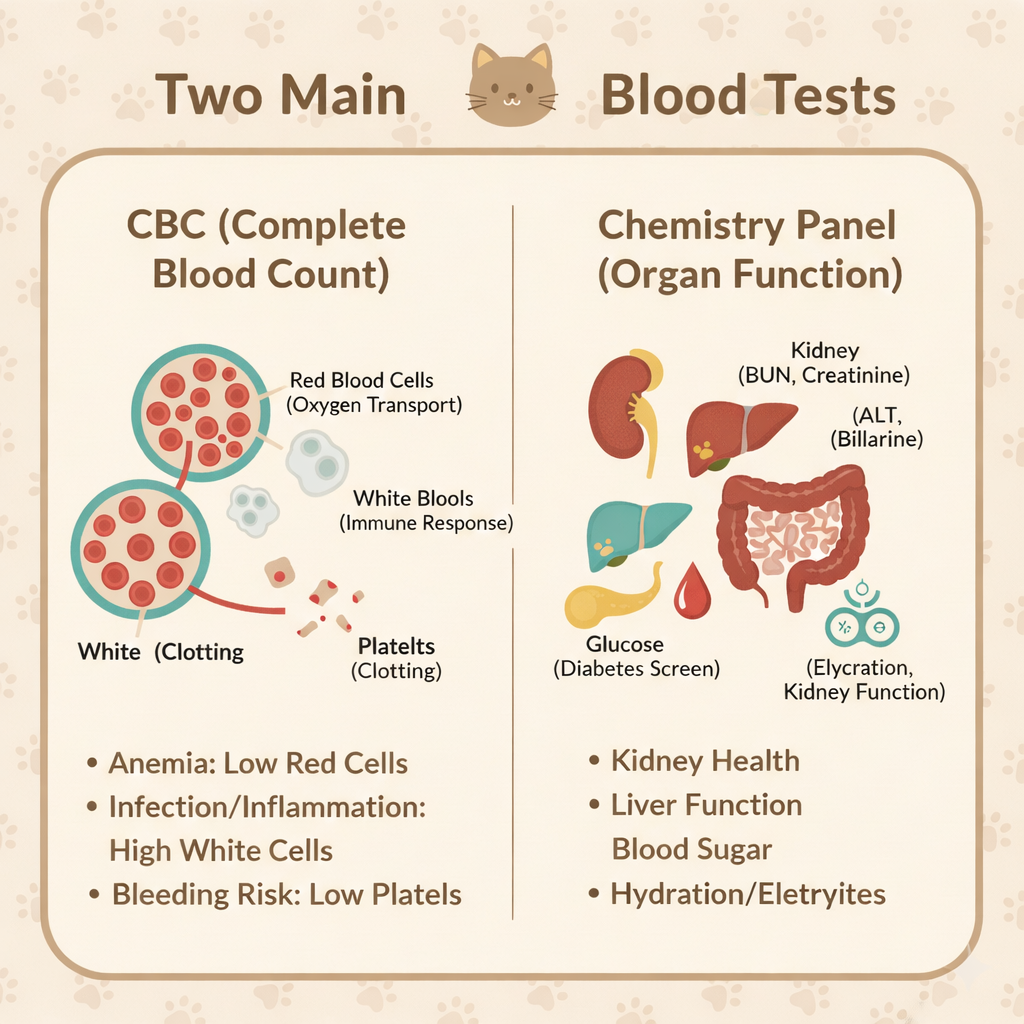
Veterinarians typically order two distinct tests that work together to paint your cat’s health picture.
Complete Blood Count: Your Cat's Cellular Story
A CBC examines the cells floating through your cat’s bloodstream, measuring three critical cell types:
- Red blood cells haul oxygen to tissues throughout the body
- White blood cells patrol for infections and coordinate immune responses
- Platelets patch damaged blood vessels to prevent excessive bleeding
When veterinarians analyze a CBC, they’re counting each cell type and assessing whether numbers fall within healthy ranges. Too few red cells suggests anemia. Elevated white cells might indicate infection or inflammation. Low platelets raise concerns about clotting ability before surgery.
Chemistry Panel: Organ Function Under the Microscope
Blood chemistry profiles evaluate the chemical compounds circulating in your cat’s blood serum. Key measurements include:
- Kidney values (BUN and creatinine) show whether kidneys filter waste properly
- Liver enzymes (ALT and bilirubin) indicate liver health
- Glucose levels screen for diabetes
- Electrolytes (potassium and sodium) reflect hydration and kidney function
What Specific Values Tell Your Veterinarian
Kidney Function Markers
BUN and creatinine are the traditional kidney markers, but they have limitations. According to Cornell University College of Veterinary Medicine, creatinine doesn’t typically rise until a cat has lost roughly 75% of kidney function.
SDMA is a newer biomarker that detects kidney problems earlier—when only 40% of function is compromised. Normal SDMA ranges from 0-14 μg/dL in cats. Values above 14 signal potential kidney disease, often months before creatinine climbs into dangerous territory.
Chronic kidney disease affects an estimated 30-40% of cats over age 10, based on Cornell data. Early detection through bloodwork allows veterinarians to slow disease progression with diet changes, medications, and monitoring before irreversible damage accumulates.
Liver Health Indicators
ALT (alanine aminotransferase) and bilirubin provide insight into liver function. Elevated ALT often points to liver cell damage, though levels can also rise with muscle injury or certain medications. Bilirubin increases when the liver can’t process waste products properly.
The liver has remarkable regenerative capacity, so elevated values deserve attention even when cats seem outwardly healthy. Catching liver dysfunction early improves treatment success.
Thyroid Hormone Testing
Total T4 is the screening test for hyperthyroidism—an overactive thyroid gland that’s surprisingly common in older cats. According to veterinary endocrinology research, over 90% of hyperthyroid cats show elevated T4 levels.
Common symptoms of hyperthyroidism include:
- Weight loss despite ravenous appetite
- Rapid heart rate
- Restlessness and hyperactivity
- Sometimes vomiting or diarrhea
Blood tests confirm what physical symptoms suggest, allowing treatment before heart or kidney complications develop.
Glucose and Diabetes Detection
Blood sugar measurements screen for diabetes mellitus, a condition affecting roughly 0.5-2% of cats. Diabetic cats show markedly elevated glucose levels, typically well above the normal range of 70-150 mg/dL.
A single high glucose reading doesn’t always mean diabetes. Stress from the veterinary visit itself can temporarily spike blood sugar in cats—a phenomenon veterinarians account for when interpreting results. Fructosamine testing measures average glucose levels over several weeks, providing a more reliable diabetes diagnosis.
Electrolytes and Hydration Status
Sodium, potassium, and chloride levels reveal hydration status and kidney function. Electrolyte imbalances can cause:
- Muscle weakness
- Heart arrhythmias
- Neurological problems
- Overall lethargy
Dehydration concentrates electrolytes, while kidney disease disrupts the delicate balance, often causing potassium depletion. Cats with kidney failure frequently need potassium supplementation to maintain muscle strength and overall health.
For a more comprehensive breakdown of how each blood value is interpreted in clinical practice, see our detailed guide on cat blood test results explained for clear insights into what each number means for your feline’s health.
When Veterinarians Recommend Blood Tests
Wellness Screening and Baseline Values
Healthy cats benefit from bloodwork at their first veterinary visit, establishing baseline values for future comparison. Recommended testing frequency:
- Adult cats: Annual bloodwork
- Senior cats (10+ years): Twice-yearly testing
- Cats with chronic conditions: Every 3-6 months
Trending is powerful. A cat whose creatinine rises from 1.2 to 1.8 mg/dL over two years deserves attention, even though both values fall within the normal range of 0.8-2.4 mg/dL. That upward trend signals declining kidney function before clinical disease appears.
Pre-Anesthetic Screening
Before any procedure requiring anesthesia, veterinarians need current bloodwork. Anesthetic drugs are processed by the liver and kidneys. Confirming both organs function properly prevents complications during surgery.
Low platelet counts discovered on pre-surgical bloodwork can stop a dangerous bleeding problem before it starts.
Investigating Symptoms
When cats show vague symptoms, bloodwork often provides the first solid clues. Common symptoms that warrant bloodwork:
- Decreased appetite
- Weight loss
- Increased thirst
- Lethargy or weakness
Many conditions produce similar outward signs, but blood chemistry patterns help distinguish between kidney disease, diabetes, hyperthyroidism, and other possibilities.
Monitoring Chronic Conditions and Medications
Cats with diagnosed conditions like kidney disease, diabetes, or hyperthyroidism need regular bloodwork to track disease progression and medication effects. Some medications stress the liver or kidneys. Regular chemistry panels catch problems before permanent organ damage occurs.
How AI Transforms Bloodwork Interpretation
Modern veterinary diagnostics increasingly incorporate artificial intelligence to enhance accuracy and catch subtle patterns human eyes might miss.
But AI’s most valuable contribution extends beyond the laboratory. CompanAIn’s multi-agent AI system analyzes bloodwork within the context of your cat’s complete medical history. The platform doesn’t just flag abnormal values; it identifies trends across multiple tests over months or years.
The Living Memory Advantage
CompanAIn’s Living Memory technology continuously learns from your cat’s health timeline. When lab results arrive, the system compares new values against previous tests, recognizes patterns, and provides context-aware analysis.
Consider a cat whose hematocrit values dropped from 43% to 38% to 33% over two years. Each individual result sits within normal ranges, but the 10-point decline over 24 months tells a different story. CompanAIn’s health tracking system flags that downward trend, prompting investigation before anemia becomes clinically obvious.
Multi-Agent Architecture for Better Insights
Unlike single-model AI systems that apply one-size-fits-all logic, CompanAIn employs specialized AI agents trained for specific tasks:
- Data Aggregator agent organizes lab results, vet visit notes, and medication records
- Health Analyzer agent identifies patterns and anomalies
- Recommendation Engine suggests next steps based on findings
This specialized approach mirrors how veterinary clinics operate—different experts handling different aspects of care.
Veterinary Oversight Ensures Accuracy
CompanAIn doesn’t replace veterinary judgment. Critical alerts and low-confidence cases get reviewed by licensed veterinarians before reaching pet owners. This hybrid model combines AI efficiency with professional expertise, ensuring insights remain clinically sound.
Understanding Reference Ranges and Individual Variation
Normal ranges printed on lab reports reflect values seen in healthy cat populations. But individual cats establish their own normals.
A cat whose creatinine consistently runs 1.0 mg/dL who suddenly tests at 1.8 mg/dL deserves attention, even though 1.8 falls within the typical range. That nearly doubled creatinine represents a significant change for this specific cat.
CompanAIn’s personalized health platform excels at tracking individual baselines and flagging meaningful departures from each cat’s personal norm.
For a deeper dive into interpreting cat blood test results, see our detailed guide that explains each value and what it means for your feline’s health.
What Bloodwork Can't Tell You
Despite its diagnostic power, bloodwork has limitations:
- Rarely provides definitive cancer diagnoses (though it may reveal complications)
- Can’t capture behavioral issues or pain levels
- May miss early-stage diseases before chemical changes occur
- Requires imaging studies, biopsies, or other tests for complete diagnosis
That’s why veterinarians combine lab results with physical exams, medical history, and sometimes additional testing.
Making Bloodwork More Accessible
Cost concerns sometimes prevent pet owners from running recommended tests. Many veterinarians offer in-house analyzers that provide results within minutes at lower cost than sending samples to reference laboratories.
The value proposition is straightforward: catching kidney disease, diabetes, or hyperthyroidism early typically costs less long-term than treating advanced disease. Early intervention often means better outcomes with simpler treatments.
Bringing It All Together
Blood tests reveal what your cat can’t communicate. They expose organ dysfunction before clinical symptoms emerge, guide treatment decisions for chronic conditions, and confirm diagnoses when symptoms remain vague.
Understanding what those numbers mean empowers better advocacy for your cat’s health. When BUN creeps upward or thyroid hormones edge past normal, you’ll recognize the significance rather than waiting for obvious illness.

CompanAIn bridges the gap between complex medical data and practical understanding. The platform’s AI-powered analysis provides personalized insights, tracks meaningful trends, and ensures nothing important gets overlooked in the shuffle of busy veterinary appointments and accumulating medical records.
From routine wellness checks to managing chronic disease, knowing what bloodwork shows—and what changes over time—supports longer, healthier lives for your feline companions. CompanAIn’s AI-powered platform makes this knowledge accessible and actionable for both pet parents and veterinary professionals.
Ready to Understand Your Cat's Health Better?
What does cat bloodwork show? Everything from early kidney disease to thyroid dysfunction to brewing diabetes. But raw data only helps when you can interpret it correctly and track changes over time.
CompanAIn transforms how pet parents and veterinarians understand bloodwork by organizing medical information, identifying important trends, and providing context-aware analysis. Whether you’re managing an aging cat’s health or simply want comprehensive records organized in one place, AI-assisted interpretation makes complex medical data accessible.
Visit CompanAIn to learn how our multi-agent AI platform creates a living health timeline for your cat, ensuring critical patterns never go unnoticed.
Frequently Asked Questions
How often should my cat have bloodwork done?
Annual bloodwork is recommended for healthy adult cats, with testing twice yearly for cats over 10 years old or those with chronic conditions. Cats requiring anesthesia need bloodwork within a month of the procedure.
Can bloodwork detect cancer in cats?
Bloodwork rarely diagnoses cancer definitively but can reveal related complications like anemia, elevated kidney values, or abnormal cell counts that prompt further investigation including imaging or biopsy.
Why might my cat have normal bloodwork despite seeming sick?
Early disease stages often don’t show up on blood tests yet. Some conditions like behavioral problems, pain, or certain infections require different diagnostic approaches beyond standard bloodwork panels.
What's the difference between SDMA and creatinine for kidney testing?
According to IDEXX veterinary diagnostics, SDMA detects kidney disease earlier than creatinine—when roughly 40% of function is lost versus 75% for creatinine. Both markers together provide the most complete kidney function picture, with SDMA offering valuable early warning.
How does AI improve bloodwork interpretation?
AI analyzes results within your cat’s complete medical context, identifying trends across multiple tests over time. This personalized approach catches subtle changes that single test snapshots might miss, enabling earlier intervention.
Should I worry if one bloodwork value is slightly abnormal?
Slight elevations or decreases warrant monitoring but don’t always indicate serious problems. Veterinarians interpret results considering your cat’s symptoms, physical exam, and trends over time rather than fixating on individual numbers.