
Introduction
Renal failure in cats is a condition in which the cat’s kidneys lose their ability to adequately filter waste products, regulate fluids, and maintain normal electrolyte balance-ultimately allowing dangerous toxins to accumulate in the bloodstream. This comprehensive guide covers every aspect of kidney failure in cats, from the physiology of healthy kidneys through early warning signs, diagnostic procedures, staging systems, and practical treatment options that cat owners can discuss with their veterinary team.
This content addresses both acute kidney failure and chronic kidney disease, the two main categories of feline renal failure, along with IRIS staging, symptom progression, and home management strategies. It does not cover surgical interventions such as kidney transplant procedures, specialized renal replacement therapies, or advanced ICU protocols-those require veterinary specialist consultation. The guide is designed for cat owners who are concerned about their pet’s kidney health, those whose cats have already been diagnosed with renal disease, and any pet parent seeking to understand early diagnosis pathways so they can act quickly.
Direct answer: Renal failure in cats occurs when kidneys lose their ability to filter waste and toxins from the cat’s blood, typically after losing over 75% of kidney function. Chronic kidney disease affects 30% to 40% of cats over 10 years old, making it one of the most common conditions in senior cats and geriatric cats.
By reading this guide, you will gain:
- A clear understanding of how kidney function works and what happens when it fails
- The ability to recognize early signs and severe symptoms of kidney failure at each stage
- Knowledge of diagnostic tools veterinarians use to evaluate kidney function
- Practical treatment options and management strategies to slow disease progression
- Prevention methods that can support your cat’s longevity and kidney health
Understanding Kidney Function and Renal Failure
Healthy kidneys are essential to a cat’s survival. They perform far more than simply producing urine-they filter metabolic waste from the bloodstream, regulate blood pressure, stimulate red blood cell production through the hormone erythropoietin, activate vitamin D for calcium and phosphorus metabolism, and maintain normal electrolyte balance across sodium, potassium, and other critical minerals. When these functions deteriorate, the consequences cascade through virtually every organ system in an affected cat’s body.
Normal Kidney Function in Cats
A cat’s kidneys contain thousands of microscopic units called nephrons. Each nephron filters blood through a structure called the glomerulus, then selectively reabsorbs water, amino acids, and electrolytes through a system of tubules while secreting waste products into what becomes urine. This process maintains precise control over the body’s fluid volume, acid-base status, and mineral concentrations.
Beyond filtration, healthy kidneys produce erythropoietin-the hormone responsible for red blood cell production in the bone marrow-and release renin to help control blood pressure. They also convert vitamin D into its active form, which is essential for calcium and phosphorus regulation. When kidney tissue is intact and functioning, these processes operate seamlessly, keeping blood flow stable and the cat’s internal environment balanced. Understanding this baseline is critical for recognizing what goes wrong when decreased kidney function develops.
What Happens During Renal Failure
When kidney tissue becomes damaged, fewer nephrons remain operational. Initially, the surviving nephrons compensate by increasing their individual workload-a process called hyperfiltration-which temporarily masks the problem. Over time, however, this compensatory mechanism itself contributes to further damage, and the glomerular filtration rate progressively declines.
As failing kidneys lose filtering capacity, waste products like blood urea nitrogen and creatinine accumulate in the bloodstream-a state called azotemia. Phosphorus levels rise, potassium regulation falters, and the kidneys lose their ability to concentrate urine, leading to low urine specific gravity. Cats become dehydrated despite increased thirst because their kidneys cannot conserve water effectively. Reduced erythropoietin production causes anemia, while impaired renin regulation can lead to high blood pressure. As the disease progresses, toxin buildup damages the gastrointestinal tract, cardiovascular system, and nervous system, creating a cascade of clinical signs that worsen over time.
Types of Renal Failure
There are two main types of kidney failure in cats: acute and chronic.
Acute kidney injury (also called acute renal failure) occurs suddenly, within days or weeks. Acute kidney failure can result from poison or infections, urinary blockages, severe dehydration that causes reduced blood flow to the kidneys, or ingestion of nephrotoxins like antifreeze or lilies. Acute kidney failure has a 50% terminal rate even with treatment, but if treated early, the damage can sometimes be reversed because the kidney tissue may not yet be permanently scarred.
Chronic kidney disease (also referred to as chronic renal failure or chronic kidney failure) progresses over months or years and is progressive and eventually fatal. Chronic kidney failure is often due to natural aging of the kidneys, though chronic kidney infections are a common cause of chronic renal failure as well. Polycystic kidney disease is a hereditary cause of kidney failure seen in breeds like Persians. Chronic kidney disease usually causes kidney failure in cats, as the gradual, irreversible loss of nephrons eventually crosses the threshold where the remaining kidney tissue simply cannot sustain adequate renal function.
Understanding these distinctions is essential because the symptoms, urgency, and treatment options differ significantly-which brings us to recognizing what kidney failure actually looks like in a living cat.
Signs and Symptoms of Renal Failure
Because kidney disease often develops silently-especially in its chronic form-recognizing the clinical signs at each stage can mean the difference between early intervention and a crisis. Symptom progression follows a relatively predictable pattern, from subtle behavioral shifts to life-threatening emergencies.
Early Stage Symptoms
Increased thirst and urination are early signs of kidney failure. As the cat’s kidneys lose concentrating ability, they produce dilute urine in larger volumes (polyuria), prompting the cat to drink more water (polydipsia) to compensate. You may notice your cat visiting the water bowl more frequently, seeking out unusual water sources, or producing larger, wetter clumps in the litter box.
At this stage-often corresponding to IRIS Stage 1 or early Stage 2-appetite may be unchanged or only mildly reduced. Behavioral changes are subtle: slightly less energy during play, more time spent sleeping, or minor weight fluctuations. Because routine blood tests may still fall within normal ranges during early CKD, these symptoms can easily be dismissed. Only sensitive biomarkers like SDMA, which can rise approximately 17 months before creatinine becomes elevated, may reveal the underlying problem at this point.
Progressive Disease Signs
As chronic kidney disease advances into later Stage 2 and Stage 3, the signs become harder to ignore. Cats may exhibit lethargy and decreased appetite with kidney failure, and poor appetite often leads to noticeable weight loss. Vomiting and weight loss are common symptoms of kidney failure, driven by the accumulation of uremic toxins that irritate the gastrointestinal lining. Weight loss and muscle wasting are common symptoms of kidney failure as the body breaks down muscle for energy and protein metabolism becomes impaired.
During this phase, affected cats typically show dull coats, reduced grooming, and progressive lethargy. Blood phosphorus levels often rise, calcium regulation falters, and anemia is a common complication of kidney failure due to reduced hormone production (specifically erythropoietin). High blood pressure may develop, potentially causing damage to the eyes, brain, and the kidneys themselves. Some cats develop oral ulcers and halitosis as uremic toxins affect mucosal tissues.
Advanced and Emergency Symptoms
In end stage kidney failure-or during acute kidney injury and acute-on-chronic episodes-the cat’s symptoms become severe and potentially life-threatening. An ammonia-like odor to the breath indicates kidney failure at an advanced stage, as the body can no longer clear urea effectively. Vomiting and diarrhea may occur due to accumulation of toxins in the body, and vomiting may become incessant.
Seizures can occur in cats with acute kidney failure, resulting from extreme electrolyte imbalances or toxin levels affecting the brain. Cats may show severe dehydration, oliguria or anuria (dramatically reduced or absent urine production), collapse, or even coma. Fluid overload from organ failure can cause pulmonary edema, making breathing labored. These are veterinary emergencies requiring immediate intervention.
Key takeaway on symptom progression: Early detection gives the most options. When severe symptoms like seizures, collapse, or total kidney failure appear, the window for effective intervention is much narrower. Monitoring your cat’s water intake, litter box habits, and body condition provides the best chance of catching problems early.
Diagnosis and Treatment Approaches
Once clinical signs raise suspicion-or ideally, during routine wellness screening for older cats-veterinarians employ a systematic diagnostic approach to confirm kidney disease, determine its type and stage, and develop an appropriate treatment plan.
Diagnostic Procedures
Veterinary guidelines recommend diagnostic screening for cats over age 7 every six months, including blood chemistry and urinalysis. When early signs appear or as routine screening in senior cats, the following tests help achieve an accurate diagnosis:
- Blood work analysis: Measurement of blood urea nitrogen (BUN) and serum creatinine reveals how well the kidneys are filtering waste, though these markers only rise after significant nephron loss. SDMA (symmetric dimethylarginine) is a newer biomarker that rises earlier and is less influenced by muscle mass, making it particularly valuable for early diagnosis. Electrolyte panels assess potassium, phosphorus, and calcium levels.
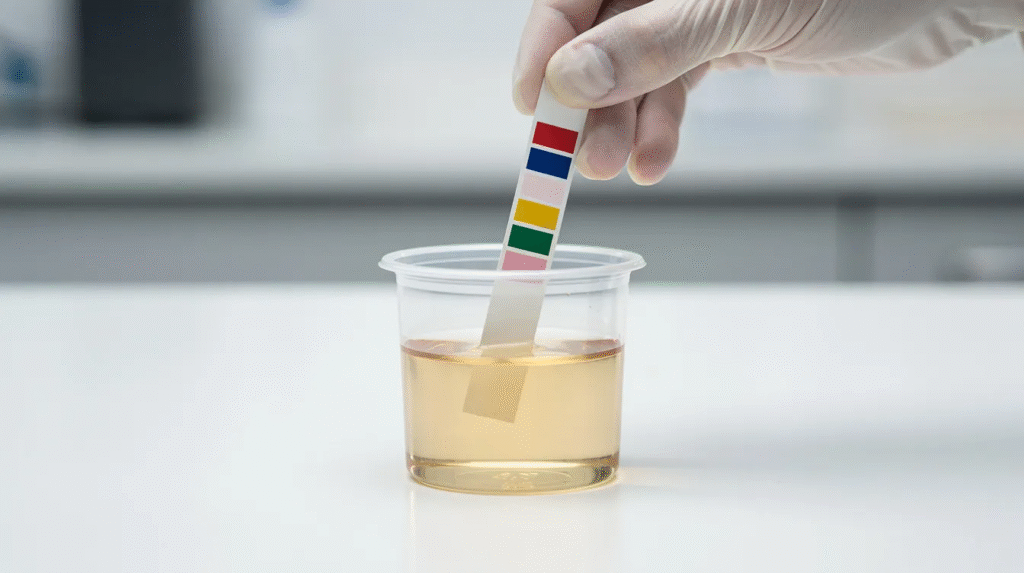
- Urinalysis and urine tests: Urine specific gravity evaluates the kidney’s concentrating ability-values below 1.035 suggest impaired function. The urine protein-to-creatinine ratio (UPC) quantifies proteinuria, which both indicates kidney damage and contributes to disease progression. Sediment analysis can reveal casts, crystals, or signs of bacterial infection in the urinary tract.
- Blood pressure measurement: Hypertension is common in advanced kidney disease and contributes to target organ damage in the kidneys, eyes, and central nervous system. Blood pressure management is important in treating chronic kidney disease, and measurement guides therapeutic decisions.
- Imaging studies: Ultrasound and radiographs allow veterinarians to assess kidney size (often smaller in CKD), cortical echogenicity, structural anomalies, kidney stones, or urinary blockage. Imaging helps distinguish acute from chronic processes and can identify conditions like polycystic kidney disease. In ambiguous cases, a kidney biopsy may be considered to determine the specific type of kidney tissue damage, though this is less commonly performed.
The International Renal Interest Society (IRIS) staging system classifies confirmed CKD into four stages based on creatinine and SDMA levels, with substaging for proteinuria and blood pressure. For cats, approximate creatinine thresholds are: Stage 1 (<1.6 mg/dL), Stage 2 (1.6–2.8 mg/dL), Stage 3 (2.9–5.0 mg/dL), and Stage 4 (>5.0 mg/dL). SDMA thresholds run parallel: <18 µg/dL for Stage 1, 18–25 for Stage 2, 26–38 for Stage 3, and >38 µg/dL for Stage 4. These distinctions directly guide the intensity of treatment and help establish prognosis.
Treatment Options Comparison
Because acute kidney injury and chronic kidney disease follow different courses, treating kidney failure requires tailored approaches:
Treatment Type | Acute Kidney Failure | Chronic Kidney Failure |
|---|---|---|
Fluid therapy | IV fluids can stabilize cats with acute kidney failure through aggressive intravenous fluids to restore perfusion and flush toxins | Subcutaneous fluids can be administered at home to combat dehydration; careful dosing prevents fluid overload |
Dietary management | Short-term feed management followed by renal support diets once stabilized | Dietary management is a cornerstone of treatment for chronic kidney disease; cats with CKD fed a renal support diet live twice as long compared to standard diets |
Medications | Targeted at underlying cause: antidotes for toxins, antibiotics for bacterial infection, antiemetics, electrolyte correction | Phosphorus binders, ACE inhibitors to control blood pressure, appetite stimulants, potassium supplementation, erythropoietin for anemia, gastroprotectants |
Advanced interventions | Hemodialysis may improve quality of life but is costly; intensive hospital monitoring | Palliative support with increasing vet monitoring; kidney transplants are experimental and require specialists |
Treatment selection depends on the failure type, IRIS stage, the cat’s overall condition, and owner resources. Acute kidney failure can sometimes be reversed with treatment if intervention occurs early. With treatment, some cats with chronic kidney disease can live several years after diagnosis-cats in Stage 1 and Stage 2 can live many years, while Stage 4 often involves a median survival measured in months. Cats with chronic kidney disease can often maintain a good quality of life with proper care, making consistent management essential.
Understanding these treatment pathways leads naturally to the practical challenges cat owners face when implementing them at home.
Common Challenges and Solutions
Managing a cat with kidney disease involves daily decisions that can feel overwhelming. Here are the most common obstacles and practical approaches to overcoming them.
Medication Administration Difficulties
Many cats resist pills, making consistent medication delivery a real struggle. Liquid formulations are available for several common kidney medications, and compounding pharmacies can create flavored chewables or transdermal preparations. Pill pockets and treat-embedding techniques work for some cats, but always verify the full dose was consumed. Avoid crushing medications into food unless your veterinarian confirms the specific drug is safe to administer this way-and never give human medications without veterinary guidance, as many are toxic to cats.
Diet Transition Resistance
Special diets can extend a cat’s life with kidney disease, but many cats refuse the new food outright. A gradual transition over 7–10 days-mixing increasing proportions of the renal diet with the familiar food-significantly improves acceptance. Warming the food slightly, adding low-sodium broth, or rotating between approved renal diet brands can enhance palatability. If a cat develops poor appetite despite transition efforts, appetite stimulants prescribed by your veterinarian (such as mirtazapine) may help re-establish eating patterns. Vitamin supplements may also be recommended to address nutritional gaps.
Home Monitoring Complications
Tracking a cat’s symptoms, water intake, urination patterns, and weight at home can feel burdensome but is vital for detecting changes early. Keeping a simple daily log-even noting “drank more than usual” or “seemed lethargic”-provides your vet with valuable trend data. AI-powered diagnostic tools and symptom checkers can help you interpret changes in your cat’s symptoms between veterinary visits. Establishing a weekly weigh-in routine using a kitchen scale helps catch gradual weight loss before it becomes severe disease.
Early diagnosis and consistent management improve outcomes for kidney disease-and these daily monitoring habits form the foundation of effective long-term care.
Conclusion and Next Steps
Renal failure in cats is a serious condition, but understanding its mechanisms, recognizing its signs early, and working closely with a veterinary team can meaningfully extend both lifespan and quality of life. Regular veterinary checks are vital for tracking kidney health in cats, especially since chronic kidney disease may progress silently for months before obvious clinical signs emerge. End-stage kidney failure often leads to humane euthanasia decisions, which makes early detection and proactive management all the more important for your cat’s longevity.
Immediate next steps:
- Schedule a senior cat wellness exam – if your cat is over 7, request blood work including SDMA, urinalysis, and blood pressure measurement to evaluate kidney function
- Monitor daily water intake and urination – note any increases in thirst, changes in litter box habits, or shifts in appetite and energy
- Establish a relationship with your veterinary team – discuss kidney screening frequency, diet recommendations, and what to watch for based on your cat’s specific risk factors
- Create a kidney-friendly home environment – ensure constant access to fresh water, eliminate exposure to known nephrotoxins (lilies, antifreeze, certain human medications), and consider age-appropriate nutrition to slow disease progression
Related topics worth exploring include nutrition optimization for cats with renal function concerns, understanding body posture changes associated with kidney disease discomfort, quality of life assessment frameworks, and end-stage care planning.
Additional Resources
IRIS Staging Quick Reference for Cats:
- Stage 1: Creatinine <1.6 mg/dL, SDMA <18 µg/dL – non-azotemic, early changes detectable
- Stage 2: Creatinine 1.6–2.8 mg/dL, SDMA 18–25 µg/dL – mild azotemia, early clinical signs
- Stage 3: Creatinine 2.9–5.0 mg/dL, SDMA 26–38 µg/dL – moderate azotemia, significant clinical management needed
- Stage 4: Creatinine >5.0 mg/dL, SDMA >38 µg/dL – severe disease requiring intensive support
Emergency Contact Guidelines: If your cat shows sudden onset of vomiting, seizures, collapse, an ammonia-like breath odor, or stops producing urine, seek emergency veterinary care immediately. These signs may indicate total kidney failure or an acute-on-chronic episode.
Diet Transition Tips: Begin mixing renal diet at 25% of total food volume, increasing by 25% every 2–3 days. Maintain two to three flavor options to prevent food aversion. Track food intake daily and report sustained appetite drops to your veterinarian promptly.
This article is for educational purposes and does not constitute medical advice. Always consult your veterinarian for diagnosis and treatment decisions specific to your cat.