
If you’ve ever wondered where are cat kidneys located, you’re asking a question that matters more than you might think. Knowing where these organs sit, what they do, and how they fail helps you catch problems early and keep your cat healthier for longer. This guide walks you through feline kidney anatomy, function, disease, and practical steps you can take at home.
Quick Answer: Where Are a Cat's Kidneys Located?
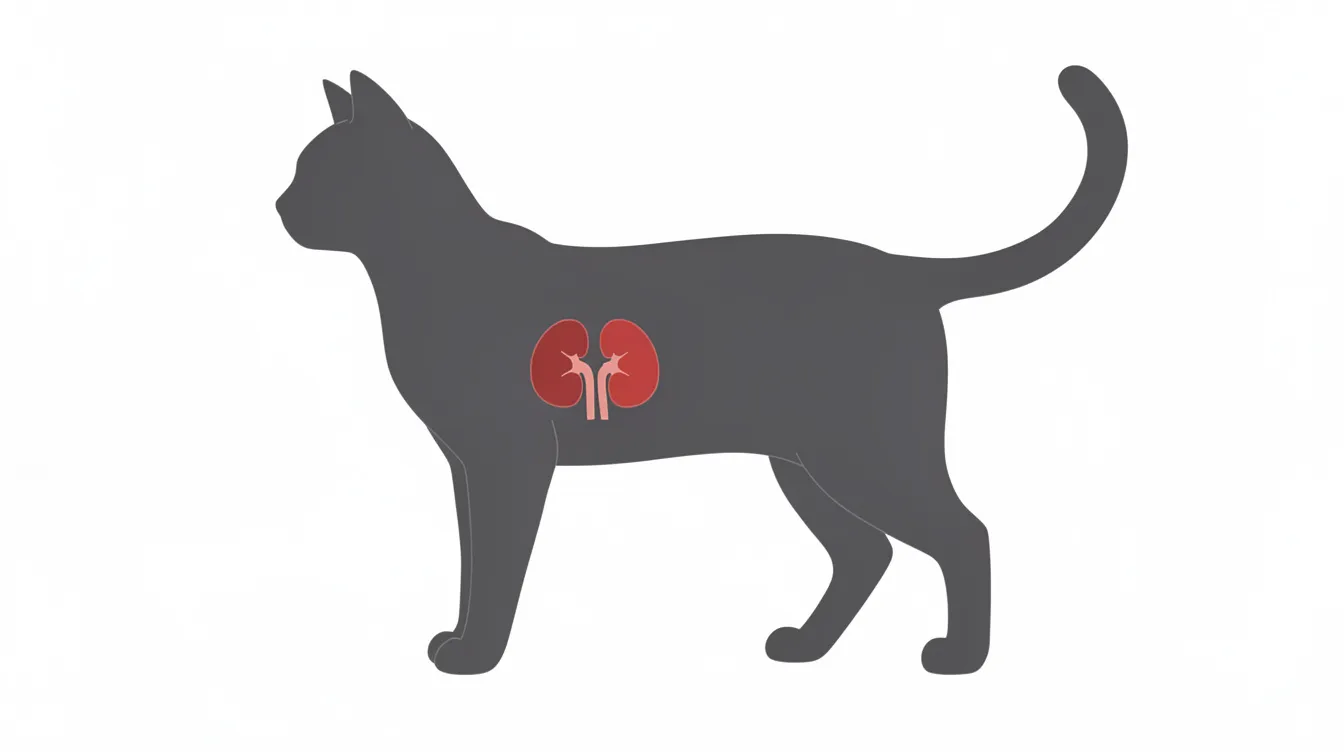
Cats have two kidneys located in the abdomen. These small, bean-shaped organs sit deep in the upper belly, tucked against the spine on either side. They are positioned just behind the last rib, roughly where the ribcage ends and the lumbar spine begins.
In everyday terms, if you place your hand just in front of your cat’s hips and slide it slightly forward on either side of the backbone, you’re hovering over the general area where the cat’s kidneys sit. They’re buried under layers of muscle, fat, and tissue, so you won’t feel them through casual petting.
The right kidney sits slightly further forward than the left kidney. This asymmetry is normal. Because the right kidney is more cranial, it can be partially hidden beneath the ribs, while the left kidney hangs a bit more freely in the abdomen.
Kidneys are retroperitoneal organs positioned behind the peritoneum, the membrane lining the abdominal cavity. This means they’re pressed against the back body wall rather than floating freely among the intestines.
In a relaxed cat at a healthy weight, an experienced veterinarian can gently feel at least the left kidney during a physical exam. Owners should avoid pressing firmly or squeezing that area, as the kidneys are delicate and pain could indicate disease.
The kidneys are part of the upper urinary tract in cats, along with the ureters. The bladder and urethra form the lower urinary tract, located further toward the pelvis.
Basic Kidney Anatomy in Cats
Cats have two kidneys, left and right, each smooth and bean-shaped. Each cat kidney is approximately 3 to 4.3 cm long in an adult cat weighing around 4 to 5 kg, with widths of roughly 2.2 to 2.8 cm. These measurements vary by breed, sex, and age, with males and larger breeds like Maine Coons having slightly bigger kidneys.
Externally, the kidneys lie along the thoracolumbar spine, roughly spanning the first through fifth lumbar vertebrae. Each kidney is wrapped in a protective fat capsule that cushions it and holds it loosely in place.
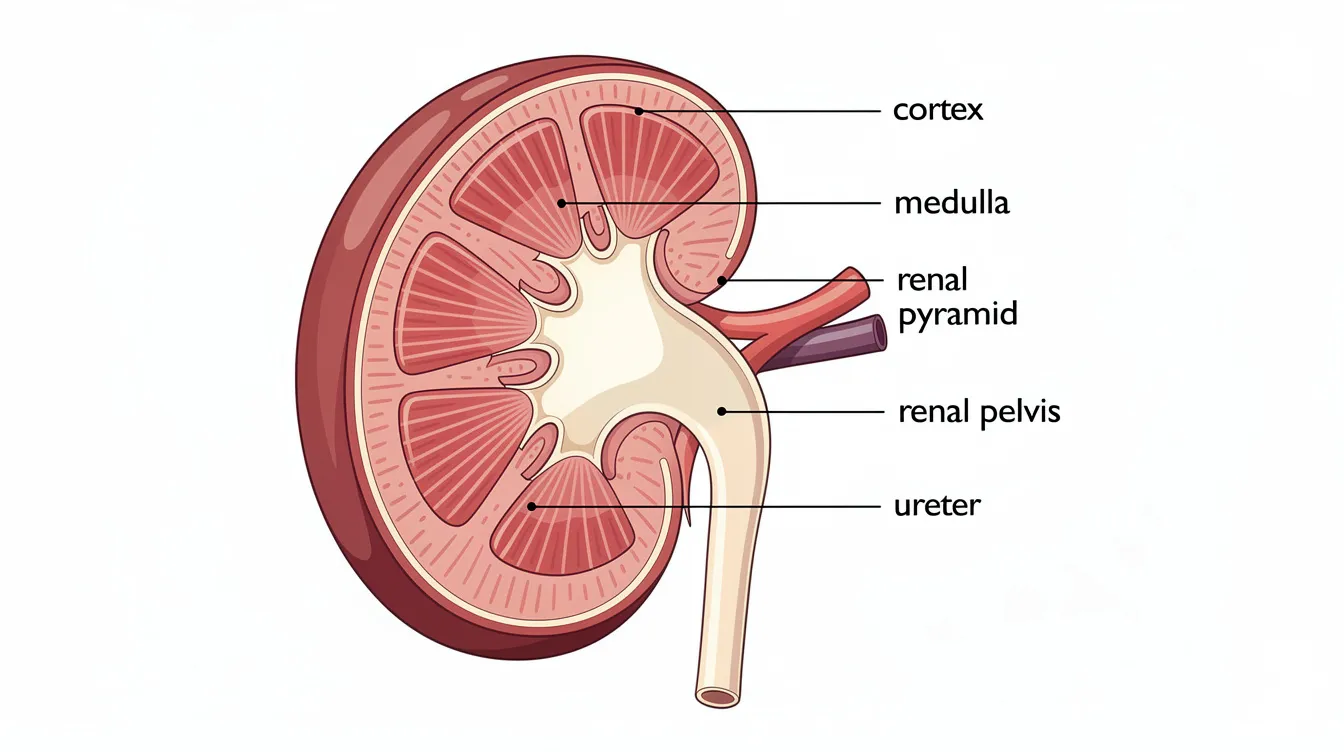
Internally, the renal cortex is the outer layer of kidney tissue where blood filtration occurs. Beneath it, the renal medulla manages urine concentration and carries fluid toward the center of the organ. Each kidney contains nephrons, the microscopic functional filtering units that do the heavy lifting of cleaning blood and producing urine.
At the inner curve of each kidney is the renal hilus, the area where blood vessels and the ureter enter and exit the kidney. Arteries bring blood in, veins carry filtered blood out, and the renal pelvis collects finished urine from the medulla and funnels it into the ureter. From there, urine travels from the kidneys through the ureters to the bladder.
What Do a Cat's Kidneys Do?
The location of the kidneys near major blood vessels is no accident. Kidneys receive about 25% of the heart’s blood output for filtering, making them among the most blood-intensive organs in the body. This is why they sit close to the aorta and vena cava.
Here are the important functions that kidneys perform around the clock:
- Removing toxic waste products like urea and creatinine from the bloodstream. The kidneys filter metabolic waste products continuously, keeping the cat’s blood clean.
- Helping regulate fluid and electrolyte balance in the body, including sodium, potassium, and phosphate levels. This electrolyte concentration management is critical to every cell’s function.
- Controlling blood pressure through producing the enzyme renin, which regulates blood pressure by adjusting vascular resistance.
- Supporting red blood cell production by releasing erythropoietin, a hormone that signals bone marrow to produce new blood cells. Without it, anemia develops.
- Activating vitamin D into its usable form, which supports calcium absorption and bone health.
These body functions connect directly to everyday wellness. Normal energy, good appetite, a shiny coat, and regular visits to the litter box all depend on healthy kidneys. Cats’ kidneys are crucial for maintaining homeostasis and balancing electrolytes across the entire body.
When chronic kidney disease or kidney failure sets in, the kidneys’ ability to perform these tasks declines. The organs may shrink, lose normal kidney tissue, and progressively fail to filter blood effectively.
How Vets Find and Examine Your Cat's Kidneys
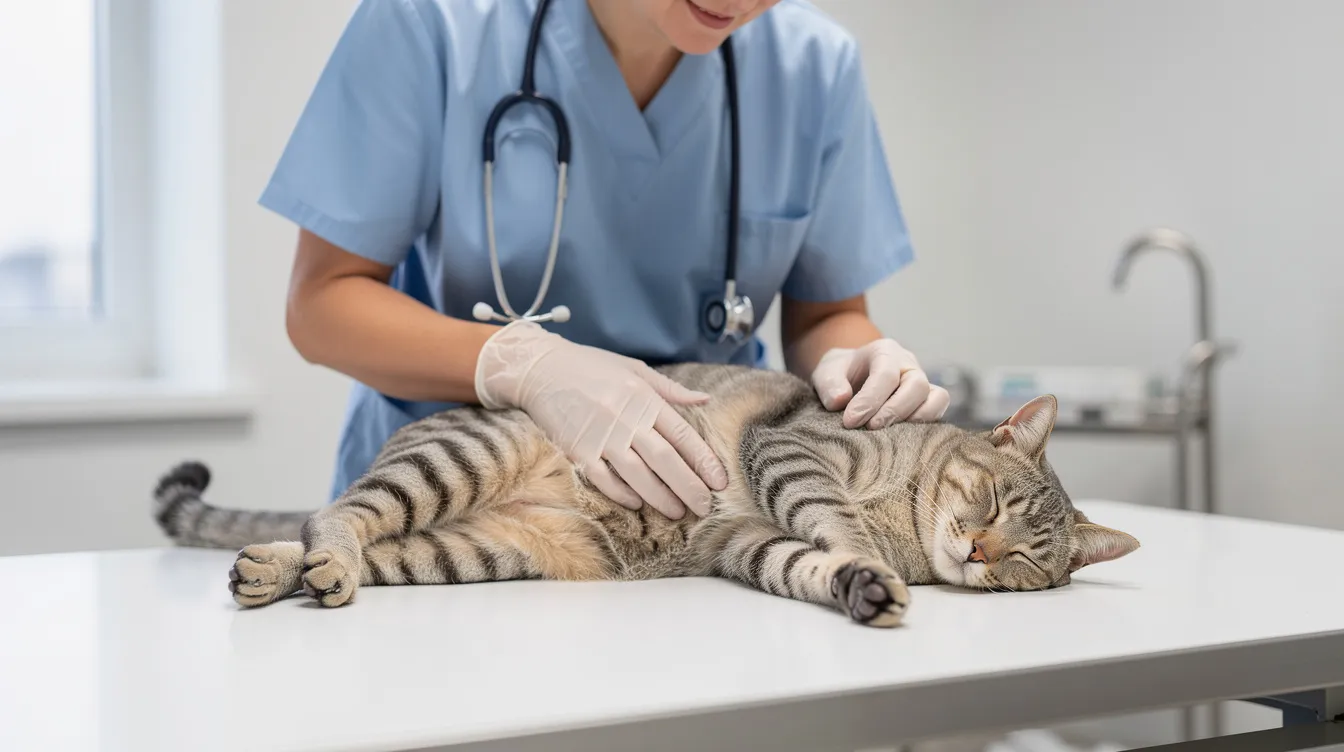
A veterinarian’s first step is gentle palpation of the abdomen. The vet feels deep under the skin along the back and sides, checking where the cat’s kidneys are located for abnormalities in size, shape, texture, or pain response.
In most cats, the left kidney is easier to palpate because it sits slightly further back and lower. The right kidney can be partially tucked under the rib cage, especially in tense, overweight, or muscular cats. If the cat flinches or vocalizes, it may signal a problem.
When something feels abnormal, imaging follows. X rays show overall kidney position, shape, and size relative to the spine. An abdominal ultrasound provides detailed views of internal kidney tissue, blood flow, cysts, tumors, or signs of hydronephrosis. High-frequency transducers give the clearest images of cortex thickness and medullary patterns.
Blood work and urinalysis are always paired with imaging to evaluate kidney function. Tests measuring blood urea nitrogen, creatinine, and symmetric dimethylarginine (SDMA) help estimate how much renal function remains. Urine samples reveal whether the kidneys can still concentrate urine properly, and urine specific gravity gives a direct measure of that ability.
Clinical Signs That Something Is Wrong Near the Kidney Area
You cannot see your cat’s kidneys from the outside, but problems in the area where cat’s kidneys are located produce noticeable clinical signs. Chronic kidney disease is a common health issue in senior cats, with studies suggesting prevalence of 20–50% in geriatric cats over 10 years old.
Common early warning signs include:
- Cats may drink excessive amounts of water due to kidney disease, a sign called polydipsia.
- More frequent urination, larger or paler clumps in the litter box, or accidents outside the box.
- Weight loss occurs in cats with chronic kidney disease, even when food intake seems normal. Gradual loss of muscle mass is common.
- Cats may exhibit lethargy as a symptom of kidney disease, sleeping more and playing less.
- A dull, dry coat that no longer looks healthy.
As disease advances, whole-body symptoms intensify. Vomiting is a common symptom of kidney failure in cats. An ammonia-like odor to the breath indicates kidney failure and the buildup of waste products the kidneys can no longer clear. Decreased appetite or selective eating often follows.
Local signs near the kidney region include flinching or vocalizing when the lower back or upper abdomen is touched. A tense or distended belly may also be present.
These clinical signs are non-specific and may also occur secondary to lower urinary tract issues like a bacterial infection of the bladder. Only a veterinarian can determine whether the kidneys are involved. Keep a log of changes you observe at home, including dates, water intake, litter box habits, and behavior shifts.
Kidneys, Kidney Disease, and Kidney Failure in Cats
Kidney disease refers broadly to any long-term damage to kidney tissue. Chronic kidney disease, sometimes called chronic renal disease, develops gradually as nephrons are lost over months or years. In many cats, especially older cats, this process is silent in the early stages because only 30% of normal kidney tissue is necessary for normal function.
Kidney failure describes a more severe stage where the kidneys’ ability to filter blood drops below a critical threshold, often when more than 75% of function is gone. Remarkably, cats with as little as 5% kidney function can survive long-term with appropriate support.
As CKD progresses, the normal feline kidney changes physically. In most cases, kidneys become smaller, firmer, and bumpier. In contrast, polycystic kidney disease, a genetic condition, causes kidneys to enlarge with fluid-filled cysts. Advanced kidney failure may lead to dehydration, mouth ulcers, anemia from lost red blood cell production capacity, and neurological signs like wobbliness.
Veterinarians use laboratory markers to stage CKD according to guidelines from the International Renal Interest Society. Blood urea nitrogen, creatinine, and SDMA levels in the cat’s blood are combined with urine specific gravity, proteinuria, and blood pressure measurements to determine how much kidney function remains and guide treatment. Early diagnosis at lower stages means more options and better outcomes.
Cats with CKD fed a renal support diet live twice as long as those on standard food. Therapeutic diets are restricted in protein and phosphorus to reduce the workload on remaining nephrons. Fluid administration can reverse dehydration in cats with CKD and improve quality of life. In rare and severe cases, hemodialysis may improve quality of life but is expensive and not widely available. Intravenous fluids or subcutaneous fluids at home remain the most common supportive treatment.
At-Home Monitoring: Litter Box Clues and Body Condition
The litter box is one of the easiest places to spot early signs of kidney trouble because kidneys perform the work that ultimately controls urine volume and concentration.
Watch for these changes:
- Larger or more numerous clumps per day, which suggest increased urine output.
- Paler or less odorous urine, indicating the kidneys may be losing concentrating ability.
- Accidents outside the box, especially in a cat that was previously reliable.
- Excessive amounts of water being consumed, which often pairs with increased urination.
Maintaining a healthy weight matters too. Gradual weight loss, even a few hundred grams over months, can be an early indicator of chronic kidney disease. Conversely, excessive weight gain puts cats at risk for diabetes and high blood pressure, both of which can damage kidneys. Weigh your cat monthly on the same scale to catch subtle trends before they become obvious.
Water makes up 60% of a cat’s body weight, so hydration is non-negotiable. Keep fresh water available in multiple locations, consider a cat fountain, and note how much your cat drinks daily. These simple habits give your veterinarian valuable data.
How to Support and Protect Your Cat's Kidneys
Prevention starts before any disease appears. Provide constant access to fresh water, offer wet food to increase moisture intake, and avoid known kidney toxins. Toxin ingestion from lilies, antifreeze, or certain medications like NSAIDs can cause acute kidney damage in otherwise healthy cats.
To encourage water consumption, try shallow bowls, running fountains, or adding small amounts of unsalted tuna water or low-sodium chicken broth. Separate water bowls from food and litter box areas so the water feels clean to your cat.
Cats should visit the veterinarian annually for kidney disease screening, especially senior cats over 7 to 10 years old. Routine blood work and urine samples can detect declining kidney function long before clinical signs appear. Studies suggest that catching CKD in the early stages gives you and your vet time to work closely on a plan that may include therapeutic diets (which may prolong life in cats with CKD), medications for controlling blood pressure, and at-home fluid support.
If chronic kidney disease is caught early, these interventions significantly slow progression and improve quality of life. The goal isn’t just adding time but ensuring good quality time with normal activity, appetite, and well being. Understanding where the kidneys are, what they do, and how disease presents empowers you to seek help early. That knowledge alone can improve your cat’s quality of life for years to come. Schedule that wellness exam, start a litter box log, and take the first step toward protecting your cat’s kidneys today.