

Dog reflux symptoms sneak up on you. One morning your dog skips breakfast. The next, she’s licking her lips obsessively while you pour kibble. A week later, you’re hearing strange gulping sounds after meals, wondering if something’s actually wrong.
These signs don’t arrive dramatically. They build gradually, disguising themselves as quirks rather than warning flags. Meanwhile, stomach acid quietly burns your dog’s esophagus, turning a manageable condition into chronic discomfort.
That’s where AI-powered health tracking changes the equation. CompanAIn’s platform analyzes patterns in veterinary records and health notes, flagging subtle changes that pet owners and veterinarians might miss during isolated appointments. By organizing medical history, lab results, and clinical observations into a clear timeline, the system identifies trends pointing toward reflux before symptoms escalate.
Understanding Canine Acid Reflux Through Medical Data
CompanAIn reviews veterinary records looking for symptom patterns that collectively suggest gastroesophageal reflux disease. When vets document frequent regurgitation, excessive salivation, or appetite changes across multiple visits, CompanAIn’s algorithms connect these dots, providing veterinarians with organized insights that support earlier diagnosis.
The disorder affects dogs when the lower esophageal sphincter—a muscular valve separating stomach from esophagus—relaxes inappropriately. Gastric acid, pepsin, and bile then flow backward into the esophagus, causing inflammation and tissue damage.
Young puppies face particular vulnerability since their sphincter muscles haven’t fully matured. Brachycephalic breeds like Bulldogs and Pugs experience elevated risk due to their unique respiratory anatomy creating increased chest pressure. Any dog undergoing anesthesia encounters heightened susceptibility as anesthetic agents relax the esophageal sphincter temporarily.
Primary Dog Reflux Symptoms Veterinarians Track
Watch for these key warning signs that veterinarians use to identify reflux:
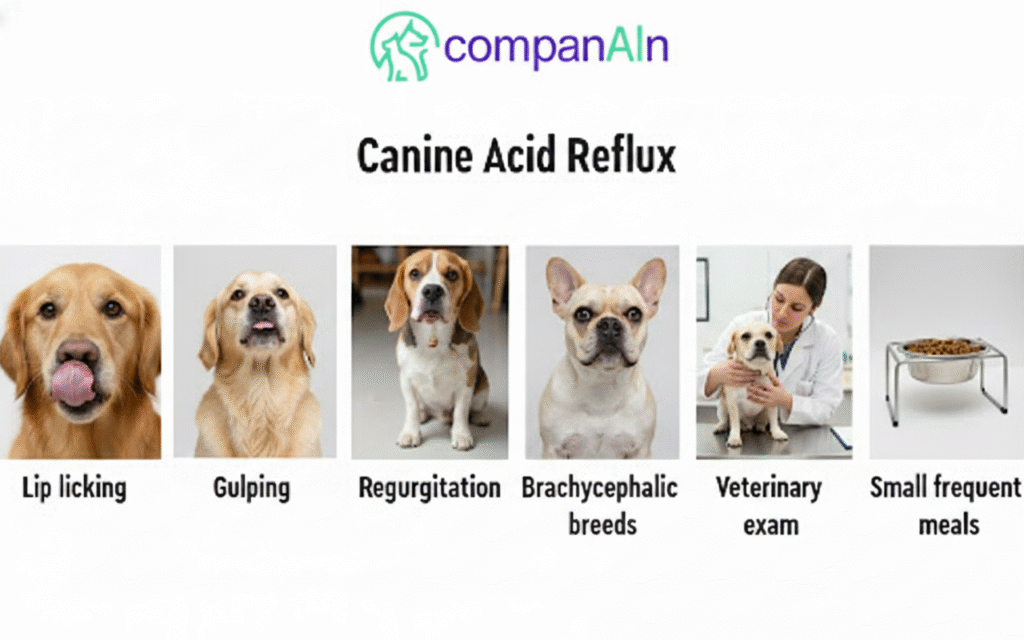
- Regurgitation: Unlike vomiting (forceful abdominal contractions), regurgitation happens passively—your dog suddenly opens her mouth and undigested food appears, often hours after eating
- Excessive drooling: Saliva production increases dramatically as the body attempts to neutralize acid touching the esophagus
- Lip licking and gulping: Dogs taste stomach acid repeatedly throughout the day, licking their lips constantly and swallowing hard
- Appetite changes: Some dogs skip meals entirely while others eat eagerly but regurgitate minutes later, creating anxiety around food bowls
- Bad breath: A distinctly sour, acidic odor develops from stomach contents repeatedly reaching the mouth
- Weight loss: Appears in chronic cases when dogs regularly regurgitate meals or eat less to avoid discomfort
How AI Identifies Patterns Veterinarians Miss
Traditional veterinary appointments capture snapshots. A vet sees your dog for fifteen minutes every few months, asking about recent symptoms while your memory scrambles to recall details.
CompanAIn fills the gaps by organizing every documented observation into a searchable timeline. When a veterinarian notes “patient exhibited lip licking” in August, then documents “regurgitation reported” in September, and later records “decreased appetite” in October, the AI platform recognizes these as connected symptoms rather than isolated incidents.
The system doesn’t diagnose—veterinarians do that. Instead, it presents organized data showing how symptoms evolved over time, enabling doctors to spot reflux patterns they might otherwise miss when reviewing fragmented records.
Veterinary clinics partnering with CompanAIn gain access to a centralized dashboard displaying each patient’s complete medical narrative. Lab results, medication responses, behavioral changes, and physical exam findings appear in chronological order.
Secondary Indicators AI Helps Track
Beyond the primary symptoms, AI platforms flag these additional warning signs:
- Persistent coughing: Cough without respiratory infection often stems from acid irritating the throat
- Morning bile vomiting: Yellow bile appearing regularly signals prolonged empty stomach periods allowing acid accumulation
- Increased grass eating: Escalates as dogs instinctively seek relief from digestive discomfort
- Unusual eating posture: Dogs may eat slowly, pause frequently, or position their head at odd angles to minimize discomfort
Breeds and Risk Factors CompanAIn Monitors
Certain dogs face higher reflux risk. AI systems track these key factors:
High-Risk Breeds:
- Brachycephalic dogs (Bulldogs, Pugs, Boston Terriers, French Bulldogs) due to compressed airways creating negative pressure
- Young puppies whose sphincter muscles haven’t fully matured
Medical Risk Factors:
- Hiatal hernias where stomach tissue pushes through the diaphragm
- Chronic vomiting conditions like pancreatitis, inflammatory bowel disease, or kidney disease
- Post-anesthesia periods when drugs temporarily relax the esophageal sphincter
CompanAIn ensures these risk factors stay visible during appointments, helping veterinarians connect pre-existing conditions with emerging gastrointestinal symptoms.
Diagnostic Process Supported by Organized Data
Veterinarians use a systematic approach to diagnose reflux:
- Physical examination and history: Palpate abdomen, check for pain or masses, discuss symptoms with owners
- Laboratory testing: Blood work and urinalysis to rule out liver dysfunction, kidney problems, or systemic diseases
- Endoscopy: Definitive diagnosis tool using a small camera to reveal inflammation, ulceration, or tissue damage in the esophagus
CompanAIn enhances diagnostic accuracy by organizing medical histories that show symptom progression over months, helping veterinarians make informed decisions about which tests to order.
Treatment Approaches and AI-Enhanced Monitoring
Effective reflux management combines multiple strategies:
Dietary Modifications:
- Low-fat, easily digestible foods
- Smaller, more frequent portions throughout the day
- CompanAIn tracks which changes were implemented and when, identifying what works for individual dogs
Medications:
- Antacids (famotidine, omeprazole): Reduce stomach acid production
- Prokinetic drugs (metoclopramide): Strengthen lower esophageal sphincter
- Sucralfate: Coats and protects damaged esophageal tissue
Lifestyle Adjustments:
- Avoiding late-night meals to prevent nocturnal reflux
- Elevating food bowls so gravity assists digestion
- Maintaining healthy weight to reduce abdominal pressure
Surgical Intervention:
- Reserved for severe cases with anatomical abnormalities like hiatal hernias
AI platforms monitor medication efficacy by tracking symptom notes before and after prescriptions begin, enabling data-driven treatment decisions.
Long-Term Management and AI's Preventive Value
Chronic reflux requires ongoing vigilance. Symptoms often improve with treatment but can return when medications stop or dietary discipline lapses.
CompanAIn sends alerts when scheduled recheck appointments approach or when gaps in medical records suggest a dog hasn’t been seen recently. For chronic conditions, consistent veterinary oversight prevents minor setbacks from becoming major complications.
Esophageal strictures—narrowing from scar tissue—develop in severe untreated cases. CompanAIn helps prevent this by organizing early symptom data that prompts intervention before permanent damage occurs.
Aspiration pneumonia threatens dogs who regurgitate frequently. If stomach contents enter the lungs, serious respiratory infection follows. AI tracking of regurgitation frequency helps veterinarians assess this risk.
Why Early Detection Changes Outcomes
Untreated reflux progresses from intermittent discomfort to chronic esophagitis. Mild cases involve surface-level inflammation. Severe cases cause deep ulceration requiring intensive treatment.
Catching symptoms early allows dietary adjustments and mild medications to resolve issues before serious tissue damage accumulates. Dogs treated promptly often achieve full resolution. Those diagnosed late may need lifelong medication and dietary restrictions.
By organizing medical data to reveal emerging patterns, CompanAIn helps veterinarians intervene when treatment stays straightforward rather than waiting until complications demand aggressive intervention.
Practical Applications for Pet Owners
When you notice potential reflux symptoms between appointments, document them. Take videos of unusual behaviors like excessive gulping or regurgitation episodes.
Share these observations with your veterinarian, who enters them into medical records. CompanAIn incorporates this information into its analysis, building a more complete picture of your dog’s health trajectory.
The system works best when veterinary records stay current and detailed. Regular appointments—even when your dog seems healthy—allow veterinarians to document normal baselines that make abnormal changes more obvious later.
Supporting Your Dog's Digestive Health
Daily habits significantly impact reflux management:
- Feed smaller portions three to four times daily rather than one or two large meals
- Wait at least an hour after feeding before vigorous exercise
- Maintain healthy weight through portion control and regular exercise
- Avoid table scraps, especially fatty human foods that slow digestion
- Stick to veterinarian-recommended diets formulated for sensitive stomachs
- Monitor for symptom changes and report them promptly
When to Seek Immediate Veterinary Attention
Most reflux cases progress gradually, but these signs demand urgent care:
- Dog stops eating entirely for more than 24 hours
- Blood appears in vomit or regurgitated material
- Difficulty breathing or choking episodes occur
- Severe lethargy, weakness, or collapse develops
- Persistent pain continues despite medication
AI as a Partner in Pet Health Management
Technology doesn’t replace veterinary expertise or attentive pet ownership—it amplifies both. CompanAIn gives veterinarians better tools to track complex conditions while helping owners understand their dog’s health journey through organized records.
For conditions like acid reflux where symptoms develop subtly and diagnosis depends on pattern recognition, AI offers genuine advantage. The platform transforms scattered observations into coherent narratives that drive better clinical decisions and ultimately, better outcomes for dogs experiencing this uncomfortable condition.
According to the American Pet Products Association, 71% of U.S. households own pets, with pet healthcare spending continuing to rise. As more families invest in their pets’ wellbeing, tools like CompanAIn become increasingly valuable for managing chronic conditions effectively.
Your dog can’t tell you when heartburn starts or when swallowing becomes painful. But through careful observation, detailed record-keeping, and AI-enhanced data analysis, veterinary teams can catch these problems early and intervene before chronic suffering takes hold.
Frequently Asked Questions
How quickly can reflux symptoms develop in dogs?
Some dogs show signs suddenly after a trigger event like anesthesia or dietary indiscretion. Others develop symptoms gradually over weeks or months as underlying conditions worsen. CompanAIn’s timeline tracking helps veterinarians determine whether symptoms emerged acutely or chronically, informing treatment strategies.
Can puppies outgrow acid reflux?
Many puppies experience temporary reflux while their lower esophageal sphincter matures. As they reach adulthood, symptoms often resolve without intervention. However, some develop chronic issues requiring ongoing management. AI tracking helps distinguish puppies genuinely outgrowing the condition from those needing sustained treatment.
Is acid reflux in dogs curable or just manageable?
The answer depends on underlying causes. Reflux from temporary factors like anesthesia or dietary mistakes resolves completely once triggers are removed. Reflux from anatomical problems like hiatal hernias may require surgical correction to cure. Chronic cases from ongoing conditions typically need lifelong management.
How does AI actually help my individual dog with reflux?
CompanAIn organizes your dog’s medical history into a searchable format. When your veterinarian reviews past appointments, the system highlights patterns in symptoms, tracks medication efficacy, and flags when follow-up care is overdue. For broader symptom tracking beyond reflux, the Dog Symptom Checker helps monitor your dog’s health patterns across multiple systems, giving both owners and veterinarians actionable insights. This organization prevents important details from being overlooked and ensures consistent care across all visits.
What's the difference between regurgitation and vomiting in dogs?
Vomiting involves forceful abdominal contractions—you’ll see your dog’s sides heaving before material comes up. Regurgitation happens passively without abdominal effort. Your dog simply opens their mouth and undigested food appears. This distinction matters because regurgitation specifically suggests esophageal issues like reflux, while vomiting has broader causes.
Do all dogs with reflux symptoms need medication?
Not necessarily. Mild cases often respond to dietary changes and feeding schedule modifications alone. Veterinarians reserve medications for moderate to severe cases or when dietary management proves insufficient. CompanAIn tracks which interventions were tried and their outcomes, helping veterinarians make evidence-based decisions about medication necessity.