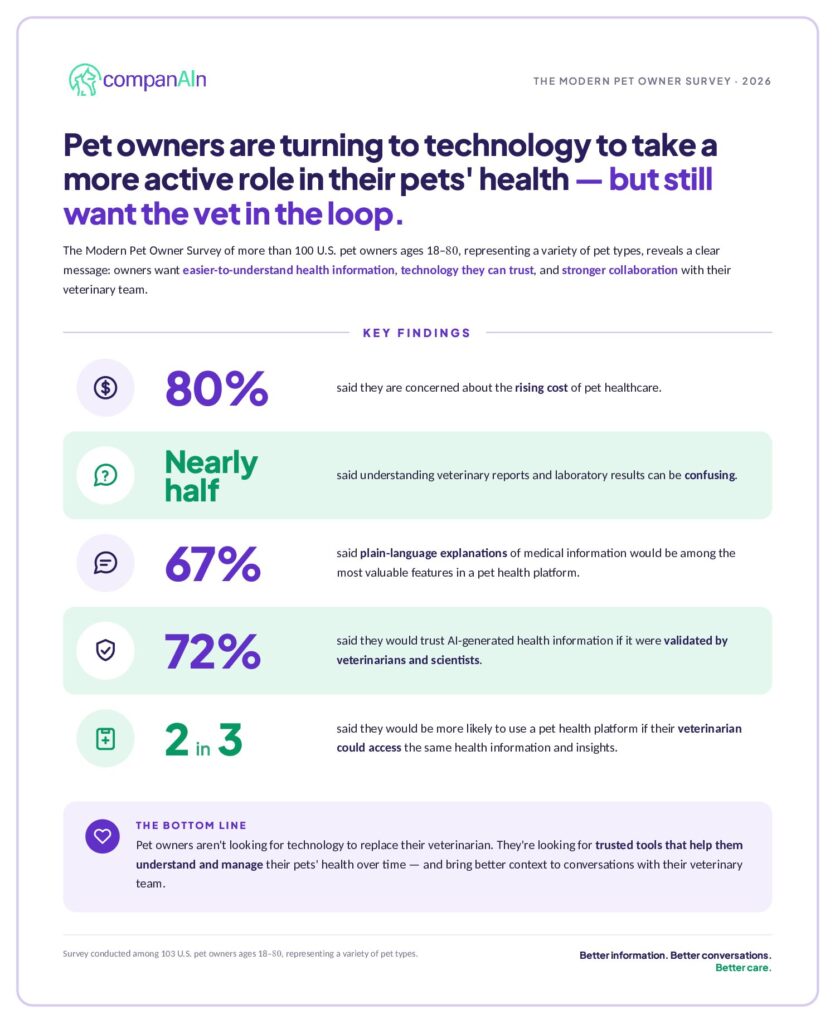

Figuring out what’s wrong with your dog rarely happens overnight. One week, you’re cleaning up ear gunk. The next, you’re Googling “why won’t my dog stop licking his paws?” Then the scratching starts, and suddenly you’re wondering whether it’s allergies, food sensitivities, or something else entirely.
Dog allergy testing at home has changed how pet owners approach these mysteries. Instead of cycling through vet visits and guesswork, you can gather initial insights from your living room. Combine that with AI-powered health monitoring, and you’ve got a smarter starting point for conversations with your veterinarian.
CompanAIn brings both together. Our platform analyzes veterinary records, tracks symptom patterns, and organizes health data so vets and pet owners can spot trends that might otherwise slip through the cracks. From persistent ear infections to unexplained skin irritation, the system flags changes worth investigating and helps you understand what’s happening before small problems turn into bigger ones.

What Dog Allergy Testing at Home Actually Measures
Not all “allergy tests” work the same way. Most at-home kits focus on sensitivities rather than true IgE-mediated allergies. That’s an important distinction. True allergies involve your dog’s immune system launching an immediate response—think hives, facial swelling, or difficulty breathing within minutes of exposure. Sensitivities show up more subtly: chronic ear infections, persistent itching, digestive upset, or behavioral changes that creep in over time.
The typical process involves collecting a small sample—usually hair or saliva—and mailing it to a lab. Results arrive within a couple of weeks, often listing hundreds of potential food ingredients and environmental factors with color-coded severity ratings.
How These Tests Differ From Veterinary Diagnostics
Veterinary allergy testing operates on different principles. Intradermal testing remains the gold standard for environmental allergies. A veterinary dermatologist injects tiny amounts of allergens under your dog’s skin and watches for raised, red reactions. It requires sedation, specialized expertise, and typically costs several hundred dollars.
Blood tests performed by veterinarians measure specific antibodies in your dog’s serum. These provide more reliable data for designing immunotherapy protocols—the allergy shots that gradually build tolerance to environmental triggers like pollen, dust mites, and mold.
At-home kits can’t replace these professional diagnostics, but they serve a different purpose. They help identify patterns, guide dietary experiments, and give you talking points for your next vet appointment.
Why AI-Powered Symptom Checkers Matter for Dog Health
Spotting health problems early sounds simple until you’re living with a dog who’s excellent at hiding discomfort. By the time symptoms become obvious, the underlying issue has often been building for weeks or months.
AI symptom checkers analyze data differently than humans do. Where you might notice your dog scratching occasionally, AI tracks frequency, duration, and location. Where you remember “ear infections a couple times,” AI pulls every documented case from your dog’s medical history and identifies the pattern: three infections in six months, all starting within two weeks of seasonal pollen spikes.
CompanAIn’s multi-agent AI system processes veterinary records, test results, and clinical notes to surface these connections. Each agent specializes in different aspects of canine health—one focuses on dermatological patterns, another on gastrointestinal trends, another on behavioral changes that might signal pain or systemic illness.
What This Looks Like in Practice
Imagine your dog’s been chewing his feet more than usual. You mentioned it to your vet three months ago. The vet checked for parasites, found nothing, and suggested monitoring. Now the behavior’s back, but you can’t remember exactly when it started or how frequently it’s happening.
CompanAIn pulls your dog’s complete medical timeline. It notes that foot-chewing episodes align with spring pollen seasons. It highlights similar patterns documented in previous years. It cross-references those observations with lab work showing mildly elevated eosinophils—a marker often associated with allergic responses.
None of this replaces your veterinarian’s expertise, but it gives them better information to work with. Instead of starting from scratch each visit, you walk in with organized data showing exactly when symptoms appear, how long they persist, and what environmental or dietary factors might be connected.
Common Allergy Symptoms AI Monitoring Can Track
Dogs express discomfort through behaviors that seem random until you map them over time. Atopic dermatitis affects 10-15% of dogs, according to Cornell University College of Veterinary Medicine. The condition typically emerges between six months and three years of age.
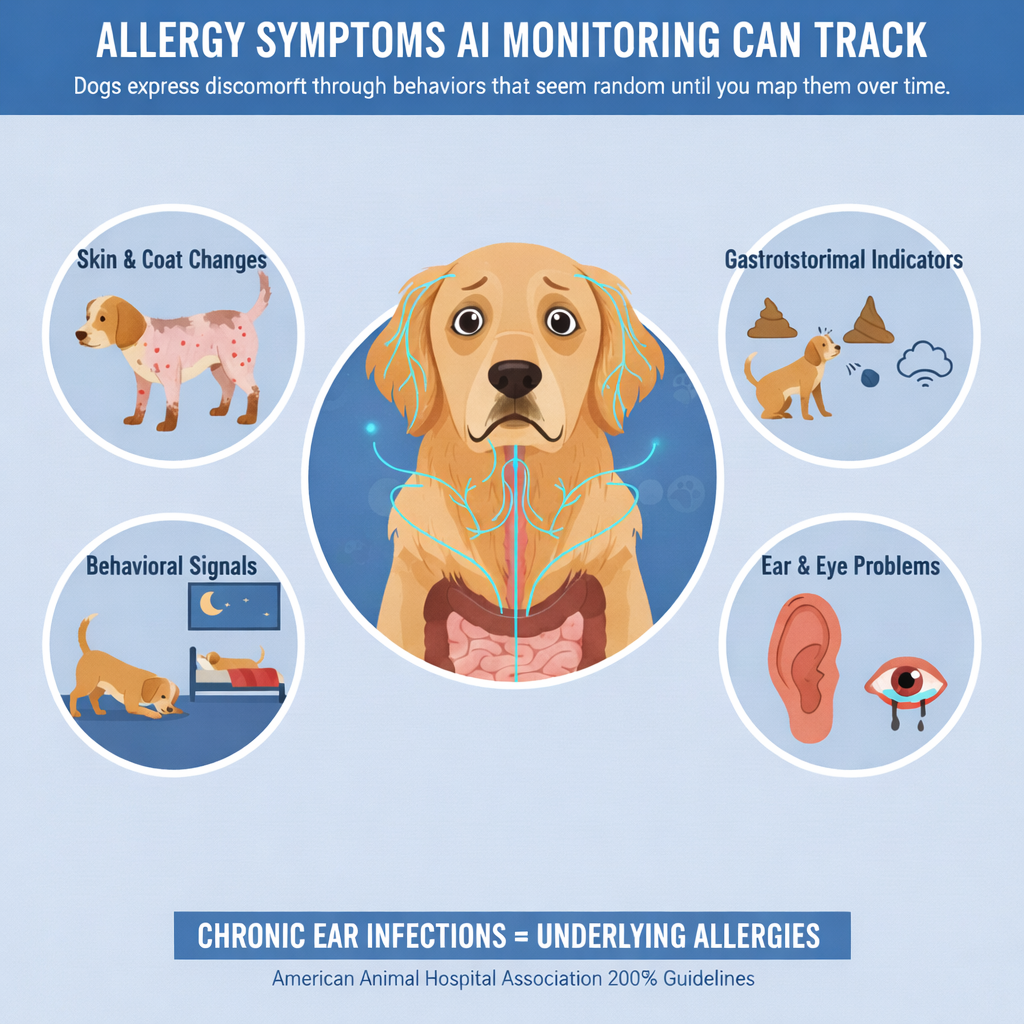
Skin and coat changes: Hair loss in patches, redness along the belly or between toes, brown discoloration where saliva has stained areas your dog licks obsessively, thickened or darkened skin in repeatedly scratched spots.
Gastrointestinal indicators: Soft stools that happen twice a week instead of once a month, occasional vomiting that’s become more frequent, increased gas, loss of appetite that comes and goes.
Behavioral signals: Head shaking, rubbing face on furniture or carpet, scooting across the floor, restlessness at night, decreased interest in play or walks.
Ear and eye problems: Ear infections that clear up with medication but return weeks later, red or swollen ear flaps, excessive wax production, watery eyes or discharge around the eyes.
Chronic ear infections frequently indicate underlying allergic conditions, according to the American Animal Hospital Association’s 2023 guidelines on managing allergic skin diseases. Treating the infection addresses the symptom, but identifying and managing the allergy prevents recurrence.
How CompanAIn Enhances Veterinary Care
Veterinarians make better decisions when they have complete information. Medical records often arrive fragmented—test results from one visit sit separate from behavioral notes captured during another appointment.
CompanAIn solves this by creating unified health timelines. Every record, lab result, and clinical note gets organized chronologically and cross-referenced with other data points. When your vet reviews your dog’s history, they see patterns instead of isolated events.
The platform doesn’t just organize historical data—it predicts where problems might develop. Machine learning algorithms compare your dog’s health trajectory against millions of other cases, identifying risk factors that suggest early intervention could prevent complications.
Understanding At-Home Allergy Test Limitations
At-home allergy tests provide useful starting points, not definitive diagnoses. Veterinary dermatologists emphasize that hair and saliva tests lack the scientific validation of intradermal and serum testing. These methods can’t reliably diagnose IgE-mediated allergies—the kind that cause immediate, severe reactions.
But “unreliable for diagnosis” doesn’t mean “useless.” Many pet owners successfully identify problem ingredients using at-home kits. The key lies in understanding what results represent and following up with your veterinarian.
Severe reactions require immediate veterinary attention. Facial swelling, difficulty breathing, or hives developing within minutes are medical emergencies. Chronic symptoms—persistent ear infections, skin lesions that won’t heal, unexplained weight loss—need diagnostic workups that home tests can’t provide.
Integrating AI Monitoring With Professional Veterinary Care
The strongest approach combines home monitoring, professional diagnostics, and ongoing collaboration with your veterinary team. AI monitoring can highlight potential health issues early, which your veterinarian can confirm through blood tests for dogs to pinpoint underlying conditions and guide treatment.
Month 1: You notice increased scratching. CompanAIn’s timeline shows this is the third occurrence in 18 months, all during spring. You schedule a vet appointment.
Month 2: Your vet examines your dog, rules out parasites, and recommends environmental allergy testing. You also order an at-home food sensitivity kit.
Month 3: At-home test results flag several proteins. You begin an elimination diet while waiting for intradermal testing results. CompanAIn tracks daily symptoms and diet compliance. Monitoring your dog’s digestive reactions during elimination diets can also reveal early dog reflux symptoms, helping you catch gastrointestinal issues before they worsen.
Month 4: Intradermal testing confirms environmental allergies to grass pollen and dust mites. Your vet starts immunotherapy. Elimination diet shows improvement after removing chicken.
Months 5-6: Symptoms decrease as immunotherapy builds tolerance and dietary triggers are avoided. CompanAIn continues monitoring for flare-ups and tracks treatment response.
This integrated approach produces better outcomes than any single strategy alone. Home monitoring provides continuous data, professional diagnostics confirm specific allergens, and AI analysis identifies patterns that guide treatment adjustments.
Choosing the Right Tools for Your Dog
Not every dog needs AI monitoring or at-home allergy testing. A healthy dog with no symptoms doesn’t require constant surveillance. But if your dog’s dealing with chronic issues, these tools make management significantly easier.
Consider AI-powered health monitoring if your dog has:
- Recurring problems that come and go without clear cause
- A history of allergies or sensitivities requiring ongoing management
- Multiple health conditions that make patterns harder to spot
- You’re switching to a new veterinarian and need organized records
At-home allergy testing makes sense when:
- Symptoms suggest food sensitivities
- You want to narrow down elimination diet options before starting a restrictive protocol
- Your vet recommends exploring dietary factors
- You’re looking for patterns to discuss with a veterinary dermatologist
CompanAIn’s platform combines both capabilities. The AI analyzes medical records to identify allergy patterns, tracks symptoms that might indicate sensitivities, organizes test results and treatment responses in one timeline, and provides data veterinarians can use for better clinical decisions.
Managing Allergies Long-Term
Allergies in dogs rarely resolve completely. Most require ongoing management with consistent monitoring to catch flare-ups early, dietary discipline to prevent problem ingredients, environmental modifications to reduce trigger exposure, and immunotherapy to build tolerance.
Air purifiers reduce airborne allergens. Regular bathing removes pollen from your dog’s coat. Wiping paws after walks limits outdoor allergens tracked inside. Washing bedding frequently eliminates dust mites.
Veterinarians prescribe medications based on severity. Antihistamines work for mild reactions. Newer options like Apoquel and Cytopoint target inflammatory pathways without steroid side effects. Omega-3 supplements support skin health.
Immunotherapy—allergy shots or sublingual drops—remains the gold standard for environmental allergies. Treatment gradually increases doses of specific allergens, conditioning the immune system to tolerate exposure. Response takes 9-12 months, but for severe cases, results can dramatically improve quality of life.
The Role of Technology in Pet Healthcare
Pet healthcare is adopting digital tools that make veterinary care more precise. Electronic medical records, telemedicine, and AI-powered diagnostics are becoming standard practice.
CompanAIn represents this shift. You arrive with comprehensive data instead of trying to recall symptom details. Your vet accesses complete digital timelines instead of flipping through paper files. This benefits everyone—better diagnoses for veterinarians, more informed pet owners, and targeted treatment for dogs.
CompanAIn maintains veterinary-grade security for all medical information. Records are encrypted, access is controlled, and data is never shared without permission.
Taking the Next Step
If your dog’s struggling with unexplained symptoms, consider whether home testing and AI monitoring might help. Start by discussing your dog’s patterns with your veterinarian. Mention specific behaviors you’ve noticed, when they occur, and what seems to trigger or relieve them.
Ask whether an elimination diet makes sense for exploring food sensitivities. Inquire about environmental allergy testing if symptoms follow seasonal patterns. Discuss how AI monitoring tools could provide better data for tracking treatment responses.
CompanAIn can help organize this process. Our platform integrates seamlessly with veterinary practices, providing the continuous insights needed for managing chronic conditions like allergies. From identifying subtle patterns in medical records to alerting you when symptoms suggest a developing problem, the system supports better care at every stage.
Your dog deserves health management that’s informed, proactive, and built on solid data rather than guesswork. When allergy testing, AI monitoring, and professional veterinary care work together, you get exactly that—a comprehensive approach that improves outcomes and quality of life.
Ready to give your veterinarian better tools for understanding your dog’s health? Explore CompanAIn’s AI-powered platform and see how organized data and predictive insights can transform care for your pet.
Frequently Asked Questions
Can at-home dog allergy tests replace veterinary diagnostics?
No. At-home kits identify potential sensitivities and help guide elimination diets, but they can’t diagnose true IgE-mediated allergies or determine appropriate medical treatments. Always discuss results with your veterinarian before making significant changes to your dog’s care.
How accurate are AI symptom checkers for dogs?
AI symptom checkers like CompanAIn analyze patterns in medical records and health data to identify trends that warrant veterinary attention. They’re highly effective at organizing information and flagging changes, but they complement rather than replace professional veterinary examination and diagnosis.
What's the difference between food allergies and food sensitivities in dogs?
Food allergies trigger immediate immune responses—typically within minutes to hours of eating. Food sensitivities develop gradually and cause symptoms like chronic itching, digestive upset, or ear infections that appear over days or weeks. Most at-home tests measure sensitivities rather than true allergies.
How long does an elimination diet take to show results?
Elimination diets typically require 8-12 weeks of strict adherence before you can reliably assess whether symptoms improve. This lengthy timeframe is necessary because it takes time for previous food proteins to clear from your dog’s system and for inflammation to resolve.
When should I see a veterinary dermatologist instead of using home testing?
Consult a veterinary dermatologist if your dog has severe, progressive, or treatment-resistant skin problems, recurring infections that don’t respond to standard treatment, symptoms affecting large areas of the body, or if you’re considering immunotherapy for environmental allergies.
How does CompanAIn's AI monitoring work with my regular veterinarian?
CompanAIn integrates with your veterinarian’s practice, organizing medical records, lab results, and clinical notes into comprehensive health timelines. Your vet accesses this data during appointments, using AI-generated insights to identify patterns and make more informed treatment decisions. The platform enhances rather than replaces your veterinarian’s expertise.