

Glyphosate in dog food shouldn’t exist, yet research confirms this herbicide appears in virtually every commercial kibble tested. Whether you’re examining ingredient labels, comparing brands, or questioning why your dog’s health seems off despite premium pricing, understanding how this chemical infiltrates pet food—and how to identify safer alternatives—matters more than marketing claims suggest.
The challenge extends beyond simple avoidance. Glyphosate contamination affects grain-free formulas, organic products, and “natural” brands with equal opportunity. CompanAIn’s document analysis technology helps pet owners track patterns across veterinary records and lab results, building a clearer picture of how dietary contaminants might influence individual health outcomes over time.
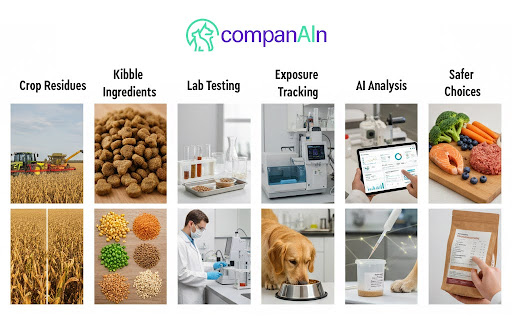
Why Glyphosate Appears in Dog Food
Corn, soy, oats, wheat, and legumes—the foundation of most kibbles—receive glyphosate applications during cultivation. Farmers spray this herbicide for weed control and increasingly as a pre-harvest desiccant to accelerate crop drying.
Pre-harvest applications create higher residue concentrations. Glyphosate sprayed days before harvest embeds directly into grains rather than dissipating in soil. Oats, lentils, chickpeas, and peas show elevated contamination because manufacturers use glyphosate to streamline harvesting.
Cornell University researchers tested 18 commercially available dog and cat foods in 2018, finding glyphosate in every product. Concentrations ranged from 78 to 2,140 micrograms per kilogram—exposures four to twelve times higher than humans experience per kilogram bodyweight. Even the GMO-free product showed contamination exceeding conventional formulas.
Detection Methods for Glyphosate Testing
Glyphosate’s high water solubility means standard pesticide screens miss it entirely. Specialized testing methods are required.
Liquid chromatography with tandem mass spectrometry (LC-MS/MS) represents the gold standard, detecting glyphosate as low as 0.02 parts per billion. This method analyzes molecular structure, eliminating false positives. Testing involves acidified solvent extraction, solid phase cleanup, and LC-MS/MS analysis measuring glyphosate and its metabolite AMPA. Labs report results within 10 business days.
ELISA (enzyme-linked immunosorbent assay) offers faster, cheaper screening, detecting contamination above 2.5 parts per billion in minutes. However, ELISA sometimes shows higher readings than LC-MS/MS on identical samples, suggesting lower specificity.
Dipstick tests provide field-ready screening through color-changing immunochromatographic strips. While convenient, positive results require LC-MS/MS confirmation for accuracy.
Concentration Patterns Across Food Types
Dry dog food averages 400 parts per billion glyphosate—400 times higher than raw meat meals at 1 part per billion, according to veterinary testing laboratories.
Grain-free formulations contain the highest contamination despite premium pricing. Manufacturers replace corn and wheat with oats, pea protein, chickpeas, and lentils—crops receiving intensive glyphosate as harvest desiccants.
Dogs eating typical kibble show urine glyphosate averaging 15.8 parts per billion, roughly 32 times higher than human averages. Cats test at 8 parts per billion. Raw food diets register virtually undetectable glyphosate when formulated with grass-fed meats and organic produce.
How CompanAIn Assists Brand Safety Assessment
CompanAIn’s multi-agent AI system specializes in document analysis that transforms scattered information into actionable intelligence.
Upload veterinary summaries, lab results, and ingredient lists. CompanAIn’s agents parse data, identifying patterns connecting dietary changes to health markers. If liver enzymes climbed after switching foods, the platform correlates timing with ingredient modifications.
Living Memory technology maintains context across years of health records. When labs show gradual kidney function changes or inflammatory marker shifts—subtle trends often unnoticed until damage becomes severe—CompanAIn’s algorithms detect these trajectories early, highlighting when trends began and which dietary factors coincided.
Document aggregation builds timelines showing food transitions alongside health data, creating visual connections between diet and wellbeing.
Reading Ingredient Lists for Contamination Risk
Ingredient order reveals contamination probability. The first five ingredients dominate any formula’s composition.
Products leading with corn, corn meal, soybean meal, wheat, or wheat middlings carry virtually guaranteed glyphosate presence. These crops receive the heaviest herbicide applications in American agriculture.
Grain-free labels mislead consumers. Formulas substituting oats, pea protein, chickpea flour, lentils, or potato products frequently increase glyphosate exposure. These crops receive pre-harvest glyphosate to accelerate drying.
Meat meals—chicken meal, beef meal, lamb meal—concentrate whatever source animals consumed. Conventionally raised livestock eat glyphosate-contaminated feed, though bioaccumulation in animal products remains lower than plant ingredients.
Organic certification provides the strongest protection. Organic standards prohibit synthetic herbicides including glyphosate during cultivation. Research shows individuals consuming organic diets demonstrate significantly lower urinary glyphosate levels.
Health Implications Under Investigation
The World Health Organization classified glyphosate as “probably carcinogenic to humans” in 2015. Research shows dogs exposed to lawn chemicals face up to 70% higher risk of malignant lymphoma, with increased susceptibility on properties where herbicides are regularly applied.
Elevated liver enzymes appear frequently in dogs consuming conventional kibble, indicating the organ is working harder to process compounds. Chronic low-level exposure may stress hepatic function over years.
Gut microbiome disruption represents another concern. Glyphosate was originally patented as an antibiotic and demonstrates antimicrobial properties against beneficial bacteria. Research suggests this herbicide alters gut flora composition, potentially contributing to inflammatory conditions and immune dysfunction.
Regulatory agencies maintain detected levels fall within allowable daily intake thresholds for humans, though these weren’t developed for canine physiology or long-term pet food exposure.
Building a Contamination-Reduction Strategy
Strategic choices significantly reduce glyphosate intake even if complete elimination proves impossible.
Select brands using organic ingredients. Organic certification prohibits glyphosate use during crop production.
Rotate protein sources and carbohydrate types rather than feeding identical kibble for years. Ingredient diversity spreads exposure across different contamination profiles.
Consider raw or lightly cooked whole food diets when resources allow. Fresh meats, vegetables, and balanced supplementation avoid concentration effects of rendered meals. Work with veterinary nutritionists to ensure complete nutrition.
Request third-party testing data from manufacturers. Reputable brands conduct regular residue testing and make results available. Companies refusing transparency likely haven’t tested their products.
CompanAIn organizes all relevant documents—brand test results, ingredient lists, veterinary recommendations, and your dog’s response data—identifying which dietary changes corresponded with health improvements.
Testing Your Dog's Glyphosate Exposure
Urine testing quantifies your dog’s actual glyphosate burden. Several laboratories offer canine testing using LC-MS/MS analysis.
Collection requires only 10-20 milliliters of urine. Testing kits include collection instructions, containers, and prepaid shipping to certified laboratories.
Results report glyphosate concentration in parts per billion, often with AMPA levels for total herbicide metabolism. Baseline testing before dietary changes establishes current exposure, while follow-up testing after switching foods demonstrates actual contamination reduction.
Cost typically ranges from $100 to $150 per test. Objective data removes guesswork from brand comparisons.
CompanAIn stores test results alongside health records, tracking trends over time and correlating contamination levels with veterinary health markers.
AI-Powered Document Analysis Advantages
CompanAIn’s specialized AI agents handle documentation burden, extracting relevant information and identifying patterns.
The Data Aggregator processes uploaded documents regardless of format—PDFs, photos of labels, veterinarian emails, or handwritten notes. Natural language processing extracts structured data, building a comprehensive health database.
The Health Analyzer examines collected data for concerning trends. When liver enzyme values gradually increase over check-ups while feeding the same food, the system flags this pattern.
The Recommendation Engine proposes evidence-based alternatives informed by your dog’s health profile and previous dietary responses.
Licensed veterinarians review critical findings and low-confidence assessments, ensuring AI insights align with clinical expertise. This hybrid approach combines computational pattern recognition with professional medical judgment.
Beyond Glyphosate: Comprehensive Food Safety
Glyphosate represents one contamination concern among many in commercial pet food. Heavy metals, mycotoxins, and antibiotic residues require equal vigilance.
CompanAIn’s document analysis tracks whatever health factors your veterinarian monitors. If bloodwork shows elevated lead levels, the platform correlates that finding with food changes and environmental factors. If urinary markers suggest kidney stress, the system examines dietary protein sources and processing methods.
This approach acknowledges that pet health involves complex interactions between genetics, environment, diet, and medical care. CompanAIn helps you see the complete picture informed by your dog’s entire health story.
Making Informed Feeding Decisions
CompanAIn empowers evidence-based decision-making by organizing information that matters—your dog’s lab results, veterinary observations, ingredient disclosures, and third-party testing data. When you see how specific foods affected specific health markers over timeframes, marketing noise becomes irrelevant.
Upload your dog’s health records to CompanAIn and start building the timeline that reveals which dietary choices support wellbeing. The platform’s AI agents work continuously, parsing documents, detecting patterns, and alerting you to changes worth discussing with your veterinarian. Whether investigating glyphosate contamination or tracking other health concerns, CompanAIn transforms scattered information into actionable intelligence supporting your dog’s long-term health. It also helps you monitor essential nutrients, such as taurine, ensuring your dog’s diet meets all health requirements. Learn more about do dogs need taurine.
Frequently Asked Questions
Can I completely eliminate glyphosate from my dog's diet?
Complete elimination proves nearly impossible given environmental contamination in water, air, and soil. However, choosing organic foods, rotating protein sources, and selecting brands that conduct third-party residue testing significantly reduces exposure to levels substantially lower than conventional kibbles provide.
Are grain-free foods actually safer regarding glyphosate?
Grain-free formulations frequently contain higher glyphosate levels than grain-inclusive foods. Manufacturers substitute oats, peas, chickpeas, and lentils—crops that receive intensive pre-harvest glyphosate applications. Focus on organic certification rather than grain-free labeling when minimizing contamination.
How does CompanAIn help track food-related health changes?
CompanAIn’s multi-agent AI system analyzes veterinary records, lab results, and feeding histories to identify correlations between dietary changes and health markers. The platform builds visual timelines showing when you switched foods alongside bloodwork trends, behavioral changes, and veterinary observations, revealing patterns that inform better feeding decisions.
What glyphosate level is considered safe for dogs?
No definitive safety threshold exists specifically for dogs. Regulatory agencies use human allowable daily intake standards—1,750 micrograms per kilogram bodyweight in the United States—but these weren’t developed for canine physiology or long-term pet food exposure. Many veterinarians recommend minimizing all avoidable chemical exposures regardless of official thresholds.
Should I test my dog's urine for glyphosate?
Testing provides objective data about your dog’s actual herbicide burden rather than theoretical dietary estimates. Baseline testing before dietary changes followed by retest several months later demonstrates whether your new feeding strategy actually reduced contamination or merely substituted one contaminated food for another.
How accurate is AI analysis compared to veterinary expertise?
CompanAIn combines AI pattern recognition with veterinary oversight. Algorithms identify trends and correlations across health records, while licensed veterinarians review critical findings and ambiguous results. This hybrid approach leverages computational thoroughness alongside clinical judgment, delivering insights neither could produce independently.