

Watching your veterinarian run a heartworm SNAP test generates more anxiety than you’d expect. Three drops of blood, eight minutes of development time, and suddenly you’re staring at colored spots trying to decode what’s happening inside your dog’s body. Whether you’re handling annual screening, adopting a rescue with unknown history, or investigating symptoms that won’t quit, heartworm testing raises questions that visual interpretation alone doesn’t always answer.
CompanAIn combines heartworm test results with your dog’s complete medical timeline, spotting patterns that single readings miss. From tracking antigen levels across years to flagging changes that warrant follow-up, AI turns isolated data points into genuine health intelligence that helps both owners and veterinarians make better decisions.
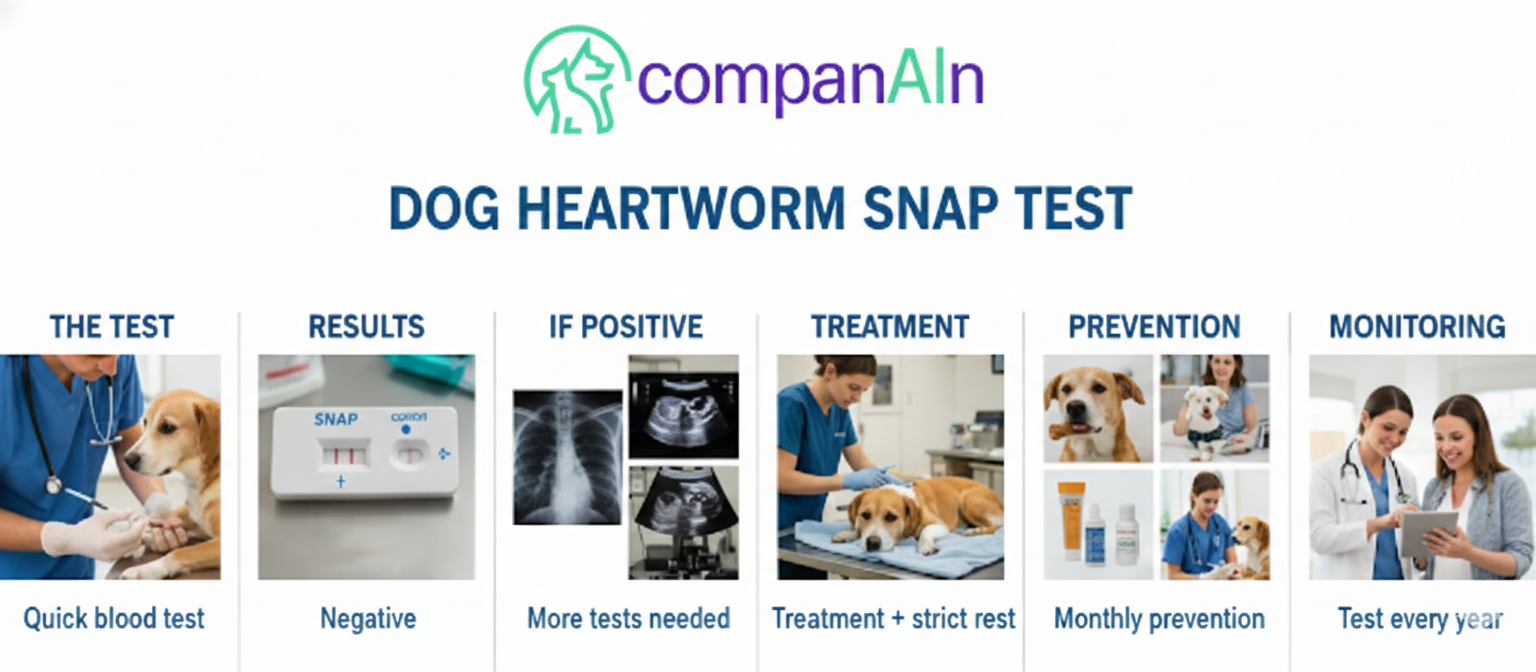
What Is the Heartworm SNAP Test?
The heartworm SNAP test detects Dirofilaria immitis antigen in canine blood through enzyme immunoassay technology. IDEXX Laboratories designed this point-of-care diagnostic for veterinary clinics, delivering results in minutes rather than days. The test identifies proteins released by adult female heartworms circulating in infected dogs’ bloodstreams.
Veterinarians prefer SNAP testing because it brings reference laboratory accuracy to the exam room. Research shows sensitivity rates of 91.7% for detecting infections with two or fewer worms, jumping to 99.2% when more worms are present. Specificity approaches 100%, making false positives exceptionally rare.
The American Heartworm Society recommends annual testing for all dogs regardless of prevention status because:
- No medication achieves 100% effectiveness
- Missed doses create vulnerability windows
- Early detection enables treatment before serious damage
- Compliance verification ensures prevention programs work
How SNAP Testing Actually Works
Sample Collection Veterinarians draw a small blood sample—typically three drops from a foreleg vein. Whole blood, serum, or plasma all work equally well. Samples enter collection tubes containing anticoagulant if testing won’t occur immediately.
Test Preparation Staff members mix blood with conjugate solution in provided tubes. This conjugate contains antibodies that bind to heartworm antigens if they’re present. After thorough mixing, the entire sample transfers into the SNAP device’s sample well.
Reaction Development Once blood flows across the result window and reaches the activation circle, technicians activate the device. This releases reagents stored within the test. Color development occurs over eight minutes as antigens bind to test spots.
Result Interpretation Visual reading identifies positive or negative results based on color intensity in specific indicator spots. Tests include built-in positive and negative controls that validate each run. Any color development in sample spots indicates antigen presence.
Decoding Your Dog's Test Results
Negative Results Mean:
- No detectable heartworm antigen in bloodstream
- Normal positive control developed
- No color in antigen detection spots
But negative results don’t guarantee complete absence of infection. False negatives happen when:
- Infections are under five months old (prepatent period)
- Only male worms are present
- Very light infections fall below detection thresholds
- Immune complexes mask circulating antigen
Positive Results Indicate: Any visible color in sample spots signals heartworm antigen presence. Darker, more intense color generally indicates higher worm burdens, though exact quantification requires additional testing.
The American Heartworm Society recommends confirming all positive SNAP results with:
- Secondary antigen testing
- Microfilaria examination
- Diagnostic imaging (radiographs, echocardiography)
- Disease severity assessment
Borderline Results Create Challenges Extremely faint color in sample spots makes interpretation tricky. These gray-zone results most commonly occur with:
- Very recent infections where antigen levels remain low
- Previously treated infections with residual antigen
- Cross-reactivity with other parasites in certain regions
Veterinarians typically recommend retesting after two to four weeks or pursuing confirmatory testing through reference laboratories.
Why AI Analysis Changes Heartworm Management
A single SNAP test provides a snapshot. CompanAIn’s multi-agent AI system builds the complete picture by analyzing test results within your dog’s entire health history.
Pattern Recognition Across Years CompanAIn’s health analyzer tracks heartworm results over time, identifying trends that isolated readings miss. If annual testing shows progressively darker positive reactions despite ongoing treatment, the AI flags this pattern before it becomes obvious.
The platform’s Living Memory technology retains every previous test result, medication change, and clinical note. When new data arrives, the AI instantly compares it against historical baselines, catching subtle progressions that might indicate treatment resistance or reinfection.
Clinical Signs Integration Heartworm disease rarely announces itself through single data points. Dogs develop exercise intolerance gradually. Coughing patterns shift over months. Weight loss creeps in slowly.
CompanAIn’s recommendation engine correlates test results with symptom documentation, identifying combinations that warrant escalated intervention. For example, borderline SNAP results alongside owner notes about increased fatigue and occasional coughing might not trigger concern individually—but the AI recognizes this pattern as potentially significant.
Geographic Risk Assessment Heartworm prevalence varies dramatically by location. The states along the Mississippi River Valley consistently show the highest infection rates, while other regions maintain lower prevalence. CompanAIn factors geographic data into risk calculations, adjusting interpretation based on local transmission probability.
Regional variables matter when flagging results that need follow-up attention. The AI accounts for these geographic differences in its pattern analysis.
Beyond the SNAP Test: Additional Diagnostics
Microfilaria Testing SNAP tests detect adult female antigen, not larvae. Microfilaria examination involves examining blood smears under microscopes, looking for tiny transparent organisms circulating through vessels. This validates positive SNAP results and helps differentiate Dirofilaria immitis from other parasites. For a comprehensive view of your dog’s health, routine blood tests for dogs complement SNAP testing by revealing organ function, infection markers, and other conditions that might influence heartworm management.
Heat Treatment Protocols Some infections produce immune complexes where antibodies bind to antigens, masking detection. Heat treating serum at 104°C for ten minutes disrupts these complexes, potentially revealing hidden antigens. However, research shows heat treatment may increase cross-reactivity with other parasites in certain endemic regions, particularly Dirofilaria repens and Angiostrongylus vasorum.
Advanced Imaging Options
- Radiographs reveal pulmonary artery enlargement and lung changes
- Echocardiography provides visualization of adult worms in heart chambers
- Both modalities assess disease severity and guide treatment decisions
Treatment Following Positive Tests
Heartworm treatment follows American Heartworm Society protocols. Melarsomine dihydrochloride remains the only FDA-approved adulticide for killing adult heartworms. Treatment involves multiple injections over several months, combined with strict exercise restriction.
Before starting adulticide therapy, veterinarians typically:
- Stabilize dogs showing severe clinical signs
- Administer heartworm preventive for two months
- Prescribe doxycycline to target Wolbachia bacteria
- Perform baseline radiographs and bloodwork
Success rates run high when disease is caught early. Dogs with mild signs respond excellently. More severe infections carry increased complication risks but remain treatable with appropriate precautions.
Approximately six months after completing treatment, veterinarians perform follow-up testing to confirm eradication. Year-round prevention then continues for life to prevent reinfection.
How CompanAIn Supports Heartworm Management
Centralized Health Timeline CompanAIn consolidates scattered records, test results, and owner observations into one living timeline. Upload SNAP results, radiograph reports, treatment notes, and daily symptom logs. The platform organizes everything chronologically, making disease progression tracking simple.
Proactive Alerts The platform’s specialized pathologist agent continuously analyzes incoming data against established parameters. If antigen levels increase despite treatment, if clinical signs worsen unexpectedly, or if prevention lapses create vulnerability, CompanAIn generates alerts that prompt veterinary consultation before complications develop.
DVM Collaboration Critical findings and low-confidence assessments route automatically to licensed veterinarians for review. This dual-layer system ensures AI insights receive professional validation. Veterinarians access the same timeline and trend data, enabling more informed appointment discussions.
Treatment Compliance Support Managing heartworm treatment requires strict medication schedules and exercise restriction lasting months. CompanAIn helps owners track:
- Preventive medication administration dates
- Doxycycline courses
- Melarsomine injection schedules
- Exercise restriction compliance
- Follow-up appointment reminders
Prevention Beats Treatment Every Time
Heartworm disease causes serious, sometimes fatal complications. Treatment works well when infection is caught early, but prevention costs far less in both financial and health terms.
FDA-approved preventives include:
- Monthly oral tablets (ivermectin, milbemycin, moxidectin)
- Monthly topical applications (selamectin, moxidectin)
- Six-month injectable moxidectin (ProHeart 6)
- Twelve-month injectable moxidectin (ProHeart 12)
Year-round prevention provides the most reliable protection. Even in regions with distinct mosquito seasons, continuous prevention works best because:
- Mosquito activity patterns shift unpredictably with climate
- Wildlife reservoirs maintain transmission year-round in many areas
- Prevention gaps create vulnerability during larval development
- Most preventives also protect against intestinal parasites
Transform Your Dog's Health Management
Heartworm testing provides critical information, but test results alone tell incomplete stories. CompanAIn’s AI-powered platform turns isolated data points into continuous health intelligence supporting better decisions and earlier interventions.
Whether managing chronic conditions, tracking treatment responses, or maintaining preventive care, CompanAIn delivers tools that help dogs thrive. Upload test results, consolidate scattered records, and build your dog’s living health timeline. When heartworm SNAP tests reveal concerns, you’ll have the complete context needed for confident next steps.
Frequently Asked Questions
How often should my dog receive heartworm testing? The American Heartworm Society recommends annual testing for all dogs, regardless of preventive medications. Dogs in high-transmission areas or those with inconsistent prevention history may benefit from screening every six months.
Can indoor dogs skip heartworm testing? No. Mosquitoes carrying heartworm larvae easily enter homes through doors, windows, and ventilation systems. Indoor-only dogs face lower infection risk than outdoor dogs, but risk isn’t zero. Annual testing remains important.
What happens if my dog tests positive while on prevention? Positive tests despite preventive use occur when doses are missed, administered late, or when rare medication failure happens. Notify your veterinarian immediately for confirmatory testing and treatment planning.
How accurate are SNAP tests compared to reference laboratories? SNAP tests deliver accuracy comparable to reference laboratory ELISA testing. Sensitivity ranges from 91.7% to 99.2% depending on worm burden, with specificity near 100%. However, no test achieves perfect accuracy, which is why confirmatory testing follows positive results.
Should samples be heat-treated before testing? Heat treatment isn’t routinely recommended. While it may increase sensitivity by disrupting antigen-antibody complexes, it can also increase false positives from cross-reactivity. Discuss with your veterinarian whether heat treatment makes sense for your dog’s situation.
Can CompanAIn diagnose heartworm disease? No. CompanAIn analyzes test results, medical records, and symptom data to identify patterns supporting veterinary decision-making. Licensed veterinarians perform diagnoses and develop treatment plans based on comprehensive evaluation including AI insights.