
Introduction
When your dog keeps catching his paw while walking, it usually means the paw curls under or fails to clear the ground properly during each step. This behavior-known as paw knuckling-is more than a minor coordination hiccup. Knuckling occurs when a dog’s paw curls under, causing the dog to walk on the top (dorsal surface) of the foot instead of the paw pads. It signals that something is interfering with the dog’s nervous system, physical structure, or pain response, and it deserves prompt attention because early intervention can make all the difference in long-term outcomes.
This article covers the most common causes of paw catching in dogs, how to assess the problem at home, professional diagnostic methods, practical solutions, and clear guidance on when to seek veterinary care. It does not cover general limping from acute injuries or unrelated gait irregularities like a wobbly gait caused by ear infections-if your dog started limping suddenly without paw placement issues, the underlying cause may be different.
The direct answer: Paw catching typically results from proprioceptive deficits (loss of awareness of paw position), neurological issues affecting the spinal cord or peripheral nerves, or physical obstructions like torn nails, pad injuries, or joint pain that alter how a dog walks.
By reading this article, you will:
- Understand what paw catching is and how it differs from other gait problems
- Identify the most common causes, from neurological disorders to simple paw injuries
- Learn home observation techniques and professional diagnostic approaches
- Discover actionable solutions including physical therapy, protective gear, and environmental modifications
- Know exactly when your dog’s condition requires immediate veterinary care
Understanding Paw Catching in Dogs
Paw catching-sometimes called knuckling, toe scuffing, or dragging paws-occurs when a dog fails to properly lift and place its feet during walking. Dog knuckling occurs when a paw curls under while walking, so the dog’s feet contact the ground on the wrong surface. Unlike limping, where pain dominates the gait change, paw catching points toward a breakdown in the communication pathway between the dog’s brain, spinal cord, and limbs. Knuckling can affect one or multiple paws in dogs, and it can range from subtle intermittent scuffing to persistent dragging that wears down nails and injures skin.
Understanding normal foot mechanics helps clarify why this problem matters and what goes wrong when it occurs.
Normal Foot Placement Mechanics
In a healthy dog, every step involves a precise sequence: the brain sends motor signals down the spinal cord and through peripheral nerves to flex the hip, stifle, hock, and toes, lifting the paw clear of the ground. Simultaneously, proprioceptive feedback-the dog’s unconscious awareness of where its legs and paws are in space-travels back up to the dog’s brain, confirming position and allowing real-time corrections. This feedback loop ensures each paw lands squarely on its paw pads rather than dragging or catching.
Veterinarians test this system with the “paw replacement test”: they flip the dog’s paw so the dorsal side faces down and observe how quickly the dog corrects the position. A healthy dog corrects almost instantly. Loss of conscious proprioception can affect a dog’s awareness of paw placement, resulting in delayed or absent correction-a hallmark sign of underlying trouble.
When Paw Placement Goes Wrong
When neurological issues disrupt the proprioceptive pathway at any point-brain, spinal cord, or peripheral nerves-the dog loses awareness of where its paws are. Neurological issues can affect communication between the brain and limbs in dogs, leading the dog to drag its rear paws, scuff its front paws, or walk on curled-under toes without realizing it. Early signs of knuckling may include missing steps intermittently, which owners might initially dismiss as clumsiness.
Physical problems can also cause paw catching. Pain from joint disease, pad injuries, or nail bed damage may cause a dog to alter its gait to avoid bearing weight on the affected area, resulting in compensatory movements that look like catching or dragging. Knuckling can indicate neurological disorders in dogs, but the diagnostic process must also rule out orthopedic and soft-tissue causes before settling on a diagnosis.
Understanding what drives paw catching is the essential first step toward finding the right treatment plan.
Common Causes of Paw Catching
The causes of paw catching span a wide spectrum, from progressive diseases of the dog’s nervous system to something as straightforward as an overgrown toenail. Identifying the underlying cause determines whether your dog needs emergency surgery, long-term management, or simple first aid. Here are the most common causes organized by category.
Neurological Conditions
Neurological disorders are among the most serious reasons a dog starts catching its paws, and they often present with an underlying neurological issue that worsens over time.
Degenerative myelopathy (DM) is a progressive spinal cord disease that commonly causes knuckling in older dogs, particularly breeds like German Shepherds, Corgis, and Boxers. Degenerative myelopathy commonly causes knuckling in older dogs, beginning with subtle hind-limb weakness and proprioceptive deficits before advancing to difficulty walking and eventually paralysis. Genetic testing for the SOD1 mutation can identify at-risk dogs, and research into additional genetic modifiers like SP110 continues to expand understanding of this condition.
Intervertebral disc disease (IVDD) occurs when disc material compresses the spinal cord, sometimes suddenly and sometimes gradually. Spinal injuries can lead to knuckling in dogs, and IVDD is one of the most frequent culprits. In a study of 618 dogs with non-traumatic spinal cord disease, degenerative disc disease was present in approximately 62.5% of cases. Acute IVDD with preserved deep pain sensation carries a better prognosis when treated early, often through surgical decompression to relieve pressure on the spinal cord.
Peripheral neuropathies and nerve damage can reduce sensation or motor control in one or more legs, causing the dog to drag or catch its paws. Polyneuropathy, spinal cord tumors, myelitis, and vascular lesions all disrupt proprioceptive pathways. Knuckling is often associated with neurological disorders in dogs, and these conditions require advanced diagnostics to differentiate.
Age-Related Changes
As many dogs age, muscle weakness and joint stiffness combine to reduce their ability to clear the ground with each step. Muscle atrophy diminishes the power needed to flex joints fully, while conditions like arthritis and hip dysplasia limit range of motion and cause pain during movement.
Joint pain and arthritis can cause altered gait in dogs, leading to tripping and paw scuffing. A dog experiencing pain in its hocks or stifles may avoid fully lifting its legs, resulting in the toes catching on the ground. Degenerative conditions tend to worsen gradually-difficulty standing after rest, reluctance to climb stairs, and visible stiffness after exercise are common other symptoms that accompany paw catching in senior dogs.
Large-breed dogs face particular risk. Degenerative lumbosacral stenosis, for example, has a lifetime prevalence of about 7% in German Shepherds before age 12, with an incidence rate of 5.6 occurrences per 10,000 dog-years at risk in large insured dog populations.
Physical Obstructions and Injuries
Not every case of paw catching points to a serious neurological condition. Paw injuries can result from cuts, thorns, debris lodged in pads, or cracks that make normal weight-bearing painful. Foreign objects wedged between toes, sharp objects that puncture paw pads, torn nails, or nail bed infections can all cause a dog to alter its gait. Infections on paws can cause discomfort and unusual walking patterns in dogs.
When a dog is experiencing pain in a specific paw, it instinctively shifts weight away from that area, which can cause the affected paw to catch or drag. Rough play or running on abrasive surfaces can also cause pad damage that leads to compensatory walking patterns. Knuckling can affect both front and back paws in dogs depending on the location of the injury or structural problem.
These physical causes are generally easier to identify and treat than neurological ones, which makes thorough paw inspection an important part of the diagnostic process.
Diagnosis and Assessment Methods
Pinpointing why your dog catches its paw requires a systematic approach, starting with careful observation at home and progressing to professional evaluation when needed. Veterinary examination is recommended for sudden changes in a dog’s walking behavior, but informed home monitoring provides your vet with critical data.
Home Observation Techniques
Before visiting the vet, documenting your dog’s paw catching episodes creates a valuable record that accelerates diagnosis. Here is a structured approach:
- Record timing and triggers: Note when paw catching occurs-after rest, during extended walking, on slippery surfaces, on stairs-and whether it worsens over a few days or weeks.
- Identify affected limbs: Document whether the dog is dragging its front paws, rear paws, a single back paw, or showing signs across multiple legs. Knuckling can affect one or multiple paws in dogs, and the pattern helps localize the problem.
- Perform a visual paw inspection: Check each dog’s paw for overgrown nails, cracked paw pads, foreign objects between toes, swelling, or wounds. Regular paw checks can prevent injuries from debris.
- Try the paw replacement test: Gently flip your dog’s paw so the top rests on the ground. A healthy dog corrects immediately; delayed or absent correction suggests proprioceptive loss.
- Note associated symptoms: Watch for difficulty standing, incontinence, behavioral changes, lethargy, or signs of pain when the spine is touched.
- Video the episodes: Capture your dog’s gait on video to show the vet exactly what you’re observing-this is often more informative than a verbal description.
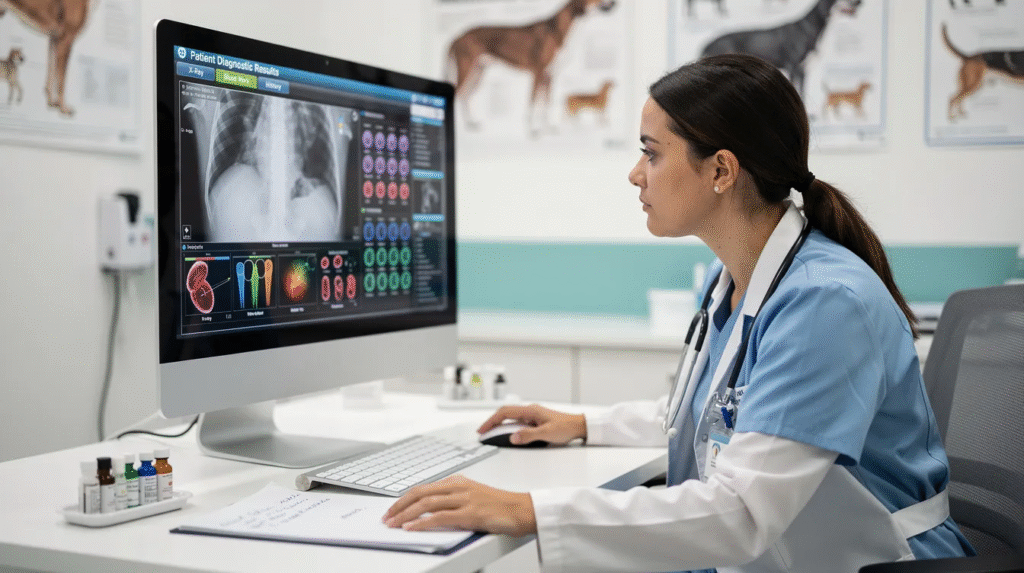
Professional Diagnostic Approaches
When you bring your dog to the vet, the diagnostic process typically progresses from hands-on examination to advanced imaging based on clinical findings.
Diagnostic Method | What It Evaluates | When It’s Used |
|---|---|---|
Physical exam & gait analysis | Overall movement, asymmetry, paw placement, joint range of motion | First step for every case of paw catching |
Neurological exam (postural reactions, reflexes) | Proprioception, upper vs. lower motor neuron involvement, spinal reflex integrity | When knuckling or neurological deficits are suspected |
Radiographs (X-rays) | Bone and joint structure, disc space narrowing, spondylosis | Suspected fractures, arthritis, patellar luxation, or bony changes |
Blood work | Systemic disease, infection, inflammatory markers | To rule out metabolic or infectious causes |
MRI | Soft tissue detail-spinal cord, discs, tumors | Gold standard for spinal cord lesions; >97.6% sensitivity for detecting intradural lesions |
CT myelography | Spinal canal structure, extradural compression | When MRI is unavailable or for surgical planning |
CSF analysis | Inflammatory or infectious spinal cord disease | Suspected myelitis, meningitis, or immune-mediated conditions |
Genetic testing | Known mutations (e.g., SOD1 for DM) | Breed-specific risk assessment for degenerative conditions |
A veterinary neurologist can integrate these findings to localize the lesion and determine whether the problem originates in the dog’s brain, spinal cord, peripheral nerves, or musculoskeletal system. MRI specificity improves from approximately 68.6% to 82.4% when combined with clinical data, which underscores why thorough veterinary diagnostic imaging interpretation matters.
Emerging technologies are also advancing the field. Deep-learning models using inertial sensors can now help differentiate between orthopedic and neurologic causes of gait abnormalities, and automated 3D quantification tools for spinal structure assessment are becoming more accessible in veterinary medicine.
Common Challenges and Solutions
Once you understand the underlying cause, practical management can significantly improve your dog’s comfort, safety, and mobility. Here are solutions organized around the challenges pet owners most frequently face.
Protecting Paws from Injury
Dogs that catch or drag their paws are at constant risk of further damage to the skin, nails, and paw pads from contact with the ground. PawZ Boots protect paws from scraping and injury, providing a barrier between the dorsal surface of the foot and rough terrain. Wraps can temporarily protect injured paws from further damage while healing occurs. Soft surfaces like grass help protect dogs’ paws outdoors, so choosing walking routes on natural terrain rather than concrete reduces abrasion.
Regular nail trimming prevents overgrown nails from catching on surfaces and worsening the problem. Inspect each dog’s paw after walks for cuts, embedded debris, or signs of wear from dragging. Never use human pain relievers to manage paw discomfort-many are toxic to dogs. Instead, consult your vet about appropriate anti inflammatory drugs or pain relief options.
Improving Mobility and Confidence
For dogs showing signs of proprioceptive loss or weakness, targeted interventions can improve coordination and restore function to varying degrees.
Physical therapy can improve coordination and strength in dogs through exercises like cavaletti pole walking, weight shifting, standing on unstable surfaces, and controlled leash walking on inclines. These proprioceptive exercises help retrain the nervous system and support nerve function. Hydrotherapy provides low-impact exercise that builds muscle mass without stressing joints.
ToeGrips enhance traction for dogs with knuckling issues, giving better ground contact on slippery indoor surfaces. Mobility aids can assist dogs struggling to walk due to knuckling-harnesses, slings, and rear-support carts help dogs bear weight more comfortably and maintain independence. Laser therapy is another common treatment option that may reduce inflammation and reduce pain in affected areas, though evidence varies by condition.
Anti-inflammatory medications can help manage pain and inflammation, while gabapentin or other neuropathic pain medications may be prescribed to address nerve-related discomfort. Your vet will design a treatment plan based on the specific diagnosis.
Managing Progressive Conditions
For degenerative conditions like degenerative myelopathy, there is no cure-but proactive management extends quality of life. Supportive care may aid recovery in dogs with knuckling, and a multi-modal approach works best:
- Environmental modifications: Non-slip flooring, ramps instead of stairs, and padded resting areas reduce fall risk and help dogs with difficulty walking navigate safely.
- Ongoing rehabilitation: Consistent physical therapy maintains muscle mass and joint flexibility even as the dog’s condition progresses. Many dogs benefit from twice-weekly sessions.
- Mobility aids: As the condition advances, rear-support harnesses and wheeled carts allow dogs to maintain activity and engagement.
- Regular reassessment: Progressive neurological deficits require periodic veterinary evaluation to adjust the treatment plan. Surgery may be necessary for structural issues causing knuckling, such as disc herniations that can be decompressed to restore function.
Immediate veterinary care is essential if a dog cannot bear weight or shows severe pain-these are signs of acute spinal cord compression or other emergencies that may require surgical intervention within hours.
Conclusion and Next Steps
Paw catching is not a behavior your dog will simply outgrow. Whether it stems from front paw knuckling caused by cervical disc disease, rear paw dragging from degenerative myelopathy, or a simple pad injury from stepping on sharp objects, identifying the underlying cause through proper diagnosis determines the path to effective treatment. Early detection consistently produces better outcomes-dogs with acute IVDD who retain deep pain sensation can often recover quickly with timely surgical intervention, while progressive conditions managed early with physical therapy and supportive care maintain quality of life far longer.
Your immediate next steps:
- Inspect your dog’s paw pads, nails, and toes for visible injuries or foreign objects
- Perform the paw replacement test on all four paws and note any delayed correction
- Video your dog’s gait during walking, turning, and on different surfaces
- Schedule a veterinary consultation-bring your notes and videos
- Implement safety measures: non-slip mats, avoid rough surfaces, and consider protective booties
If your dog is showing signs of paw catching alongside other symptoms like incontinence, difficulty standing, or rapid onset weakness in multiple legs, treat this as urgent and contact your vet or a veterinary neurologist immediately.
Additional Resources
Tracking changes in your dog’s gait over time helps detect problems before they become severe. CompanAIn’s AI-powered symptom tracking tools let you log paw catching episodes, monitor frequency and severity trends, and generate health timelines that give your vet actionable data at each visit. The platform’s AI dog symptom checker can help you assess whether your dog’s signs warrant urgent care or scheduled evaluation, bridging the gap between home observation and professional diagnosis.
For dogs diagnosed with neurological conditions, ask your vet about referral to a board-certified veterinary neurologist for advanced imaging and specialized treatment options. Products like PawZ Boots and ToeGrips are available through most veterinary supply retailers and can provide immediate protection while you pursue diagnosis and treatment.