
Spotting symptoms of glyphosate poisoning in cats early makes all the difference between a manageable emergency and a life-threatening crisis. Whether your cat brushed against freshly sprayed lawn, groomed treated paws, or encountered contaminated water, recognizing the warning signs fast gives you critical time to act.
The challenge extends beyond immediate exposure. Glyphosate residues linger in pet food ingredients, groundwater, and treated vegetation—creating ongoing risks many owners never consider. CompanAIn changes that equation by tracking subtle health shifts in veterinary records and lab results, flagging patterns that suggest toxin exposure before symptoms escalate.
What Makes Glyphosate Products Dangerous for Cats
Glyphosate itself ranks relatively low on toxicity scales for mammals. Cats don’t possess the shikimic acid pathway this herbicide targets in plants, which explains why pure glyphosate causes less severe reactions than expected.
The real danger hides in commercial formulations. Products like Roundup combine glyphosate with surfactants—particularly polyoxyethylene amine (POEA)—that boost the herbicide’s plant-penetrating power. These surfactants disrupt cell membranes and trigger far more severe reactions than glyphosate alone.
Research from the UK Veterinary Poisons Information Service revealed feline mortality from glyphosate exposure hits 22%, compared to just 5% in dogs. Cats face heightened vulnerability to respiratory complications, with surfactants causing aspiration pneumonitis and pulmonary edema that dogs rarely develop.
Early Warning Signs: What to Watch For
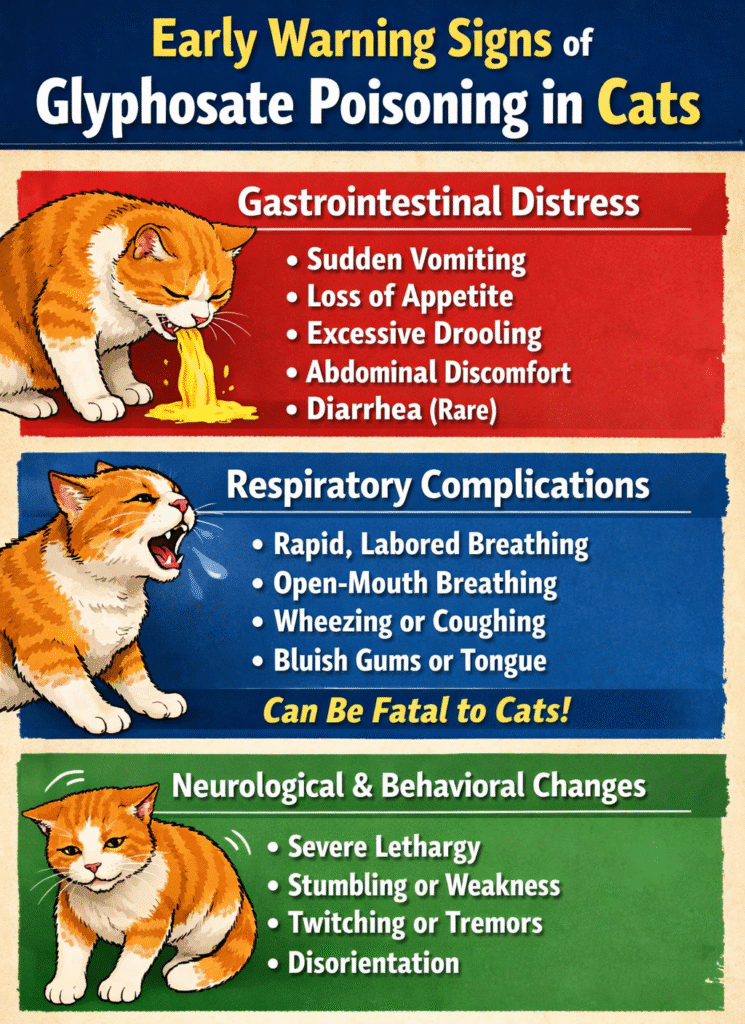
Gastrointestinal Distress
Vomiting appears as the most common initial symptom when cats encounter glyphosate products. European veterinary studies found vomiting occurred in the majority of symptomatic cases, often beginning within hours of exposure.
Common digestive symptoms include:
- Sudden vomiting or repeated episodes
- Complete loss of appetite or refusal to eat
- Excessive drooling or salivation
- Abdominal discomfort or visible distress
- Diarrhea (occurs in only 8% of feline cases)
Respiratory Complications
Breathing difficulties represent the most dangerous glyphosate symptom in cats. Respiratory distress, pulmonary edema, and bronchopneumonia occur far more frequently in felines due to surfactant effects on delicate lung tissue.
Critical respiratory warning signs:
- Rapid or labored breathing
- Open-mouth breathing (abnormal for cats)
- Wheezing or coughing
- Bluish gums or tongue (cyanosis)
- Shallow or irregular breath patterns
According to veterinary toxicology research, all cats developing bronchopneumonia following glyphosate exposure experienced fatal outcomes. Early recognition provides the only chance of preventing these severe complications.
Neurological and Behavioral Changes
Lethargy and depression appear frequently in affected cats. Animals that normally greet you at the door suddenly become withdrawn and unresponsive, sleeping excessively or showing little interest in surroundings.
Behavioral red flags include:
- Unusual lethargy or extreme drowsiness
- Staggering gait or difficulty walking
- Hind leg weakness or wobbling
- Muscle tremors or twitching
- Disorientation or confusion
The Merck Veterinary Manual documents these neurological symptoms in felines walking through recently sprayed areas, with signs typically resolving once exposure stops.
How AI Technology Detects Hidden Exposure Patterns
Traditional veterinary care relies on obvious symptoms appearing before diagnosis begins. CompanAIn’s multi-agent AI system flips this timeline by analyzing existing health records for early indicators.
Tracking Subtle Health Shifts
The platform’s specialized agents parse veterinary notes, lab results, and follow-up records to identify patterns suggesting toxin exposure. A cat showing unexplained drops in appetite documented across three visits, combined with mild respiratory sounds, might indicate chronic low-level exposure missed during individual appointments.
CompanAIn’s Living Memory technology contextualizes these findings within each cat’s complete health timeline, spotting trends a single blood panel wouldn’t reveal.
Flagging Environmental Risk Factors
Geographic location matters significantly for glyphosate exposure. Cornell University researchers detected glyphosate residues in 18 companion animal feeds from eight manufacturers. CompanAIn can correlate dietary information with gradual health changes, alerting owners when accumulated exposure might explain persistent symptoms.
Generating Actionable Alerts
When the AI identifies concerning patterns—declining kidney function markers, recurring respiratory issues, or behavioral changes coinciding with seasonal lawn treatments—it generates clear alerts for both owners and veterinarians.
A vet seeing “mild gastritis” three times in six months gains valuable perspective when CompanAIn flags those visits clustered around springtime lawn care schedules.
Immediate Response Steps When Exposure Occurs
Stop Further Contact
Remove your cat from the contaminated area immediately. If exposure occurred outdoors, bring them inside and prevent access to treated spaces. Secure any herbicide containers away from all pets.
For cats with contaminated fur, gently wipe affected areas with a damp cloth before they groom themselves. Avoid forceful bathing initially—wait for veterinary guidance on proper decontamination.
Contact Your Veterinarian
Call your vet or emergency animal poison control (ASPCA: 888-426-4435) before attempting home treatment. Provide specific product information if available—the surfactant type significantly affects treatment approach.
Essential information to provide:
- Product name and concentration (from container label)
- Estimated amount of exposure
- Time since exposure occurred
- Current symptoms and their severity
- Route of exposure (ingestion, skin contact, inhalation)
Transport Safely
Keep your cat warm and calm during transport. Line a carrier with towels that can be changed if vomiting occurs. For cats exhibiting severe respiratory distress or seizures, call ahead so the clinic can prepare emergency equipment.
Avoid giving food, water, or medications unless specifically instructed by your veterinarian.
Veterinary Treatment Approaches
Veterinarians may perform gastric lavage if ingestion occurred recently and the cat remains stable. Activated charcoal administration helps bind toxins in the digestive tract, preventing further absorption.
Treatment typically includes:
- IV fluid therapy for hydration and toxin elimination
- Respiratory support (oxygen therapy or ventilation if needed)
- Anti-nausea medications to control vomiting
- Gastrointestinal protectants to prevent ulceration
- Pain management as needed
- Continuous vital sign monitoring
No specific antidote exists for glyphosate poisoning, making symptom management and organ support essential.
Severely affected cats require hospitalization for continuous monitoring. Blood work tracks kidney function, electrolyte balance, and metabolic status. Recovery timelines vary based on exposure severity and treatment speed. Cats with mild gastrointestinal symptoms often recover within 24-48 hours, while those developing respiratory complications face longer recoveries.
Preventing Future Glyphosate Exposure
Home Environment Management
Keep cats indoors for at least 48 hours after lawn treatments, as residues remain active on surfaces even after drying.
Key prevention strategies:
- Store herbicides in locked cabinets or high shelves
- Never leave product containers where cats can access them
- Clean up spills immediately with absorbent materials
- Rinse outdoor cat bowls if they’re near treated areas
- Wash your hands after handling lawn chemicals
Consider pet-safe alternatives like acetic acid-based products (vinegar herbicides) that lose toxicity once dried.
Dietary Awareness
Check pet food ingredients for corn and soy, which frequently test positive for glyphosate residues. Research from the New York State Department of Health detected glyphosate in urine of all 30 cats tested, suggesting widespread dietary exposure.
CompanAIn’s health tracking can help identify whether changing food brands correlates with improved wellness markers over time.
Using CompanAIn for Long-Term Protection
Upload veterinary records, lab results, and notes about potential exposure incidents to create a complete health timeline. The platform’s AI agents continuously analyze this information, comparing current data against historical baselines to detect concerning shifts.
Share CompanAIn reports with your veterinarian to provide context during appointments. When symptoms appear, complete health histories help vets distinguish between toxin exposure and other conditions mimicking glyphosate poisoning.
Understanding Chronic Low-Level Exposure
Beyond acute poisoning from direct contact, cats face ongoing exposure through environmental contamination and diet. Glyphosate doesn’t accumulate in tissues, but repeated small exposures create persistent health challenges.
Common environmental exposure routes:
- Treated lawns and gardens (residential and commercial)
- Agricultural runoff into streams and ponds
- Contaminated groundwater used for drinking
- Prey animals (mice, birds) from treated areas
- Indoor tracking from outdoor shoes and clothing
Indoor-outdoor cats face compounding risks—outdoor exposure followed by indoor grooming spreads residues from paws and fur into home environments.
Research published by Cornell University found glyphosate residues across multiple pet food brands, concentrated in products containing corn and soy ingredients. CompanAIn’s document analysis capabilities help connect scattered health data points into patterns, potentially revealing exposure patterns invisible during individual appointments.
Why Cats Face Higher Risks Than Other Pets
Cats spend significant time grooming, making them especially vulnerable to environmental contaminants. Walking across treated lawn transfers residues to paws and fur, which cats then ingest during normal grooming.
Key metabolic vulnerabilities in cats:
- Limited glucuronidation pathways for toxin elimination
- Slower processing of certain chemical compounds
- Higher sensitivity to surfactant effects
- Smaller body size concentrating toxic doses
- Different enzymatic reactions to herbicide components
The 22% feline mortality rate from glyphosate exposure versus 5% in dogs reflects these metabolic differences. What appears as mild poisoning in a dog might progress to life-threatening complications in cats with identical exposure levels.
Surfactants in glyphosate products cause severe respiratory effects far more frequently in cats than dogs. Veterinary studies documented cyanosis and bronchopneumonia almost exclusively in cats, with no canine cases showing similar severity.
How CompanAIn Supports Toxin-Related Care
Toxin exposure investigations require complete medical histories—previous lab work, documented environmental exposures, dietary changes, and symptom patterns. CompanAIn consolidates everything into one searchable timeline.
When cats require specialist care or second opinions, CompanAIn generates professional-grade reports summarizing relevant history, making referrals smoother and more informed. Veterinarians accessing CompanAIn’s secure portal see the same organized timeline owners view—lab trends, medication histories, and documented exposure incidents.
The platform’s predictive analytics identify subtle trends suggesting future complications. A cat recovering from glyphosate poisoning might show gradually declining kidney markers months later—a pattern CompanAIn would flag before clinical disease develops.
Building a Protection Strategy
Protecting cats from glyphosate poisoning requires multiple approaches working together. Start by auditing your home environment. Where do you store lawn products? Do neighbors treat shared spaces? Does your cat access areas where herbicides get applied?
Establish baseline health data through CompanAIn before incidents occur. Upload historical records, current lab results, and behavioral observations to create reference points.
Develop emergency protocols with your veterinarian. Know which emergency clinics handle toxin cases, keep poison control numbers readily accessible, and understand what initial steps you can take safely at home before professional care.
Frequently Asked Questions
What are the first symptoms of glyphosate poisoning in cats?
Vomiting, loss of appetite, and lethargy appear most commonly in the initial hours following exposure. These gastrointestinal and behavioral symptoms often develop before more serious respiratory complications. Contact your veterinarian immediately if symptoms appear after potential herbicide exposure.
How long do glyphosate symptoms take to appear in cats?
Symptoms typically emerge within hours of exposure, though timeline varies based on exposure route and amount. Cats walking through treated areas might show symptoms within 2-6 hours, while dietary exposure causes more gradual changes over days or weeks.
Can cats recover from glyphosate poisoning?
Many cats recover fully with prompt veterinary treatment, especially when exposure causes primarily gastrointestinal symptoms. However, cats developing severe respiratory complications face mortality rates around 22%. Recovery success depends on exposure severity, treatment speed, and supportive care quality.
How does CompanAIn help detect glyphosate exposure?
CompanAIn analyzes veterinary records, lab results, and health notes to identify patterns suggesting toxin exposure. The AI flags subtle trends like recurring gastritis, respiratory changes, or declining kidney function that might indicate chronic low-level exposure missed during individual appointments.
What makes glyphosate products more dangerous than glyphosate alone?
Commercial herbicides contain surfactants like POEA that dramatically increase toxicity. These additives disrupt cell membranes and cause severe respiratory complications in cats, while pure glyphosate causes mainly gastrointestinal symptoms. The surfactant component drives most serious complications.
Should I change my cat's food to reduce glyphosate exposure?
Research found glyphosate residues in multiple pet food brands, concentrated in corn and soy-based products. While detected levels remain below EPA limits, some owners choose foods minimizing these ingredients. CompanAIn can help track whether dietary changes correlate with improved health markers over time.