
If your dog has ever woken up with an angry, oozing patch of raw skin that seemed to appear overnight, you’ve likely dealt with a hot spot. Some breeds face this problem far more than others, and knowing why-and what to do about it-can save your furry friend hours of misery.
Quick answer: which dogs get hot spots most, and how do you treat them?
Hot spots on dogs develop most often in breeds with dense coats, skin folds, or strong allergy tendencies. Certain breeds like Golden Retrievers are more prone to hot spots than the general dog population, but the right care routine makes a major difference.
High-risk breeds:
- Golden Retrievers and Labrador Retrievers
- German Shepherds and Rottweilers
- Saint Bernards, Newfoundlands, and Bernese Mountain Dogs
- Poodles and Doodle mixes (Goldendoodles, Labradoodles)
- Border Collies, Australian Shepherds, and Shelties
- Cocker Spaniels and Basset Hounds
- French Bulldogs, English Bulldogs, and Pugs
Core treatment steps:
- Trim fur around hot spots to promote air circulation
- Gently clean the affected area with a vet-approved antiseptic
- Keep the lesion dry and open to air
- Use a recovery cone to prevent licking and chewing
- Consult a veterinarian for medications when the lesion is large, painful, or worsening
Most uncomplicated hot spots can heal in 3 to 7 days with treatment. However, large, foul-smelling, or rapidly spreading lesions require urgent veterinary attention.
CompanAIn’s health timeline can help you recognize patterns-like repeated summer flares linked to ear infections-so you’re prepared with the right questions at your next vet visit.

What are hot spots on dogs?
Hot spots, clinically known as acute moist dermatitis or pyotraumatic dermatitis, are localized areas of skin inflammation and bacterial infection that appear suddenly and can spread with alarming speed.
- Hot spots are painful, red, and moist lesions on the skin, often warm to the touch and intensely itchy.
- Common locations for hot spots include the head and neck, cheeks, chest, hips, tail base, and inner thighs-though hot spots can appear anywhere on a dog’s body.
- These lesions are usually secondary bacterial infections triggered by self trauma such as excessive licking, chewing, or scratching. They are not a primary skin disease.
- Hot spots can develop rapidly within days-sometimes enlarging dramatically in just 12 to 24 hours if the itch-lick-itch cycle is not interrupted.
- Many skin conditions like ringworm, mange, or deep abscesses can mimic a dog’s hot spot, so a veterinarian’s exam is important whenever the diagnosis is uncertain.
Why certain dog breeds are prone to hot spots
Any dog can develop a hot spot if the conditions are conducive to irritation, but genetics, coat type, and body shape make some breeds far more vulnerable.
- Breeds with thick, double coats-Retrievers, Shepherds, northern breeds-trap moisture, dirt, and bacteria against the dog’s skin, creating an ideal environment for moist dermatitis.
- Water-loving or outdoor working breeds that swim frequently keep their dog’s fur damp for extended periods. When a dog swims and isn’t dried completely, excess moisture feeds bacterial growth.
- Drop-eared breeds like Cocker Spaniels and Basset Hounds have narrow, poorly ventilated ear canals. Chronic ear infections and moist ear flaps promote hot spots just below or behind the ear.
- Skin folds in short-muzzled breeds (French Bulldogs, Pugs) create friction and trap moisture in localized areas, producing recurrent skin irritation.
- Some lines of Goldens, German Shepherds, and Doodles carry genetic tendencies toward atopic dermatitis or food allergies, raising their lifetime hot spot risk significantly.
- CompanAIn’s health timeline can help owners see patterns by breed traits-for example, “ear infections every July followed by neck hot spot”-to guide preventive plans with their vet.
Dog breeds most likely to get hot spots
Here are the breeds most frequently seen with canine hot spots and the traits that put them at risk.
- Golden Retrievers and Labrador Retrievers: Both have thick double coats, love water, and frequently suffer from seasonal allergies. Labrador Retrievers frequently develop hot spots on the neck, chest, and tail base, especially during the summer months. Dog Aging Project data shows Golden Retrievers have a significantly elevated lifetime prevalence of recurring hot spots compared to the general population.
- German Shepherds: German Shepherds are at higher risk for hot spots due to their dense coat, common environmental allergies, and hip or elbow arthritis that leads to licking at hips and thighs until skin breaks down.
- Rottweilers: Rottweilers are also prone to hot spots. In a Swedish prospective study of 44 dogs with pyotraumatic dermatitis, Rottweilers were among the most commonly represented breeds.
- Newfoundlands, Saint Bernards, and Bernese Mountain Dogs: Saint Bernards are at higher risk for hot spots thanks to giant, heavy coats that stay damp after bathing or snow play. Matted fur along the rump and tail area traps moisture against the dog’s body.
- Poodles and Doodle mixes (Standard Poodles, Goldendoodles, Labradoodles): Curly hair mats easily, and poor grooming or clipper irritation creates skin conditions underneath. These breeds also carry frequent underlying skin allergies.
- Collies and herding breeds (Border Collies, Australian Shepherds, Shelties): Active outdoor lifestyles expose them to burrs and abrasions hidden under a thick coat, with hot spots commonly appearing on flanks and neck.
- Spaniels and hounds (Cocker Spaniels, Springer Spaniels, Basset Hounds): Long hair around heavy ears and chronic ear infections predispose these breeds to developing hot spots just under the ear and along the neck.
- Short-muzzled, skin-fold breeds: English Bulldogs are more susceptible to hot spots due to facial folds, tail folds, and underarm areas where moisture collects. French Bulldogs tend toward lip and tail fold lesions according to Korean research.
- Mixed-breed dogs share the same risks when they inherit dense coats, foldy skin, or strong allergy tendencies. Look at your dog’s coat and body traits rather than pedigree alone.

Common causes and triggers: from allergies to ear infections
A hot spot usually starts with an itch or pain source that triggers self trauma-the dog licks or scratches, bacteria exploit the damaged skin, and a secondary bacterial infection takes hold.
- Allergies are the most common underlying cause. Environmental allergens, flea allergy dermatitis, and food allergies all drive skin inflammation and pruritus. Dogs with seasonal allergies often see hot spot flares every spring and during warm weather.
- Parasites and insect bites: In flea-allergic dogs, a single flea bite can trigger a large hot spot on the rump or tail base. Common triggers for hot spots include flea bites, allergies, and moisture trapped beneath the dog’s coat.
- Moisture and poor drying: Excessive moisture from swimming or heavy rain keeps the undercoat damp. Cornell University notes that dogs enjoying warm summer rain with thick coats are especially vulnerable when fur doesn’t dry properly.
- Ear infections lead to hot spots below or behind the ear, particularly in Cocker Spaniels, Basset Hounds, and Retrievers that swim often.
- Skin irritations from grooming products, tight collars, burrs, grass awns, and friction under mats can break the healthy skin barrier-especially in long-haired or curly-coated breeds.
- Underlying health issues like hip dysplasia or arthritis cause dogs to lick sore joints until an open wound forms. Underlying issue identification is critical to preventing future hot spots.
- Behavioral factors like boredom and anxiety drive obsessive licking, converting minor irritated skin into large canine hot spots that rapidly worsen.
- CompanAIn can help track possible triggers-diet changes, swimming days, new flea products-against hot spot episodes to support more targeted prevention.
How to recognize a hot spot early
Treating hot spots early is easier, less painful, and less expensive than waiting until the lesion is large and infected.
- Early signs: A small red patch, localized warmth, sudden intense interest in licking or chewing a specific spot, slight odor, or damp fur in one area.
- Established symptoms: A moist, oozing, or crusted lesion with hair loss around the affected area, a strong odor, and obvious pain if touched. You may also notice discharge pus or sticky fluid matting the surrounding fur.
- Where to check by breed type: Under ear flaps in Spaniels, the hip region in Shepherds, and the neck and chest in Retrievers.
- Many owners first notice a “matted, smelly patch” when brushing or petting-especially when the dog’s coat is thick enough to hide irritated skin underneath.
- If the area is larger than a coin, bleeding, or worsening, take a photo and contact your veterinarian immediately. If you’re unsure whether what you’re seeing is a hot spot, a symptom checker can help you triage before your appointment.
Treating hot spots on dogs: home care vs. veterinary care
Mild, early hot spots may be appropriately managed at home, but many need veterinary medicine to stop infection and pain quickly. Here’s the best course of action.
- Safe first-aid steps: Gently clip or part fur around the hot spot using clippers (scissors can accidentally cut swollen skin). Clean with diluted chlorhexidine or a vet-approved antiseptic, then pat the area completely dry.
- Prevent licking and chewing: Preventing licking and scratching is crucial for hot spot recovery. An Elizabethan collar or recovery cone prevents dogs from licking hot spots and re-starting the self trauma cycle.
- Avoid unverified home remedies on open wounds: Undiluted apple cider vinegar, essential oils, and human topical antibiotics may sting, delay the healing process, or be toxic if licked.
- Veterinary treatment is the best treatment for moderate to severe lesions: a full exam to find the underlying cause, thorough clipping and cleaning, topical antibiotic or antiseptic sprays, and pain medications or allergy medication to reduce itching.
- Veterinarians may prescribe oral antibiotics and anti inflammatory medications for severe cases. Some dogs require short sedation for proper clipping, especially on the face or near ears. ISCAID 2025 guidelines prioritize topical antiseptics like chlorhexidine over systemic antibiotics when possible.
- Healing timeline: Most uncomplicated hot spots begin to dry and improve in 3–5 days and resolve in about 1–2 weeks. Long-haired breeds take longer for full hair regrowth.
- Seek urgent care if you see a rapidly enlarging lesion, thick yellow or green discharge, fever, lethargy, or if the hot spot is near the eye, genitals, or anus. If you’re unsure whether your dog has a fever, watch for lethargy and warm ears as early clues.
- CompanAIn can help owners organize medication schedules, log progress photos, and generate concise updates for follow-up visits.

Safe home remedies and what to avoid when treating hot spots
Many owners search for home remedies, but incorrect products can worsen pain or delay healing on an already vulnerable dog’s skin.
- Generally safe steps (with vet approval): Gentle clipping around the lesion, rinsing with cool water or a mild vet-recommended antiseptic wash, and using prescribed or OTC dog-specific hot spot sprays. Hydrocortisone sprays labeled for pets can soothe irritated skin on hot spots and have anti inflammatory properties when used as directed.
- Home care is usually limited to very small, early hot spots in bright, alert dogs with no fever or systemic illness.
- Avoid: Hydrogen peroxide, alcohol, undiluted apple cider vinegar, and essential oils can all irritate open skin and should never be applied to active hot spots.
- Human creams like Neosporin, zinc oxide diaper creams, or hydrocortisone not labeled for pets carry toxicity risks if licked. Anti inflammatory products formulated for humans may have different concentrations or inactive ingredients that harm dogs.
- “Natural” does not always mean safe. Some herbal mixtures or internet remedies can cause chemical burns or allergic reactions on already damaged skin.
- Consult a veterinarian before trying any home remedy, and document anything applied in your CompanAIn record so clinicians can interpret the lesion accurately.
Preventing hot spots in high-risk dog breeds
Preventing hot spots is far easier than treating them, especially in breeds that get recurring hot spots every warmer temperatures season.
- Regular grooming tailored to coat type is essential. Daily or weekly brushing for double coat breeds removes mats and tangles that trap moisture. Professional clipping for Poodles and Doodles keeps the dog’s coat manageable. Groom your dog regularly, especially after swimming, to maintain good hygiene and a healthy skin barrier.
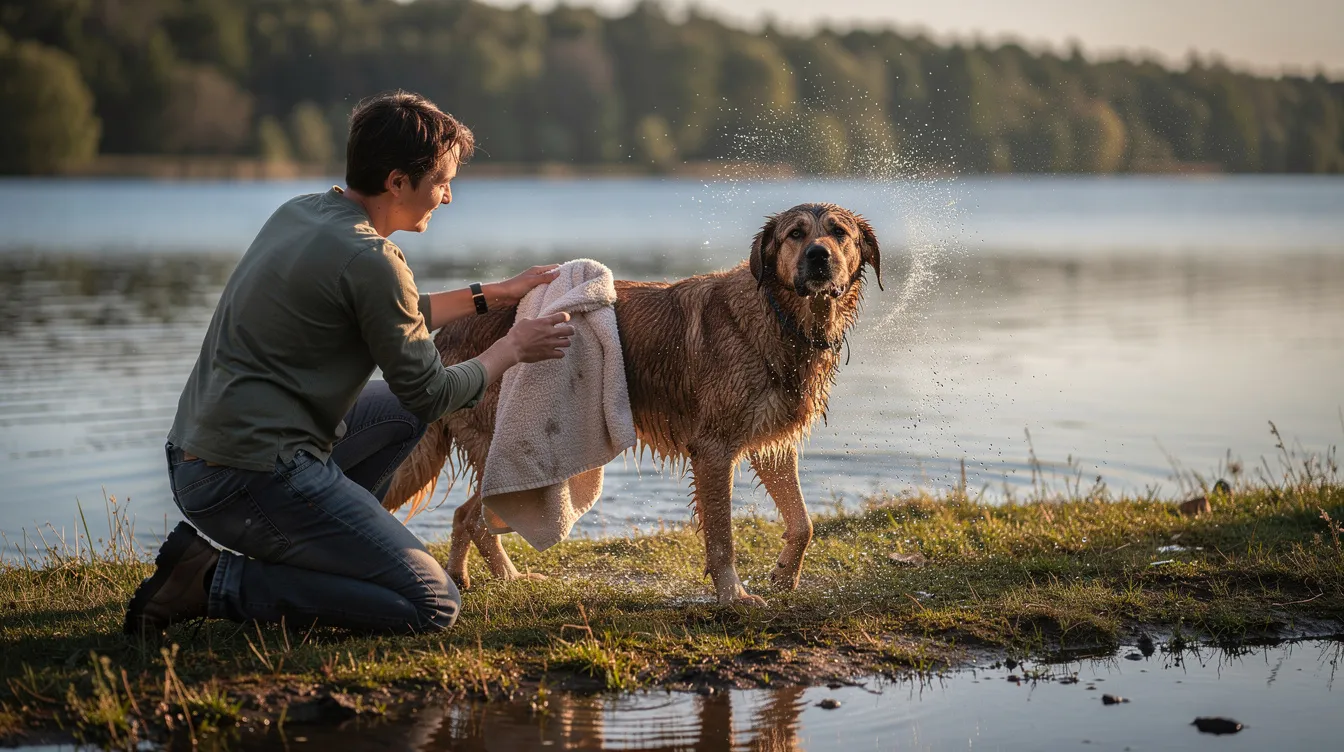
- Dry your dog’s coat thoroughly after swimming or bathing. Towel-dry first, then use a cool blow dryer on low power for dense-coated dogs. Pay extra attention to the neck, chest, tail base, and ear bases so fur can dry properly. Never leave matted fur damp-it creates the ideal environment for bacterial growth.
- Flea control: Keep your dog current on flea prevention year-round. Fast treatment of flea allergy dermatitis prevents itch-driven hot spots over the rump and tail.
- Manage allergies: Work with a veterinarian to identify triggers. Treat allergies promptly to reduce hot spot risk with prescribed allergy medication. A diet designed for gut health and allergies can support overall skin health from the inside, and fatty acids (omega-3 and omega-6) in the diet help maintain a strong skin barrier.
- Ear care: Use maintenance ear cleansers to prevent ear infections in drop-eared breeds. Weekly ear checks for redness, odor, or moisture after swimming reduce related neck hot spots.
- Environmental management is necessary to prevent recurrence of hot spots. Reduce boredom and stress with enrichment, chew toys, training, and regular exercise to limit anxiety-driven licking in sensitive breeds.
- Track flare-ups by season, environment, and activity in CompanAIn-logging “lake weekends” or “grooming visits” helps you and your vet build a personalized plan to prevent future hot spots and keep chronic problems from cycling back.
When to call the vet and how CompanAIn supports ongoing skin health
Hot spots are very uncomfortable, but they’re usually manageable and rarely life-threatening when treated promptly. Here’s when to escalate.
- Call the vet now if you see a rapidly growing hot spot, severe pain, thick discharge or bad odor, spreading redness, fever, or if your furry friend is lethargic or won’t eat.
- Seek veterinary care immediately for hot spots near the eyes, genital area, or anal region, or for any dog with a history of immune disease or diabetes. Recognizing signs of systemic illness matters when skin infections won’t resolve.
- Follow up if a hot spot is not noticeably improved within 48–72 hours of starting treatment, or if new lesions appear elsewhere on the dog’s body.
- CompanAIn’s AI-powered platform lets users store photos, vet visit notes, and lab results, helping both owner and veterinarian see patterns in skin infections, ear infections, and allergies over time.
- The app’s AI summaries translate complex dermatology notes or lab findings into simple explanations, improving adherence to long-term plans for preventing hot spots and keeping your furry friend comfortable.
- With good grooming habits, timely treatment, and smart use of digital health tools like CompanAIn, most dogs-even high-risk breeds-can enjoy long, comfortable lives with far fewer hot spot flare-ups. Start tracking your dog’s skin health today so the next flare doesn’t catch you off guard.